
Cephalotes klugi
- Науч. назв.
- Cephalotes klugi
- Триба
- Attini
- Подсемейство
- Myrmicinae
- Автор
- Emery, 1894
- Распространение
- Встречается в 0 странах
Введение
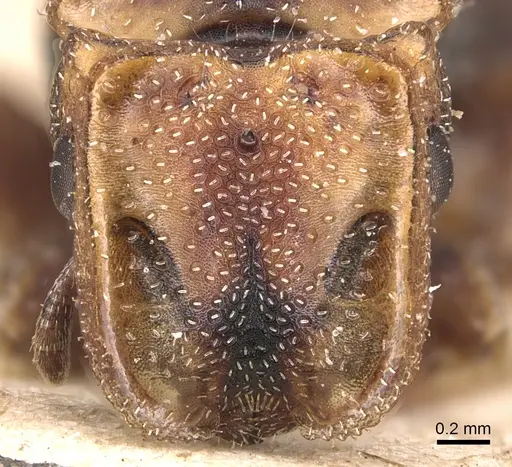
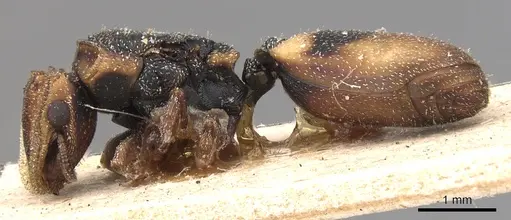
Cephalotes klugi is a turtle ant species from the forests of Brazil. Queens measure approximately 7mm in total length and have a distinctive appearance with a yellow-orange gaster marked by a dark brown transversal stripe. The head features a flattened disc shape that workers and queens can use to block nest entrances - this is their primary defense mechanism. This species belongs to the grandinosus clade, a group known for elaborate surface sculpturing. Unfortunately, almost nothing is known about the specific biology, behavior, or captive care of C. klugi. What we know comes from general Cephalotes husbandry patterns and careful observation.
Quick Summary
- Difficulty: Medium
- Origin & Habitat: Tropical forests of Brazil, specifically recorded from the Mato Grosso region. Like other Cephalotes, they are arboreal ants that nest in hollow twigs, branches, and tree cavities in forest environments [1][2].
- Colony Type: Colony structure is unconfirmed for this specific species. Based on typical Cephalotes patterns, they likely form single-queen colonies.
- Size & Growth:
- Queen: ~7mm, inferred from genus patterns
- Worker: ~4-6mm, inferred from genus patterns
- Colony: Up to a few hundred workers based on typical Cephalotes colony sizes
- Growth: Slow
- Development: Estimated 8-12 weeks based on related Cephalotes species at optimal temperatures (Development time is estimated from genus-level data since no species-specific studies exist.)
- Antkeeping:
- Temperature: Keep around 24-28°C, mimicking warm tropical forest conditions. A gentle temperature gradient allows workers to regulate their exposure.
- Humidity: Moderate to high humidity (60-80%). These are forest-dwelling ants that benefit from moisture but avoid waterlogging the nest.
- Diapause: No true diapause required. Being from tropical Brazil, they expect warm conditions year-round and may show reduced activity during cooler periods but do not enter hibernation.
- Nesting: Arboreal nesting preferences, they do well in Y-tong (AAC) nests, plaster nests, or naturalistic setups with hollow twigs and branches. They prefer tight, enclosed spaces similar to their natural tree-cavity homes.
- Behavior: Generally docile and non-aggressive. Like other turtle ants, they rely on their distinctive head disc to block nest entrances rather than attacking. They are slow-moving and deliberate in their movements. Workers forage for honeydew, nectar, and small insects. Escape risk is moderate, while not tiny ants, they can squeeze through small gaps so standard barrier precautions apply. While they possess a stinger, they primarily use their head disc for defense.
- Common Issues: slow growth can frustrate keepers expecting rapid colony development, specific dietary preferences are unknown, may be picky eaters requiring experimentation, no documented captive breeding success means you are essentially pioneering husbandry, wild-caught colonies may carry parasites or pathogens not yet understood, their arboreal nature means they may struggle in ground-based setups
Nest Preferences and Housing
Cephalotes klugi is an arboreal species, meaning they naturally nest in elevated locations like hollow twigs, branches, and tree cavities. In captivity, they do best in nests that mimic these conditions. Y-tong (AAC) nests work well, as do plaster nests with narrow chambers. The key is providing tight, enclosed spaces rather than open areas. A naturalistic setup with actual twigs or branches can also work if you can maintain proper humidity within them. Avoid setups that force them to travel across open ground frequently, they prefer to stay in their arboreal microhabitat. A small outworld connected to the nest allows for foraging space. [1][2]
Feeding and Diet
The specific diet of C. klugi is unstudied, but Cephalotes generally are omnivorous with a preference for carbohydrate sources. In captivity, offer sugar water, honey, or diluted honey-water regularly. They also accept small insects like fruit flies, pinhead crickets, and mealworms. Like other turtle ants, they likely forage for honeydew from aphids and scale insects in the wild, so sugar sources should be a staple of their diet. Feed protein (insects) once or twice weekly, and keep a sugar source available at all times. Start with small prey items and observe what your colony accepts, they may be picky compared to more adaptable ant species.
Temperature and Heating
Being a Brazilian tropical species, Cephalotes klugi needs warm conditions. Aim for 24-28°C in the nest area. You can achieve this with a heating cable on one side of the nest or a small heat mat. Room temperature may be sufficient if your home is naturally warm, but monitor with a thermometer. Provide a temperature gradient so workers can move between warmer and cooler areas as needed. Avoid temperatures below 20°C for extended periods. Unlike temperate species, they do not require a winter cooling period.
Understanding the Challenge
Keeping Cephalotes klugi is a unique challenge because virtually nothing is known about this species' specific biology. When you acquire this ant, you become a pioneer in understanding its captive care. Document everything: what foods it accepts, what temperatures it prefers (observe where workers cluster), how quickly it grows, and any behaviors you observe. Share your findings with the antkeeping community. This species may have specific requirements that differ from general Cephalotes husbandry. Be patient, Cephalotes are naturally slow-growing, and without species-specific guidance, establishing a successful colony may take time and experimentation.
Frequently Asked Questions
How long does it take for Cephalotes klugi to produce first workers?
Based on typical Cephalotes development, expect 8-12 weeks from egg to first worker at optimal warm temperatures (around 26°C). This is a slow estimate since no species-specific development data exists. The queen will remain sealed in her founding chamber until her first workers emerge.
What do Cephalotes klugi ants eat?
While not specifically studied, they likely accept sugar water, honey, and small insects like fruit flies and pinhead crickets. Start with a sugar source always available, and offer small protein prey items a few times per week. They may be picky eaters, experiment to see what your colony prefers.
Can I keep Cephalotes klugi in a test tube?
Test tubes can work for founding colonies, but turtle ants are arboreal and prefer enclosed spaces. Once the colony grows, transition to a Y-tong or plaster nest that provides the tight chambers they prefer. A test tube alone may not provide adequate space for a growing colony.
Are Cephalotes klugi good for beginners?
This species is not ideal for beginners. Almost nothing is known about its specific care requirements, meaning you must be prepared for experimentation and patience. Additionally, Cephalotes are slow-growing overall. If you want a turtle ant, consider more established species like Cephalotes varians or Cephalotes texanus where captive husbandry is better understood.
Do Cephalotes klugi need hibernation?
No, they do not require hibernation. Being from tropical Brazil, they expect warm conditions year-round. They may show reduced activity during cooler periods, but do not enter true diapause like temperate ant species.
How big do Cephalotes klugi colonies get?
Based on typical Cephalotes colony sizes, expect up to a few hundred workers at maturity. This is a moderate colony size compared to some ants that reach thousands. Growth is slow, so reaching this size may take several years.
Why is my Cephalotes klugi colony not growing?
Several factors could be involved: temperatures may be too low (keep at 24-28°C), humidity may be wrong, or they may not be accepting the food you are offering. Also remember that Cephalotes are naturally slow-growing, what feels slow to you may actually be normal. Experiment with feeding options and ensure housing conditions match their arboreal preferences.
Can I keep multiple Cephalotes klugi queens together?
This has not been documented for this species. Based on typical Cephalotes patterns, they likely form single-queen colonies. Combining unrelated queens is not recommended without evidence they will accept each other.
What makes Cephalotes klugi different from other ants?
Their most distinctive feature is the flattened head disc that workers and queens can use to block nest entrances like a turtle shell, hence the common name 'turtle ant.' They also have unusual leg structures and are among the more specialized arboreal ants in the Myrmicinae subfamily.
Report an Issue
The current care sheet is based fully on literature. See inconsistencies, or something that's incorrect? Please , it will be resolved after review from an admin. Contributing to the blogs tab also helps providing information, to make us be able to further improve the caresheets. Thank you for your support!
References

Эта инструкция по уходу лицензирована по CC BY-SA 4.0 .
Блоги сообщества
CASENT0904918
Посмотреть на AntWeb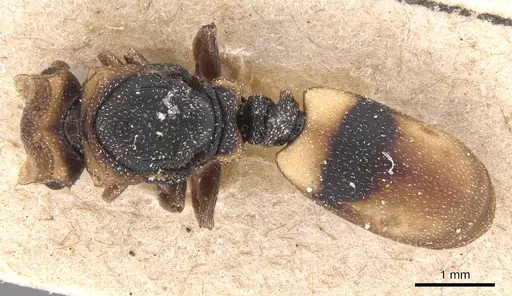
Литература
Загрузка карты распределения...Загрузка товаров...