
Cataulacus lobatus
- Науч. назв.
- Cataulacus lobatus
- Триба
- Crematogastrini
- Подсемейство
- Myrmicinae
- Автор
- Mayr, 1895
- Распространение
- Встречается в 0 странах
Введение
Cataulacus lobatus is a medium-sized myrmicine ant native to the Afrotropical region, specifically found in Cameroon and the Democratic Republic of Congo. Workers measure approximately 6.1mm in total length, with a distinctive morphology that includes a marginate pronotum with expanded lateral margins, a pair of short acute propodeal spines, and a postpetiole that divides into two distinct lobes dorsally. The species has finely reticulate-punctate sculpturing on the head and alitrunk, with strongly transversely rugose propodeal declivity. This ant belongs to the huberi species group and is closely related to Cataulacus inermis, though it can be distinguished by its propodeal spines and different sculpturing patterns. Unfortunately, almost nothing is known about the biology, behavior, or colony structure of this species in the wild.
Quick Summary
- Difficulty: Unknown, data insufficient
- Origin & Habitat: Cameroon and Democratic Republic of Congo (Afrotropical region). Specific habitat requirements are unknown [1].
- Colony Type: Unconfirmed, colony structure has not been documented in scientific literature.
- Size & Growth:
- Queen: Unknown, queen caste has not been described [1]
- Worker: 6.1mm total length [1]
- Colony: Unknown, no colony size data available
- Growth: Unknown, development has not been studied
- Development: Unknown, no development data exists for this species (Related Cataulacus species typically develop over 6-10 weeks at tropical temperatures, but this is a rough estimate for C. lobatus)
- Antkeeping:
- Temperature: Inferred: Keep at 24-28°C based on typical Afrotropical ant requirements. Provide a gentle thermal gradient allowing workers to self-regulate.
- Humidity: Inferred: Moderate to high humidity (60-80%) likely preferred, reflecting its Central African origin. Keep nest substrate consistently moist but not waterlogged.
- Diapause: Unknown, diapause requirements have not been studied. Given the tropical distribution, year-round activity is probable.
- Nesting: Inferred: Related Cataulacus species often nest in rotting wood or under bark. A naturalistic setup with rotting wood pieces or a Y-tong/plaster nest with moisture retention would be a reasonable starting point.
- Behavior: Behavior is unstudied. Based on genus-level patterns, Cataulacus ants are typically arboreal or semi-arboreal, often nesting in hollow twigs, rotting wood, or under bark. They are generally not aggressive and tend to be slower-moving than many myrmicine ants. Escape prevention should be moderate, workers at 6mm are not tiny but can still squeeze through small gaps. Their marginate body structure (flattened edges) may help them fit into narrow spaces. As a member of the Myrmicinae subfamily, this species has a stinger but uses a smear defense mechanism, wiping venom onto enemies rather than piercing flesh.
- Common Issues: no biological data exists, this is essentially an unstudied species with no established care protocols, colony founding method is unknown, it is unclear whether queens are claustral or semi-claustral, queen caste has never been described, breeding may be challenging without knowing reproductive biology, growth and development timeline is completely unknown, humidity and temperature preferences are inferred, not confirmed
Species Identification and Morphology
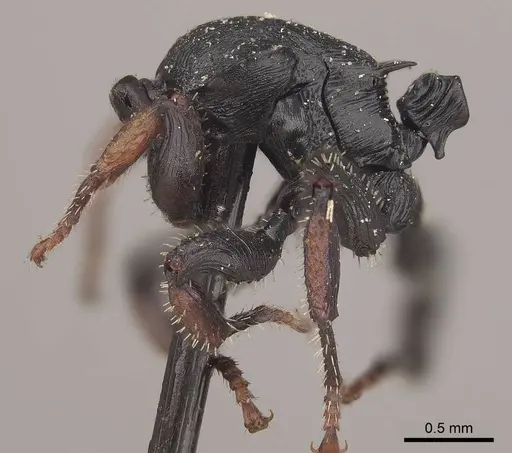
Cataulacus lobatus workers are distinctive among African Cataulacus species due to their combination of features. They measure approximately 6.1mm in total length with a relatively broad head. The pronotum has expanded lateral margins that create a distinctive profile, though these margins lack teeth or denticles. The propodeum bears a pair of short but acute spines. The postpetiole is notably longer than broad in dorsal view and divided into two lobes by a median impression. The first gastral tergite has marginate sides that are most pronounced near the base. Sculpturing consists of fine reticulate-punctation with overlying rugoreticulum, strongest behind the eyes. Notably, erect hairs are absent from the dorsal surfaces but present on the lateral margins of the head and appendages. The closest relative is Cataulacus inermis, which lacks propodeal spines and has different propodeal sculpturing. [1]
Distribution and Biogeography
Cataulacus lobatus is known from two locations in the Afrotropical region: Cameroon and the Democratic Republic of Congo. The type locality is Cameroon, specifically Kriegsschiffhafen (now likely Douala or nearby), collected in March 1892 by H. Brauns. The species has been recorded from the Democratic Republic of Congo as well, though specific province data is limited. This distribution pattern across Central Africa suggests the species likely inhabits tropical forest environments, though its precise habitat preferences remain undocumented. The species was originally described by Mayr in 1895 and later redescribed by Bolton in 1974, with subsequent mentions in taxonomic keys and checklists. [1]
Current State of Knowledge
This species represents a significant gap in antkeeping knowledge, literally nothing has been published about its biology, colony structure, behavior, or captive care. The AntWiki biology section explicitly states 'Nothing is known about the biology of Cataulacus lobatus.' This means there are no published observations on: colony size and structure, queen behavior and founding, worker behavior and foraging, diet preferences, temperature/humidity requirements, reproductive biology, or seasonal activity patterns. For antkeepers, this represents both a challenge and an opportunity. You will essentially be pioneering captive husbandry for this species, requiring careful observation and experimental approaches to determine optimal conditions. [1]
Recommended Care Approach
Given the complete lack of biological data, care recommendations must be based on inference from related species and general antkeeping principles. Cataulacus ants are generally arboreal or semi-arboreal, often nesting in rotting wood, hollow twigs, or under bark in their native tropical habitats. A naturalistic setup with rotting wood pieces or a plaster/Y-tong nest with good moisture retention would be a reasonable starting point. Temperature should likely be in the tropical range (24-28°C) with moderate to high humidity (60-80%). Feed a varied diet including sugar sources (honey, sugar water) and protein (insects, especially given the predatory tendencies common in Myrmicinae). Start with conservative approaches and adjust based on colony behavior and survival. Document your observations carefully, any successful breeding would represent the first documented captive biology for this species.
Legal and Ethical Considerations
As this species is native to Cameroon and the Democratic Republic of Congo, any antkeepers outside these countries should verify their local regulations regarding ant imports. Many countries require permits for importing exotic ant species. Additionally, responsible antkeeping ethics dictate that colonies should not be released in non-native regions, as escaped exotic ants can become invasive and cause ecological damage. If you obtain this species, ensure it is from a reputable source that follows sustainable collection practices. Given how little is known about this species in the wild, every captive observation has potential scientific value, consider sharing your findings with the antkeeping community.
Frequently Asked Questions
How do I keep Cataulacus lobatus ants?
Unfortunately, there is no established care protocol for this species, it has never been documented in captivity. Based on genus-level patterns, try a naturalistic setup with rotting wood or a moist plaster nest, keep at 24-28°C with 60-80% humidity, and offer sugar water and small insects. You will essentially be pioneering captive care for this species.
What do Cataulacus lobatus ants eat?
Diet is unconfirmed for this species. Based on typical Cataulacus and Myrmicinae behavior, they likely accept sugar sources (honey, sugar water) and protein (small insects, arthropods). Start with these and observe what the colony accepts.
How big do Cataulacus lobatus colonies get?
Unknown, colony size has never been documented. Related Cataulacus species typically form colonies ranging from dozens to a few hundred workers, but this is purely speculative for C. lobatus.
Do Cataulacus lobatus ants sting?
Stinging behavior has not been documented for this species. Most Myrmicinae have stingers, though they vary in potency. This species uses a smear defense mechanism, wiping venom onto enemies rather than piercing flesh. At 6mm, workers are large enough to potentially sting if threatened, but the pain level is unknown.
Are Cataulacus lobatus ants good for beginners?
No, this species cannot be recommended for beginners (or anyone) due to complete lack of biological data. There are no established care protocols, and success in captivity has never been documented. Consider better-documented species like Lasius, Camponotus, or Messor for starting out.
How long does it take for Cataulacus lobatus to go from egg to worker?
Unknown, development has never been studied. Related Cataulacus species in tropical conditions typically develop in 6-10 weeks, but this is a rough estimate with low confidence.
Do Cataulacus lobatus ants need hibernation?
Unknown, given their tropical African distribution, year-round activity is probable. Diapause requirements have not been studied and may not exist.
Can I keep multiple Cataulacus lobatus queens together?
Unknown, colony structure (monogyne vs polygyne) has not been documented. Without any data on natural colony structure, combining queens is not recommended.
Where is Cataulacus lobatus found?
This species is native to the Afrotropical region, specifically Cameroon and the Democratic Republic of Congo.
Is Cataulacus lobatus a rare species?
It appears to be rarely encountered, only known from a handful of records in scientific literature. Whether this reflects true rarity or limited collection effort is unknown.
Report an Issue
The current care sheet is based fully on literature. See inconsistencies, or something that's incorrect? Please , it will be resolved after review from an admin. Contributing to the blogs tab also helps providing information, to make us be able to further improve the caresheets. Thank you for your support!
References

Эта инструкция по уходу лицензирована по CC BY-SA 4.0 .
Блоги сообщества
CASENT0280804
Посмотреть на AntWeb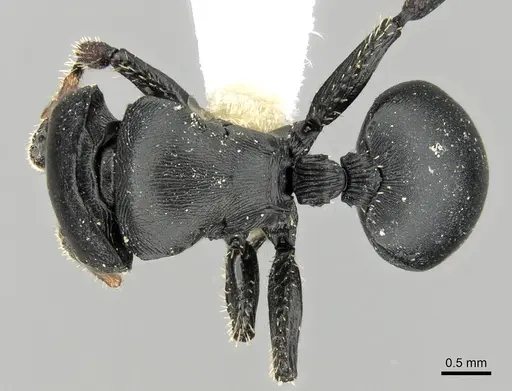
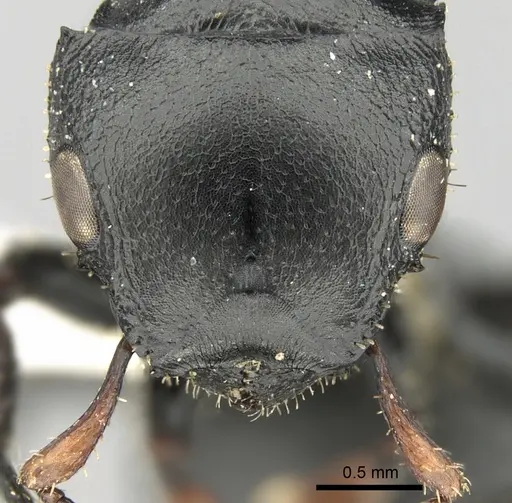
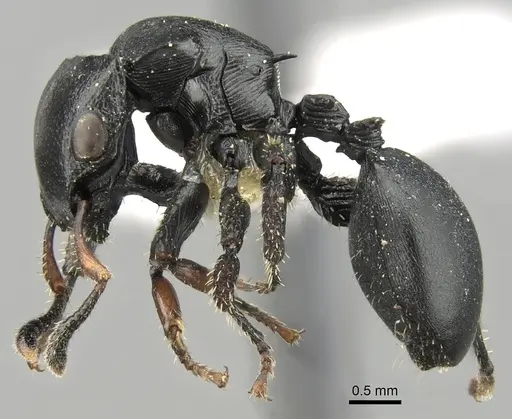
CASENT0919588
Посмотреть на AntWeb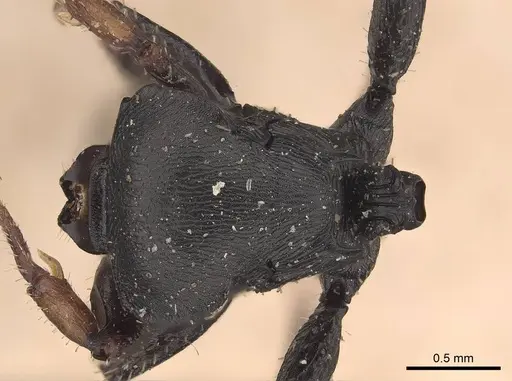
Литература
Загрузка карты распределения...Загрузка товаров...