
Cardiocondyla argyrotricha
- Науч. назв.
- Cardiocondyla argyrotricha
- Триба
- Crematogastrini
- Подсемейство
- Myrmicinae
- Автор
- Seifert, 2023
- Распространение
- Встречается в 0 странах
Введение
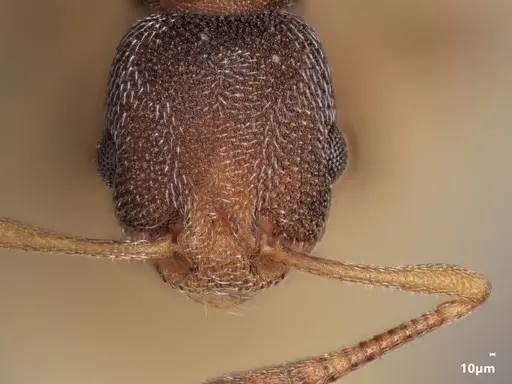
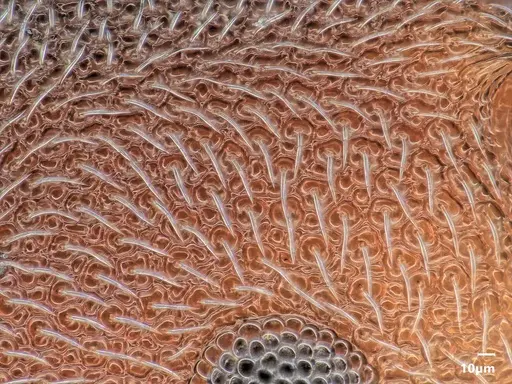
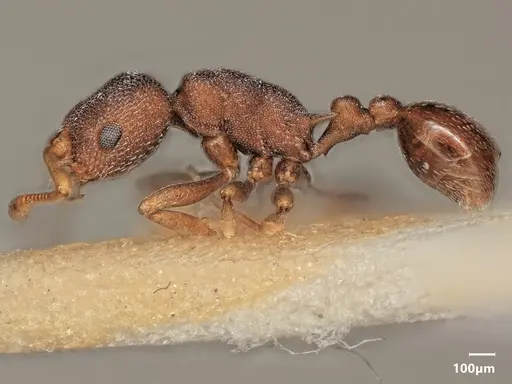
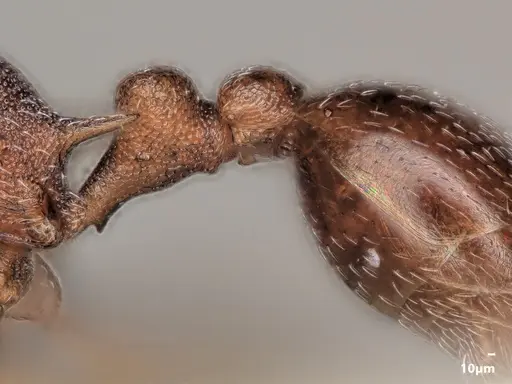
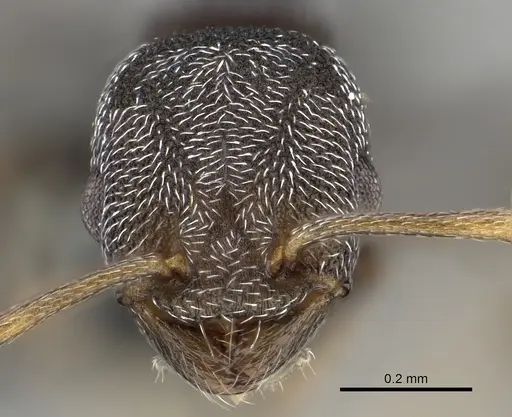
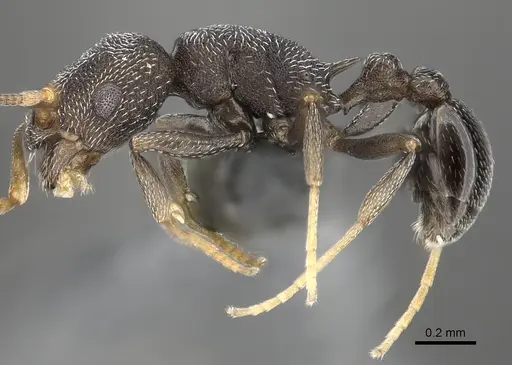
Cardiocondyla argyrotricha is a tiny ant species native to Southeast Asia, found on Tioman Island (Malaysia), Borneo (Sarawak), and Luzon (Philippines) from sea level up to 380m elevation . Workers measure approximately 2mm - inferred from Cardiocondyla genus patterns. They have a distinctive dark to medium brown coloration with striking silvery flattened pubescence on the head and mesosoma, which gives them a frosted appearance - the species name literally means 'silver hair' in Greek [AntWiki]. The head is notably elongated, and the mesosoma has a hump-backed profile with relatively long spines . This species has fascinating reproductive biology that sets it apart from most ants. Colonies are functionally monogynous - they have a single queen that monopolizes reproduction. Unlike most ant species, they produce only wingless ergatoid males with sickle-shaped mandibles that fight each other for mating opportunities . Queens can perform what researchers call 'oedipal mating' - they mate with their own sons to produce female offspring . Additionally, an unmated queen can establish a colony alone by taking along some workers, then mating with her first-born son to start producing workers .
Quick Summary
- Difficulty: Medium
- Origin & Habitat: Southeast Asia, found on Tioman Island (Malaysia), Borneo (Sarawak), and Luzon (Philippines). They nest in clefts of dark lava stones, in small forest streams, and on beaches at elevations from sea level to 380m [3][1].
- Colony Type: Functionally monogynous, single queen per colony. The first emerging queen monopolizes reproduction and prevents younger gynes from becoming fertile [1]. Colonies contain 20-60 completely sterile workers [3].
- Size & Growth:
- Queen: ~2.5-3mm, inferred from Cardiocondyla genus patterns
- Worker: ~2mm, inferred from Cardiocondyla genus patterns
- Colony: Up to 60 workers [3]
- Growth: Moderate
- Development: Approximately 13-15 weeks (about 94 days total). Queens shed wings within 11 days of emergence. First male pupae appear around day 46, first adult males around day 56, and first workers around 38 days after male emergence [3]. (Development is tied to male production, queens must first produce sons, then mate with them (oedipal mating) before workers can be produced. This makes the founding process slower than typical ants.)
- Antkeeping:
- Temperature: Keep at 24-28°C. Being a tropical species from Southeast Asia, they need warm conditions. A gentle gradient with a heating cable on one side allows workers to regulate their temperature.
- Humidity: High humidity, they naturally nest in damp locations like forest stream areas and lava stone clefts. Keep the nest substrate consistently moist but not waterlogged. Provide a water tube for drinking access.
- Diapause: No, as a tropical species, they do not require hibernation. Keep them at stable warm temperatures year-round.
- Nesting: Y-tong (AAC) nests or plaster nests work well due to their small size. They prefer tight chambers scaled to their tiny dimensions. Naturalistic setups with small rock crevices or moist substrate also work. Avoid dry, airy conditions.
- Behavior: These ants are peaceful and not aggressive. Workers are tiny and may be overlooked by keepers, they are quite inconspicuous. They are not known to sting. Escape prevention is critical due to their very small size, use fine mesh and tight-fitting lids. Foraging activity is moderate, they likely tend aphids or collect honeydew like other Cardiocondyla species. The ergatoid males remain in the nest and do not disperse on flights [1]. As with other Myrmicinae, they may use smear defense with their stinger.
- Common Issues: escape prevention is critical, they can squeeze through standard mesh barriers, use fine mesh and seal all gaps, colonies may fail if queens cannot mate with sons, this is a critical part of their reproductive cycle and cannot be skipped [3], slow founding process, queens must produce sons first, then mate with them before workers arrive, this takes 3-4 months, overfeeding can cause mold issues in small nests, remove uneaten food promptly, tiny colony size (max ~60 workers) means they remain small even when established, this is normal for the species
Housing and Nest Setup
Cardiocondyla argyrotricha requires careful housing due to their extremely small size. Workers are tiny, which means they can escape through gaps that seem insignificant to the human eye. Use Y-tong (AAC) nests or plaster nests with very tight chambers, standard formicarium setups may have passages too large for these tiny ants. Fine mesh on all ventilation holes is essential. Test tube setups can work for founding colonies but monitor for flooding and ensure the cotton is packed tightly enough to prevent escape.
For the founding setup, a simple test tube with a water reservoir works well. The queen will seal herself into a chamber and begin the reproductive cycle. Once workers arrive, you can transition to a small formicarium if desired, but given their tiny colony size (max ~60 workers), they do well in compact setups. Keep the nest area humid, these ants naturally inhabit damp environments near forest streams and in lava stone crevices [3].
Feeding and Diet
Like other Cardiocondyla species, these ants are omnivorous with a preference for protein. Feed small protein sources such as fruit flies, pinhead crickets, or small mealworms. Due to their tiny size, prey items should be appropriately sized, even a small fruit fly is a substantial meal for these ants. Sugar sources like honey water or sugar water can be offered.
In their natural habitat, they likely forage for small insects and tend aphids for honeydew. Feed every 2-3 days, removing any uneaten prey within 24 hours to prevent mold. A constant supply of sugar water is recommended once workers are present. The key is offering appropriately-sized prey, these ants cannot tackle large food items. [3]
Reproduction and Colony Development
The reproductive biology of Cardiocondyla argyrotricha is unusual and understanding it is critical for successful keeping. Colonies are functionally monogynous, only one queen reproduces at a time. Unlike most ants, they produce only wingless ergatoid males with distinctive sickle-shaped mandibles that fight each other for mating rights [1].
The colony founding process is complex: 1) The queen sheds her wings within about 11 days of emergence [3]. 2) She produces haploid eggs that develop into males (no mating required for male production) [3]. 3) First male pupae appear around day 46, adult males around day 56 [3]. 4) The queen must then mate with her own son (oedipal mating), this is required for her to produce female offspring [3]. 5) After successful mother-son mating, workers begin developing, first workers appear around 38 days after male emergence, roughly 94 days total from queen emergence [3].
If a queen cannot mate with her sons (for example, if all males die before she can mate), the colony will fail [3]. This makes the reproductive cycle delicate but fascinating.
Temperature and Seasonal Care
As a tropical species from Southeast Asia, Cardiocondyla argyrotricha requires warm, stable temperatures. Keep the nest area at 24-28°C. A heating cable placed on one side of the nest creates a temperature gradient that allows workers to regulate their exposure to heat. Avoid temperature drops below 22°C, as this can slow development significantly.
Unlike temperate ant species, they do not require diapause (winter hibernation). Maintain warm conditions year-round. Room temperature in most homes (20-24°C) may be too cool, consider using a small heat mat or placing the colony in a warm room. Monitor colony activity levels as an indicator, active foraging suggests appropriate temperature, while lethargic workers may indicate the need for warmer conditions. [3][1]
Behavior and Temperament
Cardiocondyla argyrotricha is a peaceful species with no significant defensive behaviors. Workers are tiny and go about their tasks quietly, you may not notice much activity compared to larger ant species. They are not aggressive and do not possess a painful sting. As with other Myrmicinae, they may use smear defense with their modified stinger.
The most unusual aspect of their behavior is the ergatoid (wingless) males. Unlike most ant species where males fly away to mate, these males remain in the nest and fight each other with their sickle-shaped mandibles for the opportunity to mate with the queen [1]. This fighting behavior is fascinating to observe but occurs entirely within the nest.
Foraging occurs primarily at night or during dim conditions. They likely follow trail pheromones like other Cardiocondyla species. Their small size and peaceful nature make them suitable for observation but they are not particularly dramatic or active compared to larger ant species.
Frequently Asked Questions
How long does it take for Cardiocondyla argyrotricha to produce first workers?
Approximately 13-15 weeks (about 94 days). The process is slower than typical ants because the queen must first produce sons, then mate with them (oedipal mating) before she can produce workers. First male pupae appear around day 46, adult males around day 56, and first workers around day 94 [3].
Why does my Cardiocondyla argyrotricha queen need to mate with her sons?
This is normal for the species. Queens produce haploid (unfertilized) eggs that develop into males without mating. However, to produce female offspring (workers), the queen must be fertilized. She achieves this by mating with her first-born son, this is called 'oedipal mating' and has been documented in multiple Cardiocondyla species including C. argyrotricha [3].
Can I keep multiple Cardiocondyla argyrotricha queens together?
No. This species is functionally monogynous, colonies have only one reproducing queen. The first emerging queen monopolizes reproduction and prevents younger gynes from becoming fertile [1]. Combining unrelated queens is not recommended and would likely result in fighting.
How big do Cardiocondyla argyrotricha colonies get?
Small, up to 60 workers [3]. This is typical for the genus. They remain a tiny colony even when established, which is part of their charm but means they will never become a large, impressive colony.
Do Cardiocondyla argyrotricha ants sting?
No, they are not known to sting. These tiny ants are peaceful and pose no danger to keepers. Their small size means they are more likely to go unnoticed than to engage in defensive behavior.
What do I feed Cardiocondyla argyrotricha?
Small protein sources like fruit flies, tiny crickets, or small mealworms are ideal. Due to their tiny size, prey must be appropriately small. Offer sugar water or honey water as well. Remove uneaten food within 24 hours to prevent mold. Feed every 2-3 days once workers are present.
What temperature do Cardiocondyla argyrotricha need?
Keep them warm at 24-28°C. As a tropical Southeast Asian species, they need temperatures in this range for optimal development and activity. A small heat mat or heating cable on one side of the nest creates a gradient. Avoid temperatures below 22°C.
Do Cardiocondyla argyrotricha need hibernation?
No. As a tropical species from Southeast Asia, they do not require diapause or hibernation. Keep them warm year-round at 24-28°C. Temperature drops below 22°C can slow their development significantly.
Why are my Cardiocondyla argyrotricha escaping?
These are among the smallest ants you can keep. They can squeeze through incredibly tiny gaps. Use fine mesh on all ventilation, seal all lid edges with tape or foam, and check for any gaps. Escape prevention must be excellent.
Is Cardiocondyla argyrotricha good for beginners?
Medium difficulty. While they are peaceful and small, their complex reproductive biology (requiring mother-son mating) and tiny size make them more challenging than beginner species like Lasius or Tetramorium. The slow founding process (3-4 months to first workers) also requires patience. They are better suited for keepers with some experience.
Why did my colony fail after the queen produced males?
This is likely because the queen was unable to mate with her sons. The reproductive cycle requires the queen to mate with her first-born son to produce workers. If the males die before mating occurs, or if the queen cannot access them, the colony will fail [3]. Ensure the queen is not disturbed during this critical period and that males can reach her.
Report an Issue
The current care sheet is based fully on literature. See inconsistencies, or something that's incorrect? Please , it will be resolved after review from an admin. Contributing to the blogs tab also helps providing information, to make us be able to further improve the caresheets. Thank you for your support!
References

Эта инструкция по уходу лицензирована по CC BY-SA 4.0 .
Блоги сообщества
ANTWEB1048504
Посмотреть на AntWeb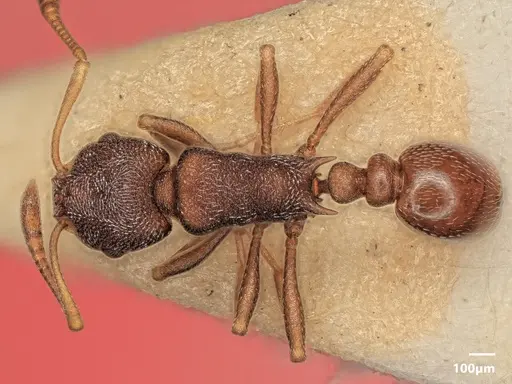
CASENT0280593
Посмотреть на AntWeb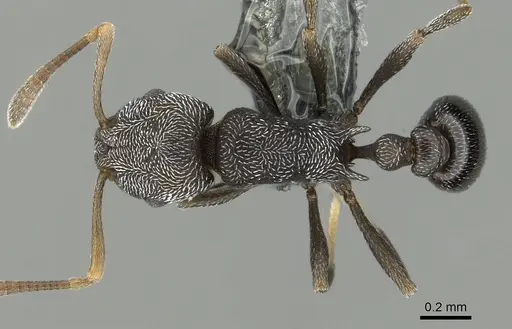
Литература
Загрузка карты распределения...Загрузка товаров...