
Camponotus santschii
- Науч. назв.
- Camponotus santschii
- Подрод
- Myrmocladoecus
- Триба
- Camponotini
- Подсемейство
- Formicinae
- Автор
- Forel, 1899
- Распространение
- Встречается в 0 странах
Введение
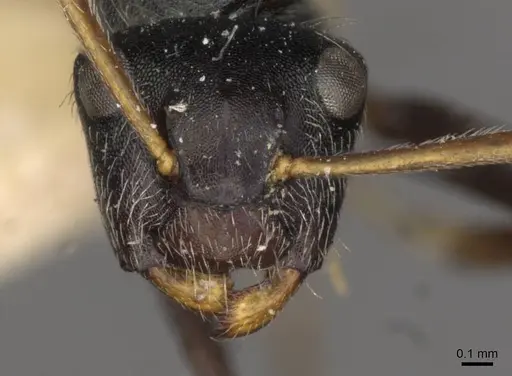
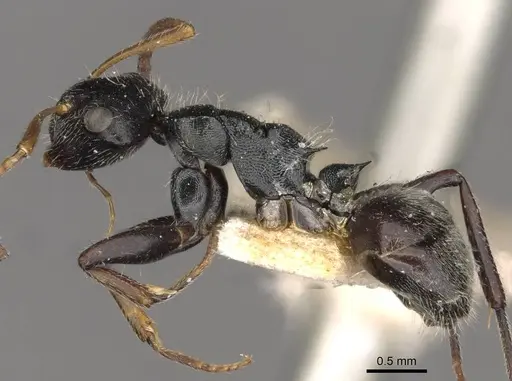
Camponotus santschii is a medium-sized carpenter ant found across Central America and northern South America, from Mexico through Panama to Colombia and recently documented in Ecuador . Workers are distinguished by a pair of spines on the propodeum and a long medial spine on the petiole, with the anterior part of the dorsopropodeum convex and the posterior part concave . The gaster is covered with dense silver pubescence, giving these ants a slightly fuzzy appearance . This species belongs to the subgenus Myrmobrachys and is very rarely collected, which means biology in the wild is unknown . What makes this species interesting is how recently we've learned about its range - the 2022 discovery in Ecuador represents the southernmost record of this ant on the continent, suggesting there may be more to learn about its distribution and behavior .
Quick Summary
- Difficulty: Unknown, biology completely unstudied
- Origin & Habitat: Tropical Central and South America, Mexico to Ecuador. Found in seasonal dry forest at low elevation (160m) in western Ecuador [2]. Originally described from the Sierra Nevada de Santa Marta in Colombia [3].
- Colony Type: Unknown, colony structure has not been documented.
- Size & Growth:
- Queen: size data unavailable
- Worker: size data unavailable
- Colony: Unknown, never documented
- Growth: Unknown, no development data exists
- Development: Unknown, no research on development. (This is entirely unstudied.)
- Antkeeping:
- Temperature: Keep warm, roughly 24-28°C. This recommendation comes from their tropical habitat in lowland Ecuador, they experience year-round warmth [2]. A heating cable on one side of the nest creates a gradient they can choose from.
- Humidity: Moderate humidity, they come from seasonal dry forest in Ecuador, not rainforest [2]. Keep the nest substrate lightly moist but allow some drying between waterings. Avoid both waterlogged conditions and complete drying out.
- Diapause: No, these ants come from tropical lowlands in Ecuador where temperatures remain warm year-round [2]. They do not require hibernation.
- Nesting: Unknown, no data on natural nesting preferences. Based on the subgenus Myrmobrachys, they likely nest in wood or hollow stems. In captivity, a Y-tong (AAC) nest or plaster formicarium works well for Camponotus. Keep chambers appropriately sized for medium-sized ants.
- Behavior: Completely unknown, no behavioral observations have been documented in scientific literature [1][2]. Based on typical Camponotus, they are likely moderate foragers with standard carpenter ant behavior. Escape prevention should be standard for medium-sized ants, they can climb smooth surfaces but are not extreme escape artists like tiny species.
- Common Issues: biology is completely unknown, this is an exploratory species for experienced keepers willing to experiment, no development data exists, you are essentially pioneering captive breeding, wild-caught colonies may have unknown parasites or diseases since the species has never been kept in captivity, temperature and humidity requirements are inferred, not confirmed, observe colony behavior and adjust, since they are rarely collected, obtaining a colony may be difficult
Why Keep Camponotus santschii?
This is not a species for beginners. Camponotus santschii has never been documented in captive care, and its biology remains completely unknown to science [1]. If you choose to keep this species, you become a pioneer. That said, Camponotus as a genus are well-understood, and we can make educated guesses about their care based on related species and what little habitat information exists. The 2022 discovery in Ecuador shows this species extends further south than previously known [2], suggesting there may be populations adapted to different conditions than the Colombian ones. If you can obtain a colony, your observations could contribute genuinely new knowledge to antkeeping.
Housing and Nest Setup
Since we have no data on this species' natural nesting, we rely on what works for other Camponotus in the Myrmobrachys subgroup. A Y-tong (AAC) nest or plaster formicarium provides the dark, humid environment carpenter ants prefer. The chambers should be appropriately sized for medium-sized ants, not too tight, not cavernously large. A test tube setup works for founding queens, but be prepared to move them to a proper nest once the colony reaches 15-20 workers. Include a water reservoir to maintain humidity without flooding. Since they come from seasonal dry forest in Ecuador [2], they likely tolerate a range of moisture levels better than rainforest species.
Feeding and Diet
No dietary observations exist for this species. Based on typical Camponotus behavior, they likely accept standard ant foods: sugar sources (honey, sugar water) for energy, and protein sources (insects, mealworms) for colony growth. Carpenter ants are generally omnivorous and not particularly picky. Start with a mix of sugar water and small insects, then observe what your colony prefers. Since they come from a tropical environment with year-round insect activity [2], they may be more active foragers than temperate Camponotus species that slow down in winter.
Temperature and Seasonal Care
Keep these ants warm, aim for 24-28°C based on their tropical lowland habitat in Ecuador [2]. They come from an area with minimal seasonal temperature variation, so no hibernation or cooling period is needed. A heating cable under one side of the nest creates a gradient allowing workers to choose their comfort zone. Room temperature in heated homes (around 20-22°C) may be too cool, monitor colony activity. If workers cluster consistently near the heated side, the colony is telling you they want it warmer. Unlike temperate species, these ants likely remain active year-round.
What We Don't Know
Honesty requires acknowledging how little we know about this species. The scientific literature explicitly states biology is unknown [1]. We have no data on: colony size, development time, founding behavior, queen number, aggression levels, foraging patterns, or any captive care observations. Every aspect of keeping this species is an experiment. This is not a species to choose if you want guaranteed success, it's for experienced antkeepers who enjoy the process of discovery and are willing to document their observations carefully.
Frequently Asked Questions
How difficult is Camponotus santschii to keep?
We genuinely do not know, this species has never been documented in captive antkeeping. Based on being a Camponotus, they may be manageable, but the complete lack of biological data makes this an experimental species. Only experienced antkeepers should attempt this.
What do Camponotus santschii eat?
No dietary observations exist for this species. Based on typical Camponotus, they likely accept sugar sources (honey, sugar water) and protein (insects, mealworms). Start with these standard foods and observe your colony's preferences.
Do I need to hibernate Camponotus santschii?
No, they come from tropical lowland Ecuador where temperatures stay warm year-round [2]. No hibernation or cooling period is needed.
How long does it take for Camponotus santschii to produce workers?
Unknown, no development research exists for this species.
What temperature should I keep Camponotus santschii at?
Aim for 24-28°C based on their tropical habitat in Ecuador [2]. They are adapted to year-round warmth. A heating cable on part of the nest provides a gradient.
Are Camponotus santschii aggressive?
Unknown, no behavioral observations have been documented [1]. Most Camponotus are defensive but not particularly aggressive toward keepers. Standard caution applies.
Can I keep multiple queens together?
Unknown, colony structure has never been documented for this species [1]. Do not attempt combining unrelated queens without documented evidence that this works.
Where does Camponotus santschii live in the wild?
From Mexico through Central America to Colombia, with a recent discovery in Ecuador (Guayaquil area) at 160m elevation in seasonal dry forest [2][1].
How big do colonies get?
Unknown, colony size has never been documented [1]. Most Camponotus colonies reach several hundred to a few thousand workers, but we have no data for this specific species.
Report an Issue
The current care sheet is based fully on literature. See inconsistencies, or something that's incorrect? Please , it will be resolved after review from an admin. Contributing to the blogs tab also helps providing information, to make us be able to further improve the caresheets. Thank you for your support!
References

Эта инструкция по уходу лицензирована по CC BY-SA 4.0 .
Блоги сообщества
CASENT0910740
Посмотреть на AntWeb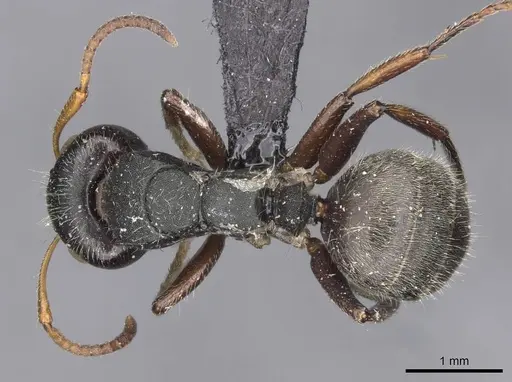
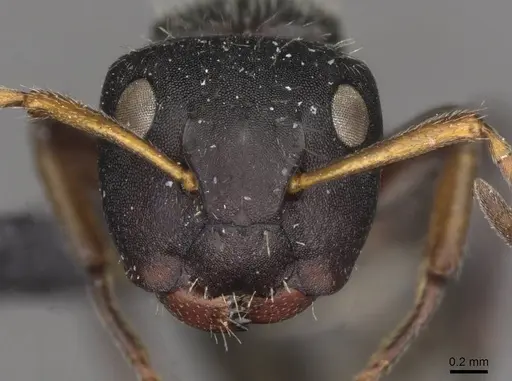
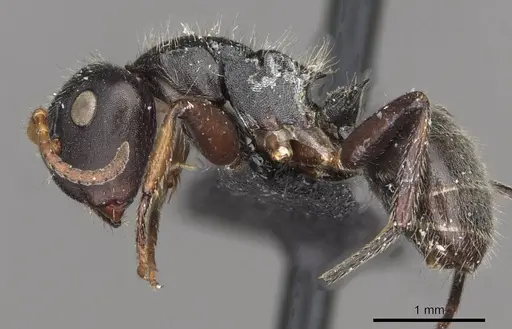
CASENT0910741
Посмотреть на AntWeb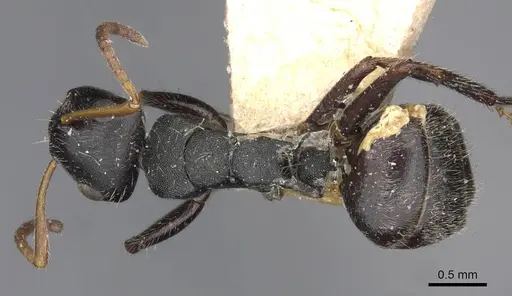
Литература
Загрузка карты распределения...Загрузка товаров...