
Camponotus folicola
- Науч. назв.
- Camponotus folicola
- Подрод
- Myrmosphincta
- Триба
- Camponotini
- Подсемейство
- Formicinae
- Автор
- Forel, 1904
- Распространение
- Встречается в 0 странах
Введение
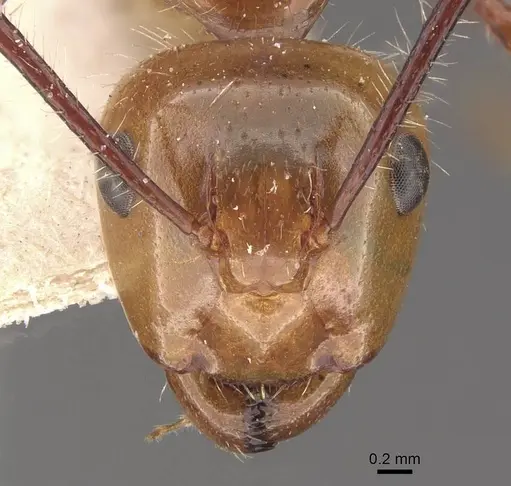
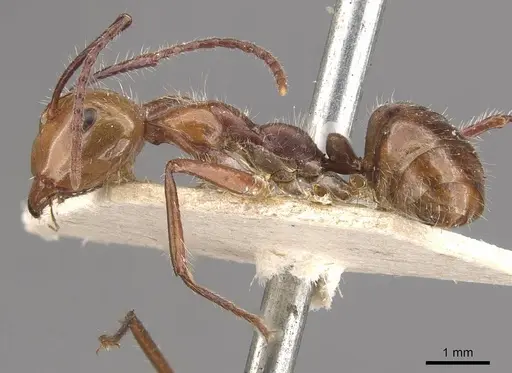
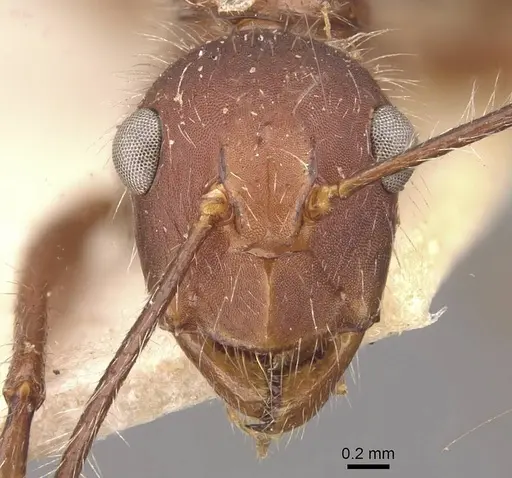
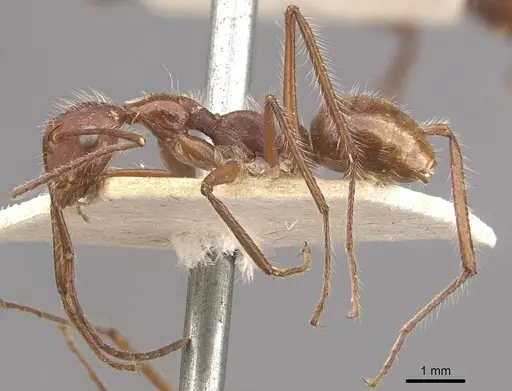
Camponotus folicola is a small Neotropical ant species native to the Amazon basin of Brazil, Colombia, and Peru. Workers are small and medium brown in color, with a distinctive smooth and shiny head in major workers. The notopropodeal suture is strongly impressed, and the scapes and tibiae are covered with erect and suberect hairs. This species belongs to the subgenus Myrmosphincta and is not commonly encountered in the wild . The biology of this species remains completely unstudied in scientific literature.
Quick Summary
- Difficulty: Expert
- Origin & Habitat: Amazon basin in Brazil, Colombia, and Peru, tropical rainforest environment [2][1][3]
- Colony Type: Unconfirmed, colony structure has not been documented in scientific literature
- Size & Growth:
- Queen: size data unavailable, no documented measurements for this species
- Worker: small workers [1]
- Colony: Unknown, no colony size data available
- Growth: Unknown, growth rate has not been studied
- Development: Unknown, development timeline has not been documented for this species (No species-specific data available. Estimates based on related Camponotus species may not be accurate.)
- Antkeeping:
- Temperature: Keep at 24-28°C, warm tropical conditions. Use a heating cable on one side of the nest to create a gentle gradient.
- Humidity: Maintain high humidity around 70-80%. Keep the nest substrate consistently moist but not waterlogged. Mist occasionally and provide a water tube.
- Diapause: No, tropical species do not require hibernation
- Nesting: In nature they likely nest in rotting wood or under bark in the tropical forest floor. In captivity, a Y-tong (AAC) nest or plaster nest with good humidity retention works well. Provide narrow chambers scaled to their small worker size.
- Behavior: Behavior is unstudied. Workers are likely moderately active and may be nocturnal or crepuscular. They probably forage for honeydew and small insects. Escape prevention should be excellent due to their small size, use fine mesh barriers and tight-fitting lids. As Formicinae ants, they lack a functional sting but will bite and spray formic acid if threatened.
- Common Issues: completely unknown biology means caretakers must rely on genus-level assumptions rather than species-specific data, no documented founding behavior, queen may be claustral like most Camponotus but this is unconfirmed, tropical species may be sensitive to temperature drops, maintain warm conditions year-round, no data on colony size limits makes it difficult to know when to upgrade enclosures, species is not common in the hobby so finding established colonies may be difficult
Nest Preferences
In their natural Amazon habitat, these ants likely nest in rotting wood or under loose bark in the tropical forest. The subgenus Myrmosphincta suggests arboreal or semi-arboreal tendencies. For captivity, a Y-tong (AAC) nest or plaster formicarium works well, both retain humidity effectively while providing dark chambers that mimic natural nesting sites. The chambers should be narrow and scaled to their small worker size. Avoid dry, airy setups as tropical ants quickly decline in dry conditions. A water tube connected to the nest helps maintain humidity. [1]
Feeding and Diet
Like most Camponotus species, they likely accept a varied diet of sugars and proteins. Offer sugar water, honey, or diluted maple syrup as a constant carbohydrate source. For protein, provide small insects like fruit flies, pinhead crickets, or mealworms. Since workers are small, prey items should be appropriately sized. They probably also tend aphids and collect honeydew in the wild, so offering plant-based sugar sources is beneficial. Feed protein 2-3 times per week and keep sugar water available at all times.
Temperature and Care
As a Neotropical species from the Amazon basin, C. folicola requires warm conditions year-round. Maintain temperatures between 24-28°C in the nest area. A heating cable placed on top of the nest (never underneath to avoid drying) creates a gentle thermal gradient allowing workers to self-regulate. Room temperature below 20°C for extended periods may stress the colony. Monitor worker activity, if they cluster near the heat source consistently, increase temperature slightly. High humidity is essential, so keep the nest substrate moist and consider covering part of the setup to retain moisture.
Behavior and Temperament
The behavior of this species has not been scientifically documented. Workers are likely moderate foragers, possibly showing more activity during evening hours as many tropical ants do. They are probably not aggressive but may defend the nest if threatened. Major workers, when present, may have slightly more defensive behavior. Their small size means escape prevention must be excellent, use fluon barriers on the rim and ensure all openings have fine mesh covers. As Formicinae ants, they lack a functional sting but will bite and spray formic acid from their acidopore when threatened. [1]
Colony Founding
The founding behavior of Camponotus folicola has not been documented in scientific literature. The queen likely seals herself in a small chamber and raises the first brood alone using stored fat reserves, similar to most Camponotus species. The first workers, called nanitics, will be smaller than normal workers and will emerge after several weeks. Do not disturb a founding queen unnecessarily, she needs dark, quiet, and stable conditions to succeed. Once workers emerge, you can begin offering tiny amounts of sugar water.
Growth and Development
No specific development data exists for this species. Based on related Camponotus species, development may take several weeks from egg to first worker at optimal temperatures. Development is temperature-dependent, cooler conditions slow growth significantly. Nanitics (first workers) will be smaller than subsequent workers. Growth rate is likely moderate, Camponotus colonies typically grow slower than many Myrmicinae species. Patience is essential, especially in the first year. Do not overfeed as uneaten prey can cause mold issues in the humid setup these ants require.
Frequently Asked Questions
How long does it take for Camponotus folicola to produce first workers?
The exact timeline is unknown for this species. Development has not been documented in scientific literature.
What do Camponotus folicola ants eat?
Like most Camponotus species, they likely accept sugar sources (honey, sugar water, maple syrup) and protein (small insects like fruit flies, pinhead crickets, mealworms). Offer sugar water constantly and protein prey 2-3 times per week.
What temperature do Camponotus folicola ants need?
Keep them warm at 24-28°C. As a Neotropical Amazon species, they require year-round warmth. A heating cable on the nest can help maintain optimal temperatures, especially in cooler climates.
Are Camponotus folicola ants good for beginners?
No, this is an expert-level species. Their biology is completely unstudied, meaning caretakers must rely on genus-level assumptions rather than species-specific data. They are also not common in the antkeeping hobby.
Can I keep multiple Camponotus folicola queens together?
The colony structure of this species is unconfirmed. Combining unrelated queens is not recommended without specific data.
What size do Camponotus folicola workers reach?
Workers are described as small [1], but exact measurements have not been documented in scientific literature.
How big do Camponotus folicola colonies get?
Colony size data is not available for this species.
Do Camponotus folicola ants need hibernation?
As a tropical Amazon species, they do not require true hibernation. Maintain warm conditions year-round.
What is the best nest type for Camponotus folicola?
A Y-tong (AAC) nest or plaster formicarium works well. Both retain humidity effectively and provide the dark chambers these tropical ants prefer. Ensure chambers are scaled to their small worker size.
Where is Camponotus folicola found in the wild?
They are native to the Amazon basin in Brazil, Colombia, and Peru, specifically recorded from Amazonas state in Brazil (Rio Purus) and surrounding regions [2][1][3].
Why is Camponotus folicola difficult to keep?
This species has completely unstudied biology, everything about their care must be inferred from related species. They are also not common in the hobby, making established colonies difficult to find. Their tropical nature requires precise warm, humid conditions year-round.
Report an Issue
The current care sheet is based fully on literature. See inconsistencies, or something that's incorrect? Please , it will be resolved after review from an admin. Contributing to the blogs tab also helps providing information, to make us be able to further improve the caresheets. Thank you for your support!
References

Эта инструкция по уходу лицензирована по CC BY-SA 4.0 .
Блоги сообщества
CASENT0910623
Посмотреть на AntWeb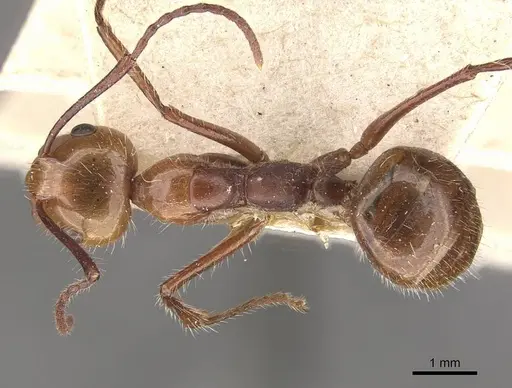
CASENT0910624
Посмотреть на AntWeb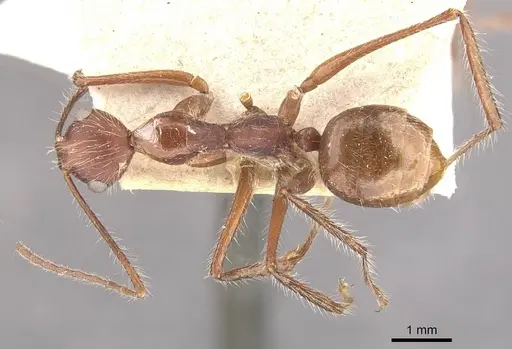
Литература
Загрузка карты распределения...Загрузка товаров...