
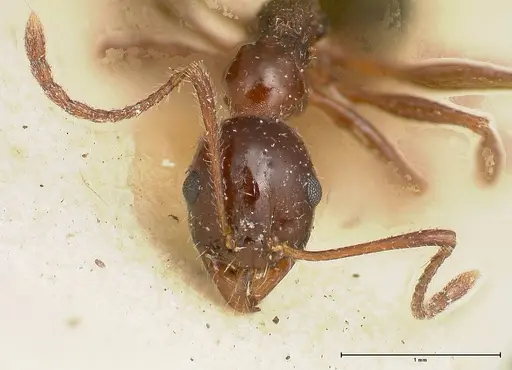
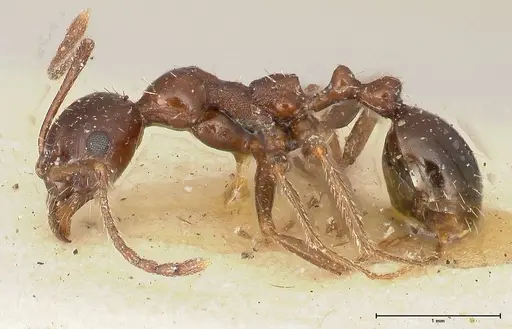
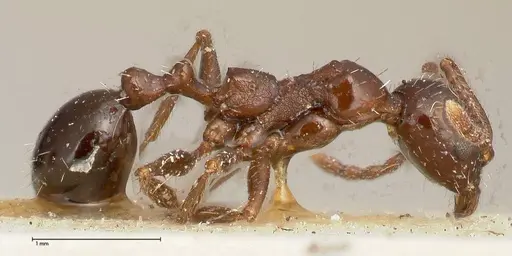
Aphaenogaster weigoldi
- Науч. назв.
- Aphaenogaster weigoldi
- Триба
- Stenammini
- Подсемейство
- Myrmicinae
- Автор
- Viehmeyer, 1922
- Распространение
- Встречается в 0 странах
Введение
Aphaenogaster weigoldi is a rarely encountered ant species described from Sichuan Province, China in 1922 . The holotype worker was collected at Kwansien during the Stötzer Expedition, and no additional collection records exist in available literature . This species belongs to the subfamily Myrmicinae and tribe Stenammini . Phylogenomic research places it within the extratropical Palearctic region at approximately 26 degrees north latitude, indicating a temperate to warm-temperate distribution . Specific details regarding colony size, behavior, and care requirements remain undocumented .
Quick Summary
- Difficulty: Expert
- Origin & Habitat: Sichuan Province, China [1], extratropical Palearctic region at approximately 26°N latitude [2]. Specific habitat preferences unconfirmed [1].
- Colony Type: Unconfirmed [1]
- Size & Growth:
- Antkeeping:
- Temperature: Maintain moderate temperatures around 20-24°C given its extratropical distribution at 26°N latitude [2]. A slight gradient is recommended.
- Humidity: Provide moderate humidity with a gradient between moist and dry areas [1].
- Diapause: Likely required given extratropical distribution [2], but specific timing and duration unconfirmed [1].
- Nesting: Unknown [1]. A naturalistic setup with soil and rotting wood options would allow the ants to self-select.
- Behavior: Unknown for this species [1].
- Common Issues: extreme scarcity of biological data makes captive care experimental and high-risk., risk of misidentification due to morphological similarity with other Aphaenogaster species., unknown dietary requirements may lead to colony failure without careful observation., unspecified founding type means queen care requirements are unverified.
Distribution and Type Locality
This species was described by Viehmeyer in 1922 based on a holotype worker collected in Sichuan Province, China, specifically at Kwansien during the Stötzer Expedition [1]. The phylogenomic study by Branstetter et al. confirms its placement in the extratropical Palearctic region at a latitude midpoint of 26.00°, placing it in a temperate to warm-temperate climatic zone [2]. No additional collection records or range extensions have been documented in the available literature [1].
Taxonomic Position
Aphaenogaster weigoldi belongs to the subfamily Myrmicinae and tribe Stenammini [1]. It was originally described in the subgenus Attomyrma [1]. The genus Aphaenogaster contains numerous species across the Northern Hemisphere, many of which are soil-nesting generalists, but the specific ecological niche of A. weigoldi remains undefined [1].
Experimental Care Approach
Keeping Aphaenogaster weigoldi represents an experimental endeavor due to the complete absence of specific care documentation. You should approach this species as you would other temperate Aphaenogaster species, but with careful observation. Maintain temperatures around 20-24°C initially, with a slight gradient [2]. Provide a naturalistic setup with access to both moist and dry areas. Offer a varied diet including small insects and sugar sources, observing acceptance carefully. Be prepared for the possibility that the species may require diapause during winter months given its extratropical origin [2]. Document everything you observe to contribute to the limited knowledge base.
Challenges and Risks
The primary challenge in keeping this species is the lack of baseline data. You will not find established guidelines for founding type, development time, or colony size limits [1]. This means higher mortality risk for colonies, especially during founding. There is also significant risk of misidentification, ensure your specimens match the type locality and description from Sichuan [1]. Without knowing whether queens are claustral or semi-claustral, you must be prepared to offer food during founding or risk starvation if the queen requires foraging.
Frequently Asked Questions
What is the colony size of Aphaenogaster weigoldi?
Unknown. No studies have documented colony size for this species [1].
How long does Aphaenogaster weigoldi take from egg to worker?
Unknown. Development time has not been studied [1].
Does Aphaenogaster weigoldi need hibernation?
Likely yes, given its extratropical distribution at 26°N latitude in China [2], but specific requirements are unconfirmed [1].
What do Aphaenogaster weigoldi eat?
Unknown. Offer a varied diet and observe acceptance [1].
Can I keep multiple Aphaenogaster weigoldi queens together?
Not recommended. Colony structure (monogyne vs polygyne) is unconfirmed [1].
How big are Aphaenogaster weigoldi workers?
Size data is unavailable for this species [1].
Is Aphaenogaster weigoldi good for beginners?
No. The lack of care data makes this suitable only for expert keepers willing to experiment [1].
Report an Issue
The current care sheet is based fully on literature. See inconsistencies, or something that's incorrect? Please , it will be resolved after review from an admin. Contributing to the blogs tab also helps providing information, to make us be able to further improve the caresheets. Thank you for your support!
References

Эта инструкция по уходу лицензирована по CC BY-SA 4.0 .
Блоги сообщества
FOCOL0499
Посмотреть на AntWeb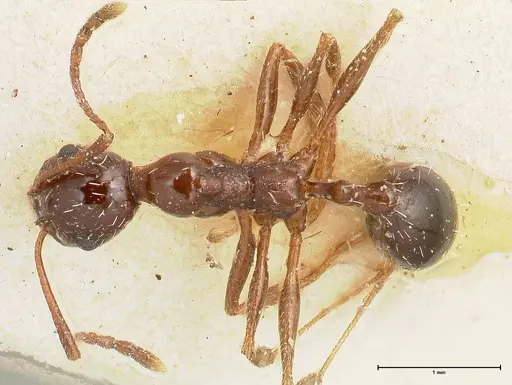
Литература
Загрузка карты распределения...Загрузка товаров...