
Aphaenogaster brevicollis
- Науч. назв.
- Aphaenogaster brevicollis
- Триба
- Stenammini
- Подсемейство
- Myrmicinae
- Автор
- Forel, 1899
- Распространение
- Встречается в 0 странах
Введение
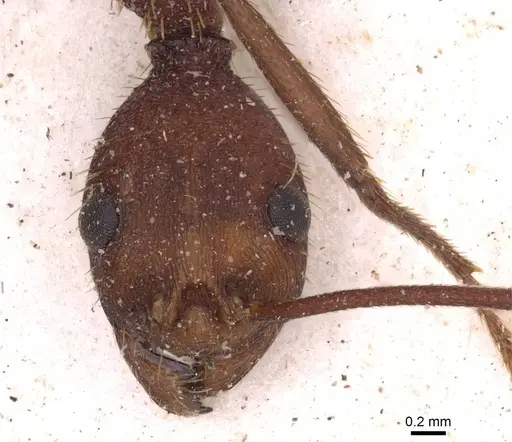
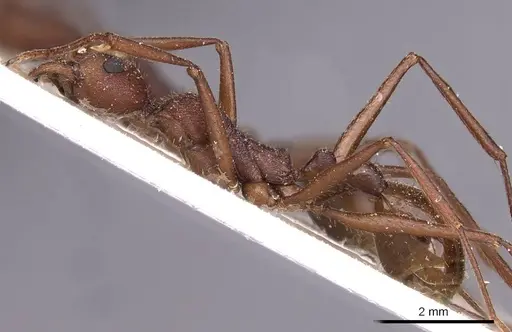
Aphaenogaster brevicollis is a robust ant found only in the mountains of northern Panama. Workers have a rough, grainy texture covering their heads and bodies, with heads wider than 1.4mm at the back of the eyes, and they lack the pointed spines on their backs that many other ants have, showing only small swellings instead . Males are rusty red, about 6mm long, with large eyes and an elongated neck . The species lives in oak and bamboo cloud forests at 1200 meters elevation, where workers have been found only in leaf litter samples . This species is one of the least known ants in the hobby. Scientists have only ever found workers wandering in leaf litter. No queens have been discovered, no nests have been dug up, and no one has seen their mating flights or founding behavior . For antkeepers, this means keeping Aphaenogaster brevicollis would be entirely experimental with no established care guidelines.
Quick Summary
- Difficulty: Expert
- Origin & Habitat: Northern Panama, specifically oak and bamboo cloud forests at 1200m elevation in the Chiriquí province [1].
- Colony Type: Unknown, no queens or nests have ever been found.
- Size & Growth:
- Antkeeping:
- Temperature: Keep cool, approximately 18-22°C, based on their montane cloud forest habitat at 1200m [1]. Avoid temperatures above 25°C.
- Humidity: High humidity required, maintain damp nest material to match the humid leaf litter conditions where they live [1].
- Diapause: Unknown, may slow during the dry season (December-April in Panama), but this is unconfirmed.
- Nesting: Likely nests in soil and leaf litter based on workers being collected from forest floor samples [1].
- Behavior: Unknown, workers forage in leaf litter and are collected from the forest floor [1].
- Common Issues: extreme rarity in the hobby means no established care protocols exist., montane temperature requirements make them difficult to keep in warm climates without cooling., founding behavior is completely unknown, making captive rearing experimental., queens have never been collected, so starting a colony may be impossible until biology is better understood.
Identification and Appearance
Aphaenogaster brevicollis workers are robust compared to their relatives. Their most distinctive feature is the rough, grainy texture covering the entire top of the head and body, with poorly defined lengthwise lines between the eyes [1]. Unlike many ants that have obvious pointed spines on the back of their thorax, these ants have only small rounded swellings [1]. Short, blunt-tipped hairs about 0.15mm long cover most of their body except for the lower legs [1].
Males look quite different, they are rusty red, about 6mm long, with large eyes and a noticeably stretched-out neck [1]. Their back legs have a few upright hairs on the underside but none on the sides or top [1]. Both workers and males have a grainy or pitted texture over most of their body, giving them a matte rather than shiny appearance [1].
Natural Habitat and Distribution
This species lives only in northern Panama, specifically in the Chiriquí province [1]. All known specimens come from mountain locations around 1200 meters elevation, in forests containing oak and bamboo [1].
The habitat is cloud forest, cool, humid, and shaded. Workers have been collected exclusively from leaf litter samples, meaning they live and forage in the decomposing leaves on the forest floor [1]. The only collection records are from June, which falls during Panama's wet season, suggesting they may be most active during rainy months [1].
Captive Care Considerations
Keeping Aphaenogaster brevicollis presents unique challenges because almost nothing is known about their biology beyond what the workers look like and where they were found. No one has ever found a queen, observed a nest, or documented their mating behavior [1]. This means any captive care would be experimental.
If you somehow obtained workers, you would need to replicate their cloud forest home. This means cool temperatures, high humidity, and a setup that mimics leaf litter. Based on typical Aphaenogaster habits, they probably eat small insects and possibly seeds, but this is unconfirmed for this species. You would essentially be pioneering their care with no guide to follow.
Temperature and Environment
Because they live at 1200 meters in Panamanian cloud forests, these ants experience cooler and more stable temperatures than lowland tropical ants [1]. You should aim for roughly 18-22°C, definitely avoiding the high heat that many tropical ants tolerate. Temperatures above 25°C likely stress them.
Humidity should remain high to match the damp leaf litter where they live. Keep their nest material moist but not waterlogged, with good ventilation to prevent mold. Since they naturally live in shaded forests, bright light may stress them, provide dim or indirect lighting.
Frequently Asked Questions
What do Aphaenogaster brevicollis look like?
Workers are robust ants with heads wider than 1.4mm and a rough, grainy texture covering their bodies. They lack the pointed spines seen on many other ants, having only small swellings on their backs instead. Males are rusty red, about 6mm long, with large eyes and an elongated neck [1].
Where are Aphaenogaster brevicollis found?
They are found only in northern Panama, specifically in oak and bamboo cloud forests at around 1200 meters elevation in the Chiriquí province [1].
How big do Aphaenogaster brevicollis colonies get?
We do not know. Scientists have only ever collected individual workers from leaf litter samples, so colony size remains completely unknown [1].
What temperature do Aphaenogaster brevicollis need?
Based on their mountain habitat at 1200m, they likely need cooler temperatures than typical tropical ants. Aim for 18-22°C and avoid heat above 25°C [1].
Do Aphaenogaster brevicollis need hibernation?
This is unknown. As a tropical montane species, they may slow down during the dry season (roughly December to April in Panama), but no one has documented their seasonal cycle [1].
Can I keep Aphaenogaster brevicollis in a test tube?
While test tubes work for many ants, we do not know the specific nesting needs of this species. A naturalistic setup with leaf litter and soil would better match their known habitat than a bare test tube [1].
How long until Aphaenogaster brevicollis get their first workers?
The egg-to-worker timeline is completely unknown for this species. No development data exists for this species [1].
Are Aphaenogaster brevicollis good for beginners?
No. They are extremely rare in captivity, their biology is almost completely unknown, and they have specific montane temperature requirements. Only expert keepers with experience pioneering care for unknown species should attempt keeping them [1].
Report an Issue
The current care sheet is based fully on literature. See inconsistencies, or something that's incorrect? Please , it will be resolved after review from an admin. Contributing to the blogs tab also helps providing information, to make us be able to further improve the caresheets. Thank you for your support!
References

Эта инструкция по уходу лицензирована по CC BY-SA 4.0 .
Блоги сообщества
CASENT0907711
Посмотреть на AntWeb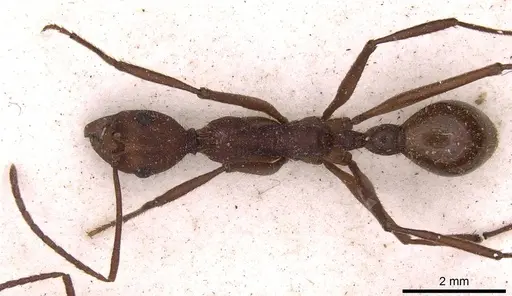
Литература
Загрузка карты распределения...Загрузка товаров...