
Anochetus annetteae
- Науч. назв.
- Anochetus annetteae
- Триба
- Ponerini
- Подсемейство
- Ponerinae
- Автор
- Sharaf, 2017
- Распространение
- Встречается в 1 странах
Введение
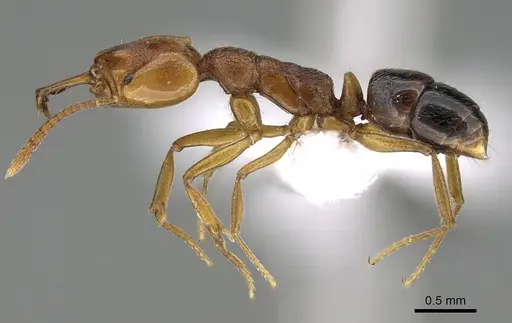
Anochetus annetteae is a small ant measuring 3.35-4.20 mm in total length . These predators have a distinctive yellow head, legs, and petiole contrasting with a yellow-brown mesosoma and dark brown bands on the first two abdominal segments . First described in 2017 from Oman, they inhabit irrigated date palm plantations where they nest in moist soil beneath tree bases . Workers forage on the ground and have been found living near termite colonies, indicating they hunt small soil arthropods .
Quick Summary
- Difficulty: Expert
- Origin & Habitat: Oman and United Arab Emirates, specifically date palm plantations and irrigated farms with moist, organic-rich soil at low elevations around 190m [1][2].
- Colony Type: Unconfirmed, no studies have documented queen number or colony structure for this recently described species [1].
- Size & Growth:
- Queen: Unknown, only workers have been described in the type material [1].
- Worker: 3.35-4.20 mm total length [1].
- Colony: Unknown, only three workers have ever been collected [1].
- Growth: Unknown
- Development: Estimated 6-10 weeks based on tropical origin and typical Anochetus patterns [1]. (Timeline is estimated, assumes temperatures around 25-28°C.)
- Antkeeping:
- Temperature: Warm and stable, roughly 24-28°C, native to hot climates at low elevation in Oman [1].
- Humidity: Moist substrate required, found in damp soil under date palms with decomposing organic matter [1].
- Diapause: Unknown, tropical distribution suggests hibernation is likely not required.
- Nesting: Naturalistic soil nests or plaster nests with tight chambers, they nest in ground in nature [1].
- Behavior: Workers forage on the ground and were collected by leaf litter sifting [1]. Their small size means escapes are likely without fine mesh barriers. Like other Ponerinae ants, they possess a sting for defense.
- Common Issues: escape prevention is critical, at only 4mm they squeeze through the tiniest gaps., colony founding behavior is completely unconfirmed, you may be pioneering captive breeding., moisture balance is difficult in small nests, they need damp soil but setups dry out or flood easily.
Nest Preferences and Moisture
In nature, Anochetus annetteae nests in moist soil under the base of date palm trees [1]. The soil contains decomposing organic matter including livestock dung and fallen dates [1]. For captive care, provide a naturalistic setup with a soil-sand mix that holds moisture without becoming waterlogged. The nest should offer tight spaces appropriate for their small size.
Feeding and Diet
Diet is unconfirmed for this species, but they are ground-foragers found near termite colonies [1]. Offer small live prey appropriate for their size, springtails, fruit flies, or tiny termites if available. Pre-killed insects may be accepted.
Temperature and Seasonal Care
Native to Oman and UAE at low elevations in hot climates [1]. Keep warm and stable, roughly 24-28°C, with a slight gradient. Start at room temperature if above 20°C, but increase if the colony shows sluggish behavior. Tropical origin suggests hibernation is not required.
Behavior and Foraging
Workers forage on the ground surface and were collected by leaf litter sifting [1]. They are small enough to require excellent escape prevention including fine mesh barriers.
Identification and Size
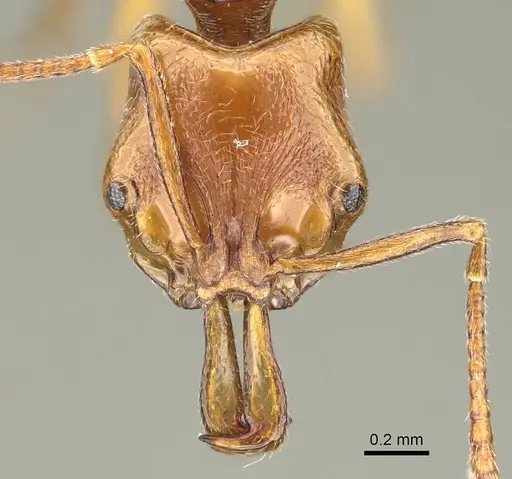
Distinguished by small size under 4.5mm, yellow head and legs with darker body bands, and short antennae that do not reach the back of the head [1]. The mandibles have three teeth with the middle tooth half the length of the others [1].
Frequently Asked Questions
Can I keep Anochetus annetteae in a test tube?
You can start colonies in test tubes, but provide a soil substrate rather than bare plastic to mimic their natural moist soil nesting habits [1].
How long until first workers for Anochetus annetteae?
The egg-to-worker timeline is estimated at 6-10 weeks based on their tropical origin and related Anochetus species [1].
Can I keep multiple Anochetus annetteae queens together?
Not recommended. Colony structure is unconfirmed for this species, and combining queens has not been documented [1].
Do Anochetus annetteae ants sting?
Like other ants in the subfamily Ponerinae, they possess a sting for defense [1].
Are Anochetus annetteae good for beginners?
No. They are suitable for expert keepers only due to their tiny size, recent discovery in 2017,and lack of captive breeding data [1].
What temperature for Anochetus annetteae?
Keep them warm at roughly 24-28°C based on their Omani origin [1].
What do Anochetus annetteae eat?
Likely small live prey such as springtails or termites based on their habitat near termite colonies and ground-foraging behavior [1].
Do Anochetus annetteae need hibernation?
Probably not. They come from a warm tropical climate in Oman and the UAE [1].
Why are my Anochetus annetteae dying?
Common causes include desiccation from insufficient moisture, escapes due to their tiny size, or inappropriate prey that is too large [1].
Report an Issue
The current care sheet is based fully on literature. See inconsistencies, or something that's incorrect? Please , it will be resolved after review from an admin. Contributing to the blogs tab also helps providing information, to make us be able to further improve the caresheets. Thank you for your support!
References

Эта инструкция по уходу лицензирована по CC BY-SA 4.0 .
Блоги сообщества
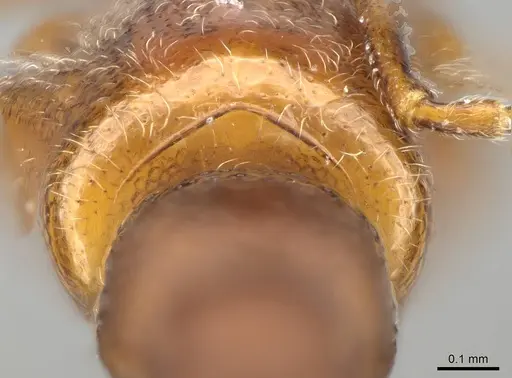
CASENT0919949
Посмотреть на AntWeb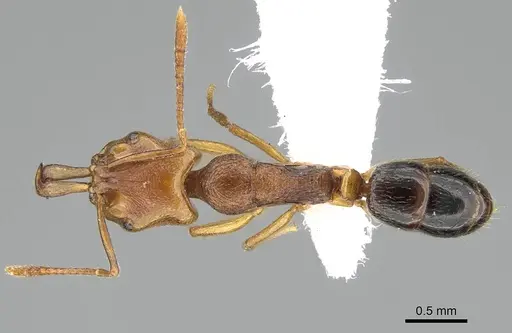
Литература
Загрузка карты распределения...Загрузка товаров...