
Aenictus pharao
- Науч. назв.
- Aenictus pharao
- Подсемейство
- Dorylinae
- Автор
- Santschi, 1924
- Распространение
- Встречается в 0 странах
Введение
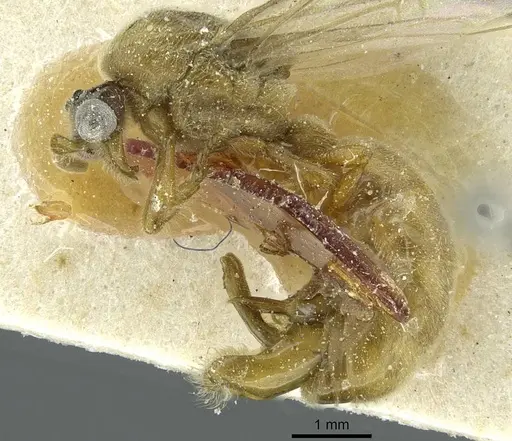
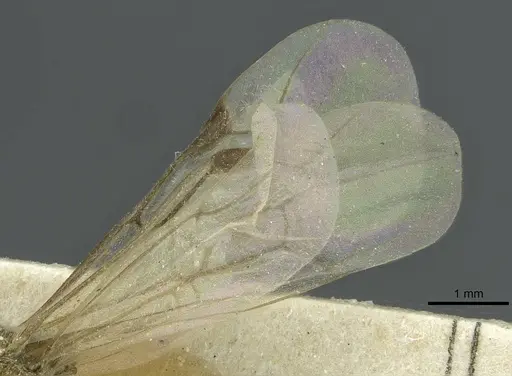
Aenictus pharao is an army ant species from Sudan that remains one of the most poorly known ants in the world. Scientists have only ever documented a single male specimen, collected at Bahr el Zeraf in 1924 . No one has ever observed workers, queens, or a living colony of this species. The entire natural history is unknown - we do not know what the workers look like, what they eat, how they nest, or even if the species is still extant .
Quick Summary
- Difficulty: Expert
- Origin & Habitat: Only known from Bahr el Zeraf in Sudan [1]. The region consists of tropical savanna and woodland. Specific habitat preferences are unrecorded.
- Colony Type: Unknown. No colony has ever been documented.
- Size & Growth:
- Queen: Unknown, no queen specimens have ever been collected or described.
- Worker: Unknown, no worker specimens have ever been collected or described.
- Colony: Unknown, colony size has never been observed.
- Growth: Unknown
- Development: Unknown, no developmental data exists for this species. (Development timing has never been studied.)
- Antkeeping:
- Temperature: Unknown, no captive observations exist.
- Humidity: Unknown, no captive observations exist.
- Diapause: Unknown, likely active year-round as a tropical species, but unconfirmed.
- Nesting: Unknown. Army ants in the genus Aenictus are nomadic and do not build permanent nests.
- Behavior: Presumed to exhibit typical army ant behavior based on genus placement: nomadic lifestyle, predatory raids on other ant colonies or termites, and large colony sizes. This remains unconfirmed for this species.
- Common Issues: no confirmed captive care exists for this species, you would be the first to attempt it, army ants require enormous space and constant food supplies that home setups cannot provide, only the male is known to science, so identifying workers or queens is impossible without expert help, the species may already be extinct or extremely rare, no collections have been reported since 1924
Taxonomy and Discovery
Aenictus pharao was described in 1924 by Santschi based on a single male specimen collected at Bahr el Zeraf in Sudan [1]. The type specimen is housed in the Natural History Museum Basel [1]. No subsequent collections have been reported in the scientific literature, and the species remains a mystery. Without workers or queens, we cannot confirm whether this species is active above ground or subterranean, though most Aenictus are surface foragers [2].
What We Know About Army Ants
While we know nothing specific about A. pharao, other Aenictus species are true army ants. They live in large colonies that move frequently, staying in temporary bivouacs rather than permanent nests. They send out raiding columns to hunt prey, often specializing on termites or other ant species. Queens are typically permanently wingless (dichthadiiform), blind, and physogastric, and colonies reproduce by fission rather than nuptial flights [2].
Why This Species Cannot Be Kept
You cannot currently keep Aenictus pharao in captivity because no one knows how to find or identify the colonies. The workers have never been described, so there is no way to identify them even if you found a colony. If you somehow obtained a colony, army ants present extreme challenges: they require massive foraging arenas, constant access to live prey, high humidity with good ventilation, and specialized nesting substrates that allow for their nomadic lifestyle [2].
Conservation and Legal
Do not attempt to import Aenictus pharao from Sudan. International transport of ants requires permits, and introducing African army ants to new regions could cause ecological damage. If you encounter this species in the wild, photograph it and contact taxonomists rather than attempting collection.
Frequently Asked Questions
Can I keep Aenictus pharao in a test tube?
No. Army ants require massive foraging spaces and constant food supplies that a test tube cannot provide. Additionally, no one has successfully identified or collected a living colony of this species.
What do Aenictus pharao eat?
Unknown. Other Aenictus species prey on termites, ant brood, or other small arthropods, but the specific diet of A. pharao is unstudied.
How long until first workers?
Unknown. The development timeline has never been documented, and founding behavior is unconfirmed.
Do Aenictus pharao need hibernation?
Probably not. As a tropical Sudanese species, they likely remain active year-round, but this is unconfirmed.
Are Aenictus pharao good for beginners?
Absolutely not. This is one of the worst possible choices for beginners. The species is scientifically unknown, likely has massive space requirements, and requires expert-level care even if you could find a colony.
How big do Aenictus pharao colonies get?
Unknown. Army ants typically have hundreds to thousands of workers, but colony size for this specific species has never been observed.
Can I catch a queen and start a colony?
You cannot start this species from a single queen. Army ant queens require existing workers to survive and do not found colonies alone in the traditional sense. Colonies reproduce by splitting existing nests.
Where do Aenictus pharao live?
They are only known from Bahr el Zeraf in Sudan [1]. No other locations have been documented.
Report an Issue
The current care sheet is based fully on literature. See inconsistencies, or something that's incorrect? Please , it will be resolved after review from an admin. Contributing to the blogs tab also helps providing information, to make us be able to further improve the caresheets. Thank you for your support!
References

Эта инструкция по уходу лицензирована по CC BY-SA 4.0 .
Блоги сообщества
CASENT0911437
Посмотреть на AntWeb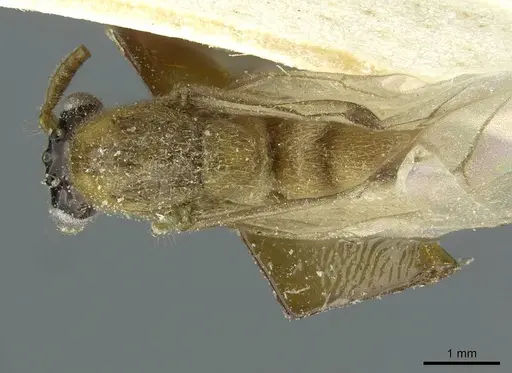
Литература
Загрузка карты распределения...Загрузка товаров...