
Aenictus glabratus
- Науч. назв.
- Aenictus glabratus
- Подсемейство
- Dorylinae
- Автор
- Jaitrong & Nur-Zati, 2010
- Распространение
- Встречается в 0 странах
Введение
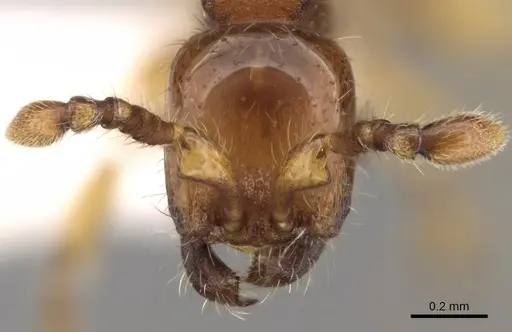
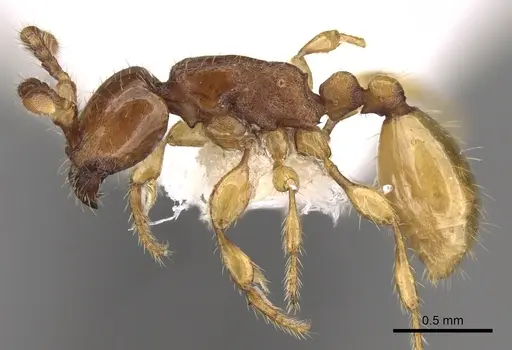
Aenictus glabratus is a tiny army ant from the Malay Peninsula. Workers measure just 2.85-2.95 mm and have a distinctive smooth, shiny head that gives the species its name - 'glabratus' means smooth in Latin . Their body is pale yellowish-brown with clear yellow legs and abdomen, and dark brown mandibles . This species is unusual because it has only 9 antennal segments instead of the usual 10 found in most Aenictus species . They live in leaf litter of lowland rainforests in Malaysia, specifically recorded from Selangor's Semangkok Forest Reserve at 550 meters elevation . Only worker ants have ever been collected - no queens or males are known to science, which makes captive keeping currently impossible .
Quick Summary
- Difficulty: Expert
- Origin & Habitat: Malay Peninsula (Malaysia), lowland rainforest leaf litter at 550m elevation [1]
- Colony Type: Unknown, queens remain undescribed [2]
- Size & Growth:
- Antkeeping:
- Temperature: Warm and stable, roughly 24-28°C based on their lowland rainforest habitat in Malaysia [1]
- Humidity: High, damp leaf litter conditions, keep substrate moist but not waterlogged [1]
- Diapause: No, tropical species from Malaysia do not require winter rest [1]
- Nesting: Likely forms temporary bivouacs like other army ants [2]
- Behavior: Army ant behavior, likely a specialized predator of other social insects like termites. Extremely small size creates high escape risk. Aggressive tendencies typical of army ants but unconfirmed for this specific species.
- Common Issues: no queens have been discovered, making colony founding impossible., army ants require massive foraging spaces and constant food supplies that are difficult to provide in captivity., tiny size means standard barriers may fail, they can squeeze through minute gaps., specialized diet of other social insects is hard to source and maintain.
Why Captive Keeping Is Currently Impossible
You cannot currently keep Aenictus glabratus because only worker ants have ever been found. Scientists have never collected a queen or male, which means there is no way to start a colony [2]. Even if queens were discovered tomorrow, this is an army ant species that requires specialized care completely different from standard ant keeping. Army ants need large foraging areas, constant supplies of specific prey like termites, and complex humidity gradients that are nearly impossible to provide in home setups.
Identification and Appearance
Workers are tiny at just 2.85-2.95 mm with a distinctive smooth, shiny head that gives this species its name 'glabratus' (Latin for smooth) [1]. Most Aenictus have heavily sculptured heads, but this species lacks those textures entirely, it is almost entirely smooth and shiny [1]. They possess only 9 antennal segments rather than the usual 10,with the terminal segment being very large, almost as long as segments VI, VII and VIII combined [1]. The head is rectangular and longer than wide, with short antennae that reach only halfway to the back of the head [1]. Coloration is yellowish-brown on the head and thorax, with clear yellow abdomens and legs, and dark brown mandibles [1].
Natural Habitat and Range
This species comes from the Malay Peninsula in Malaysia, specifically collected from leaf litter in the Semangkok Forest Reserve in Selangor at 550 meters elevation [1]. They live in lowland rainforest environments where they forage through the leaf litter. They likely share their habitat with related species Aenictus latifemoratus and Aenictus silvestrii [1]. The type series was collected by sifting leaf litter, suggesting they live and forage in the forest floor debris rather than in soil or rotting wood [1].
Army Ant Biology and Care Implications
Aenictus glabratus belongs to the army ant group, which means they likely live in large colonies with a nomadic lifestyle, moving frequently to new hunting grounds [2]. Army ants typically prey on other social insects, especially termites and the brood of other ants. They do not build permanent nests like Lasius or Camponotus, but instead form temporary clusters called bivouacs. This biology makes them unsuitable for standard formicariums, which are designed for ants that stay in one place and have defined nest chambers.
Frequently Asked Questions
Can I keep Aenictus glabratus in a test tube?
No. Only workers are known for this species, and workers cannot reproduce or form new colonies. Even if you collected wild workers, they would die within weeks without a queen [2].
How long until Aenictus glabratus first workers arrive?
Unknown. No queens have ever been observed, so development time from egg to worker has never been measured [2].
What do Aenictus glabratus eat?
Specific diet is unconfirmed, but army ants in the genus Aenictus typically prey on other social insects like termites and the brood of other ants. They are specialized predators and do not accept standard ant foods like honey or seeds [2].
Can I keep multiple Aenictus glabratus queens together?
Unknown. Queens have never been found for this species, so their colony structure and queen tolerance is unconfirmed [2].
Do Aenictus glabratus ants sting?
Probably yes. As army ants, they likely possess stingers used for subduing prey. However, at only about 3mm long, they are too small to penetrate human skin effectively [1][2].
What temperature do Aenictus glabratus need?
Keep them warm and stable, roughly 24-28°C, based on their origin in tropical Malaysian rainforests [1].
Do Aenictus glabratus need hibernation?
No. They come from tropical Malaysia where temperatures remain warm year-round, so they do not require a winter rest period [1].
Why are my Aenictus glabratus workers dying?
Wild-caught workers naturally die after several weeks to months because they lack a queen to replace them. Without a queen, the colony cannot produce new workers and will eventually die out [2].
Where can I buy Aenictus glabratus queens?
You cannot. Queens remain undescribed by science and are not available in the ant trade. Only workers have ever been collected [2].
Are Aenictus glabratus dangerous?
They are not dangerous to humans. While army ants can sting, these ants are only about 3mm long and cannot deliver significant stings to people [1].
How big do Aenictus glabratus colonies get?
Unknown. Colony size has never been documented for this species [2].
Report an Issue
The current care sheet is based fully on literature. See inconsistencies, or something that's incorrect? Please , it will be resolved after review from an admin. Contributing to the blogs tab also helps providing information, to make us be able to further improve the caresheets. Thank you for your support!
References

Эта инструкция по уходу лицензирована по CC BY-SA 4.0 .
Блоги сообщества
CASENT0281953
Посмотреть на AntWeb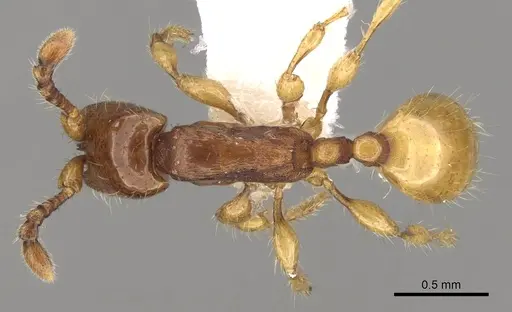
Литература
Загрузка карты распределения...Загрузка товаров...