
Typhlomyrmex meire
- Nome cient.
- Typhlomyrmex meire
- Tribo
- Ectatommini
- Subfamília
- Ectatomminae
- Autor
- Lacau <i>et al.</i>, 2004
- Distribuição
- Encontrado em 1 países
Introdução
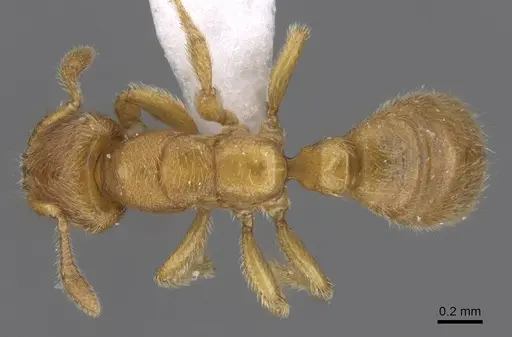
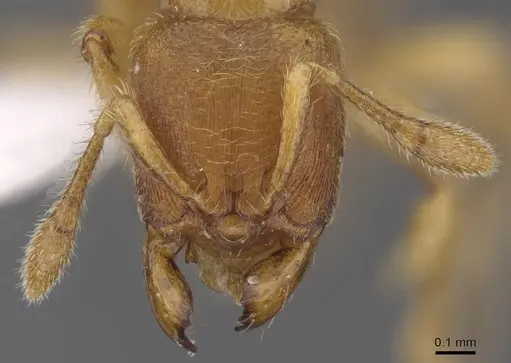
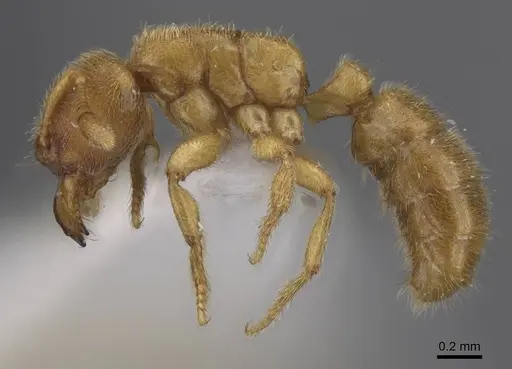
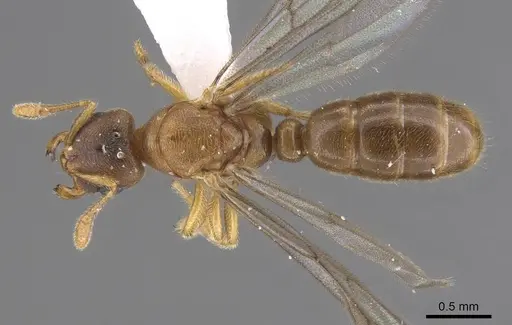
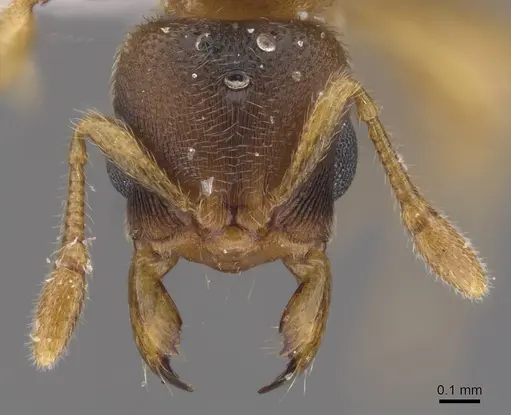
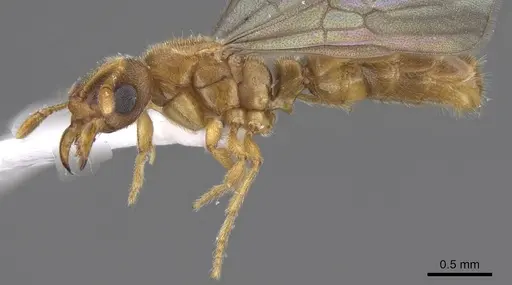
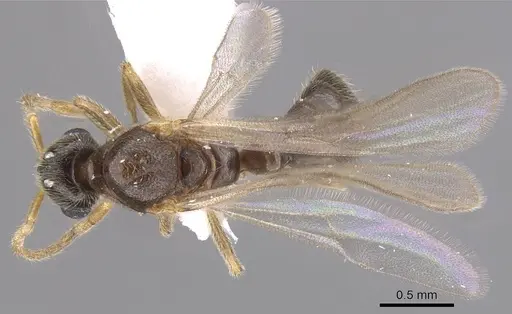
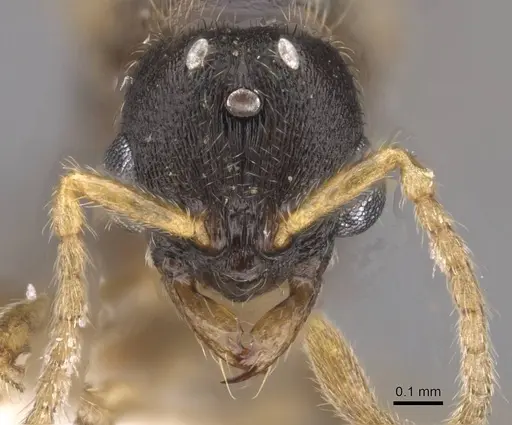
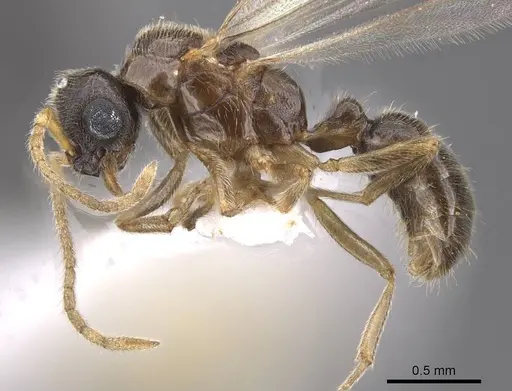
Typhlomyrmex meire is a small, strictly underground-dwelling ant species endemic to the Atlantic Forest of Southern Bahia, Brazil. Workers and queens are yellow-reddish to brownish with reduced eyes (only 4-5 ommatidia) and a unique reduction of antennal segments: females have 10 segments instead of the typical 12 for the genus, and males have 12 instead of 13 . Exact body length measurements are not provided in the literature, but the species is described as medium-sized for the genus . This species was only described in 2004 and is one of the rarest and most specialized ant species known. It nests exclusively inside termite mounds of Syntermes grandis, always located a few centimeters from colonies of its obligate prey, the ant Acropyga fuhrmanni .
Quick Summary
- Difficulty: Expert
- Origin & Habitat: Endemic to Southern Bahia, Brazil, specifically the Ilhéus region in the Atlantic Forest biome. Found in cocoa plantations farmed under the 'cabruca' system and occasionally in forest remnants [1][2]. The type locality has an average temperature of 23.3°C and annual rainfall of 1,687 mm [1].
- Colony Type: Colony structure is unconfirmed. The type colony contained multiple winged queens (27), but whether multiple queens coexist long-term is unknown [1].
- Size & Growth:
- Queen: Size data unavailable, described as medium-sized for the genus [1].
- Worker: Size data unavailable, described as medium-sized for the genus [1].
- Colony: Unknown, only a colony fragment has been studied, which included 21 workers,27 winged queens, and 13 males [1].
- Growth: Unknown
- Development: Unconfirmed, no development data exists for this species. Based on related Ectatomminae ants, expect 8-12 weeks at optimal temperature, but this is purely estimated. (No captive rearing has been recorded.)
- Antkeeping:
- Temperature: Based on the native climate with an annual average of 23.3°C, maintain a gradient between 22-26°C, using a heating cable on one side of the nest [1].
- Humidity: High humidity required, the type locality receives 1,687 mm annual rainfall [1]. Keep the nest substrate consistently moist but not waterlogged, simulating damp underground conditions.
- Diapause: Unknown, the Atlantic Forest region has mild winters with reduced rainfall rather than true cold dormancy.
- Nesting: Must provide underground conditions with complete darkness. In the wild, colonies nest inside termite mounds (Syntermes grandis) and are strictly hypogean [1]. A naturalistic setup with moist soil and a section of termite mound material is the only option. Standard test tubes and formicaria are unsuitable.
- Behavior: Extremely specialized predator feeding exclusively on the brood and immatures of Acropyga fuhrmanni [1][3][4]. Workers are blind (reduced eyes) and never forage on the surface [1]. They possess a functional sting but rarely use it on large threats due to their small size. Escape risk is low because they never leave the nest, but all openings must be sealed with fine mesh (≤0.5 mm) given their tiny size.
- Common Issues: no successful captive colonies have ever been recorded, all knowledge comes from a single field study [1]., they are strictly hypogean and will not survive if kept in dry or exposed conditions., extreme dietary specialization on Acropyga fuhrmanni brood makes long-term husbandry effectively impossible without access to living colonies of that ant., their dependence on termite mounds for nesting is nearly impossible to replicate in captivity., extreme endemism means wild populations are vulnerable and should not be collected.
Discovery and Taxonomy
Typhlomyrmex meire was first described in 2004 by Lacau, Villemant, and Delabie, making it one of the most recently described ant species [1]. It belongs to the tribe Typhlomyrmecini, which contains only the genus Typhlomyrmex [1]. The species is named after Mrs. Lucimeire de Souza Ramos Lacau [1]. Its most striking feature is the reduced number of antennal segments: workers and queens have only 10 segments (instead of the typical 12 for the genus), and males have 12 (instead of 13) [1]. This reduction, along with its unique mandible shape, sets it apart from all other Typhlomyrmex species [1]. The karyotype shows a diploid chromosome number of 2n=20,with 12 metacentric and 8 acrocentric chromosomes [5].
Natural History and Biology
Typhlomyrmex meire is one of the most specialized ant predators known: it is an obligate feeder on the brood and immature stages of Acropyga fuhrmanni, a dominant soil-dwelling ant in cocoa plantations [1][3][4]. This was confirmed through laboratory observations [1]. The species is strictly hypogean (lives entirely underground) and has never been collected on the soil surface or in leaf litter, despite extensive surveys [1]. Nests are located approximately 15 cm deep inside termite mounds (Syntermes grandis), consisting of many small galleries [1]. Crucially, every nest is situated just a few centimeters from an Acropyga fuhrmanni colony, suggesting a mandatory proximity to their prey [1]. The type colony, collected in June 2002,contained multiple winged queens (27), but it is unknown whether they coexisted as a polygyne colony or if this was a pre-dispersal aggregation [1].
Housing and Nesting
Housing Typhlomyrmex meire is arguably the most challenging task in antkeeping. In the wild, they nest inside active termite mounds (Syntermes grandis) and are always found near colonies of their specific prey [1]. Replicating this in captivity is extremely difficult. A naturalistic setup with a deep layer of moist soil and a fragment of termite mound material may be the only viable option. The nest must remain completely dark, as these ants have adapted to total darkness and have very reduced eyes [1]. High humidity is essential, reflecting the wet underground conditions of the Atlantic Forest (annual rainfall 1,687 mm) [1]. Standard test tubes and acrylic nests are unsuitable. Only experienced keepers with access to both termite mound material and Acropyga fuhrmanni colonies should attempt this species.
Feeding and Diet
Typhlomyrmex meire is an obligate predator of Acropyga fuhrmanni workers and brood (eggs, larvae, pupae, and callows) [1][3][4]. In laboratory studies, workers actively attacked and consumed the immatures of this specific ant [1]. They do not accept standard antkkeeping foods such as sugar water, mealworms, or crickets. This extreme dietary specialization makes long-term husbandry effectively impossible without a sustained supply of Acropyga fuhrmanni colonies or their brood. There are no reports of any alternative food source.
Distribution and Conservation
Typhlomyrmex meire is known only from the region around Ilhéus in Southern Bahia, Brazil, making it one of the most range-restricted ant species [1][6]. It was first collected in 1986 in an experimental cocoa plantation, and additional specimens were collected through 2002 [1]. The original collection site was deforested in 1997,raising concerns about the species' survival [1]. It occurs sympatrically with Typhlomyrmex rogenhoferi and Typhlomyrmex pusillus, but Typhlomyrmex meire is the only strictly hypogean species among them [1]. Reports from Colombia have been re-identified as Typhlomyrmex clavicornis, leaving Brazil as the sole confirmed country [6]. Because of its extreme endemism, wild colonies should not be collected without permits.
Frequently Asked Questions
Can I keep Typhlomyrmex meire in a test tube?
No. This species nests inside termite mounds in the wild and requires high humidity, darkness, and a substrate it can burrow into. Test tubes cannot provide the specialized nesting conditions they need [1].
What do Typhlomyrmex meire eat?
They eat only the brood and immatures of Acropyga fuhrmanni, a specific ant species. They do not accept standard foods like sugar water, insects, or protein. This specialized diet makes them nearly impossible to keep in captivity [1][3][4].
How long until first workers in Typhlomyrmex meire?
Unknown, no development data exists for this species. There are no captive breeding records to reference. This is one of the least studied ants in the hobby [1].
Are Typhlomyrmex meire good for beginners?
No. This is an expert-only species with extremely specialized requirements: they need live termite nests nearby, a diet of only specific ant brood, complete darkness, and high humidity. There are no established husbandry protocols [1].
Do Typhlomyrmex meire need hibernation?
Unknown. The species comes from the Atlantic Forest region of Brazil with mild temperatures (average 23.3°C) and seasonal rainfall patterns rather than cold winters. A true diapause may not be necessary, but no captive data exists [1].
Can I keep multiple queens together?
Unknown. The type colony contained 27 winged queens, but it is not known whether they coexist in mature colonies or if this was a pre-dispersal gathering. No data on polygyny exists [1].
Do Typhlomyrmex meire ants sting?
Yes, they have a short, slightly curved sting [1]. However, due to their small size and strictly subterranean lifestyle, stinging encounters with humans are extremely unlikely.
Why are my Typhlomyrmex meire dying?
This species has never been successfully kept in captivity. Without access to live Acropyga fuhrmanni colonies for food and termite mound material for nesting, colonies will not survive. The requirements are beyond what most hobbyists can provide [1][3].
What is the difficulty level for Typhlomyrmex meire?
Expert. This is arguably the most difficult ant species to keep due to its obligate predatory diet on a specific ant species, requirement for termite mound nesting, strictly subterranean lifestyle, and extreme endemism. There are no established captive breeding protocols [1].
Where does Typhlomyrmex meire live in the wild?
Only in Southern Bahia, Brazil, around Ilhéus. They live entirely underground within termite mounds, always located near Acropyga fuhrmanni colonies. They have never been found on the surface [1][6][2].
Report an Issue
The current care sheet is based fully on literature. See inconsistencies, or something that's incorrect? Please , it will be resolved after review from an admin. Contributing to the blogs tab also helps providing information, to make us be able to further improve the caresheets. Thank you for your support!
References

Esta ficha de cuidados é licenciada sob CC BY-SA 4.0 .
Blogs da comunidade
Literatura
A carregar mapa de distribuição...A carregar produtos...