
Trichomyrmex wroughtoni
- Nome cient.
- Trichomyrmex wroughtoni
- Tribo
- Crematogastrini
- Subfamília
- Myrmicinae
- Autor
- Forel, 1911
- Distribuição
- Encontrado em 0 países
Introdução
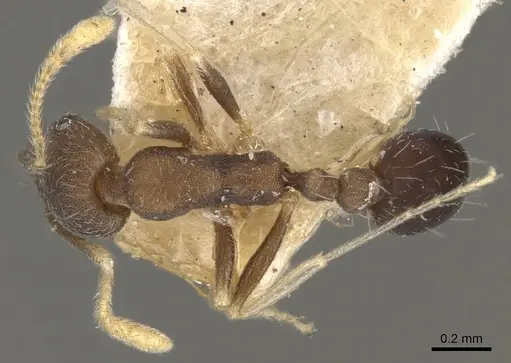
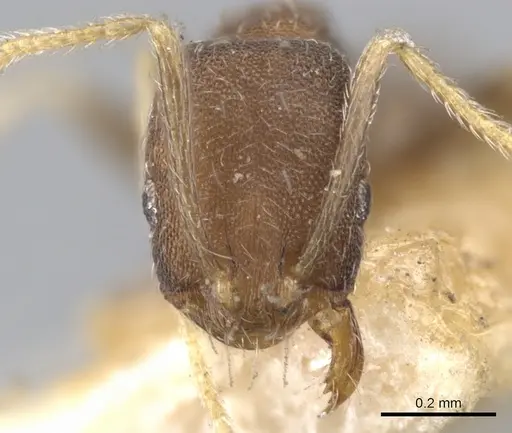
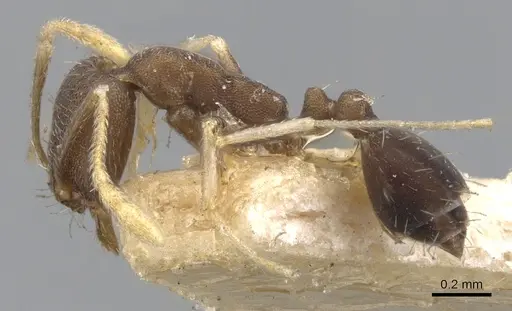
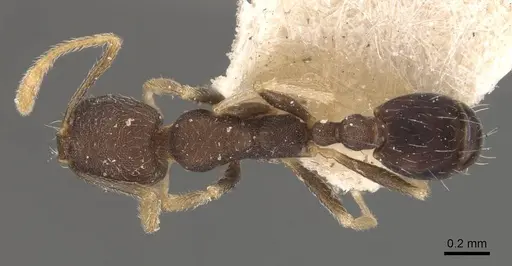
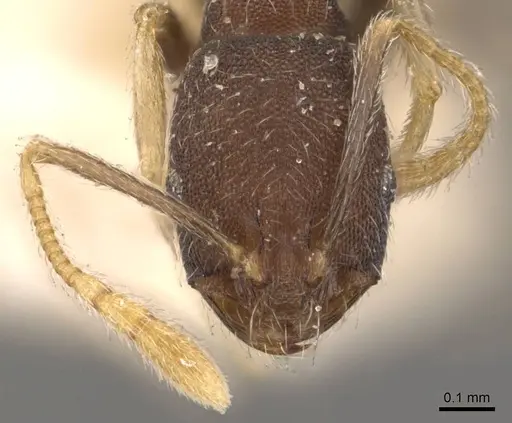
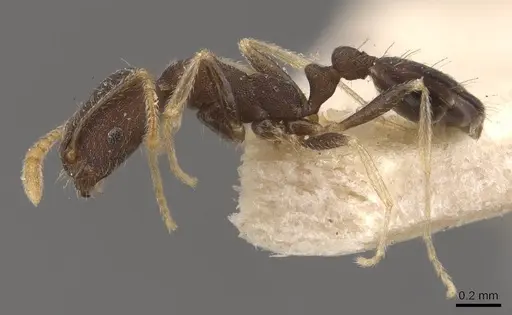
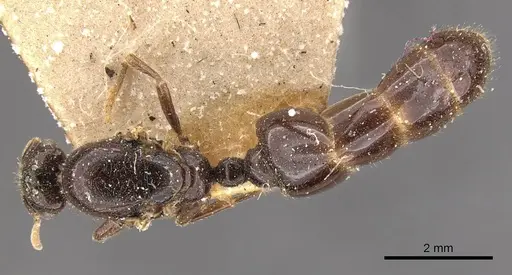
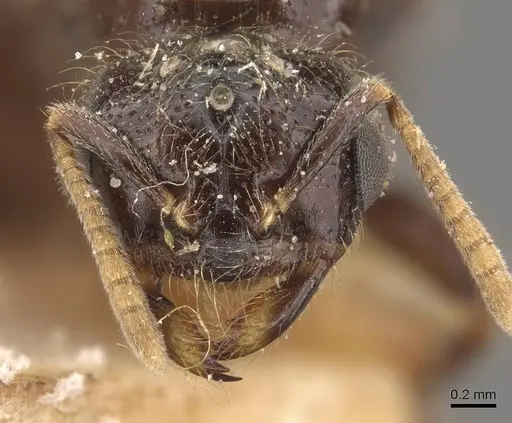
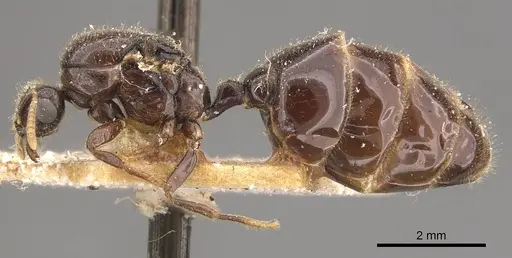
Trichomyrmex wroughtoni is a small ant species native to India and Sri Lanka . It was originally described from Belgaum in Karnataka, India, and has since been recorded across Goa, Gujarat, Haryana, Himachal Pradesh, Karnataka, Kerala, Maharashtra, Punjab, Rajasthan, Uttar Pradesh, and West Bengal . The species belongs to the scabriceps group within the genus Trichomyrmex, which was separated from Monomorium . Very little is known about its biology, and it is rarely kept in captivity.
Quick Summary
- Difficulty: Hard
- Origin & Habitat: Native to India and Sri Lanka (Indomalaya region). Recorded from a wide range of Indian states spanning tropical and subtropical zones, but specific habitat preferences (e.g., forest, grassland, urban) are not documented [2].
- Colony Type: Unknown, no published data on queen number or social structure for this species.
- Size & Growth:
- Queen: Size data unavailable
- Worker: Size data unavailable
- Colony: Unknown
- Growth: Unknown
- Development: Unknown (No documented development data for this species.)
- Antkeeping:
- Temperature: Unknown, as a tropical species, room temperature (20-25°C) is a reasonable starting point, but optimal conditions have not been studied.
- Humidity: Unknown, provide a water source (e.g., test tube with water) and observe, adjust based on colony behavior.
- Diapause: Unknown but likely not required given tropical origin, colony activity may slow in cooler conditions.
- Nesting: Unknown, test tube setups or small Y-tong nests are typical for tiny species, chambers should be appropriately scaled.
- Behavior: Based on subfamily (Myrmicinae, tribe Crematogastrini), this species likely uses a modified spatulate stinger to smear venom onto enemies rather than piercing. Workers are very small and pose no significant threat to humans, but escape prevention is critical due to their tiny size. They can squeeze through gaps that larger ants cannot.
- Common Issues: escape prevention is critical due to very small size, workers can slip through tiny gaps, lack of published care information means keepers must experiment and risk colony loss, high sensitivity to vibrations and light during founding if conditions are not stable, overheating or desiccation can kill colonies quickly if moisture is not monitored
Housing and Nest Setup
Because so little is known about this species' nesting preferences, it is best to start with a simple test tube setup. Use a test tube filled with water, sealed with a tight cotton plug to create a reservoir. The tube should be kept dark. Once workers appear, you can connect a small outworld. For larger colonies, a Y-tong (AAC) or plaster nest with narrow chambers scaled to tiny workers may work. Avoid acrylic nests. Ensure all connections are sealed with fine mesh (at least 0.5mm openings) to prevent escapes [1].
Feeding and Diet
Trichomyrmex wroughtoni is likely a generalist scavenger, but specific dietary data is lacking. Offer small protein sources such as fruit flies, pinhead crickets, or small pieces of insect. Sugar water or honey water can be provided occasionally. Feed small amounts every 2-3 days and remove uneaten food to prevent mold. Always provide fresh water via a test tube or moist cotton [1].
Temperature and Seasonal Care
As a tropical species, Trichomyrmex wroughtoni likely requires warm temperatures year-round. However, no optimal range has been studied. Keep at room temperature (20-25°C) and monitor colony activity. If the colony thrives, you may consider gentle heating with a heat mat on one side of the nest. Do not allow temperatures to drop below 15°C for extended periods. Hibernation is not required, but colony activity may slow in cooler conditions [1].
Colony Founding and Early Development
Founding behavior is unconfirmed. If queens are claustral, they will seal themselves in a small dark chamber and raise first workers on stored reserves without feeding. If semi-claustral, they would need to forage. Because the founding method is unknown, provide a small, dark founding tube with water and do not disturb the queen. Check only when first workers appear, which could take weeks or months depending on unknown factors [1].
Behavior and Temperament
Trichomyrmex wroughtoni belongs to the Crematogastrini tribe, which uses a smear defense: workers have a modified flattened spatulate stinger to wipe venom onto enemies rather than piercing. They are not aggressive towards humans but may sting defensively if handled. Their small size makes them harmless but difficult to observe without magnification. They are prone to escaping through tiny gaps, so all enclosures must be escape-proof. No specific behavioral data (e.g., foraging patterns, trail formation) is published for this species [1].
Frequently Asked Questions
How long does it take for Trichomyrmex wroughtoni to get their first workers?
Unknown. Development time has not been documented for this species. Under warm conditions, related small Myrmicinae often take 4–8 weeks, but this is speculative.
Can I keep multiple Trichomyrmex wroughtoni queens together?
Unknown. There is no data on queen tolerance in this species. It is safest to keep queens individually unless you observe otherwise.
Do Trichomyrmex wroughtoni ants sting?
Yes, but they use a modified spatulate stinger to smear venom onto enemies rather than piercing. The venom may cause mild irritation, but the sting is not effective against humans. They are not considered dangerous.
What do Trichomyrmex wroughtoni eat?
Likely generalist scavengers. Offer small insects (fruit flies, pinhead crickets) and sugar water. Specific dietary preferences are unknown.
Are Trichomyrmex wroughtoni good for beginners?
No. This species is rated as hard because almost nothing is known about its care requirements. Beginners should choose better-documented species.
What temperature is best for Trichomyrmex wroughtoni?
Unknown. As a tropical species, room temperature (20–25°C) is a reasonable starting point. Avoid temperatures below 15°C.
How big do Trichomyrmex wroughtoni colonies get?
Unknown. Colony size has not been documented. Related Trichomyrmex species may reach a few hundred workers, but this is speculation.
Do Trichomyrmex wroughtoni need hibernation?
No evidence of hibernation. Given their tropical origin, they are unlikely to require a diapause period. Maintain stable warm conditions year-round.
Why are my Trichomyrmex wroughtoni escaping?
Their tiny size allows them to slip through very small gaps. Use fine mesh (0.5mm or smaller) on ventilation, pack test tube cotton tightly, and seal all connection points. Regularly inspect for gaps.
When should I move my colony to a formicarium?
Unknown. Wait until the colony has at least several dozen workers before attempting a move. The timing is uncertain due to lack of data. Use a gradual transfer method to minimize stress.
Report an Issue
The current care sheet is based fully on literature. See inconsistencies, or something that's incorrect? Please , it will be resolved after review from an admin. Contributing to the blogs tab also helps providing information, to make us be able to further improve the caresheets. Thank you for your support!
References

Esta ficha de cuidados é licenciada sob CC BY-SA 4.0 .
Blogs da comunidade
Literatura
A carregar mapa de distribuição...A carregar produtos...