
Tetramorium xuthum
- Nome cient.
- Tetramorium xuthum
- Tribo
- Crematogastrini
- Subfamília
- Myrmicinae
- Autor
- Bolton, 1980
- Distribuição
- Encontrado em 0 países
Introdução
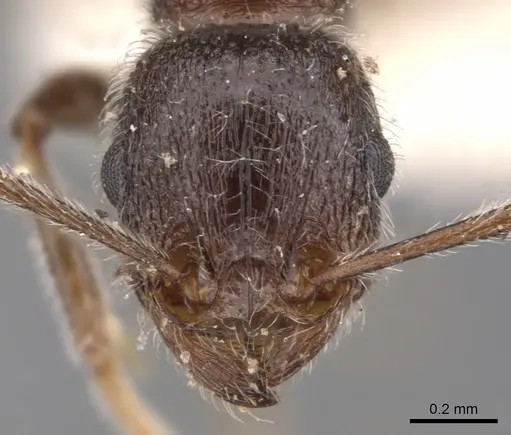
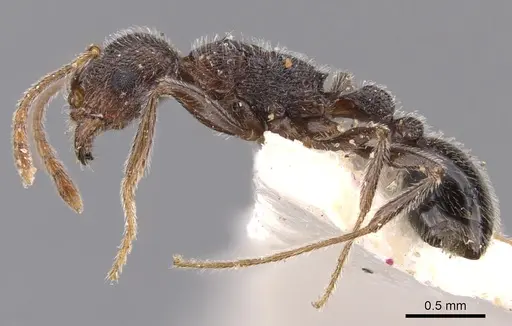
Tetramorium xuthum is a small but striking ant species native to West Africa, originally described from Ghana and recently recorded in Nigeria . Workers measure just 3.3-3.4 mm and are uniformly dark brown, but what makes them immediately recognizable is their exceptionally dense covering of short, fine hairs that cover not just their body but also their antennae and legs, giving them a fuzzy appearance unlike most other Tetramorium species . They belong to the bequaerti-complex, a group of four closely related species, and are the only member found in West Africa, standing out for their dense pilosity and short propodeal teeth . These ants are active hunters. When first discovered, researchers watched them running across bare ground in bright sunlight, actively attacking and carrying off workers of a Pheidole species - this predatory behavior shows they seize and transport prey back to the nest rather than just fighting . This makes them an interesting predatory species for antkeepers who want to observe active hunting behavior.
Quick Summary
- Difficulty: Medium
- Origin & Habitat: West Africa, originally described from Ghana with a recent new record in Nigeria [1]. Found in tropical habitats, typically on bare ground in bright sunny areas [2].
- Colony Type: Colony structure is unconfirmed, based on related species they may be monogyne (single queen), but this is not verified.
- Size & Growth:
- Queen: Unconfirmed, likely 6-8 mm based on genus patterns for Tetramorium
- Worker: 3.3-3.4 mm [2]
- Colony: Unconfirmed, likely several hundred workers based on related species
- Growth: Moderate
- Development: Estimated 6-8 weeks at tropical temperatures (24-28°C) based on typical Tetramorium development (Development time is estimated since species-specific timing has not been documented)
- Antkeeping:
- Temperature: Keep at 24-28°C, these are tropical ants from West Africa and need warm conditions. A heating cable on one side of the nest creates a suitable gradient.
- Humidity: Moderate humidity around 50-70%. These ants are found in sunny, relatively dry bare ground areas, so they don't need the high humidity of rainforest species. Allow the substrate to dry partially between waterings.
- Diapause: No, as a tropical species from West Africa, they do not require hibernation. Keep them warm year-round.
- Nesting: Natural nesting is in soil on bare ground in sunny areas. In captivity, a Y-tong (AAC) nest or plaster nest works well. Avoid overly damp conditions, they prefer drier nest chambers compared to many other Myrmicinae.
- Behavior: These ants are active and aggressive foragers with a predatory nature. Workers hunt and kill other small ants, they were observed attacking Pheidole workers [2], making them interesting to watch during feeding. They are small but bold, readily leaving the nest to search for prey. Escape prevention is important: at 3.3 mm they can squeeze through tiny gaps, so use fine mesh barriers and seal all openings. Belonging to the tribe Crematogastrini, they have a modified flattened stinger used to smear venom rather than pierce, but they are harmless to humans.
- Common Issues: small size means escapes are likely without fine mesh barriers and careful sealing, tropical warmth requirements year-round can be challenging in cooler climates, predatory nature means they need live prey, not suitable for keepers who only want to feed sugar water, founding behavior is unconfirmed, which creates uncertainty during colony establishment, humidity control is important, too damp conditions may cause problems, as their natural habitat is dry
Housing and Nest Setup
For these small tropical ants, a Y-tong (AAC) nest or plaster formicarium works well. They prefer drier nest conditions compared to many other Myrmicinae, keep the nest substrate lightly moist but allow it to dry partially between waterings. The outworld should be simple and easy to clean since these are active foragers that hunt live prey. Use a test tube setup for the founding colony, then move to a proper nest once the colony has a small worker force (around 20-30 workers is a common guideline). Escape prevention is critical, at only 3.3 mm [2], workers can squeeze through surprisingly small gaps, so apply Fluon or use fine mesh (0.5 mm or smaller) on all ventilation holes.
Feeding and Diet
Tetramorium xuthum are predatory ants, in the wild they actively hunt and kill other small ants, as evidenced by their attack on Pheidole workers [2]. In captivity, offer small live prey such as fruit flies, pinhead crickets, small mealworms, and other tiny insects. They likely accept protein sources readily given their predatory nature. Sugar water or honey can be offered as a supplement, but protein-rich live prey should be the primary food. Feed every 2-3 days, removing any uneaten prey after 24 hours to prevent mold.
Temperature and Seasonal Care
These are tropical ants requiring warm conditions year-round. Maintain temperatures between 24-28°C in the nest area. A small heating cable placed on one side of the nest creates a temperature gradient that allows ants to regulate their own exposure to warmth. Unlike temperate species, they do not require hibernation or diapause, keeping them cool can slow their metabolism and stunt colony growth. Room temperature below 22°C may cause reduced activity and slower development. Monitor colony behavior, if workers cluster near the heated area, the temperature is appropriate.
Behavior and Colony Dynamics
Workers are active foragers that readily leave the nest to hunt prey. Their small size and bold behavior make them entertaining to watch during feeding. The colony will likely grow gradually, expect the first workers (nanitics) to emerge 6-8 weeks after the queen lays her first eggs, assuming optimal temperatures. Once established, colonies may reach several hundred workers over time. Founding behavior is unconfirmed, if the queen is claustral, she will seal herself in a chamber and raise her first brood without leaving to forage, which is typical for many Tetramorium species. Do not disturb the founding queen unnecessarily during this critical period.
Frequently Asked Questions
How long does it take for Tetramorium xuthum to raise their first workers?
Based on typical Tetramorium development at tropical temperatures, expect 6-8 weeks from egg to first worker. This is an estimate since species-specific development times have not been documented. Keep the nest at 24-28°C for optimal speed.
What do Tetramorium xuthum ants eat?
They are predatory ants that hunt small insects [2]. In captivity, feed small live prey like fruit flies, pinhead crickets, small mealworms, and other tiny insects. They may accept sugar water or honey as a supplement, but live protein should be their primary food source.
Do Tetramorium xuthum ants need hibernation?
No, as a tropical species from West Africa, they do not require hibernation. Keep them warm year-round at 24-28°C. Cooler temperatures can slow their metabolism and stunt colony growth.
Are Tetramorium xuthum good for beginners?
They are moderate difficulty, their small size and escape risk require a well-sealed setup, and their predatory nature means you need to provide live prey regularly. They are more challenging than simple sugar-feeding species but rewarding if you enjoy watching active hunters.
How big do Tetramorium xuthum colonies get?
Colony size is unconfirmed for this species, but based on related Tetramorium species, they likely reach several hundred workers. Growth is moderate, expect several months to establish a solid colony.
Can I keep multiple Tetramorium xuthum queens together?
Colony structure is unconfirmed for this species. Combining unrelated queens is not recommended since it hasn't been documented and could result in fighting. Most Tetramorium species establish single-queen colonies.
What temperature is ideal for Tetramorium xuthum?
Keep them at 24-28°C, these are tropical ants that need warmth. Use a heating cable on one side of the nest to create a gradient, and avoid temperatures below 22°C for extended periods.
Do Tetramorium xuthum ants sting?
They belong to the tribe Crematogastrini and have a modified flattened stinger used to smear venom rather than pierce. They may bite if threatened, but they are harmless to humans.
When should I move my colony to a formicarium?
Move from a test tube setup to a proper nest (Y-tong, plaster, or naturalistic setup) once the colony reaches roughly 20-30 workers. Ensure the new setup has appropriate humidity, these ants prefer drier conditions than many other Myrmicinae.
Why is escape prevention important for Tetramorium xuthum?
At only 3.3 mm [2], workers are very small and can squeeze through tiny gaps. Use fine mesh (0.5 mm or smaller), apply Fluon to barrier edges, and check all connections and lid seals regularly. Small escapes can quickly become big problem.
Report an Issue
The current care sheet is based fully on literature. See inconsistencies, or something that's incorrect? Please , it will be resolved after review from an admin. Contributing to the blogs tab also helps providing information, to make us be able to further improve the caresheets. Thank you for your support!
References

Esta ficha de cuidados é licenciada sob CC BY-SA 4.0 .
Blogs da comunidade
CASENT0901251
Ver no AntWeb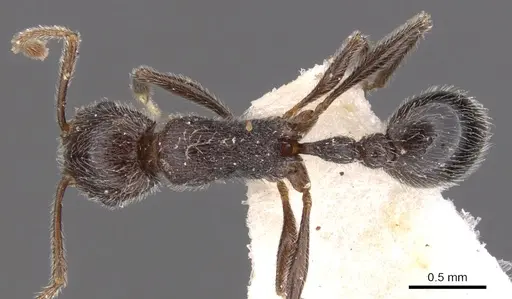
Literatura
A carregar mapa de distribuição...A carregar produtos...