
Tetramorium urbanii
- Nome cient.
- Tetramorium urbanii
- Tribo
- Crematogastrini
- Subfamília
- Myrmicinae
- Autor
- Bolton, 1977
- Distribuição
- Encontrado em 0 países
Introdução
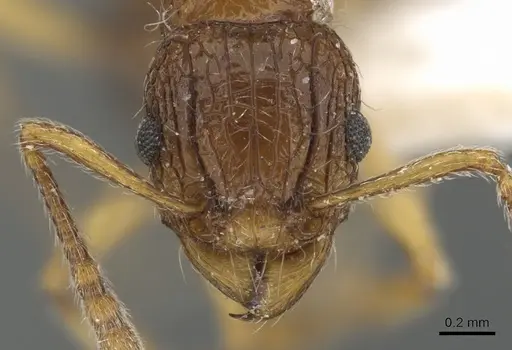
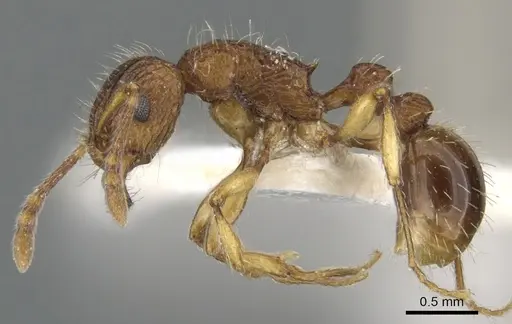
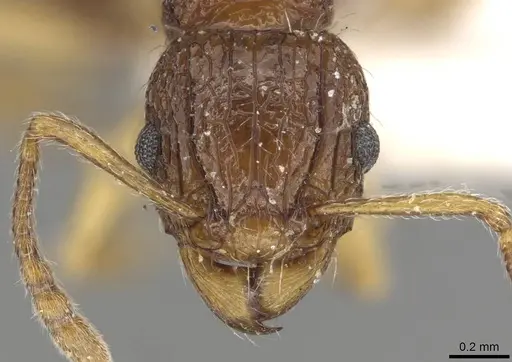
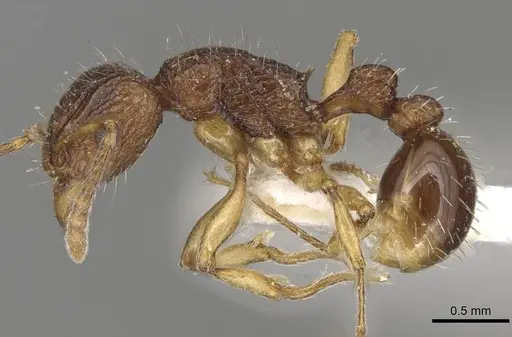
Tetramorium urbanii is a small ant from the tortuosum-group, native to the Himalayan foothills of northeastern India and Bhutan . Workers measure 3.8-4.1 mm and are easy to spot by their very short propodeal spines (the shortest in the group), moderately long antenna scapes, and 11-segmented antennae . The body is blackish brown, while the mandibles, antennae, and legs are yellowish brown . The promesonotum is smooth and shiny, which helps tell it apart from related species . This species has a limited, high‑elevation distribution (587-1635 m) and is found in forest habitats all year round . Nearly everything about its biology - nesting, feeding, colony founding, nuptial flights - remains unstudied. That makes it a challenge for keepers who are willing to learn alongside their colony.
Quick Summary
- Difficulty: Hard
- Origin & Habitat: Native to the Himalayan foothills of northeastern India (Arunachal Pradesh, Meghalaya, Sikkim) and Bhutan. Found at elevations of 587-1635 m in forest habitats [2][3].
- Colony Type: Unknown, colony structure has not been studied. Most Tetramorium species are monogyne (single queen), but this has not been confirmed for Tetramorium urbanii.
- Size & Growth:
- Queen: Undescribed, queen measurements not available in scientific literature [4]
- Worker: 3.8-4.1 mm [2][1]
- Colony: Unknown, no colony size data available. Based on typical Tetramorium patterns, likely reaches several hundred workers.
- Growth: Unknown, development has not been studied
- Development: Unknown, estimated 6-10 weeks based on typical Tetramorium genus patterns (No direct data available, estimate based on related species. Temperature dependency unknown.)
- Antkeeping:
- Temperature: Based on Himalayan distribution (587-1635 m elevation), likely prefers cooler conditions than tropical ants. Start at 18-24 °C and observe colony activity [2].
- Humidity: Unknown, likely moderate humidity needs typical of mid‑elevation forest species. Start with standard substrate moisture (damp but not waterlogged) and adjust based on colony behavior.
- Diapause: Unknown, likely requires a winter rest period given Himalayan distribution. Consider a cool period (10-15 °C) during winter months.
- Nesting: Unknown in captivity. In the wild, collected by hand from forest habitat at various elevations. Likely nests in soil or under stones like other Tetramorium. Y‑tong or plaster nests with moderate moisture would be appropriate starting points.
- Behavior: Behavior is unstudied. Based on genus patterns, likely forms moderate‑sized colonies with typical Myrmicinae temperament, not particularly aggressive but will defend the nest. Like other members of tribe Crematogastrini, it has a modified stinger used to smear venom rather than pierce. Workers are small (under 5 mm), so good escape prevention is essential. Foraging style unknown.
- Common Issues: completely unknown biology means you will need to experiment, expect some losses while learning what works for your colony, no development data makes it hard to gauge whether the colony is progressing normally, wild‑caught colonies may carry parasites or diseases with no documented treatment, Himalayan origin suggests specific temperature needs that differ from common pet species, very limited availability, finding established colonies may be difficult
Identification and Distinction
Tetramorium urbanii is a very distinct species within the tortuosum‑group, mainly because of its extremely short propodeal spines, the shortest of any species in the group [2]. These spines are barely longer than the propodeal lobes [1]. The antenna scapes are moderately long and almost reach the back of the head, and the antennae have 11 segments, both helpful features for identification [2]. Workers are small (3.8-4.1 mm total length), with a blackish‑brown body and yellowish‑brown mandibles, antennae, and legs [1]. The promesonotal dorsum is mostly smooth and shiny, which also sets it apart from closely related species [1].
Distribution and Habitat
This species is known from the Himalayan foothills of northeastern India and Bhutan. The original description came from Phuentsholing, a border town in western Bhutan [2]. In India, it has been recorded from Arunachal Pradesh, Meghalaya, and Sikkim [5]. Collection data shows it occurs at elevations from 587 m (Rorathang, Sikkim) to 1635 m (Dirang, Arunachal Pradesh) [2]. In Meghalaya’s West Khasi Hills it was found in all seasons at about 1484 m elevation, suggesting it can handle a range of seasonal conditions [3]. This mid‑elevation Himalayan distribution points to a preference for cooler, more temperate conditions than many tropical ants.
Unknown Biology - What We Don't Know
The biology of Tetramorium urbanii is essentially undocumented in scientific literature [4]. We have no information on: colony founding (whether the queen seals herself in like typical Tetramorium or must forage), nuptial flight timing, development timeline from egg to worker, colony size limits, queen lifespan, or typical behavior. Even its defense mechanism, likely a smear defense like other Crematogastrini, has not been confirmed for this species. This is both a challenge and an opportunity: you will be pioneering the husbandry of a species with no established care protocols. Related Tetramorium are typically claustral, generalist omnivores, and form moderate‑sized colonies, but T. urbanii may deviate.
Care Recommendations
Because no specific care data exists for this species, recommendations come from its natural distribution and related species. Housing: start with a standard test tube setup for the founding colony, then move to a Y‑tong or plaster nest as the colony grows. Temperature: aim for 18-24 °C, cooler than many tropical ants, a heating cable on one side of the nest can create a gradient. Humidity: keep the substrate moderately moist but not waterlogged, watch colony behavior and adjust. Feeding: offer typical ant foods, sugar water or honey, small insects (fruit flies, pinhead crickets), and seeds if accepted. Expect a trial‑and‑error period to learn what they prefer. Diapause: given the Himalayan origin, a cool period (10-15 °C) during winter is probably beneficial.
Acquisition and Legal Considerations
Tetramorium urbanii is rarely available in the ant‑keeping hobby. Wild‑caught colonies would likely come from northeastern India or Bhutan. Always check local regulations before acquiring or transporting this species, there may be collection restrictions in India. Do not release this ant outside its native range, even within India, releasing it outside its documented distribution could cause ecological harm. This species is best suited for experienced antkeepers who are willing to document their observations and help fill the gaps in our knowledge.
Frequently Asked Questions
How do I keep Tetramorium urbanii ants?
Care is largely unknown since this species hasn’t been studied in captivity. Based on its Himalayan distribution, provide cooler temperatures (18-24 °C), moderate humidity, and standard test tube or Y‑tong housing. You will be pioneering husbandry for this species, so expect a learning curve.
What do Tetramorium urbanii eat?
Diet is unconfirmed. Based on typical Tetramorium behavior, they likely accept sugar sources (honey, sugar water) and protein (small insects). Offer a variety and observe. Remove uneaten food to prevent mold.
How long does it take for Tetramorium urbanii to develop from egg to worker?
Unknown, no development data exists for this species. Based on typical Tetramorium genus patterns, estimate 6-10 weeks at optimal temperature, but this is a rough guess.
Do Tetramorium urbanii ants sting?
Yes, like other Myrmicinae it has a functional stinger. It belongs to tribe Crematogastrini, which uses a smear defense, wiping venom onto enemies with a flattened stinger rather than piercing. However, this behavior has not been confirmed specifically for T. urbanii.
Is Tetramorium urbanii good for beginners?
No, this species is not recommended for beginners. Almost nothing is known about its biology, care, or behavior. Keeping it successfully requires experience with ant husbandry and tolerance for trial‑and‑error learning.
How big do Tetramorium urbanii colonies get?
Unknown, no colony size data is available. Based on typical Tetramorium patterns, expect several hundred workers at maturity, but this is an estimate.
Do Tetramorium urbanii need hibernation?
Likely yes, given their Himalayan origin at 587-1635 m elevation. Consider providing a cool period (10-15 °C) during winter months, but specific requirements are unconfirmed [2].
Can I keep multiple Tetramorium urbanii queens together?
Unknown, colony structure hasn’t been studied for this species. Most Tetramorium are monogyne (single queen), but polygyny has been documented in some species. Do not attempt combining unrelated queens without research specific to this species.
Where is Tetramorium urbanii found?
This species is native to the Himalayan foothills of northeastern India (Arunachal Pradesh, Meghalaya, Sikkim) and Bhutan, at elevations between 587 and 1635 m [2][5].
Why is Tetramorium urbanii hard to keep?
This species has no documented care history, everything about its biology (founding, development, diet preferences, temperature needs, colony structure) is unknown. Keeping it successfully requires experimentation and careful observation, making it suitable only for experienced antkeepers [4].
Report an Issue
The current care sheet is based fully on literature. See inconsistencies, or something that's incorrect? Please , it will be resolved after review from an admin. Contributing to the blogs tab also helps providing information, to make us be able to further improve the caresheets. Thank you for your support!
References

Esta ficha de cuidados é licenciada sob CC BY-SA 4.0 .
Blogs da comunidade
CASENT0901068
Ver no AntWeb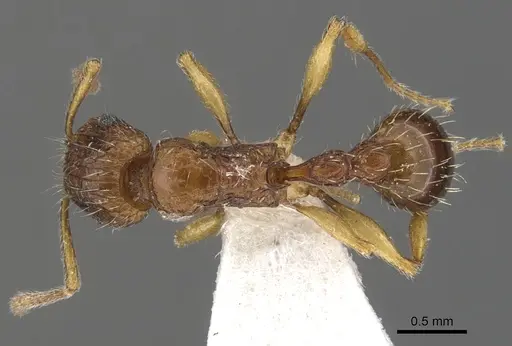
CASENT0915093
Ver no AntWeb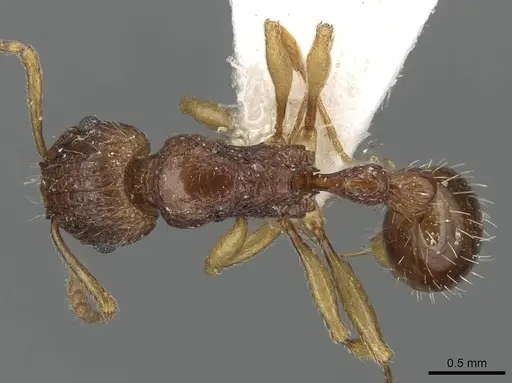
Literatura
A carregar mapa de distribuição...A carregar produtos...