
Tetramorium mayri
- Nome cient.
- Tetramorium mayri
- Tribo
- Crematogastrini
- Subfamília
- Myrmicinae
- Autor
- Forel, 1912
- Distribuição
- Encontrado em 1 países
Introdução
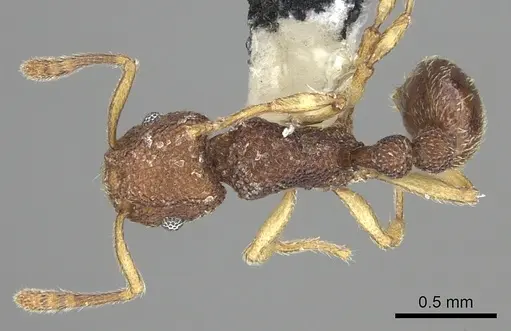
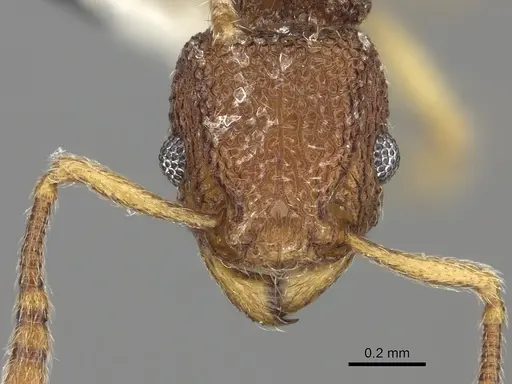
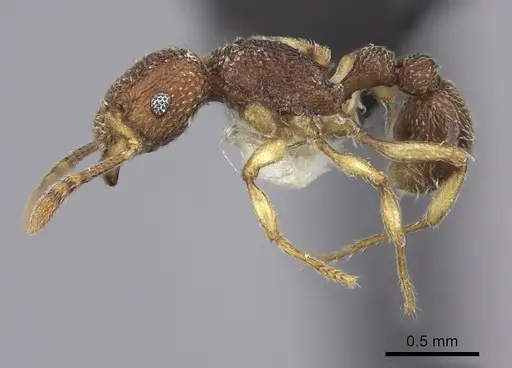
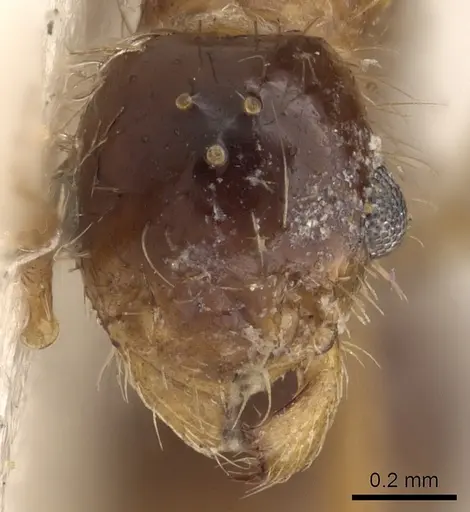
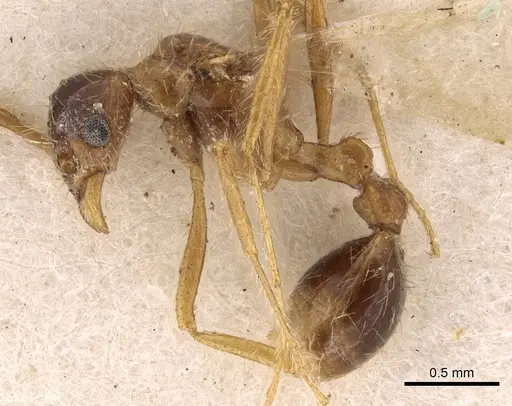
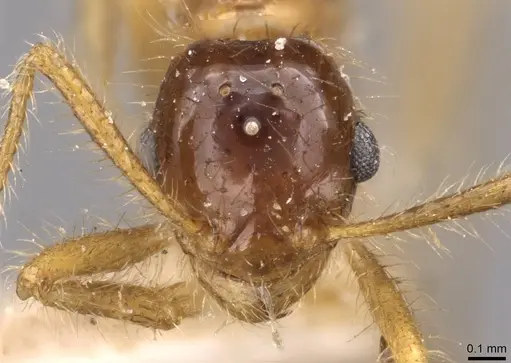
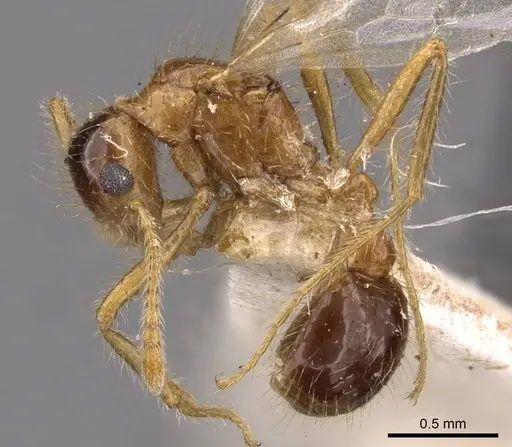
Tetramorium mayri is a tiny ant species originally described from India in 1912. Workers are about 2-3mm long, with the characteristic Myrmicinae body shape and a modified stinger used to smear venom rather than pierce. The species has a messy taxonomic history - it's been placed in the genera Rhoptromyrmex, Hagioxenus, and finally Tetramorium . In fact, the name 'Tetramorium mayri' is a secondary junior homonym and has been replaced with Tetramorium solomonensis, though many sources still use the old name . They're known from India (Maharashtra) and the Solomon Islands (Makira, Guadalcanal, San Cristoval) . They belong to the melleum species group and the tribe Crematogastrini . In the wild, these ants probably nest in soil or under stones in tropical areas, but detailed biology is almost completely unstudied. They're generalist scavengers that likely feed on small insects, seeds, and honeydew. Because so little is known about their specific needs, keeping them is a challenge best left to experienced antkeepers.
Quick Summary
- Difficulty: Hard
- Origin & Habitat: Native to India (Maharashtra) and the Solomon Islands (Makira, Guadalcanal, San Cristoval) [2][3][4]. Type locality is India [6]. Expected to inhabit tropical forests, probably nesting in soil or under stones.
- Colony Type: Unconfirmed, colony structure is unknown. Most Tetramorium species are monogyne (single queen), but this has not been verified for Tetramorium mayri.
- Size & Growth:
- Queen: ~5-6mm, inferred from typical Tetramorium queen sizes [5]
- Worker: ~2-3mm, inferred from genus patterns [5]
- Colony: Unknown
- Growth: Unknown
- Development: Unknown, species-specific data unavailable. Estimated 6-8 weeks based on related Tetramorium species, but this is speculative. (No published data on development times for this species.)
- Antkeeping:
- Temperature: Unknown, as a tropical species, likely needs warm conditions. Start around 24-28°C and observe colony response. Provide a temperature gradient [5].
- Humidity: Unknown, likely moderate to high given tropical habitat. Keep nest substrate moist but not waterlogged. Provide a water source [5].
- Diapause: Unknown, as a tropical species, probably does not require diapause, but no specific data available. Monitor colony behavior in winter [5].
- Nesting: Unknown preferences, based on Tetramorium patterns, Y-tong (AAC) nests, test tube setups, or naturalistic soil nests may work. Provide small chambers and escape-proof enclosures due to tiny size [5].
- Behavior: Workers are tiny but defend the nest using a modified stinger that smears venom onto attackers rather than stinging (typical for the Crematogastrini tribe). They are active foragers that likely recruit nestmates via chemical trails. Escape prevention is critical due to their tiny size, use fine mesh and tight seals. Not known to be aggressive outside of nest defense.
- Common Issues: escape prevention is critical, they can squeeze through gaps smaller than 1mm, almost nothing is known about this species' specific care requirements, keepers must experiment carefully, tropical species may suffer if temperatures drop below 20°C for long periods, wild-caught colonies may carry parasites, quarantine new colonies, overfeeding can cause mold in small enclosures, especially dangerous for tiny colonies
Housing and Nest Setup
Because almost nothing is known about their natural nesting habits, you'll need to experiment with different setups. Y-tong (AAC) nests with narrow chambers or test tubes are good starting points. The main challenge is containment, at 2-3mm, these ants can escape through tiny gaps. Use ventilation mesh with holes no larger than 0.5mm and seal all joints with fluon or similar barriers. Provide a water source in the outworld and keep the nest substrate damp (but not soaked). Avoid large open spaces that might stress the colony. [5]
Feeding and Diet
Based on general Tetramorium feeding habits, offer a variety of small protein sources (fruit flies, pinhead crickets, tiny pieces of mealworm) and carbohydrates (sugar water, diluted honey). Feed small amounts 2-3 times per week and remove leftovers after 24-48 hours to prevent mold. A constant sugar source is helpful once workers are active. Since we don't know their exact preferences, try different foods and see what they accept. [5]
Temperature and Seasonal Care
As a tropical species, they likely need warm conditions year-round. A good starting point is 24-28°C in the nest area, with a gradient to allow self-regulation. Avoid temperatures below 20°C for extended periods. Whether they need a seasonal temperature drop is unknown, if you want to try, reduce by 2-4°C for a couple of months in winter and watch for any negative effects. Keep them away from drafts and air conditioning. [5]
Colony Development and Growth
Virtually nothing is published about colony development in this species. If founding is claustral (which is common in Tetramorium but unconfirmed here), the queen would seal herself in a chamber and raise the first brood on stored reserves. The first workers (nanitics) might appear after 6-8 weeks if conditions are right, but this is a guess based on related species. Colony size in the wild is unknown. Proceed patiently and avoid disturbing the queen during founding. [5]
Behavior and Defense
Workers have a modified stinger that smears venom onto attackers rather than stinging (typical of the Crematogastrini tribe). The venom is likely mild to humans. They are not known to be aggressive outside of nest defense. Foraging workers are active searchers and probably lay chemical trails to recruit nestmates. Because of their tiny size, they can easily be overlooked if they escape, inspect barriers regularly. [5]
Frequently Asked Questions
Can I keep Tetramorium mayri in a test tube?
Yes, test tubes are a good starting point, especially for a founding colony. Use a small tube with a water reservoir and cotton plug. If founding is claustral (unconfirmed), the queen will stay in the tube. Once you have 20-30 workers, you can consider moving to a small Y-tong or naturalistic nest.
How long until first workers appear in Tetramorium mayri?
This is unknown because species-specific data doesn't exist. If founding is claustral and temperatures are warm, first workers might appear in roughly 6-8 weeks, but this is speculative and based on related Tetramorium species. You may see faster or slower development.
Do Tetramorium mayri ants sting?
They have a modified stinger, but instead of piercing, they use it to smear venom onto attackers. This is typical for the Crematogastrini tribe. The venom is likely mild and rarely affects human skin. They are not considered dangerous.
What do Tetramorium mayri ants eat?
Based on general Tetramorium behavior, offer small insects (fruit flies, pinhead crickets) for protein, and sugar water or honey for carbohydrates. They may also accept small seeds. Feed small amounts 2-3 times per week and remove leftovers quickly to prevent mold.
Are Tetramorium mayri good for beginners?
No, they are rated Hard because so little is known about their specific needs. Their tiny size makes escape prevention challenging, and lack of data means keepers must experiment. They're better suited for experienced antkeepers who enjoy working with poorly-known species.
Do Tetramorium mayri need hibernation?
Probably not, since they come from tropical regions. But because their natural life cycle is unstudied, you should watch the colony in winter. If activity slows down, you can reduce temperature slightly (2-4°C) for a couple of months, but this is optional.
How big do Tetramorium mayri colonies get?
Unknown. There are no published records of colony size in the wild. Some Tetramorium species reach several hundred workers, but this is speculative. Start with a single queen and see how the colony grows.
When should I move Tetramorium mayri to a formicarium?
Wait until you have at least 20-30 workers and they are actively foraging. Moving too early can stress the queen. A small Y-tong nest or test tube setup is fine for young colonies. Ensure the formicarium has tiny chambers to match their small size.
Why are my Tetramorium mayri dying?
Possible causes include: temperatures too low (below 20°C), incorrect humidity (too dry or waterlogged), mold from overfeeding, escape (they are tiny), stress from disturbance, or parasites from wild-caught colonies. Check all parameters and ensure the enclosure is completely escape-proof.
Can I keep multiple queens together?
This is not recommended because the colony structure is unknown. Most Tetramorium species are monogyne (single queen), and attempting to keep multiple queens together could lead to fighting or one queen being killed. Each colony should start with a single queen.
Report an Issue
The current care sheet is based fully on literature. See inconsistencies, or something that's incorrect? Please , it will be resolved after review from an admin. Contributing to the blogs tab also helps providing information, to make us be able to further improve the caresheets. Thank you for your support!
References

Esta ficha de cuidados é licenciada sob CC BY-SA 4.0 .
Blogs da comunidade
Literatura
A carregar mapa de distribuição...A carregar produtos...