
Tetramorium critchleyi
- Nome cient.
- Tetramorium critchleyi
- Tribo
- Crematogastrini
- Subfamília
- Myrmicinae
- Autor
- Bolton, 1976
- Distribuição
- Encontrado em 0 países
Introdução
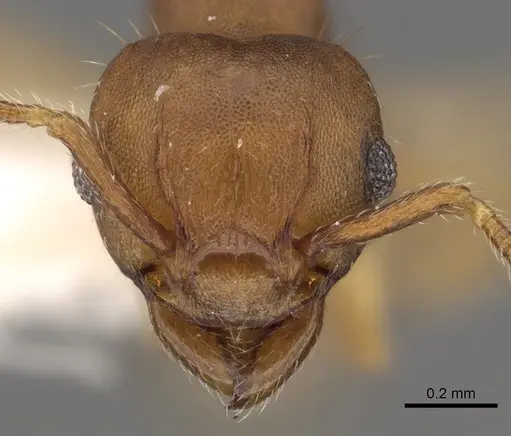
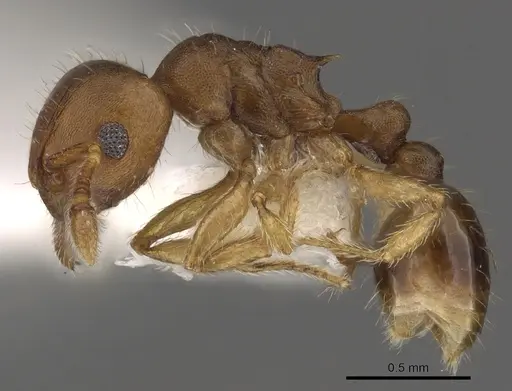
Tetramorium critchleyi is a small ant that was originally described as Rhoptromyrmex critchleyi. A 2015 phylogenetic study moved it to the genus Tetramorium . Workers are about 2-4mm long, with the standard Tetramorium features: 12-segmented antennae and a two-segmented petiole. Very little is known about its natural history - no one has published detailed observations of its behavior, nesting habits, or diet. The few related Tetramorium species come from Africa, so it likely lives in tropical or subtropical regions there.
Quick Summary
- Difficulty: Medium
- Origin & Habitat: Unconfirmed, probably African tropical or subtropical areas based on related Tetramorium species. Other members of the genus nest in soil, under stones, or in leaf litter, but this is just a guess.
- Colony Type: Unconfirmed, could be single-queen or multiple-queen, no data exists for this species.
- Size & Growth:
- Queen: ~5-7mm, inferred from typical Tetramorium queen sizes [1]
- Worker: ~2-4mm, inferred from typical Tetramorium worker sizes [1]
- Colony: Estimated up to several hundred workers based on genus patterns, unconfirmed
- Growth: Moderate (estimated from genus)
- Development: Estimated 6-10 weeks at 22-26°C based on related Tetramorium species (Species-specific timeline unknown, adjust expectations based on your colony.)
- Antkeeping:
- Temperature: Keep at 22-26°C as a starting point. Most Tetramorium do well in warm, stable conditions. Adjust if you see the colony clustering or slowing down.
- Humidity: Keep the nest substrate consistently moist but not soggy. Provide a water source in the outworld. Since natural habitat is unknown, watch the colony, if brood dries out, increase moisture, if mold appears, reduce it.
- Diapause: Probably needs a winter rest period if you live in a temperate climate, but this is not confirmed. If the colony slows down in winter, reduce temperature to 15-18°C for 2-3 months.
- Nesting: Start with a test tube setup for founding. Once the colony grows, use a Y-tong (AAC) nest, plaster nest, or a small formicarium with chambers sized for tiny ants (passages 2-3mm wide). Make sure all openings are sealed with fine mesh, these ants can squeeze through tiny gaps.
- Behavior: Likely active foragers, like most Tetramorium. They defend their nest, and being in the tribe Crematogastrini, they have a modified stinger used to smear venom onto enemies rather than stab them (smear defense). Temperament is probably moderate, not super aggressive, but they will fight if threatened. Escape risk is high because of their small size, you need very fine mesh on all ventilation.
- Common Issues: small workers (2-4mm) can escape through the tiniest gaps, use fine mesh and seal everything., almost no species-specific data exists, you’ll have to adjust care based on general Tetramorium advice and your colony’s behavior., overfeeding and disturbing the colony too often can stress them, let them settle., temperature or humidity swings can kill brood, keep conditions stable., wild-caught colonies might carry mites or diseases, quarantine new colonies if possible.
Taxonomy and Classification
Tetramorium critchleyi was first described as Tetramorium critchleyi. In 2015,a detailed phylogenetic study of myrmicine ants synonymized Rhoptromyrmex under Tetramorium, so it became Tetramorium critchleyi [1]. This change reflects a better understanding of evolutionary relationships. The genus Tetramorium includes hundreds of species, many of which are common in urban areas (often called pavement ants), but that label doesn’t apply to every species.
Housing and Nest Setup
Because this ant is small, start a new colony in a test tube setup. Once you have around 20-30 workers, move them to a Y-tong (AAC) nest or a small formicarium with chambers that match their tiny size, passageways 2-3mm wide are perfect. Keep the nesting area moist but not soaked. Connect a water reservoir or water tube to keep humidity steady. The most important thing: seal every possible escape route with very fine mesh (0.5mm or smaller). Workers can slip through gaps that look sealed to the human eye.
Feeding and Diet
Like most Tetramorium, T. critchleyi is omnivorous. Offer a constant supply of sugar water or honey. For protein, give small insects: fruit flies, pinhead crickets, or tiny mealworm pieces. You can also try crushed seeds or fish food. Feed small amounts 2-3 times per week and remove leftovers after a day to stop mold. Watch what they take and adjust.
Temperature and Seasonal Care
Keep the nest area at 22-26°C. Create a slightly warmer spot on one side so the ants can choose. If your room is cooler, a heat cable or mat (with thermostat) on one part of the nest helps. During winter in temperate areas, you may need to give them a rest period: lower the temperature to 15-18°C for 2-3 months. But since we don’t know if this species really needs diapause, watch for signs, if they cluster and stop eating, they might be entering rest. Don’t force it unless they show natural slowdown.
Colony Development
A mated queen probably starts laying eggs after a claustral founding period where she seals herself in and uses her stored body reserves. The first workers (nanitics) will be smaller than later ones. Based on related Tetramorium, expect the first workers after about 6-10 weeks at 22-26°C. Growth should be moderate, the colony may take several months to reach 50 workers and a year or more to hit a few hundred. Don’t disturb them too much, especially during founding. Keep temperature and humidity stable.
Defense and Behavior
This ant belongs to the tribe Crematogastrini, which has a unique defensive system: instead of stabbing with a sharp stinger, they have a flattened, spatulate stinger that they use to wipe or smear venom onto attackers. This allows the venom to be applied over a larger area. In captivity, you probably won’t see this unless the colony is threatened. Their behavior is expected to be similar to other Tetramorium, active foragers that will defend the nest if disturbed. They are not aggressive toward keepers unless handled roughly.
Frequently Asked Questions
How long does it take for Tetramorium critchleyi to raise first workers?
Based on typical Tetramorium development, about 6-10 weeks from egg to first worker at 22-26°C. This is an estimate, the exact timeline for this species is unknown.
What do Tetramorium critchleyi ants eat?
They eat both sugars and proteins. Offer sugar water or honey regularly, plus small insects like fruit flies or pinhead crickets. Remove uneaten food after a day to avoid mold.
Can I keep multiple Tetramorium critchleyi queens together?
Not recommended, we don’t know if this species tolerates multiple queens. Some Tetramorium are polygynous, but most are monogyne. Play it safe and start with one queen.
Do Tetramorium critchleyi ants sting?
They have a stinger, but it’s modified for smearing venom rather than stinging. The sting is very mild and not dangerous to humans, you probably won’t even feel it.
What temperature do Tetramorium critchleyi need?
Aim for 22-26°C. Provide a slight temperature gradient so they can choose. Keep it stable, sudden drops or spikes can harm brood.
Are Tetramorium critchleyi good for beginners?
We rate this species as medium difficulty. The lack of species-specific data means you’ll need to adapt care based on general Tetramorium knowledge and your colony’s behavior. If you’re new, it might be easier to start with a well-documented species like Tetramorium caespitum.
How big do Tetramorium critchleyi colonies get?
Probably up to a few hundred workers, but nobody has recorded the maximum for this species. That estimate is based on related Tetramorium.
Do Tetramorium critchleyi need hibernation?
Probably yes if you live in a temperate climate. If the colony naturally slows down in winter, reduce temperature to 15-18°C for 2-3 months. If they stay active all year, you might not need to force a rest period.
Why is escape prevention important for Tetramorium critchleyi?
Workers are tiny (2-4mm) and can squeeze through cracks that look closed. Always use very fine mesh (0.5mm or smaller) on ventilation holes, and seal all connections with tape or silicone.
When should I move Tetramorium critchleyi to a formicarium?
Move when the colony has 20-30 workers and they’re outgrowing the test tube. The new nest should have small chambers (passages 2-3mm) and a humidity source.
Report an Issue
The current care sheet is based fully on literature. See inconsistencies, or something that's incorrect? Please , it will be resolved after review from an admin. Contributing to the blogs tab also helps providing information, to make us be able to further improve the caresheets. Thank you for your support!
References

Esta ficha de cuidados é licenciada sob CC BY-SA 4.0 .
Blogs da comunidade
CASENT0901033
Ver no AntWeb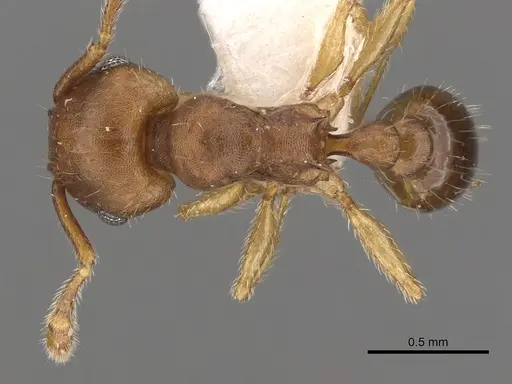
Literatura
A carregar mapa de distribuição...A carregar produtos...