
Temnothorax tembotovi
- Nome cient.
- Temnothorax tembotovi
- Tribo
- Crematogastrini
- Subfamília
- Myrmicinae
- Autor
- Radchenko & Yusupov, 2015
- Distribuição
- Encontrado em 0 países
Introdução
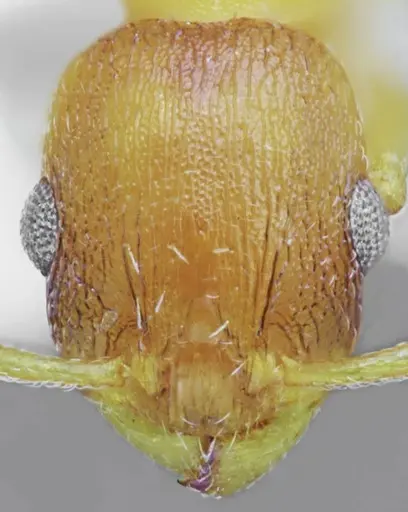
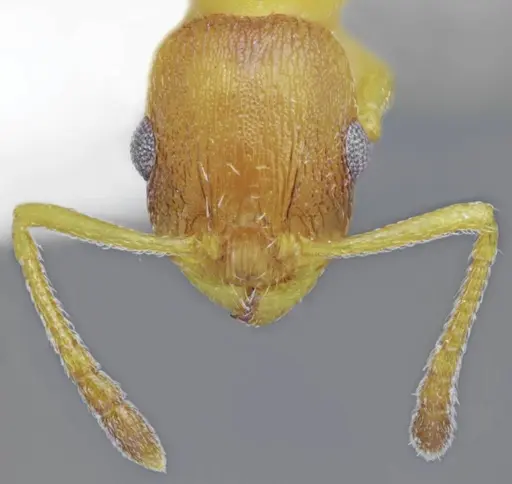
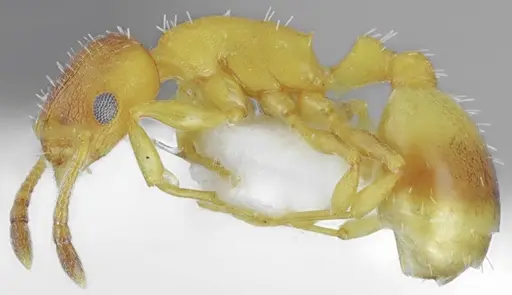
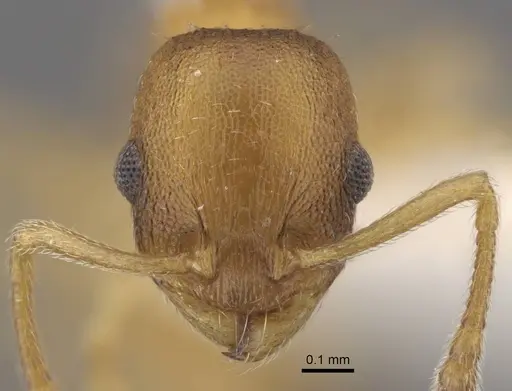
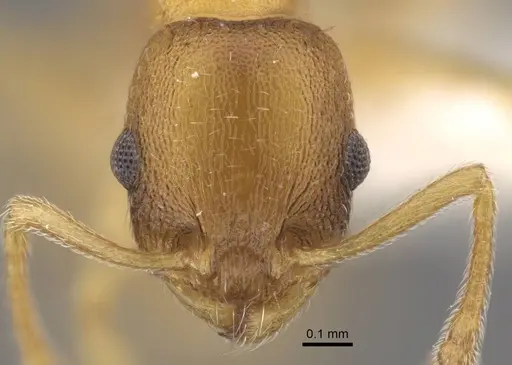
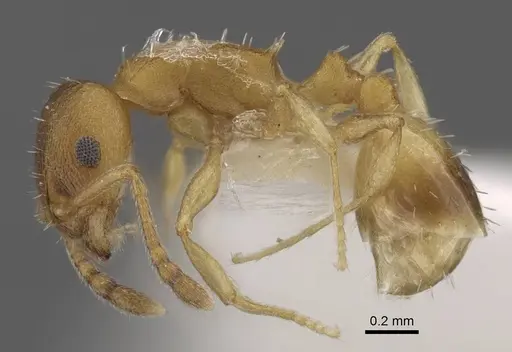
Temnothorax tembotovi is a tiny ant species described in 2015 from the North Caucasus region of Russia . Workers are small, estimated around 2-3 mm total length (inferred from the Temnothorax genus). They have a distinctive look: a long, narrow head (the narrowest of any Caucasus Temnothorax), a dark‑yellow to ochre‑yellow mesosoma, and a bright yellow first abdominal segment with a brownish band toward the back . This species belongs to the tuberum group and resembles Temnothorax unifasciatus in colour . What makes T. tembotovi stand out is its extreme rarity - it is known only from a single location in the Kabardino‑Balkarian Republic at altitudes above 1200 m. Nests are dug in soil on stony, south‑east‑facing mountain slopes with dry steppe‑like vegetation . Because queens and males have never been collected, much of its basic biology, including colony founding and caste details, remains unknown . The species was named after Professor A.K. Tembotov, a Russian ecologist.
Quick Summary
- Difficulty: Unknown, likely Medium (limited availability, little captive data)
- Origin & Habitat: North Caucasus, Russia (Kabardino‑Balkarian Republic). Found at 1232 m altitude in an arid depression on a stony south‑eastern mountain slope with xerophytic steppe‑like vegetation [1][2].
- Colony Type: Unknown. Queens and males have not been described [1]. Based on typical Temnothorax patterns, likely single‑queen (monogyne) colonies.
- Size & Growth:
- Queen: Unknown, not yet described in scientific literature [1]
- Worker: Workers are small, exact total length not reported. Estimated ~2-3 mm total length (inferred from Temnothorax genus) [1][2]
- Colony: Unknown, based on Temnothorax genus patterns, likely small colonies (up to a few hundred workers)
- Growth: Unknown, likely moderate (inferred from temperate Temnothorax)
- Development: Unknown, for typical temperate Temnothorax, roughly 6-10 weeks at warm temperatures (estimated, no direct data) (Development not studied for this species. Estimate is based on related species.)
- Antkeeping:
- Temperature: Based on its high‑altitude steppe habitat, this ant likely prefers warm conditions [1]. Start at 22-26 °C with a gradient so workers can choose. Avoid prolonged cool drafts.
- Humidity: Dry to moderate. The natural habitat is arid, so keep the nest substrate slightly moist but never waterlogged. Provide a humidity gradient with a drier area [1].
- Diapause: Likely yes, this is a temperate mountain species that experiences cold winters [1]. Give 2-3 months at 5-10 °C during winter (inferred from habitat).
- Nesting: In the wild they nest in soil on stony slopes [1]. In captivity, use a small test‑tube setup for founding, then a Y‑tong (AAC) nest or 3D‑printed nest with tight, narrow chambers. Avoid large open spaces.
- Behavior: Peaceful and non‑aggressive, like most Temnothorax. They have a modified stinger used to smear venom (smear defense), but they pose no danger to keepers. Workers are active foragers. Because of their tiny size, escape prevention is critical, use very fine mesh on ventilation and ensure all lids fit tightly.
- Common Issues: escape prevention is critical, workers can squeeze through gaps invisible to the naked eye, queens have never been found, so founding a colony from a wild queen is currently impossible, specific temperature, humidity, and diapause requirements are not documented, you must observe and adjust, the species is extremely rare and only known from one small area in Russia, making specimens very hard to obtain, no data on diet, development, or colony structure, so most care advice relies on inference from related Temnothorax
Housing and Nest Setup
Because Temnothorax tembotovi is so tiny, you need to scale everything down. For a founding colony, use a small test‑tube setup, pack the cotton firmly and keep the water reservoir modest to avoid flooding. Once the colony grows, move them to a Y‑tong (AAC) nest or a 3D‑printed nest with narrow chambers that match their small size. Avoid large, open spaces, which can stress these ants. The nest material should hold slight moisture without becoming waterlogged, reflect their preference for dry steppe conditions [1]. Escape prevention is absolutely essential: use fine mesh on any ventilation holes and check that all lids seal tightly. A small outworld (e.g., a plastic box with a thin layer of sand) is plenty for foraging.
Temperature and Seasonal Care
These ants come from a high‑altitude, sunny steppe environment in the North Caucasus [1]. Keep them warm, aim for 22-26 °C, and provide a temperature gradient using a small heat mat on one side. Watch where the workers gather: if they cluster on the warm side, the temperature is fine, if they avoid it, lower the heat. During winter, give them a diapause period of 2-3 months at 5-10 °C to mimic the cold mountain winters. This rest is likely essential for colony health and reproduction, even though it hasn’t been directly studied for this species. Don’t try to keep them active year‑round without a break.
Feeding and Diet
No specific diet has been recorded for Temnothorax tembotovi, but based on other members of the genus they are probably omnivorous with a preference for small protein sources [1]. Offer tiny live prey such as fruit flies, springtails, or pin‑head crickets, along with sugar water or honey. Since the workers are minuscule, make sure prey items are no bigger than their head, anything larger will be ignored. Feed small amounts every 2-3 days and remove uneaten food after 24 hours to prevent mould. Observe the colony’s response and adjust the menu accordingly.
Behavior and Temperament
Temnothorax tembotovi is a typical peaceful Temnothorax. Workers are active but not aggressive. They belong to the subfamily Myrmicinae and tribe Crematogastrini, which means they have a modified, flattened stinger that they use to smear venom onto enemies rather than piercing flesh, a defense called “smearing.” However, they pose no threat to keepers and are very unlikely to sting you. The main challenge is their tiny size: workers can escape through the smallest gaps, so your setup must be escape‑proof. Use very fine mesh and ensure all connections are tight. Queens have never been collected, so wild‑caught colonies are extremely rare. [1]
Distribution and Rarity
This species is known from a single locality: the Kabardino‑Balkarian Republic in the North Caucasus of Russia, near the village of Verhniaja Balkaria, at an altitude of 1232 m [1][3][2]. It was formally described in 2015 and named after Professor A.K. Tembotov, founder of the Institute of Ecology of Mountain Territories [1]. This extremely limited distribution makes Temnothorax tembotovi one of the rarest Temnothorax species in the ant‑keeping hobby. Any specimens that become available are likely from very small wild collections, and their export may be restricted by Russian wildlife regulations.
Frequently Asked Questions
How long does it take for Temnothorax tembotovi to develop from egg to worker?
The exact timeline has not been studied. For typical temperate Temnothorax kept at 24-26 °C, egg‑to‑worker takes roughly 6-10 weeks. This is an estimate based on related species, you’ll need to observe your own colony.
What do Temnothorax tembotovi ants eat?
Specific dietary preferences are unknown. Based on other Temnothorax, they likely accept small live prey (fruit flies, springtails) and sugar water or honey. Offer tiny, appropriately‑sized items and adjust based on what the colony accepts.
Do Temnothorax tembotovi ants sting?
They have a modified stinger, but it is used to smear venom rather than pierce skin. They are not aggressive and pose no real stinging risk to keepers.
Are Temnothorax tembotovi good for beginners?
No, this species is not recommended for beginners. It is extremely rare, queens have never been described, and very little is known about its captive care. Their tiny size makes escape prevention difficult. They are best left to experienced keepers interested in rare species [1].
Do Temnothorax tembotovi need hibernation?
Likely yes. They come from a high‑altitude mountain area with cold winters [1]. Provide a 2-3 month diapause at 5-10 °C, similar to other temperate Temnothorax, even though it hasn’t been directly confirmed for this species.
How big do Temnothorax tembotovi colonies get?
Colony size is not documented. Based on the Temnothorax genus, mature colonies probably contain several dozen to a few hundred workers at most. They are not a large‑colony species.
Can I keep multiple Temnothorax tembotovi queens together?
Colony structure is unknown. Most Temnothorax are monogyne (single queen). There is no evidence that two queens can share a colony, so it is not recommended unless you are conducting experiments.
What is the best nest type for Temnothorax tembotovi?
For a founding colony, a small test‑tube setup works well. Once established, use a Y‑tong (AAC) nest or a 3D‑printed nest with narrow, tight chambers. Avoid any nest with large chambers or wide passages, these ants feel insecure in open spaces. Keep the nest slightly moist but not wet [1].
Where is Temnothorax tembotovi found in the wild?
Only at the type locality: Kabardino‑Balkarian Republic, Russia, near Verhniaja Balkaria, at 1232 m on a stony, south‑east‑facing slope with dry steppe vegetation [1][3][2]. It has not been recorded anywhere else.
Why is Temnothorax tembotovi so rare in antkeeping?
It was only described in 2015,and it is known from a single, remote site in the North Caucasus. Queens have never been collected, so captive stocks cannot be started from wild queens. Its high‑altitude habitat also makes it difficult to collect and export.
Report an Issue
The current care sheet is based fully on literature. See inconsistencies, or something that's incorrect? Please , it will be resolved after review from an admin. Contributing to the blogs tab also helps providing information, to make us be able to further improve the caresheets. Thank you for your support!
References

Esta ficha de cuidados é licenciada sob CC BY-SA 4.0 .
Blogs da comunidade
ANTWEB1008962
Ver no AntWeb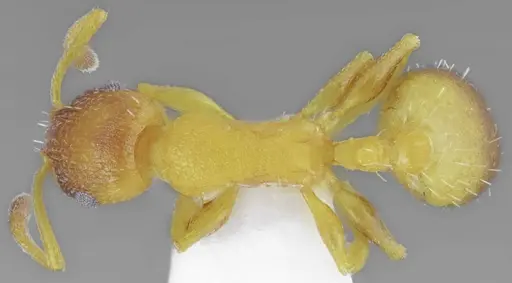
CASENT0917437
Ver no AntWeb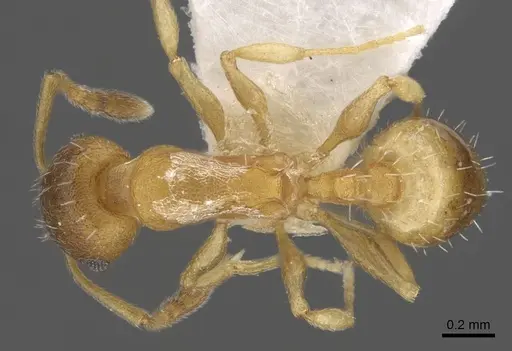
Literatura
A carregar mapa de distribuição...A carregar produtos...