
Temnothorax splendens
- Nome cient.
- Temnothorax splendens
- Tribo
- Crematogastrini
- Subfamília
- Myrmicinae
- Autor
- Wheeler, 1905
- Distribuição
- Encontrado em 0 países
Introdução
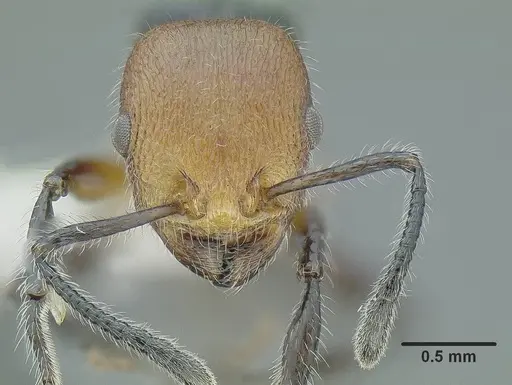
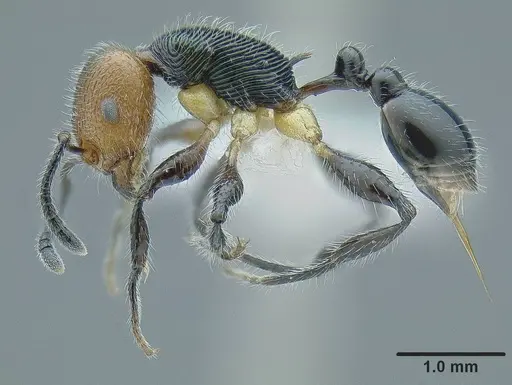
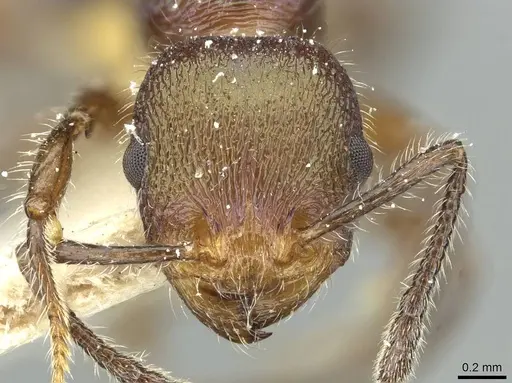
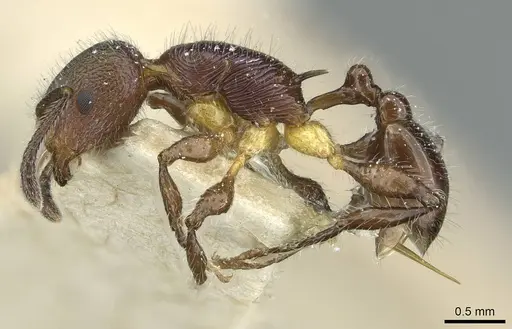
Temnothorax splendens is a small, strikingly beautiful ant native to the Caribbean islands of Cuba and the Bahamas . Workers measure 3-3.5 mm while queens are slightly larger at 4-4.5 mm . They have a distinctive metallic appearance - the head and thorax are deep metallic green that transitions to violet on the cheeks, pleurae, and epinotum, while the gaster and legs are nearly black. The mandibles, clypeus, and other head structures are dull orange, creating a vivid contrast. They have notably long hind legs and a very long, powerful sting . This species belongs to the sallei‑clade of Temnothorax , a group that includes species with sophisticated behaviors like tandem running and visual navigation . In the wild, colonies are small - typically 50-75 ants - and nest in the hollow stems of marsh grasses (Cladium jamaicense) in marshy ground . The ants are timid and move rather slowly, with the gaster held forward between their long hind legs .
Quick Summary
- Difficulty: Medium
- Origin & Habitat: Native to Cuba and the Bahamas in the Greater Antilles (Neotropical Region) [1]. Found nesting in hollow culms of Cladium jamaicense (sedge) in marshy ground [1].
- Colony Type: Colony structure is not fully documented. Wheeler (1905) noted small colonies with 50-75 ants, but queen number was not specified. Based on typical Temnothorax patterns, colonies are likely single‑queen (monogyne).
- Size & Growth:
- Queen: 4-4.5 mm [1]
- Worker: 3-3.5 mm [1]
- Colony: Up to 75 workers in wild colonies [1]. Likely under 100 workers in captivity.
- Growth: Slow
- Development: Not documented for this species. Estimated 6-10 weeks based on temperature‑dependent development of related Caribbean Temnothorax. (Development time depends on temperature, warmer conditions within the preferred range may speed it slightly.)
- Antkeeping:
- Temperature: Keep around 22-26 °C. As a Caribbean species, they prefer warm, stable conditions. A gentle gradient allows them to choose their preferred zone. Avoid drops below 18 °C.
- Humidity: High humidity required, they come from marshy habitats. Keep the nest substrate consistently moist but not waterlogged. Mist occasionally and provide a water tube.
- Diapause: Not required. As a tropical species from Cuba and the Bahamas, they do not need hibernation. A slight temperature reduction in winter (to around 20 °C) is optional but not necessary.
- Nesting: In captivity, small test tube setups work for founding. Later, Y‑tong (AAC) nests or plaster nests with tight chambers are suitable. They prefer narrow, enclosed spaces scaled to their tiny size, mimicking hollow plant stems [1].
- Behavior: Timid and non‑aggressive. Workers move slowly and will flee rather than fight. They possess a long, powerful sting but rarely use it [1]. This species belongs to the subfamily Myrmicinae and tribe Crematogastrini, which use a ‘smear’ defense: a flattened stinger that wipes venom onto enemies. Escape risk is moderate because they are tiny (under 4 mm), use standard barriers like fluon or oil.
- Common Issues: small colony size means slow population growth, don't expect rapid expansion, high humidity is essential, dry conditions will kill the colony quickly, timid nature may lead to outcompetition by more aggressive ants if housed nearby, tiny size (3-3.5 mm), check all escape routes, including gaps in test tube cottons, wild‑caught colonies may carry parasites, quarantine and monitor health
Housing and Nest Setup
For founding colonies, use a small test tube with a water reservoir stopped with tightly packed cotton. Because these ants are tiny, ensure the cotton is packed firmly to prevent escapes. Once the colony reaches about 20-30 workers, you can move them to a formicarium. Y‑tong (AAC) nests with narrow chambers or small plaster nests work well. They prefer tight, enclosed spaces, avoid tall, open areas. Keep the nest dark or covered, mimicking the dim conditions of hollow plant stems [1]. A small outworld is sufficient for their modest foraging needs.
Feeding and Diet
Temnothorax splendens is likely an opportunistic predator, as are other members of the genus. Offer small live prey such as fruit flies or tiny spiders. They may also accept crushed crickets or mealworms in very small quantities. Sugar sources like diluted honey are occasionally accepted but are not a primary food. Feed small prey items 2-3 times per week, removing any uneaten food promptly to prevent mold. Overfeeding is a common mistake with this species, give only what they can consume in a day.
Temperature and Seasonal Care
As a Caribbean species from Cuba and the Bahamas, T. splendens prefers warm conditions. Keep the nest area at 22-26 °C. A heating cable on one side creates a gentle gradient, allowing workers to regulate their temperature. Place the heat source on top of the nest, not underneath, to avoid drying out the substrate too quickly. They do not require hibernation or diapause. In winter you can slightly reduce temperatures to around 20 °C, but this is optional. Avoid drops below 18 °C, which could stress the colony. Maintain stable conditions.
Humidity and Water
These ants come from marshy habitats, so they need high humidity. Keep the nest substrate consistently moist, it should feel damp but not have standing water. Attach a water tube to the test tube or formicarium to provide a constant source. Mist the nest occasionally, but avoid excessive moisture that leads to condensation or mold. Good ventilation is important, but do not place them in direct airflow that dries things out. [1]
Behavior and Colony Dynamics
Temnothorax splendens is a timid species. Workers move slowly and carefully, fleeing rather than engaging threats. They have a long, powerful sting but rarely use it defensively [1]. Their defense mechanism is typical of the tribe Crematogastrini: they use a flattened stinger to smear venom onto enemies rather than piercing. Colonies remain small, even mature wild colonies only reach 50-75 workers [1]. The species belongs to the sallei‑clade [2][3], which includes ants capable of advanced behaviors like tandem running and visual navigation [2], though these behaviors have not been directly documented for T. splendens. The small colony size and docile nature make them interesting to observe but less impressive than large‑colony species.
Growth and Development
Colony growth is slow. Queens are 4-4.5 mm and workers are 3-3.5 mm [1]. The first workers (nanitics) will be smaller than normal workers and may take 6-10 weeks to develop, this estimate is based on development times of related Temnothorax species, as no specific data exists for T. splendens. Because wild colonies only reach 50-75 workers, captive colonies will likely remain modest in size, probably under 100 workers even in established setups. This slow growth is normal. Do not overfeed to speed growth, it leads to mold. Patience is essential.
Frequently Asked Questions
How long does it take for Temnothorax splendens to get their first workers?
There is no published data for this species. Based on development times of related Temnothorax, expect roughly 6-10 weeks from egg to first worker. The exact time depends on temperature, warmer conditions within the preferred range (22-26 °C) may speed development slightly.
Can I keep Temnothorax splendens in a test tube?
Yes, test tubes work well for founding colonies. Use a small tube with a water reservoir and tightly packed cotton to prevent escapes. Keep the tube horizontal so the queen can choose her preferred humidity zone.
Do Temnothorax splendens ants sting?
Yes, they have a very long and powerful sting [1]. However, they are timid and rarely sting, preferring to flee. If they do sting, the pain is minor due to their small size.
How big do Temnothorax splendens colonies get?
Colonies remain small. Wild colonies typically contain 50-75 workers [1]. In captivity, you can expect under 100 workers even in established nests. This is normal for the species.
Are Temnothorax splendens good for beginners?
They are moderate difficulty. The main challenges are maintaining high humidity and accepting their slow growth and small colony size. They are docile and easy to house, but the humidity requirements and modest colony sizes may frustrate beginners expecting rapid expansion.
What do Temnothorax splendens eat?
They likely eat small live prey like fruit flies and tiny insects, similar to other Temnothorax. Offer small live prey 2-3 times per week. They may accept crushed mealworms or small cricket pieces. Sugar sources like diluted honey are occasionally accepted but not a primary food.
Do Temnothorax splendens need hibernation?
No, they do not need hibernation. As a Caribbean species, they are adapted to warm, stable conditions year‑round. A slight temperature reduction in winter (to around 20 °C) is optional but not required.
When should I move my T. splendens colony to a formicarium?
Move them once the colony reaches about 20-30 workers. Before that, a test tube setup is sufficient and better for maintaining proper humidity. Use a small formicarium with tight chambers scaled to their tiny size, Y‑tong or plaster nests work well.
Why is my Temnothorax splendens colony not growing?
This species naturally grows slowly. Wild colonies peak at 50-75 workers [1]. If your colony is not growing, check humidity (needs to be high), temperature (22-26 °C), and food quality. Also confirm the queen is still laying eggs. Patience is essential.
Can I keep multiple queens together?
This has not been studied for T. splendens. Most Temnothorax are monogyne (single queen), so it is safest to keep only one queen per colony. Combining unrelated queens is not recommended.
Report an Issue
The current care sheet is based fully on literature. See inconsistencies, or something that's incorrect? Please , it will be resolved after review from an admin. Contributing to the blogs tab also helps providing information, to make us be able to further improve the caresheets. Thank you for your support!
References

Esta ficha de cuidados é licenciada sob CC BY-SA 4.0 .
Blogs da comunidade
CASENT0636109
Ver no AntWeb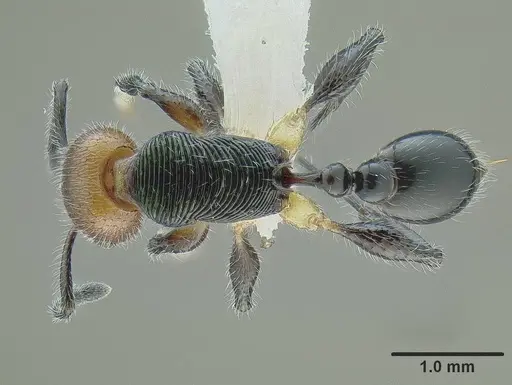
CASENT0913002
Ver no AntWeb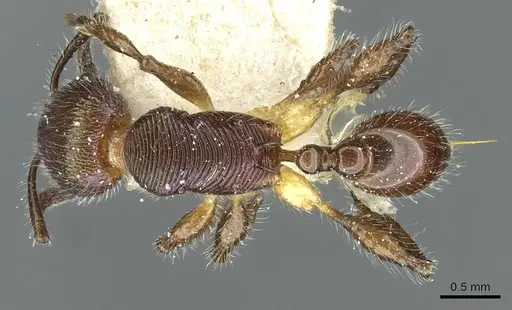
Literatura
A carregar mapa de distribuição...A carregar produtos...