
Temnothorax santschii
- Nome cient.
- Temnothorax santschii
- Tribo
- Crematogastrini
- Subfamília
- Myrmicinae
- Autor
- Forel, 1905
- Distribuição
- Encontrado em 2 países
Introdução
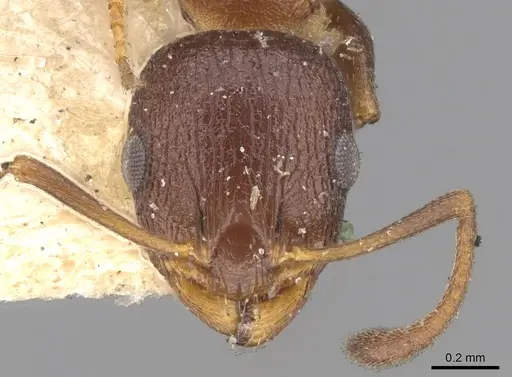
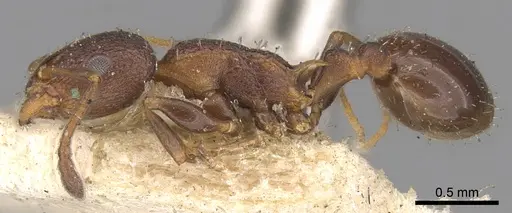
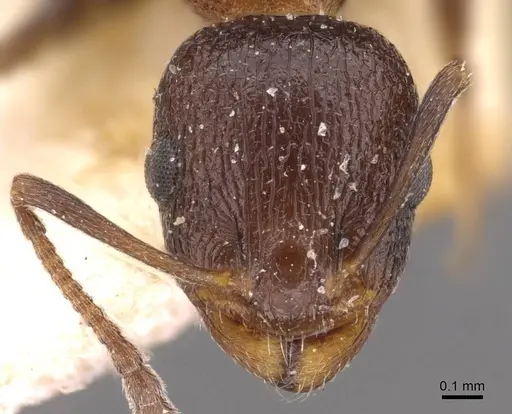
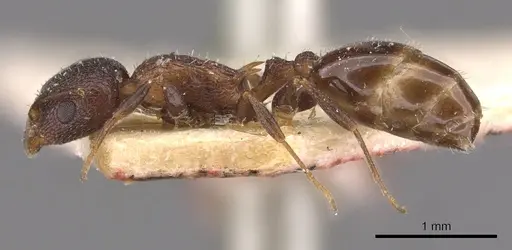
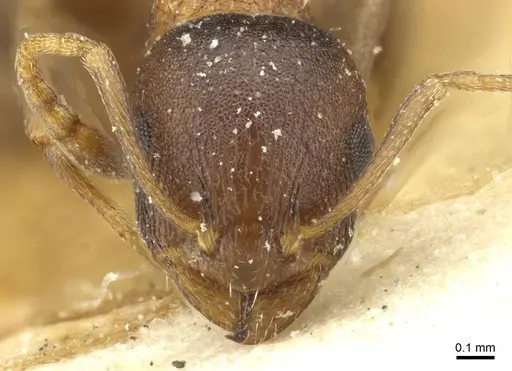
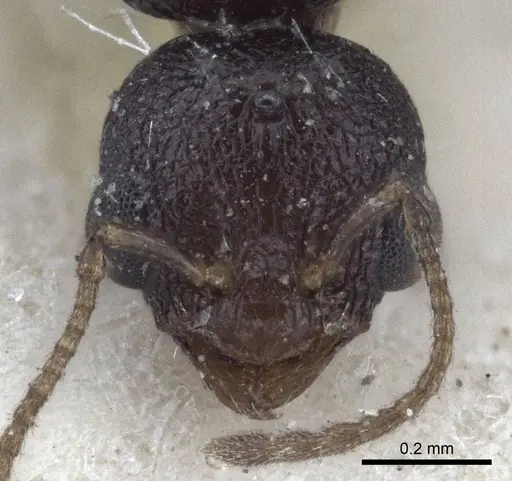
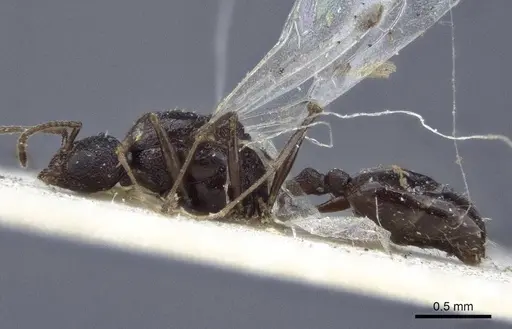
Temnothorax santschii is a small ant species native to the western Mediterranean, recorded from Algeria, Morocco, and Tunisia . Size data for this species is unavailable, but workers of similar Temnothorax are around 2-4 mm. The body is dark reddish-brown to blackish with relatively long legs. It is probably an arboreal species, meaning it nests above ground in hollow twigs, under bark, or in tree cavities rather than in soil . Originally described as a subspecies of Leptothorax flavispinus, it was raised to full species status in 1997,with boiteli and facetus considered junior synonyms .
Quick Summary
- Difficulty: Easy
- Origin & Habitat: Western Mediterranean region: Algeria, Morocco, Tunisia. This species is probably arboreal, found in forested areas of the Middle Atlas and High Atlas in Morocco [2]. The climate is Mediterranean with mild, wet winters and hot, dry summers.
- Colony Type: Likely single-queen (monogyne) based on typical Temnothorax patterns. The genus is known to have ergatoid (wingless) replacement reproductives that can take over if the queen dies.
- Size & Growth:
- Queen: size data unavailable, inferred from Temnothorax genus (~4-5 mm)
- Worker: size data unavailable, inferred from Temnothorax genus (~2-4 mm)
- Colony: Unknown, colony size data not available, most Temnothorax species form small to moderate colonies.
- Growth: Moderate
- Development: 6-10 weeks at optimal temperature (estimated based on related Temnothorax species) (Development time varies with temperature, warmer conditions within a suitable range speed up development, cooler conditions slow it down.)
- Antkeeping:
- Temperature: Keep at 20-24°C (based on Mediterranean origin). A gentle heat gradient allows workers to choose their preferred zone. Brief temperature fluctuations are generally tolerated.
- Humidity: Moderate: keep the nest substrate consistently moist but not waterlogged, and allow partial drying between waterings. As an arboreal species, it prefers slightly drier conditions than ground-nesting ants.
- Diapause: Likely required, based on Mediterranean origin. Provide a mild winter rest of 8-12 weeks at 10-15°C. Reduce feeding and keep slightly cooler during this period. No specific data for this species, but related Temnothorax undergo diapause.
- Nesting: Suitable nests include Y-tong (AAC) or plaster nests with narrow chambers scaled to the ants' small size. Provide some vertical structures to accommodate their arboreal nesting instincts. Avoid large, open spaces that might make them feel insecure.
- Behavior: Generally peaceful and non‑aggressive. Workers are active foragers that search for small prey and honeydew. They possess a modified stinger used to smear venom onto threats (not harmful to humans), but they rarely use it in captivity. Their tiny size (under 3 mm) makes escape prevention essential, they can slip through gaps as small as 1 mm. Workers are quick and curious.
- Common Issues: escape prevention is critical due to their tiny size, use fine mesh (≤0.5 mm) and tight seals on all openings., colonies are small and slow-growing, resist overfeeding, which can attract mold., wild-caught colonies may carry parasites that could harm captive populations., test tube setups can dry out quickly, monitor moisture levels more frequently than for larger species., mild winter diapause is likely needed, skipping it may stress the colony.
Housing and Nest Setup
For these tiny ants, Y‑tong (AAC) nests with narrow chambers work well. Chambers should be appropriately sized, too large and the ants may feel insecure. Plaster nests also help maintain stable humidity. Use a test tube setup for founding colonies: a small chamber with a water reservoir connected by a cotton plug. Escape prevention is critical, these ants can squeeze through gaps as small as 1 mm. Apply Fluon or use fine mesh (≤0.5 mm) on all openings. A small outworld area is sufficient since colonies remain relatively small.
Feeding and Diet
Temnothorax santschii is omnivorous, like most Temnothorax. Offer small protein sources such as fruit flies, small mealworms, or other tiny insects. They also accept sugar water or diluted honey. In the wild, they likely tend aphids for honeydew, you can replicate this with occasional sweet solutions. Feed small amounts 2-3 times per week for established colonies, removing uneaten prey after 24 hours to prevent mold. Founding colonies need minimal food (the queen does not leave the nest during founding).
Temperature and Seasonal Care
Maintain temperatures between 20-24°C for optimal colony development (based on Mediterranean origin). These ants can tolerate 18-28°C temporarily, but grow best in the middle of this range. Provide a heat gradient so workers can regulate their own temperature. Winter rest is likely important: offer 8-12 weeks at 10-15°C during winter. This mimics the natural cycle in North Africa where winters are cool. Reduce feeding during diapause, the colony will be less active. Skipping the winter rest may stress the colony and affect reproduction in spring.
Behavior and Colony Dynamics
These are peaceful, non‑aggressive ants that pose no danger to keepers. Workers are active foragers, quickly exploring their environment for food. They possess a modified, spatulate stinger used to smear venom onto threats, this is harmless to humans and rarely used in captivity. Colonies grow moderately, under optimal conditions, the first workers appear after about 6-10 weeks. Mature colonies are small (size data unavailable). The genus Temnothorax is known to produce ergatoid (wingless) replacement queens that can take over if the primary queen dies. Workers are relatively long‑lived.
Colony Founding
The exact founding method is unconfirmed for this species. Based on typical Temnothorax patterns, queens are likely claustral, they seal themselves inside a small chamber and raise the first brood using stored fat reserves without leaving the nest. This process typically takes 4-8 weeks depending on temperature. The first workers (nanitics) are smaller than mature workers but immediately begin foraging and nest maintenance. Do not disturb a founding colony unnecessarily, stress can cause the queen to abandon or consume her brood. Once the first workers emerge, you can offer tiny amounts of food.
Frequently Asked Questions
How long does it take for Temnothorax santschii to produce first workers?
Expect 6-10 weeks from egg to first worker at optimal temperature (around 22°C). This varies with temperature, warmer conditions speed development, cooler conditions slow it down. The first workers (nanitics) are smaller than mature workers but can immediately help the colony function.
What do Temnothorax santschii ants eat?
They are omnivorous. Offer small protein sources like fruit flies, tiny mealworms, or other small insects. They also accept sugar water or diluted honey. Feed small amounts 2-3 times per week, removing uneaten food after 24 hours.
Do Temnothorax santschii ants sting?
They have a modified stinger used to smear venom, but it is not used to pierce skin. They are completely harmless to humans and pose no danger. In captivity they rarely use even this defensive behavior.
Are Temnothorax santschii good for beginners?
Yes, they are considered easy to keep. They are small, peaceful, and have modest care requirements. The main challenges are escape prevention due to their tiny size and providing the mild winter rest they likely need.
What temperature do Temnothorax santschii need?
Keep them at 20-24°C. A slight heat gradient allows workers to choose their preferred temperature. They can tolerate 18-28°C but grow best in the middle of this range.
Do Temnothorax santschii need hibernation?
A mild winter rest of 8-12 weeks at 10-15°C is recommended (based on Mediterranean origin). This mimics their natural climate where winters are cool but not freezing. Reduce feeding during this period.
How big do Temnothorax santschii colonies get?
Colony size data is unavailable for this species. Most Temnothorax species form small to moderate colonies, but exact figures are not known.
Can I keep multiple Temnothorax santschii queens together?
This species is likely monogyne (single‑queen) based on typical Temnothorax patterns. Combining unrelated queens is not recommended as they may fight. In the wild, colonies typically have one founding queen.
What type of nest is best for Temnothorax santschii?
Y‑tong (AAC) nests with narrow chambers work well. Their tiny size means appropriately scaled chambers are important. Plaster nests also work and help maintain humidity. Avoid large, open spaces where they may feel insecure.
Why are my Temnothorax santschii escaping?
Their tiny size means they can slip through incredibly small gaps. Use fine mesh (≤0.5 mm), apply Fluon to smooth surfaces, and check all lid edges carefully. Even tiny gaps that seem too small for other ants are escape routes for this species.
When should I move my colony to a formicarium?
Wait until the colony has at least 20 workers before moving. Test tube setups are perfect for founding colonies and can house colonies up to roughly 100 workers. Only move when the test tube becomes crowded or the colony is clearly outgrowing it.
What humidity level do Temnothorax santschii need?
Keep the nest substrate moderately moist but not waterlogged. As an arboreal species, it prefers slightly drier conditions than ground‑nesting ants. Allow partial drying between water additions.
Report an Issue
The current care sheet is based fully on literature. See inconsistencies, or something that's incorrect? Please , it will be resolved after review from an admin. Contributing to the blogs tab also helps providing information, to make us be able to further improve the caresheets. Thank you for your support!
References

Esta ficha de cuidados é licenciada sob CC BY-SA 4.0 .
Blogs da comunidade
CASENT0906169
Ver no AntWeb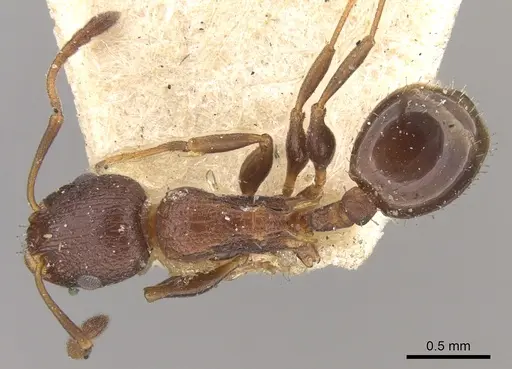
CASENT0909028
Ver no AntWeb
CASENT0912931
Ver no AntWeb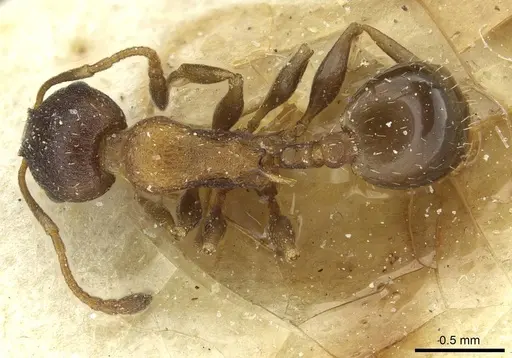
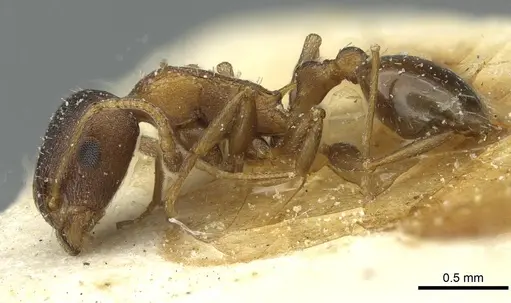
CASENT0912933
Ver no AntWeb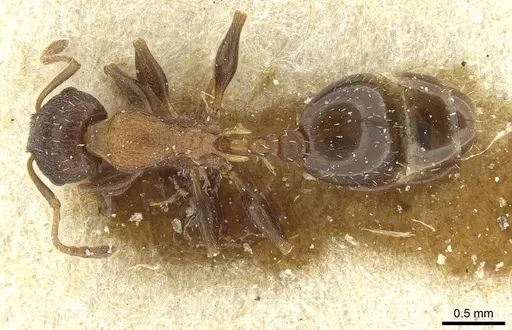
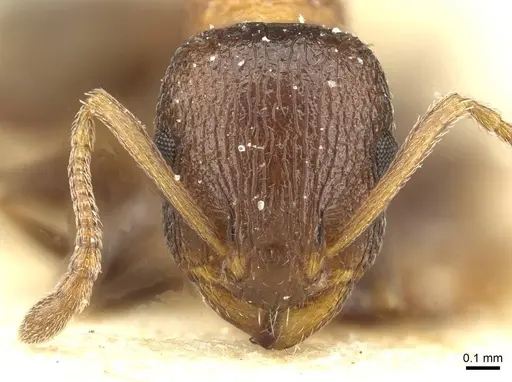
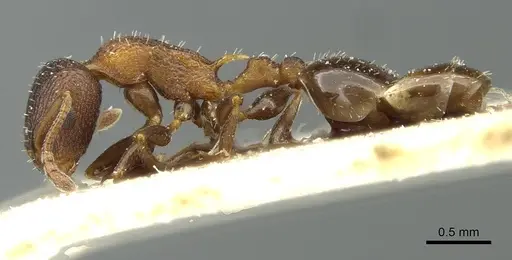
CASENT0916695
Ver no AntWeb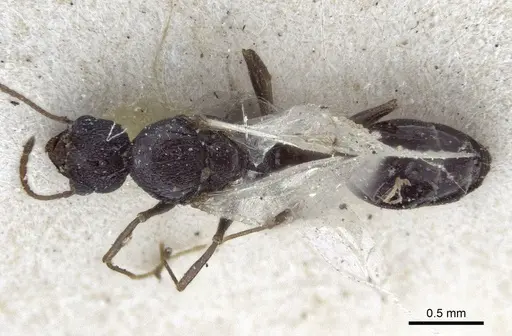
Literatura
A carregar mapa de distribuição...A carregar produtos...