
Temnothorax italicus
- Nome cient.
- Temnothorax italicus
- Tribo
- Crematogastrini
- Subfamília
- Myrmicinae
- Autor
- Consani, 1952
- Distribuição
- Encontrado em 1 países
Introdução
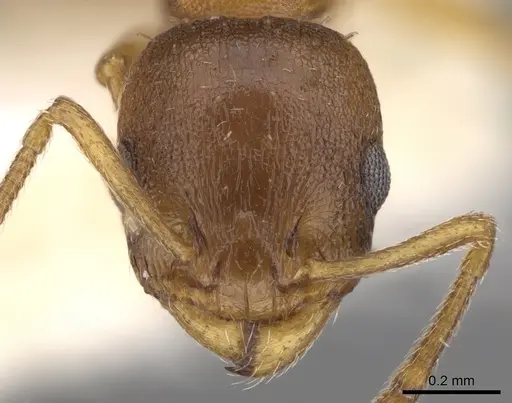
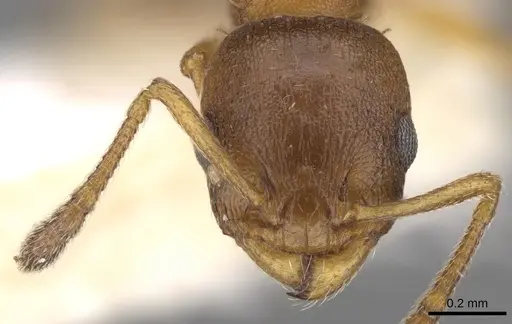
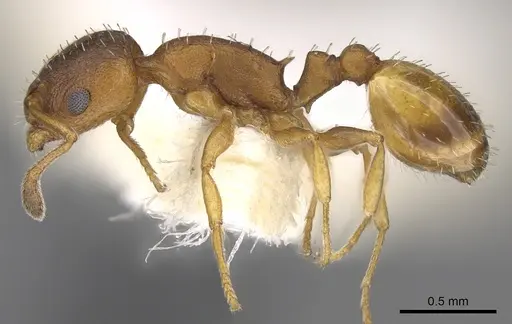
Temnothorax italicus is a tiny, yellow to orange-yellow ant native to the Mediterranean region of southern Europe. Workers have a darkened antennal club and femora that contrast with their otherwise pale body . This species belongs to the aveli species group and is closely related to other arboreal Temnothorax species . Originally described as a subspecies of Temnothorax affinis in 1952,it was raised to full species status in 1971 . This ant is arboreal, nesting in pre-existing cavities like hollow twigs and oak galls . It has been recorded visiting plants in Italian vineyards, though in very low numbers . The species is found in the submediterranean zone of Italy, Croatia, and Slovenia, favoring warm woodlands with suitable nesting sites .
Quick Summary
- Difficulty: Medium
- Origin & Habitat: Mediterranean region of southern Europe: Italy, Croatia, and Slovenia. Found in submediterranean woodland habitats, especially areas with oak trees and other dead wood providing nesting cavities [6][7][2].
- Colony Type: Likely single-queen colonies (monogyne), based on typical patterns in the genus Temnothorax. Colonies are small, probably under 100 workers.
- Size & Growth:
- Queen: Size unknown, inferred from Temnothorax genus (roughly 4-5 mm). No direct measurements available in literature.
- Worker: 0.720 mm but no total length data [1].
- Colony: Up to 100 workers (estimated, based on similar arboreal Temnothorax species).
- Growth: Moderate
- Development: Estimated 6-8 weeks at 20-24°C (based on genus patterns, no specific data for this species). (Development time is inferred from related Temnothorax species. Exact timeline for Temnothorax italicus is unknown.)
- Antkeeping:
- Temperature: Maintain at room temperature,20-24°C. Mediterranean origin suggests they tolerate warmth, but avoid overheating. A slight temperature gradient is beneficial.
- Humidity: Moderate humidity, keep nest substrate slightly moist but not wet. Arboreal species prefer less humidity than ground-nesting ants, allow surface to dry periodically.
- Diapause: Yes, a winter rest of 2-3 months at 10-15°C is recommended, mimicking Mediterranean winter conditions (inferred from temperate distribution). [3]
- Nesting: Arboreal, naturally occupying hollow twigs, oak galls, and beetle burrows [2][4]. In captivity, use small Y-tong (AAC) nests, cork nests, or test tubes with narrow chambers. They prefer tight, dark spaces.
- Behavior: Peaceful and non-aggressive. Workers forage individually, not in trails. Their defense mechanism is smearing venom (modified stinger), but they rarely use it against humans. Tiny size (under 3 mm) means excellent escape prevention is critical. They are arboreal and enjoy climbing.
- Common Issues: escape prevention is critical due to tiny size, use fine mesh and seal all gaps (1 mm gaps can be an exit)., small colony size makes them sensitive to sudden changes in conditions., arboreal nature means they may not use ground-level foraging areas, provide vertical structures., low abundance in the wild makes wild-caught colonies rare and potentially stressed [5]., overheating is lethal, avoid direct sunlight and heat sources above 28°C.
Housing and Nest Setup
Temnothorax italicus naturally nests in pre-existing cavities like hollow twigs, beetle burrows, and oak galls [2][4]. In captivity, they do best in small, tight-fitting nests that mimic these conditions. A Y-tong (AAC) nest with narrow chambers works well, as does a cork nest or a simple test tube with a cotton plug. The chambers should be small, too large an area stresses the colony. Cover the nest with an opaque sleeve or place it in a dark area. Provide a small outworld with climbing structures (twigs, mesh). Their tiny size means you must seal every connection, use fine mesh for ventilation and fluon on rims.
Feeding and Diet
This species is omnivorous but prefers protein. Offer tiny prey like fruit flies, small mealworms, or pinhead crickets 2-3 times per week. They also accept sugar water or honey droplets. Their small size means prey must be very small, any piece larger than a worker will be ignored. Remove uneaten food after 24 hours to prevent mold. A constant water source is essential, use a shallow dish with cotton or a water test tube.
Temperature and Seasonal Care
Keep the colony at 20-24°C year-round, with a gentle gradient in the outworld. They come from the Mediterranean, so they tolerate warmth but not extreme heat. During winter, provide a diapause of 2-3 months at 10-15°C. Reduce feeding during diapause and keep the nest slightly dry. A cool basement or refrigerator (not freezer) works well. Do not freeze or overheat the colony. [6]
Behavior and Observation
Workers are active during the day, foraging alone rather than in trails. They are peaceful and rarely show aggression. Their main defense is smearing venom from their modified stinger, but they are harmless to humans. Their tiny size makes them expert escape artists, you must seal all gaps (even 1 mm). Provide vertical surfaces (cork, twigs) because they prefer climbing over walking on flat ground. They are fascinating to watch as they explore their surroundings methodically. [5]
Colony Growth and Development
Colonies stay small, probably under 100 workers at maturity. The queen lays eggs that develop through larval and pupal stages over several weeks. First workers (nanitics) are smaller than later ones. Growth is moderate, a well-fed colony may gain a dozen workers per month. Patience is required, the colony builds steadily but slowly. Do not disturb the nest frequently, as small colonies are sensitive. [2]
Acquiring Your Colony
This species is rare in the hobby due to its limited range and low abundance [5]. If you can find one, buy from a reputable breeder rather than collecting in the wild (populations are vulnerable). When you get a queen, place her in a small test tube with water and a dark sleeve. Founding is unconfirmed, assume she needs no food until workers emerge if she seals herself in. Once workers appear, start offering tiny prey. The small colony is sensitive to disturbance, so keep handling to a minimum.
Frequently Asked Questions
How long does it take for Temnothorax italicus to raise their first workers?
Based on similar Temnothorax species, expect 6-8 weeks from egg to worker at 20-24°C. Exact data for this species is unknown.
Can I keep Temnothorax italicus in a test tube?
Yes, a test tube setup is ideal. The narrow, dark cavity mimics their natural nesting sites. Use a cotton plug to create a water reservoir and cover the tube with an opaque sleeve. For a growing colony, you can connect additional tubes or move to a small Y-tong nest.
Do Temnothorax italicus ants sting?
They have a modified stinger used for smearing venom, but they are not aggressive and rarely sting humans. Their defense is a venom smear, not a piercing sting. They are harmless to people.
What do Temnothorax italicus eat?
They are omnivorous but prefer small protein: fruit flies, tiny mealworms, or aphids. They also accept sugar water or honey. Feed 2-3 times per week and remove leftovers quickly to avoid mold.
Do Temnothorax italicus need hibernation?
Yes, a winter diapause of 2-3 months at 10-15°C is recommended, based on their temperate Mediterranean origin. This helps maintain colony health and may stimulate reproduction. Reduce feeding during this period.
Are Temnothorax italicus good for beginners?
Their care is fairly simple, but their tiny size makes escape prevention challenging. If you can manage sealing gaps (use fluon, fine mesh), they are a good beginner species once the initial worker batch arrives. Start with other species if you are completely new to antkeeping.
How big do Temnothorax italicus colonies get?
Colonies remain small, probably under 100 workers at maturity (estimated from related species). The small size makes them easy to house in compact setups.
When should I move my colony to a formicarium?
You can keep them in a test tube indefinitely. If the colony outgrows the tube, move to a small Y-tong or cork nest with narrow chambers. They prefer tight spaces, so avoid large enclosures.
Why are my Temnothorax italicus escaping?
Their tiny size lets them squeeze through any gap 1 mm or larger. Check all connections, use fine mesh for ventilation, and apply fluon or petroleum jelly on nest rims. Even a small crack in the lid can be an exit.
Can I keep multiple queens together?
Probably not. Most Temnothorax species are monogyne, so multiple queens likely fight. No evidence supports polygyny in this species. Keep only one queen per colony.
Report an Issue
The current care sheet is based fully on literature. See inconsistencies, or something that's incorrect? Please , it will be resolved after review from an admin. Contributing to the blogs tab also helps providing information, to make us be able to further improve the caresheets. Thank you for your support!
References

Esta ficha de cuidados é licenciada sob CC BY-SA 4.0 .
Blogs da comunidade
CASENT0906178
Ver no AntWeb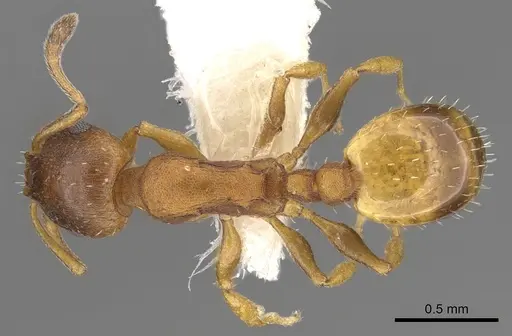
Literatura
A carregar mapa de distribuição...A carregar produtos...