
Syscia indica
- Nome cient.
- Syscia indica
- Subfamília
- Dorylinae
- Autor
- Aswaj <i>et al.</i>, 2021
- Distribuição
- Encontrado em 0 países
Introdução
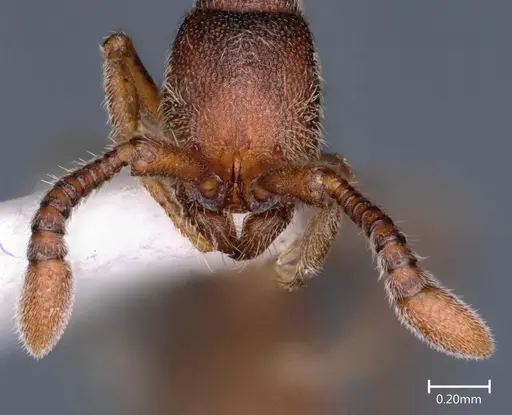
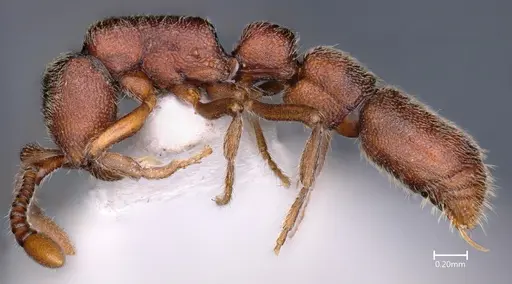
Syscia indica is an extremely rare doryline ant species known only from a single worker specimen collected in Arunachal Pradesh, India. Workers are tiny at 3.33mm total length, with a reddish-brown body and yellowish-brown antennae and legs . They have 11-segmented antennae, which is unusual for the genus, and completely lack eyes and ocelli, they are entirely blind . This species was discovered in high-elevation leaf litter at Eaglenest Wildlife Sanctuary, a pristine forest area with 85% canopy cover at 1600m elevation . The soil at the collection site had a pH of 6.85 and a temperature of 16°C . As a doryline ant, they belong to the same subfamily as army ants, though this particular species appears to be a litter-dwelling form rather than a nomadic predator.
Quick Summary
- Difficulty: Expert
- Origin & Habitat: India (Arunachal Pradesh) at 1600m elevation in Eaglenest Wildlife Sanctuary. Found in pristine montane forest leaf litter with 85% canopy cover, soil pH 6.85,and cool temperatures around 16°C [1].
- Colony Type: Unknown, only a single worker specimen has ever been collected. Colony structure, queen presence, and social organization have not been documented.
- Size & Growth:
- Antkeeping:
- Temperature: Likely prefers cool conditions given their high-elevation collection at 16°C. Start around 18-22°C and observe colony activity. Avoid overheating, they come from a cool montane environment [1].
- Humidity: High humidity is likely needed, they were collected from leaf litter in a humid forest understory. Keep the nest substrate consistently moist but not waterlogged. Provide a humidity gradient so ants can choose their preferred zone.
- Diapause: Unknown, no seasonal data exists. No information to confirm or deny a winter dormancy period.
- Nesting: In nature they live in leaf litter and soil. In captivity, a naturalistic setup with moist soil and leaf litter, or a small plaster or Y-tong nest with very tight chambers scaled to their 3mm size.
- Behavior: No behavioral observations exist for this species. They are completely unstudied. Their complete lack of eyes suggests they navigate chemically and through touch rather than vision. Exercise caution, this is one of the least-known ant species.
- Common Issues: no captive husbandry information exists, this is an experimental species with no documented success, only one specimen has ever been collected, virtually nothing is known about their biology, tiny size (3.33mm) makes them difficult to house and feed, lack of eyes suggests specialized sensory requirements that are unknown, extreme rarity means any captive attempts are high-risk
Discovery and Rarity
Syscia indica is one of the rarest ant species in the world, only a single worker specimen has ever been collected, making it one of the least-known ants [1]. The holotype was collected in 2013 from Eaglenest Wildlife Sanctuary in Arunachal Pradesh, India, using a Winkler extractor that sifted through 295ml of leaf litter [1]. This method is commonly used to collect tiny litter-dwelling ants, suggesting Syscia indica lives deep within the forest floor debris. The fact that only one specimen has been found despite extensive ant surveys in the region indicates this species is either extremely rare, has a very limited range, or is excellent at hiding in leaf litter [1]. The same trap also captured 295 individuals of the ant genus Carebara, giving us a sense of the community they inhabit [1].
Identification and Morphology
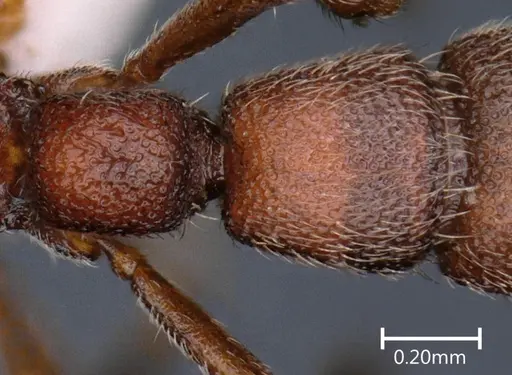
Workers are tiny at just 3.33mm body length, making them one of the smaller ant species [1]. The most distinctive features are their 11-segmented antennae (unusual in Syscia, where 9 segments is more common) and complete absence of eyes and ocelli, they are blind [1]. The head is rectangular and longer than broad, with weakly convex lateral margins and a weakly concave posterior margin. The antenna scapes are short, reaching only mid-length of the head when folded back. The body is covered in numerous small, closely-spaced foveolae (pit-like structures), and the first gastral segment has distinctive cross ribs at the base of the cinctus [1]. Coloration is reddish-brown overall, with lighter yellowish-brown antennae and legs. The propodeal declivity (the sloping rear of the mesosoma) is feebly concave and encircled with a thin rim. These ants can be distinguished from similar species by their weak sculpture,11-segmented antennae, and the specific shape of their head and petiole [1].
Natural Habitat
Syscia indica was collected from Eaglenest Wildlife Sanctuary at an elevation of 1600m above sea level, a cool, montane environment [1]. The forest had approximately 85% canopy cover, indicating a relatively undisturbed, dense forest with limited light reaching the forest floor. The soil at the collection site had a pH of 6.85 (slightly acidic) and a temperature of just 16°C at the time of collection [1]. This cool temperature is significant, it suggests this species is adapted to higher-elevation, cooler conditions rather than tropical warmth. The collection method (Winkler extractor from sifted leaf litter) confirms they are true leaf-litter dwellers, living among the decomposing organic material on the forest floor. This microhabitat is typically humid, stable in temperature, and rich in tiny invertebrates that could serve as prey [1].
Housing and Care Recommendations
No captive husbandry information exists for this species, so all recommendations are speculative and based on natural habitat data. Use a naturalistic setup with moist soil and leaf litter, or a small plaster or Y-tong nest with very tight chambers scaled to their tiny 3mm size. Maintain high humidity, their leaf-litter habitat is typically humid with minimal temperature fluctuations. Based on their collection at 16°C, keep them cool compared to most tropical ants: aim for 18-22°C and avoid overheating. Provide a humidity gradient so ants can self-regulate. For feeding, offer tiny live prey such as springtails, fruit fly larvae, or other micro-arthropods. As doryline ants, they may be predatory, but their exact diet is unknown. Start with small live prey and observe acceptance. Escape prevention is critical due to their tiny size, use fine mesh and tight-fitting barriers. This species should be considered experimental in captivity, and success is uncertain. [1]
Related Species and Taxonomy
Syscia indica belongs to the subfamily Dorylinae (army ants and their relatives), though it represents a specialized leaf-litter form rather than the nomadic army ant lifestyle [2]. It can be distinguished from the similar Syscia chaladthanyakiji by its weaker sculpture with smaller, more closely-spaced foveolae, and different head shape (oval vs rectangular) [1]. It differs from Syscia typhla (found in Sri Lanka and China) primarily in having 11-segmented antennae (vs. 9-segmented) and cross ribs at the base of the first gastral segment [1]. The genus Syscia contains several similar cryptic species that are difficult to distinguish, and many are poorly known. This species was formally described in 2021,making it a relatively recent addition to scientific knowledge [1]. The related genus Parasyscia contains many similar-looking species, and there may be some confusion between Syscia and Parasyscia in the literature [2][3].
Frequently Asked Questions
How long do Syscia indica workers live?
Unknown, no longevity data exists for this species.
Can I keep Syscia indica in a test tube?
Unknown, no captive data exists. A test tube might be attempted, but all care is experimental. Their tiny size and likely need for high humidity make a naturalistic setup with moist substrate more appropriate.
What do Syscia indica ants eat?
Unknown, no feeding observations exist. As doryline ants, they may prey on small invertebrates, but this is unconfirmed. Try tiny live prey like springtails or fruit fly larvae if attempting to keep them.
Are Syscia indica ants aggressive?
Unknown, no behavioral observations exist.
How fast do Syscia indica colonies grow?
Unknown, no colony development has been documented.
Do Syscia indica need hibernation?
Unknown, no seasonal data exists. Given their high-elevation origin in northern India, a winter cooling period might occur naturally, but this is purely speculative.
Why are my Syscia indica dying?
This species has never been successfully kept in captivity. Any attempt is experimental, and mortality is expected. No specific causes can be identified due to lack of data.
Can I keep multiple queens together?
Unknown, no queen specimens have ever been collected or described. Do not attempt combining unrelated queens without any biological data.
Are Syscia indica good for beginners?
No, this is absolutely not a beginner species. Only one specimen has ever been collected, and virtually nothing is known about their biology, care requirements, or captive survival. They should only be attempted by expert antkeepers willing to experiment and document their findings.
What is the best nest type for Syscia indica?
A naturalistic setup with moist soil and leaf litter is closest to their natural habitat. Alternatively, a small plaster or Y-tong nest with very tight chambers scaled to their 3mm size. Maintain high humidity and cool temperatures.
Where does Syscia indica live in the wild?
Only known from Eaglenest Wildlife Sanctuary in Arunachal Pradesh, India, at 1600m elevation. They live in leaf litter in a cool, humid, pristine montane forest with 85% canopy cover [1].
Report an Issue
The current care sheet is based fully on literature. See inconsistencies, or something that's incorrect? Please , it will be resolved after review from an admin. Contributing to the blogs tab also helps providing information, to make us be able to further improve the caresheets. Thank you for your support!
References

Esta ficha de cuidados é licenciada sob CC BY-SA 4.0 .
Blogs da comunidade
NBAIRHYM-FOR1721-2
Ver no AntWeb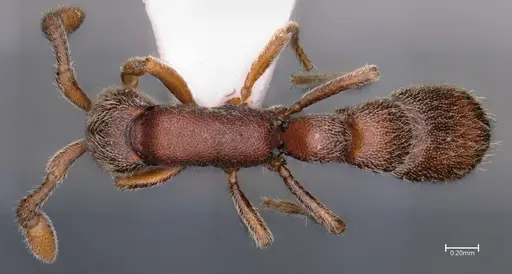
Literatura
A carregar mapa de distribuição...A carregar produtos...