
Strumigenys paradoxa
- Nome cient.
- Strumigenys paradoxa
- Tribo
- Attini
- Subfamília
- Myrmicinae
- Autor
- Bolton, 2000
- Distribuição
- Encontrado em 1 países
Introdução
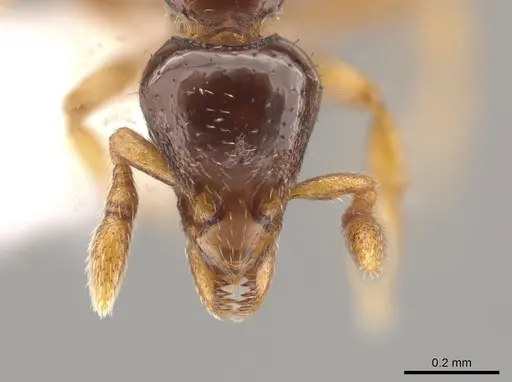
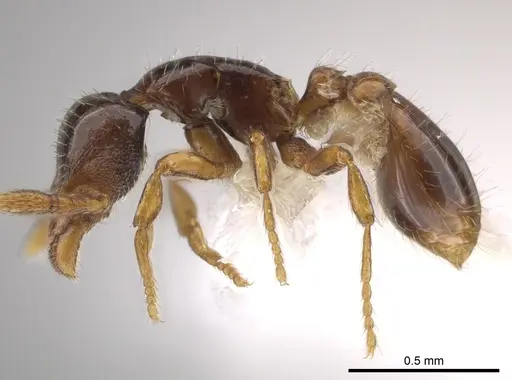
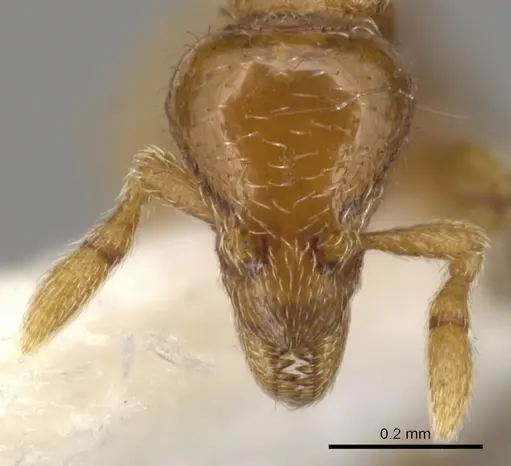
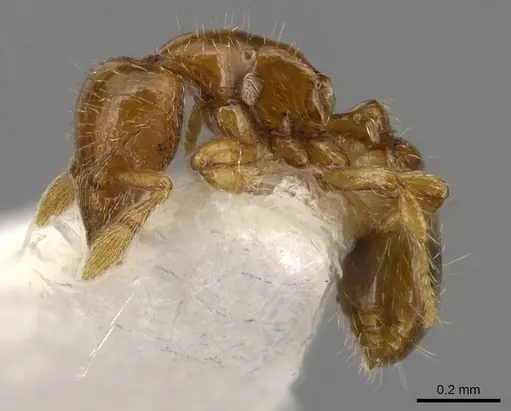
Strumigenys paradoxa is a tiny ant, about 1.7mm in total length . Workers have a smooth, shining orange body with a distinctive downward-curving mandible and an unarmed propodeum (the section behind the waist) . This belongs to the tribe Attini, a group that includes fungus-growers, but Strumigenys are specialized predators, not fungus cultivators . The species was originally described as Pyramica paradoxa in 2000 and reclassified to Strumigenys in 2007 . It lives in the leaf litter of wet forests in Central America. The type specimen came from a 10-cm-deep soil core extracted from old-growth forest at La Selva Biological Station in Costa Rica, processed with a Berlese funnel . Later records confirm this ant inhabits the humid leaf-litter layer of wet lowland forests in Costa Rica and Honduras .
Quick Summary
- Difficulty: Medium
- Origin & Habitat: Costa Rica and Honduras, wet old-growth forests, living in the leaf litter layer on the forest floor [1]
- Colony Type: Unknown, likely a single queen based on typical Strumigenys patterns, but no data is available [1]
- Size & Growth:
- Queen: Undescribed, no measurements available
- Worker: 1.7mm total length [1]
- Colony: Unknown, probably small, under 100 workers, based on related leaf-litter species [1]
- Growth: Estimated moderate, similar to other small Myrmicinae
- Development: Unknown, no direct data, inferred from related species at warm temperatures (roughly 6-10 weeks at 24-26°C) (Development depends on stable warmth and high humidity.)
- Antkeeping:
- Temperature: Keep at warm tropical levels (24-26°C), inferred from its lowland wet forest habitat. Avoid drops below 20°C [1]
- Humidity: High and stable, the substrate should feel consistently damp but not waterlogged, mimicking a rainforest floor [1]
- Diapause: No, tropical species, no hibernation needed. Keep warm all year [1]
- Nesting: Tight, humid chambers. Y-tong (AAC) nests with small chambers work, or naturalistic setups with moist soil and leaf litter. Their tiny size means very narrow passages and fine escape barriers are essential [1]
- Behavior: Docile, cryptic, and slow-moving. Forages in the leaf litter for micro-arthropods like springtails and mites. They have a functional stinger (tribe Attini), but it is too small to affect humans. Critical escape risk: at 1.7mm they can squeeze through standard mesh. Use fine mesh (≤0.5mm) or fluon barriers. Spend most time in the nest, activity is low. [1]
- Common Issues: escape prevention is critical, their tiny size lets them slip through gaps other ants can't, high humidity must be maintained constantly or the colony will quickly decline, slow growth and low activity can be boring for beginners, don't overfeed or disturb, tropical species cannot tolerate temperatures below 20°C for long, feeding tiny live prey (springtails, fruit fly larvae) can be challenging to source
Housing and Nest Setup
These ants need a setup that matches their tiny size and love for humidity. A Y-tong (AAC) nest with very small chambers works, or a test tube for founding. Use fine mesh (0.5mm or less) on all openings, standard ant mesh will not hold them. Apply fluon to edges to be safe. The nest should be dark or dimly lit, as these leaf-litter ants avoid bright light. Keep the air humid but ventilated enough to stop mold. For a founding colony, a test tube with a cotton plug that stays damp (not soaked) is ideal. The outworld can have a thin layer of moist leaf litter. [1]
Feeding and Diet
Strumigenys paradoxa is a predator of micro-arthropods. In captivity, offer live springtails, tiny mites, or fruit fly larvae. They cannot handle prey larger than themselves (1.7mm). Some keepers report they may take minute sugary liquids, but protein from live prey is essential for brood development. Feed 2-3 times per week, removing uneaten prey within 24 hours to avoid mold. Ensure prey is alive and moving to trigger hunting. Prey that is too large will be ignored. [1]
Temperature and Humidity
As a lowland wet forest species from Costa Rica, this ant needs warm, damp conditions. Keep the nest around 24-26°C. A gentle heat mat on one side can create a gradient. Never let it drop below 20°C. Humidity is critical: the substrate must feel consistently damp but not waterlogged. Mist the outworld or nest inlet if the substrate starts drying. Avoid placing the setup near air currents or direct sun. In very dry climates, covering part of the outworld can help retain moisture. [1]
Colony Founding
The founding process has not been observed for this species. Based on typical Strumigenys behavior, the queen likely seals herself in a small chamber and raises the first brood without feeding (claustral founding), but this is unconfirmed. If you catch a queen, place her in a small test tube with a damp cotton plug and keep it dark, warm, and undisturbed. Do not check frequently, vibration and light can stress the queen. First workers are expected after many weeks, but exact timing is unknown. Once they appear, start offering tiny live prey. [1]
Behavior and Temperament
Strumigenys paradoxa is docile and non-aggressive. Workers move slowly, rely on chemical cues, and spend most of their time inside the nest. They have a functional stinger (tribe Attini), but it is too small to penetrate human skin, you will not feel it. The main challenge is their escape ability: at 1.7mm, they can fit through gaps you cannot see. Use fine mesh or fluon on every opening. Colonies grow slowly and remain small, so do not expect high activity. They are best suited for patient keepers who enjoy observing subtle behavior. [1]
Frequently Asked Questions
How long does it take for Strumigenys paradoxa to produce first workers?
Unknown, no specific data. Based on related tiny Strumigenys species, it may take 6-10 weeks at 24-26°C, but this is a rough estimate. [1]
What do Strumigenys paradoxa ants eat?
They eat tiny live prey: springtails, mites, and fruit fly larvae. They cannot handle anything bigger than their 1.7mm body. Protein from live prey is essential for brood growth. [1]
Are Strumigenys paradoxa good for beginners?
They are rated medium difficulty. Their humidity needs and escape risk make them harder than common beginner species. Best for keepers who already know how to maintain stable conditions. [1]
How big do Strumigenys paradoxa colonies get?
Unknown, no records. Based on similar leaf-litter Strumigenys, probably under 100 workers. They live in tiny spaces and do not form large colonies. [1]
Do Strumigenys paradoxa need hibernation?
No. They are tropical ants from Costa Rica and Honduras and do not require any cold period. Keep them warm year-round. [1]
Why are my Strumigenys paradoxa escaping?
Their tiny size (1.7mm) lets them escape through gaps that seem impossible. Use fine mesh (0.5mm or smaller), fluon barriers, and check for any cracks. Even standard ant mesh may not hold them. [1]
Can I keep Strumigenys paradoxa in a test tube?
Yes, test tubes work well for a founding colony. Use a narrow tube with a damp cotton plug. Once you have about 20 workers, you may move them to a small formicarium with high humidity, but do so carefully, as moving can stress the colony. [1]
What temperature is ideal for Strumigenys paradoxa?
Keep them at 24-26°C. This matches their lowland tropical forest home. Avoid temperatures below 20°C. [1]
Where is Strumigenys paradoxa found in the wild?
It is known from Costa Rica and Honduras, living in wet old-growth forest leaf litter. The type specimen was collected at La Selva Biological Station in Costa Rica. [1]
Report an Issue
The current care sheet is based fully on literature. See inconsistencies, or something that's incorrect? Please , it will be resolved after review from an admin. Contributing to the blogs tab also helps providing information, to make us be able to further improve the caresheets. Thank you for your support!
References

Esta ficha de cuidados é licenciada sob CC BY-SA 4.0 .
Blogs da comunidade
CASENT0617538
Ver no AntWeb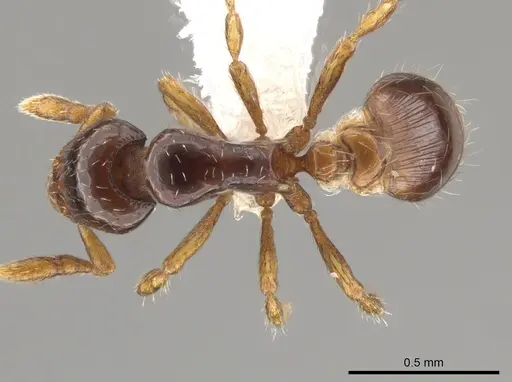
INBIOCRI001259868
Ver no AntWeb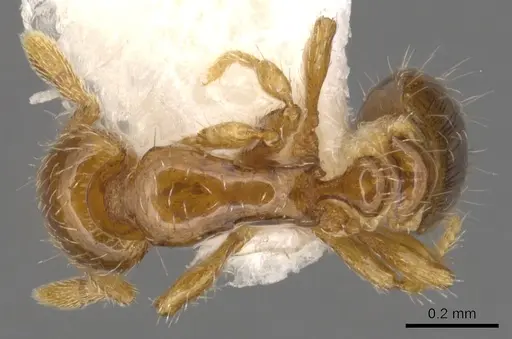
Literatura
A carregar mapa de distribuição...A carregar produtos...