
Strumigenys panaulax
- Nome cient.
- Strumigenys panaulax
- Tribo
- Attini
- Subfamília
- Myrmicinae
- Autor
- Bolton, 2000
- Distribuição
- Encontrado em 1 países
Introdução
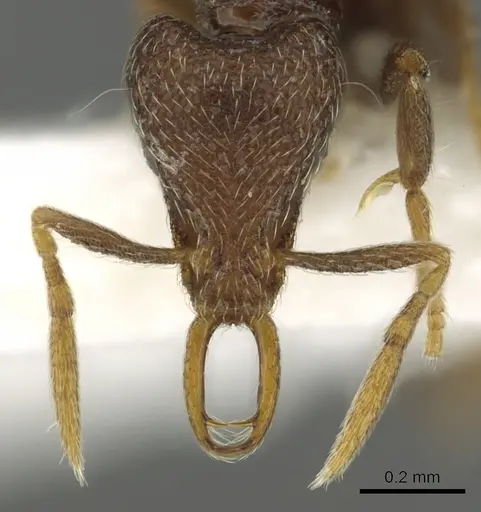
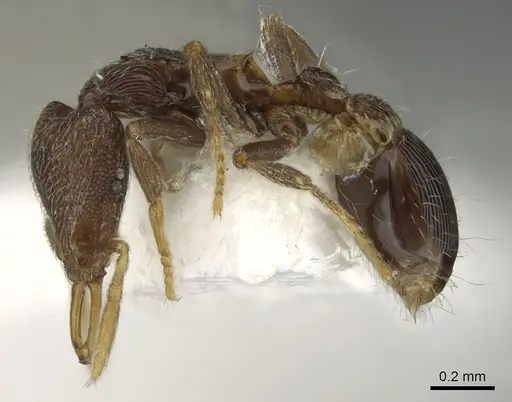
Strumigenys panaulax is an extremely small ant, measuring just 2.1-2.2mm in total length . This species is endemic to Fiji, found only on the island of Vanua Levu at elevations around 800m . Workers are reddish-brown and covered with thick decumbent hairs, making them look fuzzy . The most distinctive feature is the striations that run across the entire length of the first gastral segment – this unique sculpture sets it apart from all other members of the smythiesii complex . As a member of the godeffroyi group, this ant has long mandibles and flagellate hairs on the apicoscrobal area, pronotal humerus, and basitarsus . This ant is known only from leaf litter samples in forest habitat, making it one of the rarest and least-studied Fijian ants . No live colonies have ever been kept, and all knowledge comes from a handful of collected workers. Related Strumigenys species have specialized care needs, but for this species, almost nothing is confirmed.
Quick Summary
- Difficulty: Expert
- Origin & Habitat: Endemic to Vanua Levu, Fiji Islands, found at approximately 800m elevation in forest leaf litter [2][3][4].
- Colony Type: Unconfirmed – only a handful of workers have ever been collected. Related Strumigenys species often have single-queen colonies, but no data exists for this species.
- Size & Growth:
- Antkeeping:
- Temperature: No direct data. Based on its tropical rainforest habitat at 800m, aim for 24-28°C. Avoid sudden drops.
- Humidity: Very high humidity required. The substrate should feel consistently moist but not waterlogged. Leaf litter habitat suggests constant moisture.
- Diapause: No – Fiji has no cold season, so this ant likely stays active year-round.
- Nesting: No specific data. Related Strumigenys do well in naturalistic setups with deep, moist substrate and leaf litter. Escape prevention is critical due to tiny size.
- Behavior: Based on the subfamily (Myrmicinae), this ant has a functional stinger, though it's not dangerous to humans. It's likely shy and cryptic, living hidden in leaf litter. Escape risk is extreme due to its 2mm size – standard mesh won't stop it.
- Common Issues: Extreme rarity – this species is almost impossible to obtain and has never been kept in captivity, Tiny size (2mm) makes escape prevention nearly impossible – even the smallest gaps are escape routes, No captive breeding data exists – all care is inferred from related species, High humidity needs can cause mold if ventilation is poor, Specialized diet – related Strumigenys require live springtails and other micro-arthropods, not standard ant foods
Availability and Collection
Strumigenys panaulax is one of the rarest ants in the world. It has only been collected a handful of times from leaf litter on Vanua Levu, Fiji [4]. The species was described in 2000 by Bolton from specimens collected in 1977,and only a few workers are known to science [2]. This ant is not available commercially, and collection from Fiji would likely be prohibited due to its endemic status. For antkeepers interested in Strumigenys, more commonly available species like Strumigenys godeffroyi or Strumigenys lewisi from other regions are better options. Export regulations for Fijian endemics are extremely strict.
Housing and Setup
No specific housing data exists for this species. Based on related Strumigenys and its leaf-litter habitat, a naturalistic terrarium with deep, moist substrate and leaf litter is recommended. The enclosure must be escape-proof: at 2mm, these ants can squeeze through standard mesh (use fine stainless steel mesh or filter cloth). A test-tube setup can work if humidity is maintained, but the moisture gradient in a small nest may be harder to control. Darkness and hiding spots are essential – these are shy, litter-dwelling ants. [1]
Feeding and Diet
Strumigenys species are specialized predators of tiny soil arthropods. In the wild, they hunt springtails (collembola) and other micro-arthropods. Their long mandibles are adapted for catching fast-moving prey. In captivity, their primary food should be live springtails – this is considered essential for the genus. Other small live prey like booklice or tiny flies may be accepted, but springtails should form the core diet. Sugar sources are not taken – Strumigenys are not honeydew feeders. Standard ant foods like mealworms or honey water are inappropriate.
Temperature and Humidity
As a tropical forest-floor species, warm and humid conditions are vital. Keep the setup at 24-28°C (75-82°F) – room temperature may work if your home stays in that range, otherwise gentle bottom heating is needed. Humidity should be very high: the substrate should feel moist but not soggy. A thin layer of condensation on the container walls is ideal. Some ventilation is necessary to prevent mold growth, but don't let the nest dry out. [4]
Related Species for Keepers
Since Strumigenys panaulax is not available, keepers interested in this genus should look for more commonly collected Strumigenys species. The genus contains over 800 species worldwide, mostly tropical. Related species from the godeffroyi group or smythiesii complex may have similar care needs. Strumigenys godeffroyi is one of the more commonly kept species. All Strumigenys share the same specialized requirements: tiny size, springtail prey, high humidity, and excellent escape prevention. Research the specific species thoroughly before acquiring any Strumigenys.
Frequently Asked Questions
Can I keep Strumigenys panaulax in a test tube?
A test tube setup could work if you maintain very high humidity, but the tiny 2mm size creates serious escape risks. Standard cotton barriers may not stop them. You'd need fine mesh on any air holes and extremely tight connections. A naturalistic setup with moist substrate may be easier to manage and more escape-proof.
What do Strumigenys panaulax ants eat?
Like all Strumigenys, this species is a specialized predator that needs live springtails as its primary food. Standard ant foods like mealworms, fruit, or honey water are not appropriate. Their long mandibles are adapted for catching tiny, fast-moving prey in the 1-2mm range.
How big do Strumigenys panaulax colonies get?
Colony size is completely unknown for this species. Only a handful of workers have ever been collected, and no colonies have been studied. Related Strumigenys typically have small colonies (maybe 50-200 workers), but this is pure speculation.
Are Strumigenys panaulax good for beginners?
Absolutely not. This is an expert-level species even among Strumigenys. It has never been kept in captivity, no care information exists, and its tiny size creates extreme challenges. Even experienced antkeepers struggle with Strumigenys care. Start with more established species.
Where is Strumigenys panaulax found in the wild?
This species is endemic to Fiji, found only on Vanua Levu island at approximately 800m elevation. It has only been collected from forest leaf litter samples – never from ground nests or in large numbers.
Do Strumigenys panaulax need hibernation?
No. Fiji has a tropical climate with no cold season, so this ant likely stays active year-round. No hibernation or diapause is needed in captivity.
Why is Strumigenys panaulax so rarely collected?
The species appears to be genuinely rare in the wild, living in moist forest litter where it probably exists at low population densities. Combined with its tiny 2mm size and cryptic habits, it easily escapes detection in standard surveys. Only dedicated leaf litter extraction has found this species.
Report an Issue
The current care sheet is based fully on literature. See inconsistencies, or something that's incorrect? Please , it will be resolved after review from an admin. Contributing to the blogs tab also helps providing information, to make us be able to further improve the caresheets. Thank you for your support!
References

Esta ficha de cuidados é licenciada sob CC BY-SA 4.0 .
Blogs da comunidade
CASENT0013149
Ver no AntWeb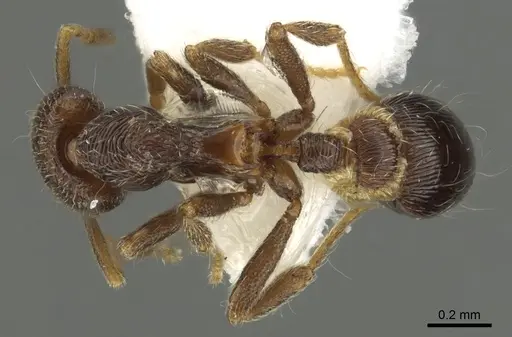
Literatura
A carregar mapa de distribuição...A carregar produtos...