
Strumigenys dagon
- Nome cient.
- Strumigenys dagon
- Tribo
- Attini
- Subfamília
- Myrmicinae
- Autor
- Bolton, 1983
- Distribuição
- Encontrado em 0 países
Introdução
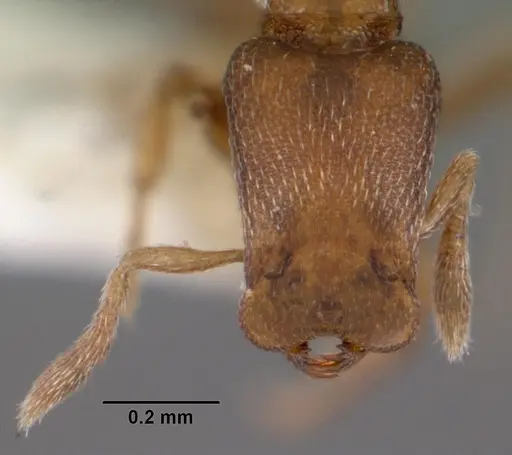
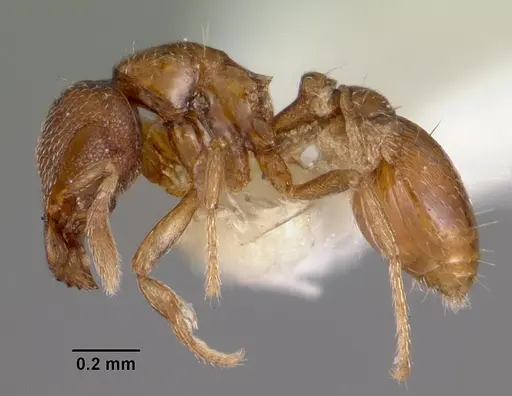
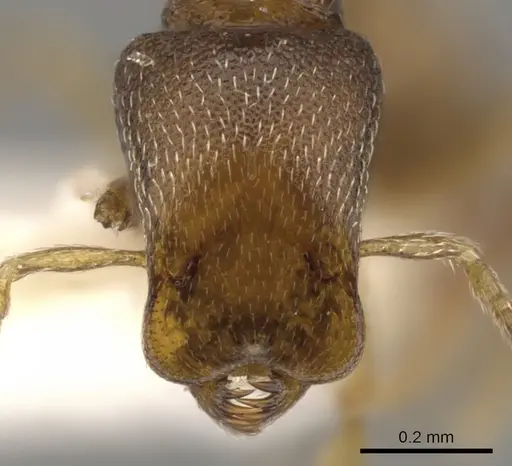
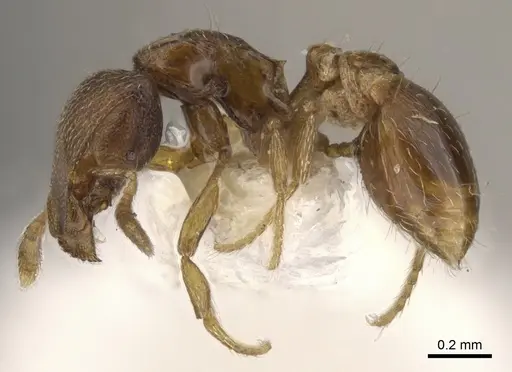
Strumigenys dagon is an exceptionally tiny ant species from the highlands of Rwanda, measuring just 2.0-2.1 mm in total length . Workers are yellowish-brown with remarkably short mandibles (MI 8-9) - among the shortest in the entire genus - and a bizarre, uniquely expanded clypeal structure that makes them instantly recognizable . This species belongs to the Strumigenys dagon group and is known only from forest humus at approximately 1800 m elevation in Rwanda, making it likely endemic to that region . The combination of extremely short trap-jaw mandibles and the unusual clypeal morphology suggests specialized predatory behavior, though this remains unstudied. As with other Strumigenys species, colonies are expected to be very small.
Quick Summary
- Difficulty: Hard
- Origin & Habitat: Rwanda highlands (Rangiro, ~1800 m elevation), forest humus layer [2][1]. This is a high-elevation Afrotropical forest species requiring cool, humid conditions.
- Colony Type: Colony structure is unconfirmed. Based on related Strumigenys species, expect small colonies with single queens (monogyne).
- Size & Growth:
- Queen: Unknown, not yet described [1]
- Worker: 2.0-2.1 mm TL [1]
- Colony: Likely small (under 100 workers) based on typical Strumigenys colony sizes and tiny worker size
- Growth: Unknown, likely slow given small colony size
- Development: Unconfirmed, likely 6-10 weeks based on typical Strumigenys development patterns (No specific development data exists for this species. Estimates based on genus-level patterns for small Myrmicinae.)
- Antkeeping:
- Temperature: Cool conditions needed, aim for 18-22°C given their high-elevation forest origin in Rwanda [2]. Avoid temperatures above 25°C.
- Humidity: High humidity required, they come from forest humus which stays consistently moist. Keep substrate damp but not waterlogged, with humidity around 70-80%.
- Diapause: Unknown, likely a mild seasonal slowdown given Rwanda's moderate climate, but specific requirements unstudied
- Nesting: Prefers tight, humid chambers. Test tubes with cotton and a humid outworld work well. The tiny size means they need very small chambers and narrow passages. Naturalistic setups with moist soil/forest floor material mimic their natural humus habitat.
- Behavior: Very small and likely cryptic. Strumigenys are specialized predators using trap-jaw mandibles to capture prey (typically springtails), though this species has unusually short mandibles suggesting potentially different hunting behavior [1]. Escape prevention is critical due to their minute size, they can squeeze through the tiniest gaps. Likely shy and not aggressive.
- Common Issues: escape prevention is critical, at 2 mm they can squeeze through gaps that larger ants cannot, high humidity must be maintained or colonies will desiccate, finding appropriate live prey (springtails) can be challenging, slow growth may lead to beginner impatience and overfeeding, wild-caught colonies may have parasites that are difficult to detect
Housing and Nest Setup
Strumigenys dagon requires careful housing due to their extremely small size. Test tube setups work well, use a small test tube with a water reservoir (cotton ball) that provides humidity without flooding. The tube should have a tight-fitting cotton plug that prevents escape while allowing some air flow. Because they are only 2 mm tall, even standard test tube setups may feel spacious to them, but the tight fit of the cotton helps contain them. Some keepers add a small piece of moist plaster or soil to the outworld to maintain humidity. The outworld should be small and simple, a plastic container works fine as long as escape prevention is excellent. Apply Fluon or similar barrier to the rim of any container. Given their forest humus origin, they appreciate having some moist substrate or leaf litter in the outworld to forage through.
Feeding and Diet
Strumigenys dagon is likely a specialized predator like other Strumigenys species. In the wild, most Strumigenys hunt springtails (tiny soil arthropods) using their trap-jaw mandibles. However, S. dagon has unusually short mandibles (MI 8-9), which may indicate different prey or hunting behavior compared to typical Strumigenys [1]. For captive care, offer small live prey: springtails are the ideal choice and should be the primary food source. Other tiny arthropods like booklice (psocids), dust mites, or fruit fly larvae may also be accepted. Do not offer large prey, their tiny size means they cannot tackle anything substantial. Sugar sources are unlikely to be accepted given the predatory nature of this genus. Feed small amounts of live prey every few days, removing any uneaten prey after 24 hours to prevent mold.
Temperature and Humidity
This species requires cool, humid conditions reflecting its high-elevation Rwandan forest habitat. Keep the nest area at 18-22°C, avoid any temperatures above 25°C. Room temperature is often ideal for this species. If your room runs warm, consider using a small cooling method or placing the colony in a cooler area of your ant room. Humidity should be high, around 70-80%. The nest substrate (test tube cotton or naturalistic setup) should remain consistently moist but never waterlogged. A small water dish in the outworld helps maintain humidity through evaporation. Avoid placing the colony near heating devices, drafty windows, or air conditioning vents that could cause temperature fluctuations or drying. [2]
Handling and Observation
Observing Strumigenys dagon requires patience and good lighting, these are tiny ants that spend much of their time in dark, humid microhabitats. Use a magnifying glass or macro lens for photography. They have a functional sting, but given their tiny size it is not considered medically significant and they are not aggressive. When cleaning the outworld or moving the colony, use gentle techniques, these ants are fragile. Transferring colonies is best done when the colony is small enough to fit in a single test tube. Avoid frequent disturbances as this can stress the colony. Check for escapees regularly, at 2 mm, they can find their way out through surprisingly small gaps.
Growth and Development
Specific development data for S. dagon does not exist. Based on typical Strumigenys patterns and related small Myrmicinae, expect development from egg to first worker to take approximately 6-10 weeks at optimal temperature (around 20°C). Growth is likely slow, with colonies remaining very small (likely under 100 workers even at maturity). The first workers (nanitics) will be tiny, matching the already minute adult size. Do not expect rapid colony expansion, these ants prioritize longevity over rapid growth. Be patient and avoid the temptation to overfeed, which can lead to mold problems in the small, humid setup.
Frequently Asked Questions
How long does it take for Strumigenys dagon to produce first workers?
Exact timing is unconfirmed for this species, but based on typical Strumigenys development patterns, expect approximately 6-10 weeks from egg to first worker at optimal temperature (around 20°C). Growth is slow, so patience is essential.
What do Strumigenys dagon ants eat?
Like other Strumigenys, they are likely specialized predators. Offer small live prey, springtails are ideal. Other tiny arthropods like booklice or dust mites may be accepted. Their unusually short mandibles suggest potentially different prey handling than typical Strumigenys, but live prey remains the best choice [1].
Can I keep Strumigenys dagon in a test tube?
Yes, test tubes work well for this species. Use a small test tube with a water reservoir (cotton ball) for humidity. Ensure the cotton plug is tight-fitting, these tiny ants can escape through very small gaps. Consider adding a small humid outworld for foraging space.
What temperature do Strumigenys dagon ants need?
Keep them cool, around 18-22°C is ideal. This reflects their high-elevation Rwandan forest origin. Avoid temperatures above 25°C. Room temperature is often perfect for this species.
Are Strumigenys dagon ants good for beginners?
No, this species is rated as Hard difficulty. Their tiny 2 mm size makes escape prevention challenging, they require specific high-humidity conditions, need live springtail prey, and growth is slow. They are best suited for experienced antkeepers who can provide stable, humid environments and access to appropriate live food.
How big do Strumigenys dagon colonies get?
Colony size is expected to remain small, likely under 100 workers at maturity. This is typical for Strumigenys species, especially those with very tiny workers. Do not expect large, impressive colonies.
Why are my Strumigenys dagon dying?
Common causes include: too low humidity (they desiccate quickly), temperatures above 25°C, escape through tiny gaps, starvation (if live prey is not available), or mold from overfeeding. Check that your setup maintains consistent moisture and that escape prevention is thorough.
Do Strumigenys dagon need hibernation?
Diapause requirements are unconfirmed. Given Rwanda's moderate equatorial climate, they likely do not require true hibernation but may have a mild seasonal slowdown. Do not force cold hibernation, a cool room temperature (15-18°C) during winter months may be sufficient if needed.
Where is Strumigenys dagon native to?
This species is known only from Rwanda, specifically the Rangiro area at approximately 1800 m elevation in highland forest humus. It is likely endemic to Rwanda [2][1].
Report an Issue
The current care sheet is based fully on literature. See inconsistencies, or something that's incorrect? Please , it will be resolved after review from an admin. Contributing to the blogs tab also helps providing information, to make us be able to further improve the caresheets. Thank you for your support!
References

Esta ficha de cuidados é licenciada sob CC BY-SA 4.0 .
Blogs da comunidade
CASENT0102588
Ver no AntWeb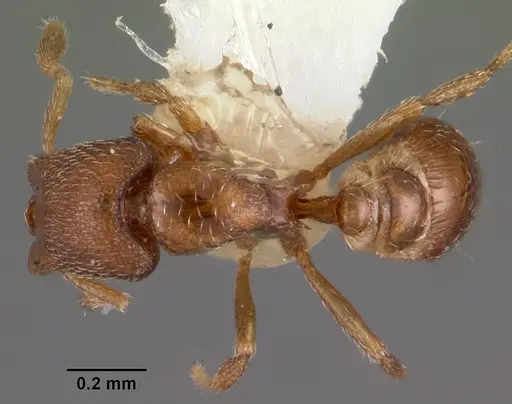
CASENT0900049
Ver no AntWeb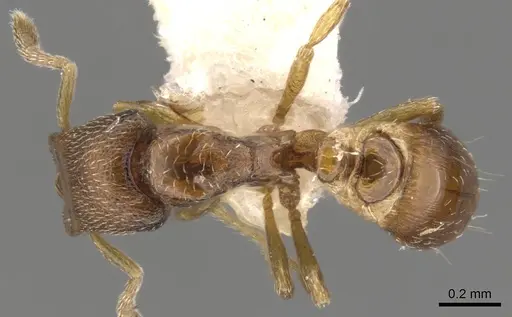
Literatura
A carregar mapa de distribuição...A carregar produtos...