
Strumigenys connectens
- Nome cient.
- Strumigenys connectens
- Tribo
- Attini
- Subfamília
- Myrmicinae
- Autor
- Kempf, 1958
- Distribuição
- Encontrado em 0 países
Introdução
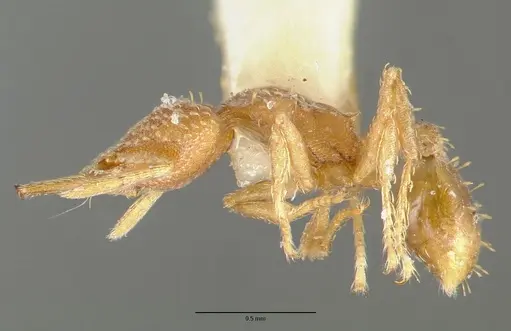
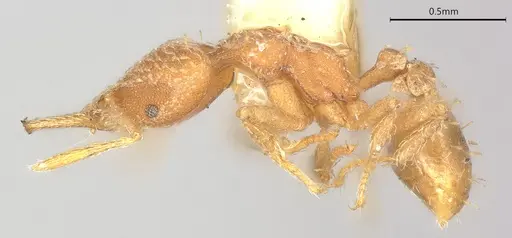
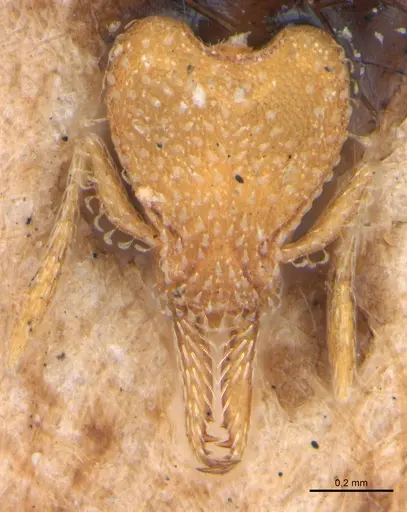
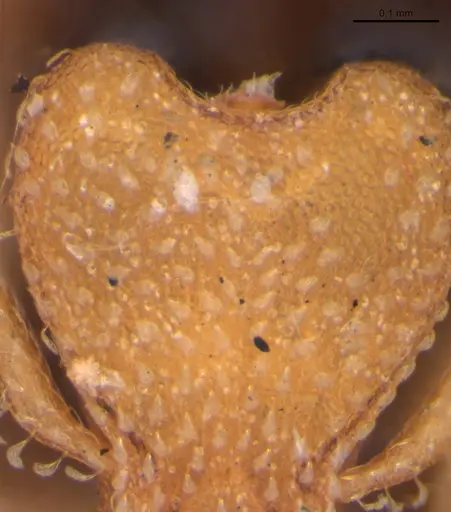
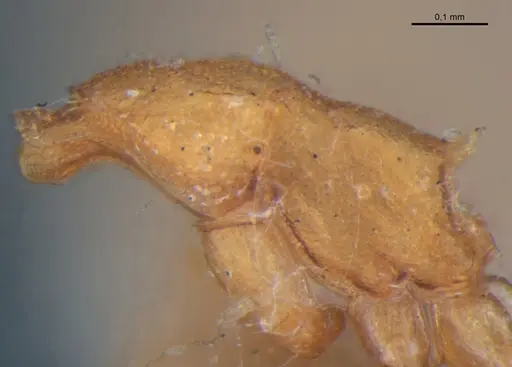
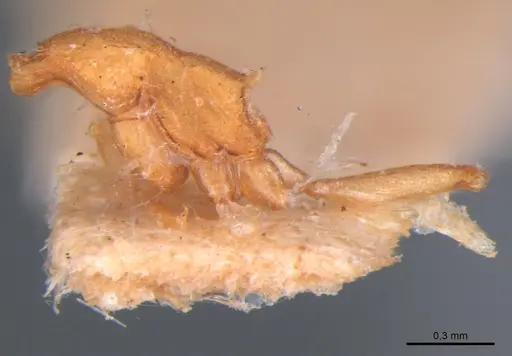
Strumigenys connectens is a tiny predatory ant measuring 2.5–2.9 mm in total length . Workers have the characteristic trap‑jaw mandibles typical of the Dacetini tribe – short, robust, triangular mandibles that snap shut to capture prey. They belong to the Strumigenys gundlachi group and are closely related to Strumigenys subedentata and Strumigenys trieces . The head and body are covered in distinctive curved spatulate hairs, and the antennae have six segments . This species is found exclusively in forest patches in Colombia and Ecuador, typically in leaf litter and rotting wood on the forest floor .
Quick Summary
- Difficulty: Medium
- Origin & Habitat: Neotropical region – Colombia and Ecuador. Recorded from Cundinamarca, Quindío, Risaralda, and Valle del Cauca departments [4][2]. Inhabits leaf litter and rotting wood in lowland wet to seasonal forest patches [3][1].
- Colony Type: Colony structure is unconfirmed. Based on related Strumigenys species, colonies are likely monogyne (single queen) but this has not been directly studied for S. connectens.
- Size & Growth:
- Queen: Unknown – no queen measurements have been documented for this species.
- Worker: 2.5–2.9 mm (total length) [1]
- Colony: Unknown – no data for this species. Related Strumigenys have small colonies, likely under 100 workers at maturity.
- Growth: Slow – Strumigenys are slow‑growing ants that invest heavily in each individual worker.
- Development: Unknown – no specific data for this species. Based on related Strumigenys species, development is estimated at 8–12 weeks at warm temperatures. (Development is slow, these ants prioritize individual worker quality over rapid colony growth.)
- Antkeeping:
- Temperature: Probable range 22–26 °C based on their tropical origin. A gentle gradient allows workers to self‑regulate.
- Humidity: High humidity is essential – think damp forest floor. Keep the nest substrate consistently moist but not waterlogged. Provide a water tube as a drinking source. [3] describes the species from forest habitats, supporting high humidity needs.
- Diapause: Unlikely – as a tropical species, true diapause is not required. A slight temperature reduction in winter (to ~20 °C) may be beneficial.
- Nesting: Y‑tong (AAC) nests or test tube setups work well. These tiny ants need tight chambers and narrow passages scaled to their small size. Naturalistic setups with leaf litter and moist substrate also mimic their natural environment.
- Behavior: Strumigenys connectens is a shy, non‑aggressive ant. They are not aggressive toward humans, but they do possess a functional stinger (subfamily Myrmicinae, tribe Attini), however, the sting is not medically significant. Workers are slow‑moving and deliberate, preferring to flee rather than fight. Their trap‑jaw mandibles are used exclusively for hunting micro‑arthropods, not for defense. Escape prevention is critical due to their very small size – they can squeeze through tiny gaps.
- Common Issues: escape prevention is critical – they are tiny and will squeeze through standard test tube barriers, slow growth can frustrate keepers expecting rapid colony development, requires live micro‑prey – they are obligate predators and may not accept sugar water or dead food easily, high humidity requirements can lead to mold if ventilation is poor, wild‑caught colonies may arrive with parasites or in poor condition
Housing and Nest Setup
Strumigenys connectens requires careful housing due to their tiny size. Y‑tong (AAC) nests with narrow chambers work well, as do test tube setups. The key is tight‑fitting connections and barriers – these ants can escape through gaps that larger ants would ignore. Use cotton plugs that are firmly packed, and consider adding a thin layer of fluon around the edges of any connections. A naturalistic setup with a layer of moist leaf litter and decaying wood mimics their natural habitat and provides hunting grounds. Keep the nest area humid but ensure some ventilation to prevent mold buildup. A water tube should always be available – these ants need access to liquid water [2][3].
Feeding and Diet
Strumigenys connectens is an obligate predator that hunts micro‑arthropods using its trap‑jaw mandibles [1]. In captivity, their primary food should be live springtails – these are the ideal prey item and what they would hunt in the wild. Other small live prey like pot worms (enchytraeids), minute soil mites, and tiny isopods may also be accepted. Acceptance of sugar water, honey, or dead insects has not been studied, but their hunting strategy relies on movement to trigger the trap‑jaw response, so such foods are likely ignored. Feed every 2–3 days, offering only what the colony can consume within 24 hours. Remove uneaten prey to prevent mold. Do not overfeed – excess prey can stress the colony and attract pests.
Temperature and Humidity
As a Neotropical species from Colombia and Ecuador, Strumigenys connectens requires warm and humid conditions. Keep the nest area at 22–26 °C – this is warm enough for their metabolism but not excessive. A heating cable on one side of the nest can create a temperature gradient, allowing workers to move to their preferred zone. Humidity is critical – aim for 70–85% relative humidity. The substrate should feel consistently damp but never waterlogged. Mist the outworld occasionally, but avoid directly misting the nest as this can flood tiny chambers. A water tube provides both drinking water and helps maintain humidity through evaporation. Never let the nest dry out completely [3][1].
Colony Development
Strumigenys colonies grow slowly compared to many common ant species. A newly mated queen will lay a small number of eggs and invest heavily in each individual worker. The first workers (nanitics) are typically smaller than mature workers and may take an estimated 8–12 weeks to emerge from egg at optimal temperature. Growth continues slowly – a healthy colony might reach 30–50 workers in the first year. Do not expect rapid expansion. The slow growth is a feature of their hunting strategy – they do not need large worker numbers to be effective predators. Be patient and avoid disturbing the colony unnecessarily. Stress from over‑handling can cause queens to stop laying or workers to abandon brood [1].
Behavior and Temperament
These are shy, non‑aggressive ants that prefer to flee rather than fight. Workers are slow‑moving and deliberate, spending much of their time hunting through leaf litter and substrate. Their trap‑jaw mandibles are used exclusively for hunting prey, not for defense. They do possess a stinger (as is typical for Myrmicinae), but the sting is not considered dangerous to humans. Their small size means they are easily lost during transfers or when escaping – excellent barrier maintenance is essential. Workers may be active during both day and night, as they do not have strong circadian rhythms tied to light cycles. Watching them hunt is fascinating – when a springtail or other prey triggers their trap‑jaws, the strike is lightning fast [1][2].
Frequently Asked Questions
Can I keep Strumigenys connectens in a test tube?
Yes, test tubes work well for starting colonies. Use a tightly packed cotton plug and consider adding a thin barrier of fluon at the tube opening. These tiny ants can escape through gaps that larger ants cannot, so ensure all connections are secure. A test tube setup with a water tube attached provides humidity and drinking water.
How long does it take for the first workers to appear?
Exact timing is unknown for this species, but based on related Strumigenys, expect 8–12 weeks from egg to first worker at warm temperatures (22–26 °C). The first workers (nanitics) will be smaller than mature workers. Growth is slow – these ants prioritize quality over quantity.
What do Strumigenys connectens eat?
They are obligate predators of micro‑arthropods. In captivity, live springtails are the most reliable food. They may also accept pot worms, tiny soil mites, or minute isopods. They are unlikely to accept sugar water, honey, or dead insects. Remove uneaten prey within 24 hours.
Are Strumigenys connectens good for beginners?
They are considered intermediate in difficulty. While not aggressive, they have specific requirements – high humidity, live prey feeding, and excellent escape prevention. Their slow growth and small size require patience. Beginners should have experience with at least one other species before attempting Strumigenys.
How big do Strumigenys connectens colonies get?
Colony size has not been documented for this species. Related Strumigenys typically form small colonies, likely under 100 workers at maturity. They are not large colony builders.
Do Strumigenys connectens need hibernation?
No, as a tropical species from Colombia and Ecuador, they do not require true hibernation. However, a slight reduction in temperature during winter months (to around 20 °C) may be beneficial and mimic seasonal changes in their natural habitat.
Why are my Strumigenys connectens dying?
Common causes include: escape through tiny gaps (improve barriers), dried‑out substrate (increase humidity), lack of live prey (ensure springtail supply), mold from excessive moisture (improve ventilation), or stress from over‑handling. Review each of these factors and adjust accordingly.
When should I move my colony to a formicarium?
Wait until the colony has at least 20–30 workers before moving. Strumigenys do better in stable, confined spaces – test tubes or Y‑tong nests are usually sufficient even for mature colonies. Only move if the colony has outgrown its current setup and is showing signs of stress from crowding.
Can I keep multiple queens together?
This has not been documented for this species. Based on related Strumigenys behavior, they are likely monogyne (single queen). Combining unrelated queens is not recommended, as it typically results in aggression.
Report an Issue
The current care sheet is based fully on literature. See inconsistencies, or something that's incorrect? Please , it will be resolved after review from an admin. Contributing to the blogs tab also helps providing information, to make us be able to further improve the caresheets. Thank you for your support!
References

Esta ficha de cuidados é licenciada sob CC BY-SA 4.0 .
Blogs da comunidade
CASTYPE06884
Ver no AntWeb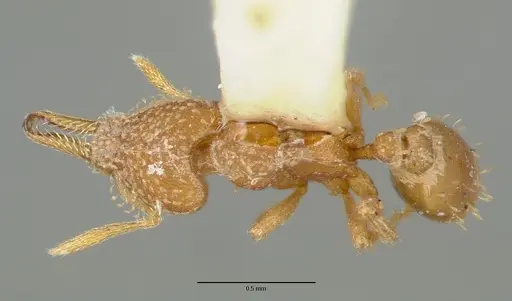
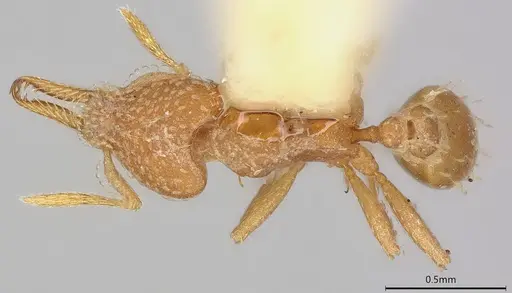
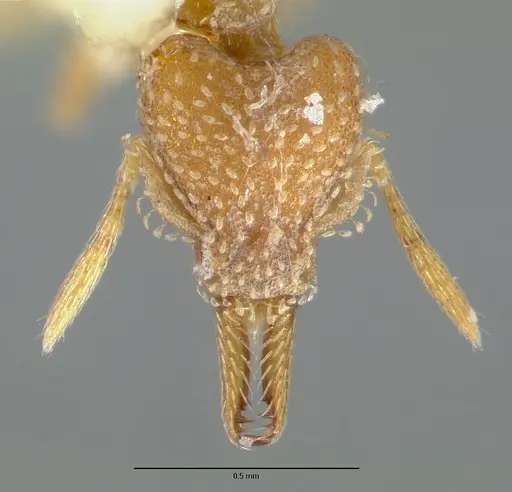
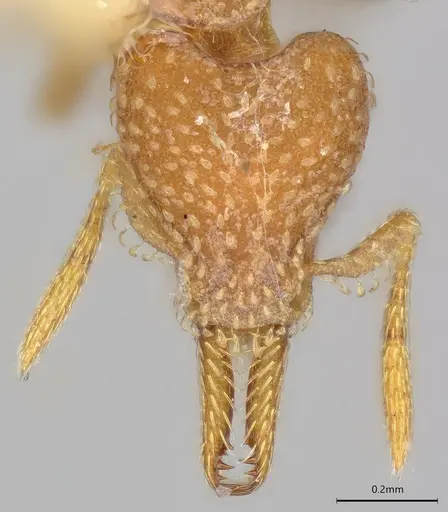
MZSP63092
Ver no AntWeb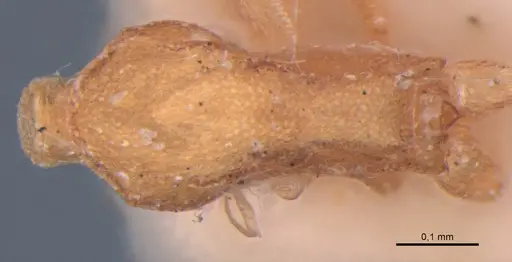
Literatura
A carregar mapa de distribuição...A carregar produtos...