
Strumigenys ataxia
- Nome cient.
- Strumigenys ataxia
- Tribo
- Attini
- Subfamília
- Myrmicinae
- Autor
- Bolton, 2000
- Distribuição
- Encontrado em 0 países
Introdução
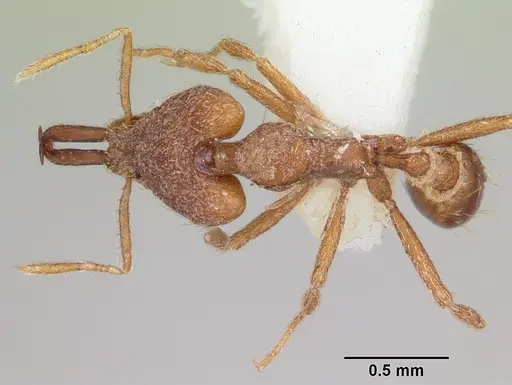
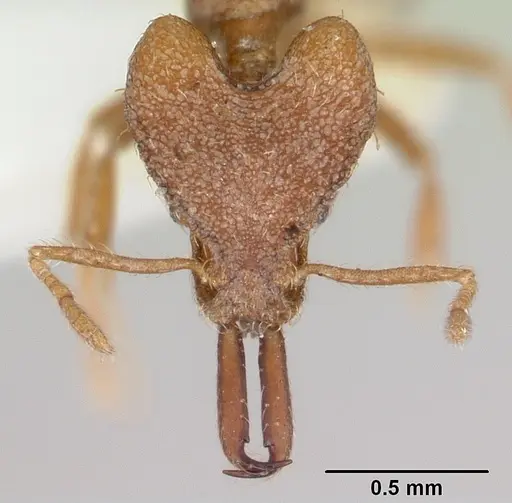
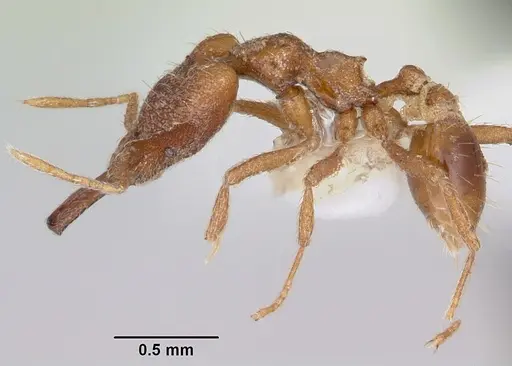
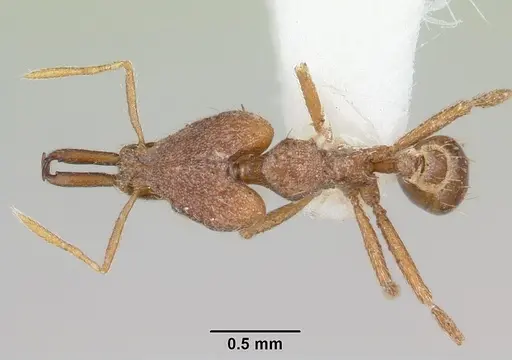
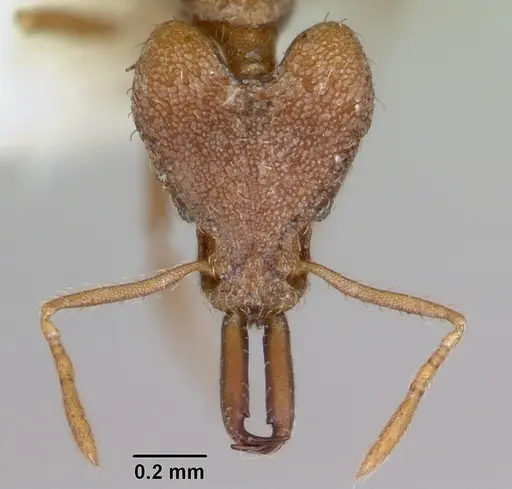
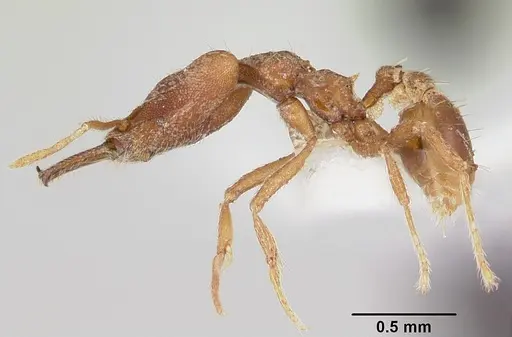
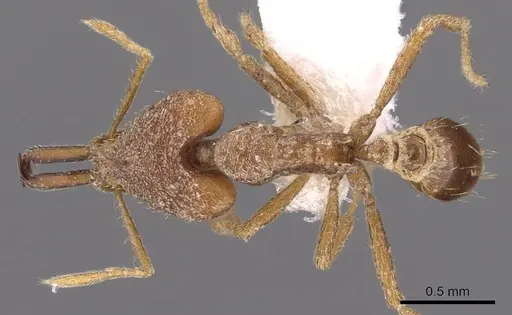
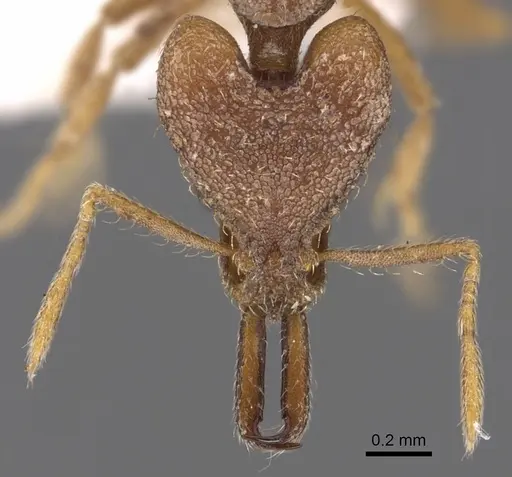
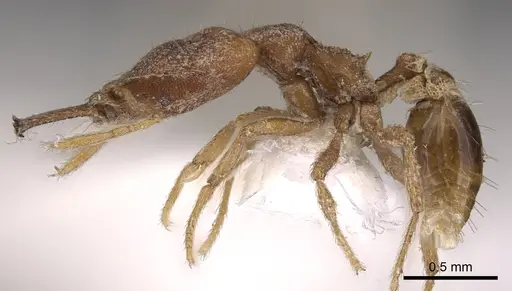
Strumigenys ataxia is a tiny ant species with workers measuring 2.9–3.0 mm in total length . Workers are yellowish to light brown and have a broad shallow depression on the ventral head and simple cylindrical hairs on the first gastral tergite. This species belongs to the koningsbergeri complex within the Strumigenys koningsbergeri group . It is known only from highland Sumatra, Indonesia (North and West Sumatra provinces) at elevations around 1400–1450 m . Almost nothing is documented about its biology, so most care advice must rely on genus‑level inference.
Quick Summary
- Difficulty: Hard
- Origin & Habitat: Highland forests of Sumatra, Indonesia (North Sumatra and West Sumatra provinces) at 1400–1450 m elevation [1].
- Colony Type: Undocumented – colony structure unknown.
- Size & Growth:
- Antkeeping:
- Temperature: Keep cool,18–24 °C. Avoid overheating – this species comes from highland forests at 1400 m+ [1]. Room temperature is often suitable, do not use heating cables.
- Humidity: High humidity needed. Keep nest substrate consistently moist but not waterlogged. Provide good ventilation to prevent mold.
- Diapause: Unlikely necessary – tropical highland origin suggests minimal seasonal variation. Maintain stable conditions year‑round.
- Nesting: Use test tubes or Y‑tong (AAC) nests with narrow, dark chambers. Tiny ants prefer confined, humid spaces.
- Behavior: Little documented. As a member of Myrmicinae, workers possess a functional sting but it is not medically significant to humans. They are unlikely to be aggressive. Due to very small size (
- Common Issues: escape prevention is critical – workers under 3 mm can pass through standard barriers, diet is likely specialized – they probably require live small arthropods (e.g., springtails) and may not accept sugar or dead prey, high humidity needs can cause mold if ventilation is poor, almost nothing is known about their biology – expect trial and error
Housing and Nest Setup
Because almost nothing is known about the nesting preferences of Strumigenys ataxia, we must infer from related species and its habitat. A test‑tube setup with a small water reservoir works well for a founding queen or small colony. For larger groups, use a Y‑tong (AAC) nest with narrow, dark chambers. The nest must hold high humidity but also have ventilation to prevent mold. Use very fine mesh (≤0.5 mm) on all openings – these tiny ants can squeeze through standard ant mesh. Place the nest in a quiet, dark spot away from direct sunlight and vibrations. Avoid large, open outworlds, they feel safest in tight, dark spaces.
Feeding and Diet
Based on typical Strumigenys habits, Strumigenys ataxia is probably an obligate predator of tiny soil arthropods. Springtails (Collembola) are the most likely natural prey. You should culture your own springtails to ensure a constant supply. Other potential prey includes booklice (psocids) and fruit flies (Drosophila). They may ignore dead prey – movement likely triggers their hunting response. Sugar sources or honeydew are probably not consumed. Offer small amounts of live prey every 2–3 days and remove any leftovers after 24 hours to prevent mold. Because there is no published feeding data, careful observation is needed.
Temperature and Humidity
Strumigenys ataxia comes from highland Sumatra at 1400–1450 m [1], so it prefers cooler conditions than typical lowland tropical ants. Maintain temperatures around 18–24 °C, avoid anything above 28 °C. Room temperature is often adequate. Heating cables are unnecessary and may overheat the nest. Humidity must be high – keep the nest substrate moist but not soaking wet. For test tubes, ensure the water reservoir is topped up regularly. A humidity gradient (wetter nest, drier outworld) allows workers to choose. Mist the outworld occasionally, but avoid spraying directly into the nest.
Behavior and Temperament
Workers are not aggressive toward humans. As a myrmicine, they possess a functional sting, but it is mild and not medically significant. They are slow‑moving outside the nest, but may show sudden bursts when hunting (if their hunting behavior follows genus patterns). Their tiny size makes them expert escape artists – always check for gaps. There is no evidence of mass recruitment or territorial aggression. Colony establishment probably follows typical claustral founding (though unconfirmed), with the queen sealing herself and raising the first brood on her reserves. Disturbance during founding should be minimized.
Colony Establishment
No specific founding data exists for Strumigenys ataxia. It is assumed that queens are claustral (seal themselves in a chamber and raise the first workers on stored fat reserves) and monogyne, but these are guesses based on genus‑level trends. Provide a dark, humid, undisturbed chamber (e.g., test tube with water reservoir). Do not disturb the queen for the first 6–8 weeks. Once the first tiny workers appear, begin offering very small live prey (e.g., springtails). Growth is expected to be slow, maturity may take a year or more. Because biology is so poorly known, expect unexpected setbacks.
Frequently Asked Questions
How long does it take for Strumigenys ataxia to produce first workers?
Unknown – no species‑specific data exists. If the queen is claustral (unconfirmed), first workers might appear after several weeks, but this is pure speculation.
What do Strumigenys ataxia ants eat?
They are probably obligate predators of tiny live arthropods, especially springtails. They likely do not accept sugar or dead prey. Cultures of springtails are recommended. No research has confirmed their diet.
Can I keep Strumigenys ataxia in a test tube?
Yes – a test tube with a water reservoir and dark cover is suitable for a founding queen or small colony. Make sure the cotton plug allows moisture through but prevents flooding. This mimics the dark, humid cavities they probably prefer.
Are Strumigenys ataxia good for beginners?
No – they are rated Hard because almost nothing is known about their biology. The need for live prey, high humidity, and extremely fine escape barriers makes them challenging even for experienced keepers.
Why are my Strumigenys ataxia dying?
Common causes include: escape through gaps too small to see, starvation (lack of live prey), desiccation (low humidity), mold from excess moisture, or overheating. Because so little is known, any care mistake can be fatal. Eliminate one variable at a time.
What temperature do Strumigenys ataxia need?
Keep them cool,18–24 °C, based on their highland origin [1]. Avoid temperatures above 28 °C. Room temperature is usually fine.
How big do Strumigenys ataxia colonies get?
Colony size is completely unknown. Based on related Strumigenys, they might reach a few hundred workers after years, but this is an estimate.
Do Strumigenys ataxia need hibernation?
Probably not – they come from a tropical highland area with little seasonal temperature variation. Keep conditions stable year‑round.
When should I move my colony to a formicarium?
When the colony outgrows the test tube (crowding becomes visible), transfer to a Y‑tong nest with narrow chambers. Do not disturb the colony during the move – let them walk in on their own.
How often should I feed Strumigenys ataxia?
Offer a small amount of live prey every 2–3 days. Remove any leftovers after 24 hours to prevent mold. Adjust based on consumption – if prey remains, reduce frequency.
Report an Issue
The current care sheet is based fully on literature. See inconsistencies, or something that's incorrect? Please , it will be resolved after review from an admin. Contributing to the blogs tab also helps providing information, to make us be able to further improve the caresheets. Thank you for your support!
References

Esta ficha de cuidados é licenciada sob CC BY-SA 4.0 .
Blogs da comunidade
Literatura
A carregar mapa de distribuição...A carregar produtos...