
Stictoponera taivanensis
- Nome cient.
- Stictoponera taivanensis
- Tribo
- Ectatommini
- Subfamília
- Ectatomminae
- Autor
- Wheeler, 1929
- Distribuição
- Encontrado em 0 países
Introdução
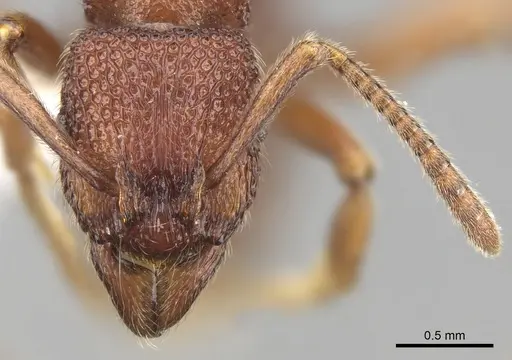
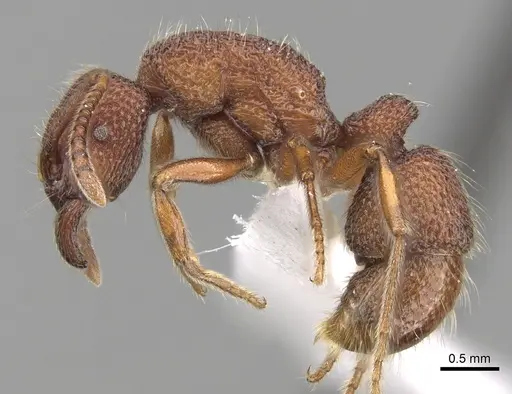
Stictoponera taivanensis is a small ant of the subfamily Ectatomminae, native to Taiwan and Vietnam . Workers have a head length of about 1.25-1.32 mm and a mesosomal length of about 1.67-1.80 mm; the total body length is not recorded in the literature . The body is mostly ferruginous brown (rusty brown) with lighter antennae, legs, and mandibles. They have distinctive propodeal denticles (small teeth on the rear of the mesosoma) and a postpetiolar dorsum with anterior strigae (grooves) that fade to a mostly smooth, punctate surface. The body is covered in abundant erect to subdecumbent golden hairs . This species is the only known Stictoponera from Taiwan and represents the northernmost geographical range for the genus in the Old World, slightly above 30°N latitude . It inhabits altitudes above 1000 m and prefers cooler, montane forests .
Quick Summary
- Difficulty: Expert
- Origin & Habitat: Taiwan and Vietnam in the Indomalaya Region. This species is found at altitudes above 1000 m and shows a preference for cooler, montane forests [2]. It is considered a relict species with the northernmost range for the genus in the Old World [2].
- Colony Type: Unknown, queen and male castes have not been described, so colony structure in the wild is unconfirmed [1].
- Size & Growth:
- Queen: Unknown, queen caste has not been described [1]
- Worker: Size data unavailable, only head and mesosomal measurements are known, which do not represent total body length [1]
- Colony: Unknown, no colony size data available
- Growth: Unknown
- Development: Unknown, development timeline has not been studied (No data exists on egg-to-worker development. Related genera may take several weeks, but this is unconfirmed.)
- Antkeeping:
- Temperature: Cool conditions recommended, this is a montane species that prefers cooler temperatures. Aim for 18-22°C based on its high-altitude natural habitat [2]. Avoid temperatures above 25°C.
- Humidity: Moderate to high humidity, montane forest dwellers typically prefer damp conditions. Keep the nest substrate consistently moist but not waterlogged.
- Diapause: Unknown, likely, as a temperate montane species, but specific requirements are not documented.
- Nesting: Natural nesting sites are unknown. In captivity, a naturalistic setup with a moisture gradient in Y-tong (AAC), plaster, or soil nests may work, but no established protocols exist.
- Behavior: As a member of the subfamily Ectatomminae, this species has a functional sting used for defense and prey capture. Workers are likely predatory and may be more defensive than typical house ants. Escape risk is moderate given their small size.
- Common Issues: extremely rare in the hobby, queen and male castes unknown, making colony foundation impossible, no established captive care protocols, all husbandry is speculative, temperature sensitivity, being a montane species, overheating is a serious risk, unknown colony structure and social organization make long-term care unpredictable
Identification and Appearance
Stictoponera taivanensis workers have a head length of about 1.25-1.32 mm and a mesosomal length of about 1.67-1.80 mm, the total body length is not recorded in the literature [1]. The body is mostly ferruginous brown (rusty brown) with noticeably lighter antennae, legs, and mandibles. They have abundant erect to subdecumbent golden hairs covering the dorsum of the thorax and abdominal segments 1-4. A key identifying feature is the presence of propodeal denticles (small triangular teeth on the propodeum). The head lacks an occipital lamella (the raised ridge found in some related species). The postpetiolar dorsum has distinctive anterior strigae (grooves) that fade posteriad to a mostly smooth, punctate surface with scalloped ridges around each puncture [1]. This is the only known Stictoponera from Taiwan and can be distinguished from mainland relatives like Stictoponera panda and Stictoponera sichuanensis by its unique combination of features including the propodeal denticles [1].
Natural Habitat and Distribution
This species is native to Taiwan and Vietnam in the Indomalaya Region [1]. It represents the northernmost geographical range for the genus Stictoponera (formerly Gnamptogenys) in the Old World, with populations slightly above 30°N latitude [2]. Stictoponera taivanensis inhabits altitudes above 1000 m and shows an apparent preference for cooler, montane forests [2]. Two mainland related species have been recorded close to 2000 m elevation [2]. This preference for high-altitude, cooler habitats distinguishes it from many other tropical ant species and suggests it would not tolerate warm conditions. The species is considered a relict group, conserving many primitive character states including the position of petiolar and propodeal spiracles and the number of palpal segments [2].
Temperature and Care
Based on its montane forest habitat, Stictoponera taivanensis requires cooler temperatures than most tropical ants [2]. Keep the nest area at 18-22°C, avoiding temperatures above 25°C. A heating cable on one side of the nest can create a gradient if room temperature falls below this range. Being from high altitudes, this species may benefit from a cooler winter period, though specific diapause needs are unknown. Monitor colony activity: if workers cluster together excessively, the colony may be too cold, if they avoid the nest area, it may be too warm.
Feeding and Diet
As a member of the subfamily Ectatomminae (which includes many predatory species), this ant likely hunts small invertebrates such as springtails, tiny beetles, and other micro-arthropods. Offer small live prey regularly, frozen insects may be accepted but live prey is more likely to trigger hunting behavior. Sugar sources like honey water may be accepted but should not be the primary food. Given the complete lack of captive husbandry data, start with small live prey and observe acceptance. Feed every 2-3 days, removing uneaten prey to prevent mold. No specific dietary studies exist for this species.
Nesting Requirements
Natural nesting habits are not described in any source. Based on related Ectatomminae species, they may nest in soil or under stones, but this is speculative. In captivity, a naturalistic setup with a moisture gradient in Y-tong (AAC), plaster, or soil nests could be tried, but no established protocols exist. Provide both moist and slightly drier areas so the ants can self-regulate. Ensure the nest has adequate ventilation to prevent mold while maintaining humidity. The small size of workers means chambers and passages should be appropriately scaled.
Colony Status and Availability
Stictoponera taivanensis is extremely rare in the antkeeping hobby. The queen and male castes have never been described scientifically, making colony foundation from wild-caught queens essentially impossible [1]. There are no established captive breeding protocols for this species. For antkeepers, this species represents a significant challenge, it is not a species you can simply purchase and keep. It is suitable only for those with access to specialized research collections or who are conducting formal studies.
Frequently Asked Questions
Is Stictoponera taivanensis available for sale in the antkeeping hobby?
No, this species is extremely rare in the hobby. The queen caste has never been described, so colony foundation is impossible. There are no established breeding protocols, and specimens are not commercially available through standard ant vendors [1].
What temperature does Stictoponera taivanensis need?
Keep them cool, 18-22°C is ideal based on their montane forest habitat above 1000 m altitude [2]. Avoid temperatures above 25°C. This is a cool-adapted species unlike typical tropical ants.
Can I keep Stictoponera taivanensis in a test tube setup?
A test tube setup could be tried for a small colony if humidity is maintained, but a naturalistic setup with a moisture gradient is probably more appropriate. The test tube would need regular rehydration and should be kept in a cool location. No data exists on optimal setups for this species.
Does Stictoponera taivanensis sting?
Yes, as a member of the subfamily Ectatomminae, it has a functional stinger. They are likely more defensive than many common ant species. Handle with care and avoid provoking the colony.
How big do Stictoponera taivanensis colonies get?
Colony size is completely unknown, no colony size data has been documented in scientific literature [1].
What do Stictoponera taivanensis eat?
Like most predatory ants, they likely hunt small invertebrates such as springtails and tiny beetles. Offer small live prey regularly. Sugar sources may be accepted but should not be the primary food. No captive diet protocols exist [1].
Do Stictoponera taivanensis need hibernation?
Unknown, as a montane species from a temperate region, a winter rest period seems likely, but specific diapause requirements are not documented. If kept, a gradual reduction to 10-15°C during winter months might be beneficial, but this is speculative.
Is Stictoponera taivanensis good for beginners?
No, this is an expert-only species. The queen caste has never been described, making colony foundation impossible. They are extremely rare, require specific cool temperatures, and have no established captive care protocols. Not suitable for beginners [1].
Where does Stictoponera taivanensis live in the wild?
They are found only in Taiwan and Vietnam at altitudes above 1000 m in cooler montane forests. This species has the northernmost range for the genus in the Old World, above 30°N latitude [2].
How long does it take for Stictoponera taivanensis to develop from egg to worker?
Unknown, the development timeline has not been studied or documented, and no data exists for this species [1].
Report an Issue
The current care sheet is based fully on literature. See inconsistencies, or something that's incorrect? Please , it will be resolved after review from an admin. Contributing to the blogs tab also helps providing information, to make us be able to further improve the caresheets. Thank you for your support!
References

Esta ficha de cuidados é licenciada sob CC BY-SA 4.0 .
Blogs da comunidade
CASENT0281848
Ver no AntWeb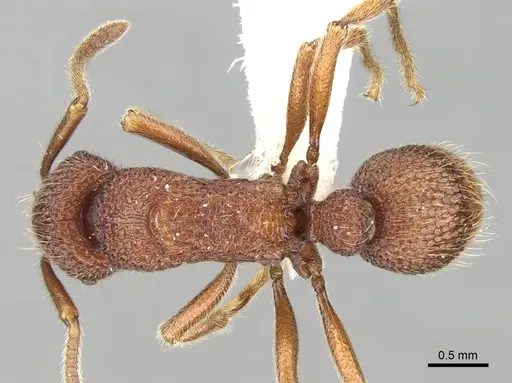
Literatura
A carregar mapa de distribuição...A carregar produtos...