
Stenamma wumengense
- Nome cient.
- Stenamma wumengense
- Tribo
- Stenammini
- Subfamília
- Myrmicinae
- Autor
- Liu & Xu, 2011
- Distribuição
- Encontrado em 0 países
Introdução
Stenamma wumengense is a tiny, ground-dwelling ant from the mountains of Yunnan Province, China. Workers are just 3.9 mm in length, making them one of the smallest ant species you will encounter . They have a distinctive reddish‑brown color, a rectangular head that is longer than wide, and extremely small eyes that contain only 4 light‑sensing units (ommatidia) - a key identification feature . The antennae have 12 segments with a 4‑segmented club, and the first segment (scape) reaches just past the rear of the head . This species was discovered in 2011 and remains known from only a single worker specimen collected at 2070 meters elevation in broadleaf forest . What makes this ant especially interesting is that it lives at high elevation in the Palearctic region - most Stenamma species are tropical, but S. wumengense is adapted to the cool mountain forests of southwestern China . Because so little is known about its biology, almost everything we recommend here is based on genus‑level patterns and should be treated as a best guess.
Quick Summary
- Difficulty: Expert
- Origin & Habitat: Mt. Wumeng in Yunnan Province, China, at 2070 m elevation in broadleaf forest [1][3]. This is a Palearctic region species from high‑altitude, cool forest [4].
- Colony Type: Unknown, colony structure has never been documented.
- Size & Growth:
- Queen: Unknown, only worker specimens have ever been collected.
- Worker: 3.9 mm total length (holotype worker) [1].
- Colony: Unknown, no colony data exists.
- Growth: Unknown, no development data available.
- Development: Unknown, no direct measurements exist. Estimate 8-12 weeks based on related temperate Stenamma species, but this is pure speculation. (Development time is entirely unconfirmed.)
- Antkeeping:
- Temperature: Keep cool, around 18-22°C. This is a high‑elevation species from the Palearctic, so avoid tropical heat [4]. A gentle gradient is helpful.
- Humidity: Moderate to high, roughly 60‑80%. Their natural habitat (broadleaf forest at 2070 m) suggests damp but not waterlogged conditions.
- Diapause: Likely yes, this is a Palearctic species from high elevation in Yunnan, which experiences cool winters. Expect 2-3 months of reduced temperatures (around 10-15°C) during winter, but this has not been confirmed for this species.
- Nesting: Use a naturalistic setup with moist substrate or a Y‑tong/plaster nest with chambers scaled to their tiny 3.9 mm size. Fine mesh (0.5 mm or smaller) is essential for escape prevention. They likely nest in soil or under stones.
- Behavior: Almost nothing is known. Based on genus patterns, they are docile, ground‑nesting ants that move slowly and rely on chemical cues rather than vision (eyes have only 4 ommatidia). Their sting is negligible to humans. Escape prevention is critical because at 3.9 mm they can squeeze through tiny gaps.
- Common Issues: escape prevention is critical, at 3.9 mm they can fit through standard barriers, use fine mesh., no captive husbandry exists, you will be pioneering this species., colony founding is completely unstudied, expect high failure if you attempt to start from a queen., high‑elevation origin means temperature management is essential, avoid overheating., only one specimen has ever been documented, availability to antkeepers is near zero.
Discovery and Taxonomy
Stenamma wumengense was described in 2011 by Liu and Xu from a single worker collected in Yunnan, China [1]. The species name comes from Mt. Wumeng, the type locality in northeastern Yunnan [1][5]. It belongs to the tribe Stenammini within the subfamily Myrmicinae, a group of small, cryptic ants. Morphologically it is similar to Stenamma owstoni but can be told apart by its longer head, longer scapes, eyes with only 4 ommatidia, and reddish‑brown color [1][6]. The holotype specimen was foraging on the ground in broadleaf forest at 2070 m [1][3]. Only a handful of specimens have ever been reported, making this one of the rarest ant species in the world.
Natural Habitat and Distribution
This species is known only from the type locality, Mt. Wumeng in Yunnan Province, China, at about 2070 m elevation in broadleaf forest [1][7]. Yunnan is part of the Palearctic region and is a biodiversity hotspot including the Hengduan Mountains [4][8]. The high elevation suggests this ant experiences cool temperatures year‑round and likely requires a winter diapause. Based on the distribution of the genus, S. wumengense is considered a Palearctic species, not tropical [4].
Identification and Morphology
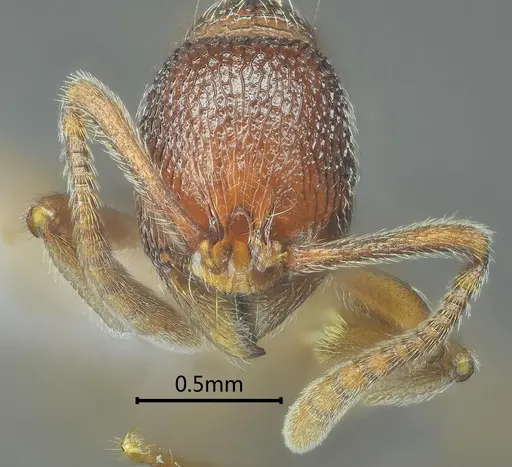
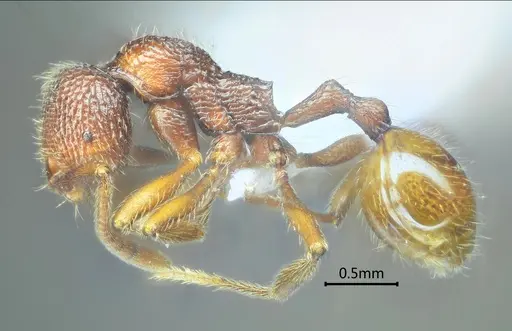
Workers are tiny, only 3.9 mm total length [1]. The head is roughly rectangular, longer than wide, with nearly straight rear margin and weakly curved sides [1][2][3]. The most distinctive feature is the extremely small eyes, only 4 ommatidia in the biggest diameter, indicating very poor eyesight [1][8][2]. The antennae have 12 segments with a 4‑segmented club, and the scapes extend slightly past the rear corners of the head [1][6][7]. The propodeal spines are very short, about one‑sixth the length of the sloping face [1][7]. Color is reddish‑brown on the head and body, with yellowish‑brown legs and gaster, the eyes and mandible tips are black [1][9]. The body has a mix of erect hairs and short, lying‑down hairs, with more abundant hairs on the rear half of the body [1][10][11].
Housing and Nesting
Since this species has never been kept in captivity, housing advice is based on genus‑level knowledge. Use a naturalistic setup with moist substrate or a Y‑tong/plaster nest with small chambers scaled to the ant’s 3.9 mm size. The number‑one requirement is escape prevention: use fine mesh (0.5 mm or smaller) and tight‑fitting lids. Provide a shallow foraging area with some natural soil or leaf litter if possible. Keep the nest moderately moist (about 60‑80% relative humidity) but not waterlogged. A small water reservoir connected to the nest can help maintain stable moisture. Keep the setup in a cool area away from direct heat.
Temperature and Seasonal Care
Because this is a high‑elevation Palearctic species, temperature management is critical. Keep the nest area around 18-22°C, much cooler than tropical ant temperatures [4]. Offer a gentle temperature gradient so the ants can choose their preferred spot. In winter (November-February in the Northern Hemisphere), lower the temperature to about 10-15°C to mimic natural dormancy. This species almost certainly needs a winter diapause [4]. Do not try to keep them active all year at room temperature. Watch for signs of stress: workers clustering away from heat or becoming sluggish at normal temperatures.
Feeding and Diet
The natural diet is unknown, but Stenamma species are generalist predators and scavengers that hunt small insects on the ground [1]. In captivity, offer small live prey like fruit flies, springtails, or other micro‑arthropods. Sugar sources (honey water, diluted sugar water) may be accepted but should not be the only food. Offer small amounts of protein (crushed insects, bits of small mealworms) a few times per week. Remove uneaten food quickly to prevent mold. Since this species has never been kept, you will need to experiment to see what they accept.
Challenges and Considerations
Stenamma wumengense is one of the least‑known ant species in cultivation. The main challenge is simply getting a colony started, no one has ever kept this species. If you manage to obtain a queen (likely collected at the type locality), expect a high failure rate during founding. The species is extremely rare in collections, so availability to antkeepers is virtually zero. If you do get a colony, document everything: any husbandry data would be scientifically valuable. Focus on stable, cool temperatures and secure escape prevention.
Frequently Asked Questions
How big do Stenamma wumengense workers get?
Workers are tiny, just 3.9 mm total length [1]. Queen size is unknown because no queen specimens have been found.
Where is Stenamma wumengense found?
Only from Mt. Wumeng in Yunnan Province, China, at 2070 m elevation in broadleaf forest [1][7]. It is a Palearctic species, not tropical [4].
Do Stenamma wumengense ants need hibernation?
Almost certainly yes. This is a high‑elevation Palearctic species that experiences cool winters [4]. Expect to provide 2-3 months of reduced temperatures (about 10-15°C) during winter, though this has not been directly observed.
What temperature do Stenamma wumengense ants need?
Keep them cool, around 18-22°C is ideal [4]. They come from 2070 m elevation and prefer temperatures well below typical room heat. Avoid overheating.
Are Stenamma wumengense ants good for beginners?
No. This species has never been kept in captivity and is almost unreachable for collectors. Even experienced antkeepers would find it extremely challenging.
How do I keep Stenamma wumengense ants?
No captive protocols exist, so you would be pioneering. Use a naturalistic setup with moist substrate or Y‑tong nest sized for 3.9 mm workers. Keep moderate humidity (60‑80%) and cool temperatures (18‑22°C). Escape prevention with fine mesh is essential. Feed small live prey and sugar water. Provide winter dormancy.
Can Stenamma wumengense ants sting?
Yes, they likely can sting, they belong to Myrmicinae, which have functional stingers. However, at only 3.9 mm, their sting is negligible to humans.
How long does it take for Stenamma wumengense to develop from egg to worker?
Unknown, no development data exists. Based on related temperate Stenamma, a guess is 8-12 weeks, but this is purely speculative.
Are Stenamma wumengense colonies monogyne or polygyne?
Unknown, colony structure has never been documented. Most Stenamma species are monogyne (single queen), but this is unconfirmed for S. wumengense.
Why is Stenamma wumengense so rare?
Only a handful of specimens have ever been reported, all from one small area in Yunnan [1]. It was described in 2011 and remains one of the least‑collected Stenamma species. Their cryptic, high‑elevation lifestyle makes them hard to find.
Report an Issue
The current care sheet is based fully on literature. See inconsistencies, or something that's incorrect? Please , it will be resolved after review from an admin. Contributing to the blogs tab also helps providing information, to make us be able to further improve the caresheets. Thank you for your support!
References

Esta ficha de cuidados é licenciada sob CC BY-SA 4.0 .
Blogs da comunidade
ANTWEB1060576
Ver no AntWeb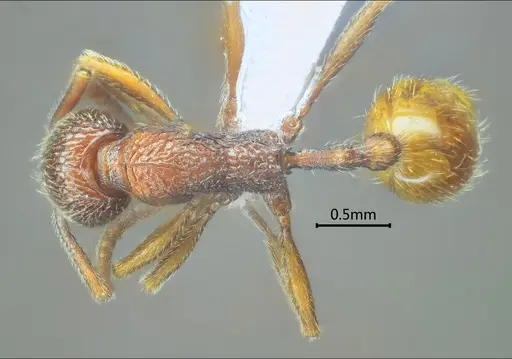
Literatura
A carregar mapa de distribuição...A carregar produtos...