
Stenamma wilsoni
- Nome cient.
- Stenamma wilsoni
- Tribo
- Stenammini
- Subfamília
- Myrmicinae
- Autor
- Bharti <i>et al.</i>, 2012
- Distribuição
- Encontrado em 0 países
Introdução
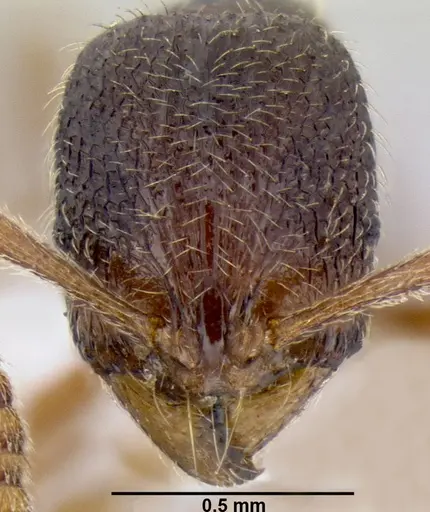
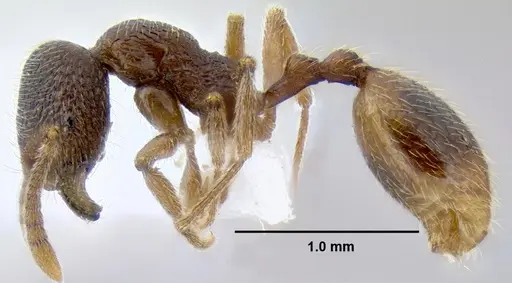
Stenamma wilsoni is a tiny myrmicine ant recently described from the North-West Indian Himalaya. Workers measure just 3.58-3.72mm, making them one of the smaller ant species you might encounter . They have a distinctly rectangular head with parallel sides, small eyes with only 5 facets, and short 12-segmented antennae that fall short of reaching the back of the head . Their coloration is distinctive: the head, mesosoma, petiole, and postpetiole are reddish brown, while the mandibles, antennae, legs, and tip of the abdomen are yellowish brown . The body is covered in suberect to erect yellowish-white hairs . This species is known only from a single locality near Reckongpeo in Himachal Pradesh, India, at an elevation of about 2050 meters . It is classified as extratropical and Palearctic . They were collected from a rotten log in open woodland on a hill slope . The species was named in honor of Prof. E.O. Wilson, the legendary myrmecologist . As a recently described species from 2012,biological information is extremely limited - this is one of the least-studied ants in the hobby.
Quick Summary
- Difficulty: Expert
- Origin & Habitat: North-West Indian Himalaya (Himachal Pradesh, Reckongpeo) at 2050m elevation, open woodland on hill slopes, nesting in rotting wood [1][2]
- Colony Type: Unknown, colony structure has not been documented in scientific literature [1]
- Size & Growth:
- Queen: Undescribed [1]
- Worker: 3.58-3.72mm [1]
- Colony: Unknown, only known from 4 worker type specimens [1]
- Growth: Unknown
- Development: Unknown, no development data exists for this species [1]. Based on similar small Myrmicinae, estimate 6-10 weeks at warm temperatures. (Development timeline is unconfirmed. This is an estimate based on genus-level patterns for small Myrmicinae ants.)
- Antkeeping:
- Temperature: Likely cool-adapted given high elevation (2050m) Himalayan habitat [1] and extratropical classification [3]. Start around 18-22°C and observe colony activity. Avoid overheating, they likely prefer temperatures closer to room temperature than tropical warmth.
- Humidity: Moderate, they were found in rotting wood in open woodland [1], suggesting they tolerate some dryness but need moisture in their nest substrate. Keep nest material slightly damp but not waterlogged.
- Diapause: Likely yes, Himalayan species at 2050m elevation almost certainly experience cold winters [1]. Expect a winter rest period at 5-10°C for 3-4 months.
- Nesting: In nature they nest in rotting wood [1]. In captivity, a small Y-tong nest with a wood insert, a plaster nest, or a naturalistic setup with rotten wood pieces would be most appropriate. Keep chambers small given their tiny 3.6mm worker size.
- Behavior: Behavior is unstudied [1][2]. Based on genus patterns, they are likely docile and not aggressive. Their small size (3.6mm workers) and tiny eyes (only 5 facets) suggest they are not strong foragers and likely stay close to the nest. Escape prevention is critical, at 3.6mm they can squeeze through standard mesh barriers. Use fine mesh or fluon barriers.
- Common Issues: escape prevention is critical due to tiny 3.6mm size, they can slip through standard barriers, no established care protocols exist, this is a recently described species with virtually no biological data, slow growth expected given limited data and small colony sizes typical of the genus, wild-caught colonies may have parasites or fail to adapt to captivity, hypothetical temperature needs mean you must observe and adjust based on colony behavior
Housing and Nest Setup
Stenamma wilsoni are tiny ants at just 3.6mm, so your nest chambers need to be appropriately scaled. In nature they nest in rotting wood [1], so a small wooden formicarium or a naturalistic setup with rotten wood pieces works best. Y-tong nests with narrow chambers or small plaster nests with a wood insert are practical choices. Because of their small size, escape prevention must be excellent, use fine mesh (at least 0.5mm) or apply fluon to barrier surfaces. A test tube setup can work for founding colonies, but monitor closely for escapes. The outworld should be small with smooth walls to prevent climbing escape. Keep the nest area dark or covered, these are cryptic ants that likely avoid bright light.
Temperature and Seasonal Care
This species comes from 2050m elevation in the Indian Himalaya [1] and is classified as extratropical [3], suggesting they are adapted to cooler conditions than most tropical ants. Start around 18-22°C and monitor colony behavior, if workers cluster together tightly, they may want it warmer, if they seem sluggish, try slightly warmer, if they avoid the heated area, reduce temperature. Given their high-elevation origin, they almost certainly need a winter dormancy period. Provide 3-4 months at 5-10°C during winter (roughly October-March in the Northern Hemisphere). Do not feed during hibernation. Return to room temperature gradually in spring. This species is not tropical, avoid sustained temperatures above 25°C.
Feeding and Diet
Diet in captivity is unconfirmed, no feeding observations exist for this species [1]. Start with small live prey such as fruit flies or springtails, and offer sugar water or honey on a cotton ball. Remove uneaten food promptly to prevent mold. Adjust based on colony acceptance.
Handling and Colony Maintenance
These ants are tiny and delicate, avoid disturbing the colony unnecessarily. When you need to move them, use gentle aspiration or coax them into a test tube rather than grabbing them. Because they come from a single known locality in the wild [1][2], captive colonies are extremely rare and valuable for the antkeeping community. Document your colony's growth and behavior, any observations you publish could be scientifically valuable since so little is known about this species. Monitor for mold in the nest and remove any contaminated areas promptly. Keep the nest humidity stable, sudden swings can stress small colonies.
Growth Expectations and Patience
You should expect very slow growth with this species. No development timeline data exists [1], but based on similar small Myrmicinae, expect 6-10 weeks from egg to first worker at optimal temperature. Colonies likely remain small, Stenamma species typically have colonies of only dozens to a few hundred workers, not the thousands seen in some genera. Do not overfeed in an attempt to speed growth, excess food causes mold problems that can kill small colonies. Focus on stability rather than rapid growth. If your colony survives the first year and produces workers, you are doing well, this is an expert-level species that challenges even experienced keepers.
Frequently Asked Questions
How long does it take for Stenamma wilsoni to produce first workers?
The egg-to-worker timeline is unconfirmed, no development data exists for this species [1]. Based on similar small Myrmicinae ants, estimate 6-10 weeks at warm temperatures. The first workers (nanitics) will likely be smaller than normal workers.
What temperature do Stenamma wilsoni ants need?
Likely cool-adapted given their 2050m Himalayan elevation [1] and extratropical classification [3]. Start around 18-22°C and adjust based on colony behavior. Avoid temperatures above 25°C. A winter hibernation at 5-10°C for 3-4 months is likely necessary.
Can I keep Stenamma wilsoni in a test tube?
Yes, test tubes work for founding colonies. Use a small diameter tube, their workers are only 3.6mm [1]. Monitor humidity carefully and provide a dark cover. Transfer to a small nest once the colony reaches 10-15 workers.
Do Stenamma wilsoni ants sting?
Stenamma wilsoni belongs to the subfamily Myrmicinae [4], which includes many species with stingers. However, no sting records exist for this species. Their small size makes any sting negligible.
Are Stenamma wilsoni good for beginners?
No, this is an expert-level species. They are recently described with virtually no biological data [1], extremely rare in captivity [2], and require specific conditions (cool temperatures, winter dormancy) that must be determined through observation. Only experienced antkeepers should attempt this species.
How big do Stenamma wilsoni colonies get?
Unknown, the species is only known from 4 worker type specimens [1]. Based on genus patterns, colonies likely reach dozens to a few hundred workers, not thousands.
Do Stenamma wilsoni need hibernation?
Almost certainly yes. This is a Himalayan species at 2050m elevation, they experience cold winters in their native habitat [1]. Provide 3-4 months at 5-10°C during winter.
What do Stenamma wilsoni eat?
Diet is unconfirmed [1]. Start with tiny live prey (fruit flies, springtails) and occasional sugar water or honey. Remove uneaten food promptly.
Why are my Stenamma wilsoni dying?
Common causes: temperature too high (keep under 25°C), humidity wrong (too wet or too dry), mold from overfeeding, escape-related losses, or stress from disturbance. This species has no established care protocol [1], you are essentially pioneering captive husbandry. Document what you try and adjust gradually.
When will Stenamma wilsoni alate (produce reproductives)?
Unknown, nuptial flight timing has not been documented [1]. As a high-elevation Himalayan species, flights likely occur during warm months (roughly June-August). Reproductives have never been observed in captivity.
How do I obtain Stenamma wilsoni?
This species is extremely rare in the antkeeping hobby. It was only described in 2012 [1] and is known from a single locality in India [2]. You likely cannot purchase them, any colony would need to be wild-caught from their limited native range, which raises significant ethical and legal concerns. Consider keeping more common, well-understood species instead.
Report an Issue
The current care sheet is based fully on literature. See inconsistencies, or something that's incorrect? Please , it will be resolved after review from an admin. Contributing to the blogs tab also helps providing information, to make us be able to further improve the caresheets. Thank you for your support!
References

Esta ficha de cuidados é licenciada sob CC BY-SA 4.0 .
Blogs da comunidade
ANTWEB1008038
Ver no AntWeb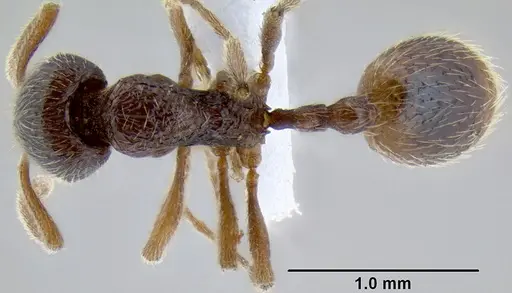
Literatura
A carregar mapa de distribuição...A carregar produtos...