
Stenamma punctiventre
- Nome cient.
- Stenamma punctiventre
- Tribo
- Stenammini
- Subfamília
- Myrmicinae
- Autor
- Emery, 1908
- Distribuição
- Encontrado em 1 países
Introdução
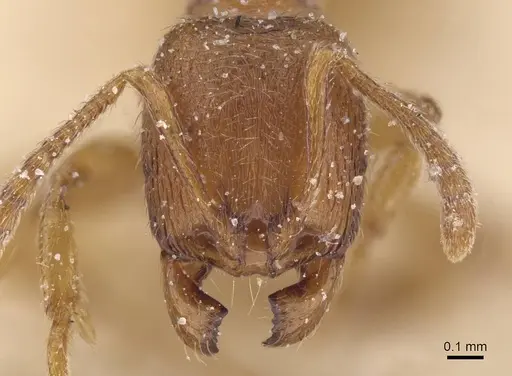
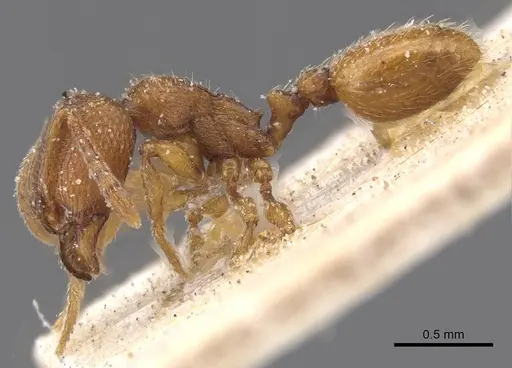
Stenamma punctiventre is a small, cryptic ant species endemic to Morocco in North Africa . Workers are tiny and inconspicuous, making them easy to overlook in the field - which explains why this species was known from only three specimens for over 90 years before being rediscovered in 2009 . The species belongs to the punctiventre group and represents a relict Palearctic taxon, an ancient lineage that survived while many related species elsewhere went extinct . This ant is sister to all remaining Stenamma species, making it unique within the genus . This species lives in mesic (moderately damp) forest leaf litter habitats and nests under stones in siliceous, humid soil on slopes with herbaceous vegetation . Workers are subterranean, spending much of their time underground, and have been collected from soil samples taken as deep as 50cm . The rediscovered colony was found near livestock grazing areas, suggesting it tolerates some human disturbance . For antkeepers, this is a rare species that represents an opportunity to keep something few others have attempted.
Quick Summary
- Difficulty: Expert
- Origin & Habitat: Endemic to Morocco, specifically the Tanger and Rabat regions in the northern part of the country [7]. Found in mesic forest leaf litter habitats and under stones on siliceous, humid soil slopes with herbaceous vegetation including dwarf palm (Chamaerops humilis), mastic (Pistacia lentiscus), and Asphodelus [3]. Elevation around 123m at sites like Ain es Srhir [3].
- Colony Type: Colony structure is unconfirmed. Based on typical Stenamma patterns, likely monogyne (single-queen) colonies, though this has not been directly documented.
- Size & Growth:
- Queen: Unconfirmed, no specific measurements found in available research
- Worker: Unconfirmed, described only as small-sized and cryptic [4]
- Colony: Unconfirmed, no colony size data available in research
- Growth: Moderate, inferred from typical Stenamma development patterns
- Development: 8-12 weeks, estimated based on typical Stenamma and Myrmicinae development at room temperature (Development timeline is estimated, not directly studied for this species)
- Antkeeping:
- Temperature: Keep at room temperature, roughly 18-22°C, matching its Mediterranean climate origin in Morocco [1]. Avoid extreme heat above 28°C. Stable temperatures are more important than exact numbers.
- Humidity: Moderate to high, these ants naturally live in humid soil under stones in mesic habitats [3]. Keep the nest substrate consistently moist but not waterlogged, with some drier areas available.
- Diapause: Probably not required or minimal, Morocco has mild winters [1]. You may reduce feeding and keep them slightly cooler (around 15-18°C) for 4-6 weeks in winter if the colony shows reduced activity.
- Nesting: A naturalistic setup with soil or a plaster/Y-tong nest with moisture retention works best. The key is providing humid soil chambers since they naturally nest under stones in soil [3].
- Behavior: This is a cryptic, subterranean species that spends much of its time underground [5]. Workers are small and likely forage in leaf litter and soil. They belong to Myrmicinae, which typically have a sting, but they are not aggressive and rarely sting in captivity. Escape prevention is critical due to their tiny size, use fine mesh and tight-fitting barriers.
- Common Issues: tiny size means escapes are likely without fine mesh barriers, subterranean habits make them hard to observe, not a display species, no captive breeding data means you're pioneering husbandry, expect trial and error, humidity management is critical, too dry and colonies fail, too wet leads to mold, wild-caught colonies may carry parasites or fail to adapt to captivity
Discovery and Rarity
Stenamma punctiventre has one of the most remarkable stories in ant biology. Originally described by Emery in 1908 from specimens collected in Tangier, Morocco, the species was known from only three specimens collected between 1896 and 1920 [3]. For 90 years, it was considered possibly extinct, not a single specimen had been found since 1920 despite numerous ant surveys in Morocco [3].
Then in 2009,researchers Xavier Espadaler and Carles Hernando rediscovered the species in the Péninsule Tingitane (Tingitan Peninsula) in northern Morocco [3]. They found colonies living under large stones in humid, siliceous soil at sites like Ain es Srhir (123m elevation) and Bounezal [3]. The habitat had herbaceous vegetation including dwarf palm, mastic, and Asphodelus, with livestock like cows and donkeys grazing nearby [3].
This rediscovery was published by Espadaler and Hernando in 2012 [3]. The species was found using subterranean sampling techniques, including soil sampling and pitfall traps placed underground, these tiny ants simply aren't caught using standard surface sampling methods [5][6]. For antkeepers, this means you're dealing with a species that has rarely been kept in captivity, if ever.
Phylogenetic Significance
This species holds a special place in ant evolution. When researchers finally included Stenamma punctiventre in a molecular phylogeny study, they discovered it represents a relict Palearctic taxon, an ancient lineage that diverged from all other Stenamma species roughly 41 million years ago [4][2].
In evolutionary terms, S. punctiventre is the sister taxon to all remaining Stenamma species, meaning it branched off from the evolutionary tree before all the other species diversified [4][2]. This makes it a rare glimpse into the early evolution of the genus Stenamma.
The species belongs to the punctiventre group, a cluster of closely related species defined by morphological characteristics [8]. Its junior synonym was Stenamma punctiventre, described by Santschi in 1921 and later recognized as the same species [8].
For antkeepers, this phylogenetic significance means you're potentially keeping a species with unique, primitive traits not seen in more derived Stenamma species. This also means there's very little captive husbandry information available, you'll be pioneering the care of this species.
Natural Habitat and Nesting
In the wild, Stenamma punctiventre lives in mesic (moderately damp) forest environments with leaf litter, specifically in the Mediterranean climate zone of northern Morocco [4][3]. The nests are found under large stones embedded in siliceous (sandy, acidic) soil on slight slopes [3].
The soil at collection sites was described as humid, with herbaceous vegetation including Chamaerops humilis (dwarf palm), Pistacia lentiscus (mastic), and Asphodelus (a Mediterranean wildflower) [3]. The presence of livestock suggests the habitat isn't pristine wilderness, these ants apparently tolerate some human-associated disturbance.
Importantly, these ants are subterranean. Workers have been collected from soil samples taken at depths from the surface down to 50cm [5][6]. This explains why they were so hard to find, standard ant collecting methods that sample the surface don't catch them.
For captive care, this means providing a naturalistic setup with soil or a moisture-retaining nest is ideal. The key is maintaining consistently humid soil conditions without flooding. A setup with a layer of damp soil and a flat stone on top would closely mimic their natural nesting situation.
Feeding and Diet
The diet of Stenamma punctiventre has not been directly studied, but we can make reasonable inferences from what we know about the genus. Stenamma ants are typically generalist foragers that hunt small prey in leaf litter and soil [5]. The fact that they were collected using protein baits in research studies suggests they readily accept protein sources [5].
In captivity, you should offer small live prey appropriate to their tiny size, springtails, small fruit flies, and tiny crickets (pinhead size or smaller) would be ideal. They may also accept other small arthropods like booklice (psocids) and minute soil mites.
Sugar sources are less certain. Some Stenamma species will take honey or sugar water, while others show little interest. Given their subterranean, cryptic lifestyle, they may be more focused on protein than sugar. Offer sugar water occasionally but don't rely on it as a primary food source.
Feed small amounts every 2-3 days, removing any uneaten prey after 24 hours to prevent mold. The subterranean nature of this species means they may not readily come out to forage in the open, you may need to place food near their nest entrance.
Temperature and Seasonal Care
Stenamma punctiventre comes from Morocco's Mediterranean climate, mild, wet winters and warm, dry summers. The northern part of Morocco where it lives (around Tanger) has average temperatures ranging from about 12°C in winter to 25°C in summer, with moderate rainfall concentrated in winter months.
For captive care, aim for room temperature in the range of 18-22°C year-round [1]. This is slightly cooler than many tropical ant species prefer but matches their temperate origins. Avoid temperatures above 28°C for extended periods, excessive heat could stress or kill them.
Regarding winter dormancy: Morocco has mild winters, and the species is from an extratropical latitude (around 34°N) [1]. A true diapause (hibernation) is probably not required, but you might observe reduced activity in winter. If your colony shows signs of slowing down during winter months, you can reduce feeding and slightly lower temperatures to around 15-18°C for 4-6 weeks. This is optional rather than mandatory.
Stable temperatures are more important than exact numbers. Avoid placing the nest near heating vents, air conditioners, or drafty windows.
Acquiring This Species
Stenamma punctiventre is one of the rarest ants in the world to keep. It has never been commonly available in the antkeeping hobby, and wild collection is difficult since the species was only rediscovered in 2009 and lives in a restricted range in Morocco [3].
If you obtain a colony, it will almost certainly be either wild-caught or from a very limited breeding program. Wild-caught colonies carry risks, they may contain parasites, have been stressed during collection, or may not adapt to captive conditions.
When collecting from the wild (if you're in Morocco and have permits), look for nests under large stones in humid, siliceous soil in areas with leaf litter and herbaceous vegetation [3]. Use careful excavation since these ants are small and easily damaged. Transfer the entire nest content (soil, queen, workers, brood) to a prepared naturalistic setup.
Given the rarity and scientific significance of this species, if you do succeed in breeding it, consider sharing your husbandry notes with the antkeeping community or even with researchers, your observations could contribute to scientific knowledge about this rediscovered species.
Frequently Asked Questions
How hard is Stenamma punctiventre to keep?
This is an expert-level species. It's rarely kept in captivity, has never been captive-bred on any significant scale, and there's no established husbandry protocol. You'll be pioneering the care of a rediscovered species. Expect trial and error.
What do Stenamma punctiventre ants eat?
Based on genus patterns and research baiting, they accept protein sources like small insects [5]. Offer tiny live prey such as springtails, small fruit flies, and pinhead crickets. Sugar acceptance is uncertain, offer honey or sugar water occasionally but don't rely on it.
What size are Stenamma punctiventre workers?
They are described as small-sized and cryptic in the research, but exact measurements have not been published [4]. They are significantly smaller than many common ant species, which means escape prevention must be excellent.
Do Stenamma punctiventre ants sting?
Stenamma belongs to the subfamily Myrmicinae, which includes many species with stingers. However, this genus is not known for aggressive behavior or stinging. These are cryptic, subterranean ants that avoid confrontation.
What temperature do they need?
Keep them at room temperature, roughly 18-22°C, matching their Mediterranean climate origin in Morocco [1]. Avoid temperatures above 28°C. Stable temperatures are more important than exact numbers.
Do they need hibernation?
Probably not. Morocco has mild winters, and this species is from an extratropical latitude [1]. You may observe reduced activity in winter and can optionally keep them slightly cooler (15-18°C) for 4-6 weeks, but a true diapause is likely not required.
How big do colonies get?
Unknown. No colony size data has been published. Based on typical Stenamma patterns and their cryptic, subterranean lifestyle, colonies are probably modest in size, likely under a few hundred workers at most.
Can I keep multiple queens together?
This has not been studied. Based on typical Stenamma genus patterns, single-queen colonies are most likely. Do not attempt combining unrelated queens without clear evidence they will tolerate each other.
What type of nest should I use?
A naturalistic setup with damp soil or a plaster/Y-tong nest with moisture retention works best. They naturally nest under stones in humid soil, so the key is providing consistently moist substrate [3].
Where is Stenamma punctiventre found?
It is endemic to Morocco, specifically the northern regions around Tanger (Tangier) and Rabat [7]. This makes it one of the rarest ants in the world to keep, you won't find it at your local ant shop.
Why is this species special?
It was rediscovered in 2009 after being considered possibly extinct for 90 years, only three specimens were known from 1896-1920 [3]. It is also evolutionarily significant as the sister species to all other Stenamma, representing a 41-million-year-old relict lineage [4][2].
Is Stenamma punctiventre a good beginner ant?
No. This species is not recommended for beginners. It's one of the rarest captive ants, has no established husbandry protocol, requires specific humidity and temperature conditions, and is extremely small making escape prevention challenging. Only experienced antkeepers should attempt this species.
Report an Issue
The current care sheet is based fully on literature. See inconsistencies, or something that's incorrect? Please , it will be resolved after review from an admin. Contributing to the blogs tab also helps providing information, to make us be able to further improve the caresheets. Thank you for your support!
References

Esta ficha de cuidados é licenciada sob CC BY-SA 4.0 .
Blogs da comunidade
CASENT0913972
Ver no AntWeb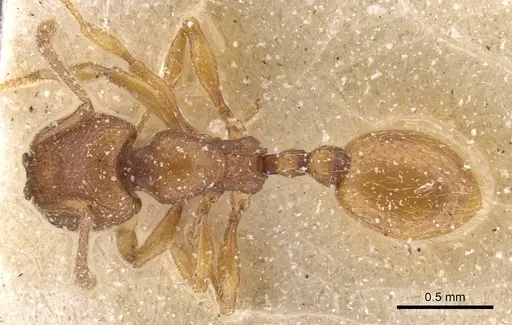
Literatura
A carregar mapa de distribuição...A carregar produtos...