
Solenopsis gallica
- Nome cient.
- Solenopsis gallica
- Tribo
- Solenopsidini
- Subfamília
- Myrmicinae
- Autor
- Santschi, 1934
- Distribuição
- Encontrado em 0 países
Introdução
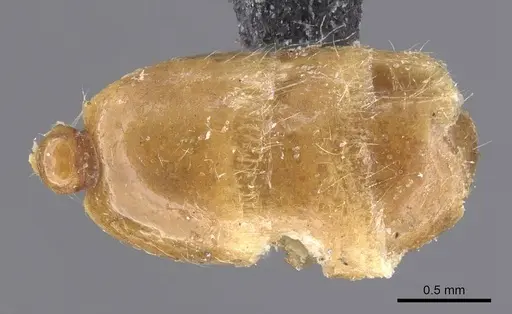
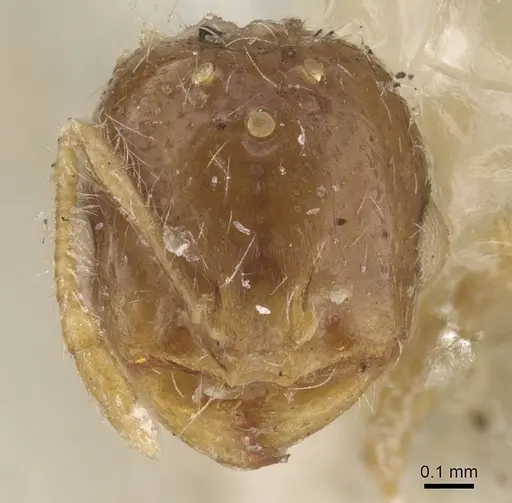
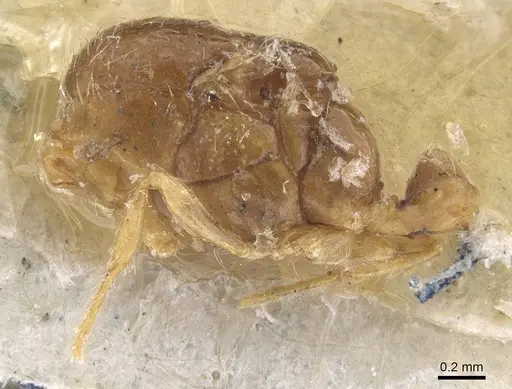
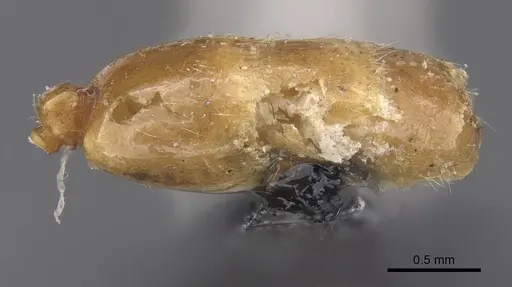
Solenopsis gallica is a tiny Mediterranean ant belonging to the lusitanica group of small Solenopsis species . It was described from a single queen collected in Grasse, Alpes-Maritimes, France . No measurements of total body length are available for the queen, and worker size and appearance are completely unknown. As a member of the Solenopsidini tribe, this species possesses a functional stinger for defense. Very little is known about its biology or captive care, making it a challenging subject for antkeepers.
Quick Summary
- Difficulty: Medium
- Origin & Habitat: Native to the Mediterranean region of southern France, specifically the Grasse area of Alpes-Maritimes [1]. Habitat details are undocumented, but the species likely lives in warm, dry to moderately humid open or disturbed ground, as is typical for small Mediterranean Solenopsis.
- Colony Type: Unknown. Colony structure is not documented for this species.
- Size & Growth:
- Queen: size data unavailable (no total length measurements exist)
- Worker: size data unavailable
- Colony: unknown, up to a few hundred workers estimated from related species
- Growth: Moderate (inferred)
- Development: unknown, no species-specific data (Development timing has not been studied for S. gallica.)
- Antkeeping:
- Temperature: Unknown. As a Mediterranean species, likely prefers warm conditions around 24-28°C, but this is an inference based on habitat.
- Humidity: Unknown. Mediterranean habitat suggests moderate to dry conditions, avoid high humidity.
- Diapause: Unknown. Mediterranean origin may require a mild winter rest of 2-3 months at 10-15°C, but this is not confirmed.
- Nesting: Unknown. Likely nests in soil or under stones in warm, open areas, based on typical small Solenopsis behavior.
- Behavior: Active foragers with a functional stinger. Their tiny size (unknown exact dimensions) means escape prevention is critical, use fine mesh or fluon barriers. They are likely defensive of the nest but no specific observations exist.
- Common Issues: very little documented care information makes husbandry speculative., escape prevention is critical due to unknown but likely very small worker size., stinger present, can deliver a noticeable sting, handle with care., slow colony growth may occur if care requirements are not met due to lack of data.
Housing and Nest Setup
Due to the complete lack of species-specific nesting data, start with a test tube setup for the queen. Use a water reservoir separated by a cotton plug. Once the colony grows (to at least 10-20 workers), you can offer a small Y-tong or plaster nest with fine chambers. Because the workers are likely very small (size unconfirmed), ensure all gaps are sealed with fluon or PTFE to prevent escapes. Provide a small outworld for foraging.
Feeding and Diet
No dietary studies exist for S. gallica. As a general guideline for small Solenopsis, offer a constant sugar source (honey or sugar water) and small protein prey such as fruit flies, pinhead crickets, or small mealworms two to three times per week. Remove uneaten prey after 24 hours to prevent mold. Seeds may be accepted, but this is speculative.
Temperature and Seasonal Care
Optimal temperature is unknown. Based on Mediterranean origin, aim for 24-28 °C during the active season using a heating cable on one side of the nest. If you attempt a winter rest, gradually lower to 10-15 °C for 2-3 months, but note that diapause requirements are unconfirmed. Monitor the colony closely for stress.
Handling and Safety
Like all Solenopsidini, S. gallica has a functional stinger. While the small size likely means mild sting, it can still be painful and may cause allergic reactions in sensitive individuals. Work calmly, avoid direct contact, and always use escape-proof enclosures. Do not unnecessarily disturb the nest.
Frequently Asked Questions
How long does it take for Solenopsis gallica to raise first workers?
Unknown. No development data exists for this species. If you keep the queen at 24-28°C, first workers may appear within 6-8 weeks, but this is a rough guess from related species.
Can I keep multiple Solenopsis gallica queens together?
Unknown. No information exists on colony structure. It is safest to start with a single queen.
What do Solenopsis gallica eat?
No specific data. Offer sugar sources and small protein prey like fruit flies and pinhead crickets. They may also accept seeds.
Are Solenopsis gallica good for beginners?
Medium difficulty. The lack of documented care information makes this species better suited for keepers with some experience who are willing to experiment cautiously.
How big do Solenopsis gallica colonies get?
Unknown. No published colony size estimates exist. Related small Mediterranean Solenopsis may reach a few hundred workers, but this is speculative.
Do Solenopsis gallica need hibernation?
Unknown. A mild winter rest of 2-3 months at 10-15°C may be beneficial, but this is not confirmed.
When should I move Solenopsis gallica to a formicarium?
Wait until the colony has at least 10-20 workers and the test tube becomes crowded. Use a small nest with appropriately sized chambers.
Report an Issue
The current care sheet is based fully on literature. See inconsistencies, or something that's incorrect? Please , it will be resolved after review from an admin. Contributing to the blogs tab also helps providing information, to make us be able to further improve the caresheets. Thank you for your support!
References

Esta ficha de cuidados é licenciada sob CC BY-SA 4.0 .
Blogs da comunidade
CASENT0913891
Ver no AntWeb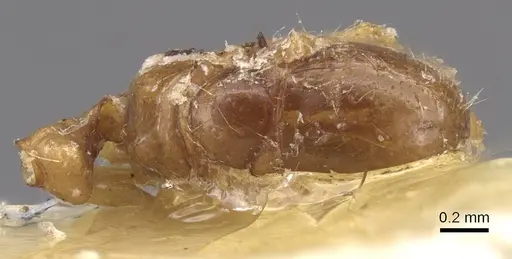
Literatura
A carregar mapa de distribuição...A carregar produtos...