Rhytidoponera aspera
- Nome cient.
- Rhytidoponera aspera
- Tribo
- Ectatommini
- Subfamília
- Ectatomminae
- Autor
- Roger, 1860
- Distribuição
- Encontrado em 1 países
Introdução
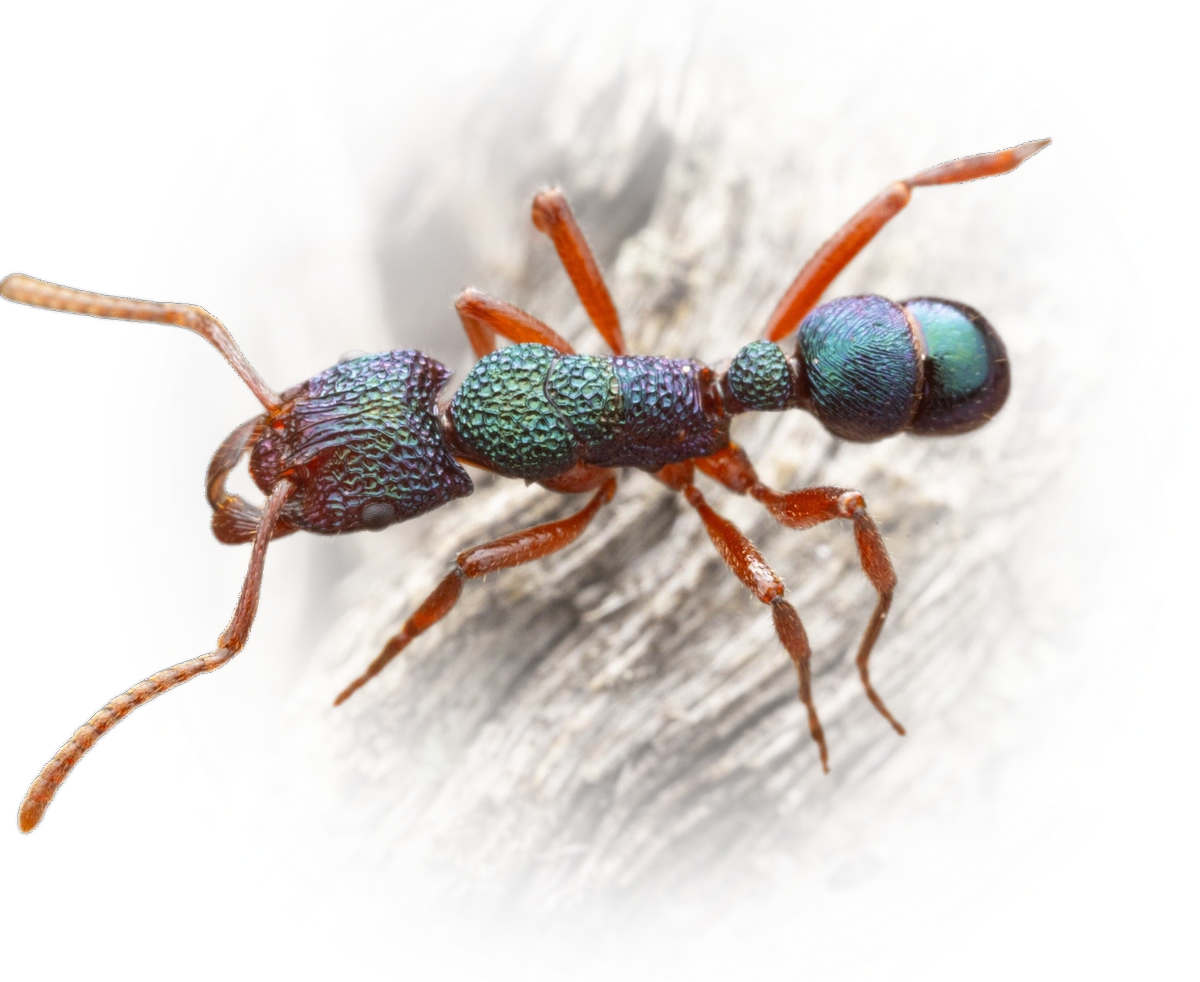
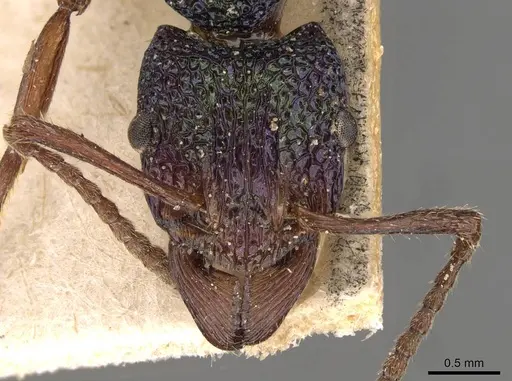
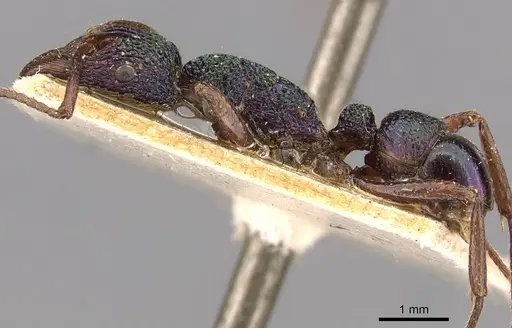
Rhytidoponera aspera is a small to medium-sized ant native to Australia, belonging to the subfamily Ectatomminae. Workers show a striking blue-green iridescence and measure about 4-6 mm (inferred from the Rhytidoponera genus). The species was first described as Ponera metallica var. aspera in 1860 and later moved to Rhytidoponera . What makes this species unusual is its reproductive system - queens are extremely rare or unknown, and colonies appear to rely on gamergates (reproductive workers) instead of a traditional queen . This means you cannot start a colony from a founding queen; you need an established group of workers that already includes gamergates.
Quick Summary
- Difficulty: Expert
- Origin & Habitat: Southeastern Australia, in eucalypt forests [4]. This species belongs to the 'Opportunist' functional group and has been intercepted in New Zealand via human transport [5].
- Colony Type: Gamergate-based reproduction, queens are rare or absent, colonies are maintained by workers that can lay eggs [3].
- Size & Growth:
- Queen: Extremely rare, not described in the available literature [3]
- Worker: ~4-6 mm (inferred from Rhytidoponera genus) [1]
- Colony: Probably under 100 workers, based on limited field data [3]
- Growth: Unknown, likely moderate (typical of many Ponerine relatives)
- Development: Unknown, no direct data, related Ponerinae often take 2-3 months from egg to worker at warm temperatures (Development has not been studied for this species.)
- Antkeeping:
- Temperature: 22-26°C, maintained at room temperature, based on its temperate Australian habitat. Avoid drops below 15°C.
- Humidity: Moderate, keep the nest substrate slightly moist but not waterlogged, mimicking a forest floor environment.
- Diapause: Unknown, temperate origin suggests a mild winter cool-down may help, but no specific requirements are documented.
- Nesting: Naturalistic soil setup or substrate under stones, as typical for ground-nesting Rhytidoponera. Provide some damp areas.
- Behavior: Opportunistic foragers that search for food on the forest floor [4]. They have a functional sting (Ectatomminae subfamily) and can deliver a mild sting if threatened. Workers are moderately defensive of the colony. Escape risk is moderate, they are not tiny but can climb smooth surfaces.
- Common Issues: gamergate reproduction means you cannot start colonies from a queen, you need an established colony with reproductive workers [3]., queens are so rare that obtaining a founding queen is practically impossible, only established colonies are available., specific care requirements (temperature, humidity, development timeline) are poorly documented, so keepers must observe and adapt., stinging can happen if the colony is disturbed, not dangerous to healthy humans but can be uncomfortable., this species has been intercepted in New Zealand [5], do not release in areas where it is not native.
Colony Structure and Reproduction
The most remarkable feature of Rhytidoponera aspera is that it lacks a normal queen-based system. Researchers note that 'queens rare or unknown' and 'mature queenright colonies not found' [3]. Instead, colonies are maintained and propagate through gamergates, workers that become reproductive and lay eggs. This means you cannot start a colony from a single queen. You must obtain an already-established group of workers that includes gamergates.
Appearance and Identification
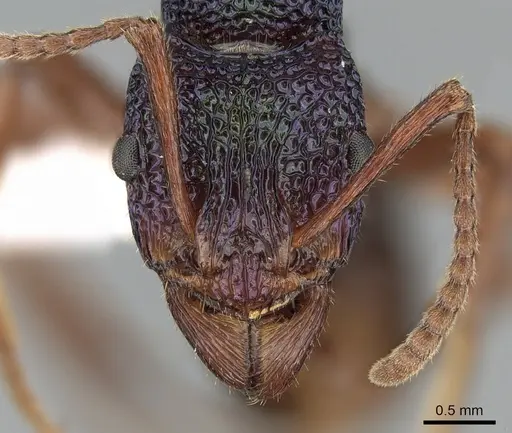
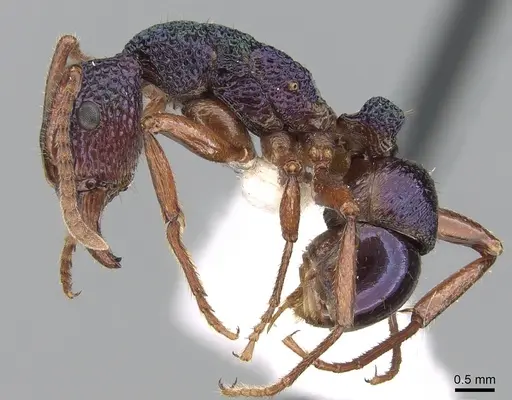
Workers are small (about 4-6 mm, inferred from the genus) and show a bright blue-green iridescence [1]. The body surface is textured, giving the species its name, 'aspera' means 'rough' in Latin. They belong to the subfamily Ectatomminae (formerly part of Ponerinae) and have a functional sting. The genus Rhytidoponera is restricted to Australasia, and R. aspera occurs primarily in Australia [2].
Natural Habitat and Distribution
This ant lives in eucalypt forests of southeastern Australia [4]. It is classified as an 'Opportunist' species, meaning it can exploit various resources and adapt to disturbed habitats. Field surveys caught individuals both on the ground and in tree traps [4]. There are also interception records in New Zealand (over five between 1955 and 2005) [5].
Feeding and Diet
As an Opportunist forager, R. aspera likely takes a mix of small invertebrates, nectar, and honeydew [4]. In captivity, offer a varied diet: small live prey (fruit flies, pinhead crickets, tiny mealworms) and sugar sources (honey water or sugar water). Protein should be a main component, as with most Ectatomminae.
Temperature and General Care
Since this species comes from temperate southeastern Australia, typical room temperatures (22-26°C) should be fine. Provide a slight warm spot (up to 28°C) but avoid prolonged cold below 15°C. Keep the nest substrate moderately moist, aim for a damp but not soggy soil mix. A shallow water dish can help with drinking. Because they have a sting, handle the colony with care. Use smooth barrier methods (fluon, oil) to prevent escape.
Obtaining and Keeping This Species
R. aspera is an expert-level ant because of its unusual reproduction. You cannot buy a queen, you need an established colony with reproductive workers [3]. Such colonies are rarely available in the hobby. Specific care parameters (exact temperature/humidity preferences, development timeline) are not documented, so keepers must experiment carefully. Treat a colony as a long-term project.
Frequently Asked Questions
Can I start a Rhytidoponera aspera colony from a queen?
Probably not, queens are extremely rare or unknown in this species. Colonies reproduce through gamergates (reproductive workers) rather than a founding queen [3]. You need an established colony that already contains gamergates.
What makes Rhytidoponera aspera different from other ants?
It lacks a traditional queen, workers (gamergates) do the reproduction. It also has bright blue-green iridescence and is native only to Australia [1] [3].
Do Rhytidoponera aspera ants sting?
Yes, as an ectatommine, it has a functional sting and can deliver a mild sting if threatened. It is not dangerous to healthy humans but may cause mild discomfort.
How big do Rhytidoponera aspera colonies get?
Colony size is probably small, likely under 100 workers based on limited field observations [3]. Exact maximums are unknown.
Are Rhytidoponera aspera good for beginners?
No, this species is not suitable for beginners. The gamergate-based reproduction makes it hard to obtain and establish, and specific care requirements are poorly documented. Only experienced keepers should attempt it.
What do Rhytidoponera aspera eat?
As opportunistic foragers, they likely eat small invertebrates and sugary secretions. In captivity, provide small live prey (fruit flies, small crickets, tiny mealworms) and sugar water or honey water. Protein is important.
Where is Rhytidoponera aspera found in the wild?
It occurs in eucalypt forests of southeastern Australia [4]. It has also been intercepted in New Zealand [5] but is not established there.
Can I keep multiple colonies of Rhytidoponera aspera together?
Not advised, unless they are part of the same colony, unrelated groups will fight. Each colony defends its own nest.
Do Rhytidoponera aspera need hibernation?
Specific overwintering needs are unknown. As a temperate species, it may benefit from a mild cool-down in winter, but no data is available. If you try a cool period, keep it above 10°C and monitor colony health.
Why are they called the 'Rough Ant'?
The species name 'aspera' means 'rough' in Latin, referring to the textured surface of the exoskeleton. They also have a striking blue-green iridescence [1].
Report an Issue
The current care sheet is based fully on literature. See inconsistencies, or something that's incorrect? Please , it will be resolved after review from an admin. Contributing to the blogs tab also helps providing information, to make us be able to further improve the caresheets. Thank you for your support!
References

Esta ficha de cuidados é licenciada sob CC BY-SA 4.0 .
Blogs da comunidade
CASENT0281241
Ver no AntWeb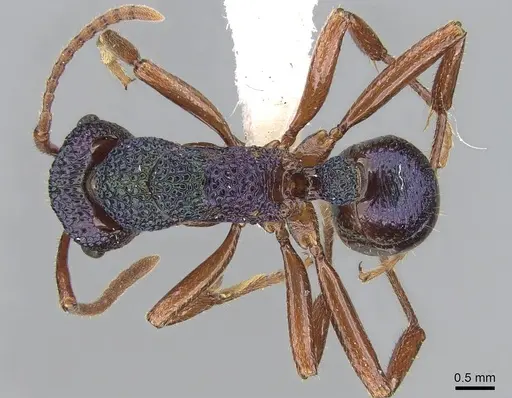
CASENT0907153
Ver no AntWeb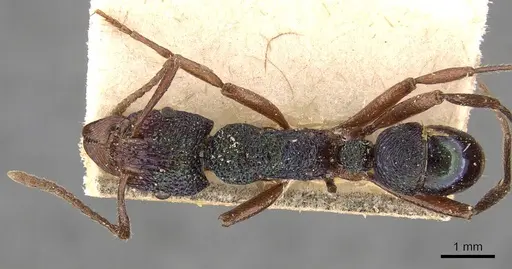
Literatura
A carregar mapa de distribuição...A carregar produtos...