
Pseudomyrmex longior
- Nome cient.
- Pseudomyrmex longior
- Tribo
- Pseudomyrmecini
- Subfamília
- Pseudomyrmecinae
- Autor
- Forel, 1904
- Distribuição
- Encontrado em 0 países
Introdução
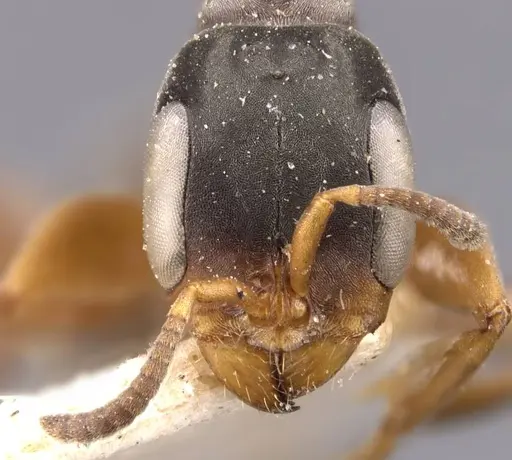
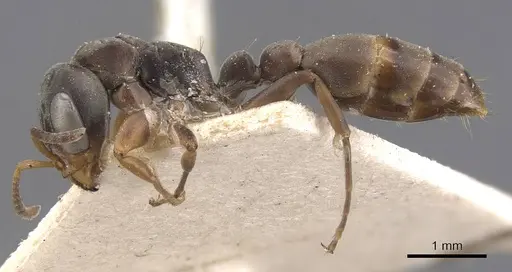
Pseudomyrmex longior is a Neotropical ant found in Brazil, Colombia, and Peru . It belongs to the Pseudomyrmecinae subfamily - slender, large-eyed, arboreal ants often called 'twig ants'. Workers have a distinctive yellowish-brown profemur (upper leg) that stands out against their darker body . They are known for a mutualistic relationship with *Triplaris* trees (ant-plants), nesting inside hollow stems and protecting the plant from herbivores . Unlike many ground-dwelling ants, they spend their entire lives in the canopy.
Quick Summary
- Difficulty: Medium
- Origin & Habitat: Found in the Neotropical region across Brazil, Colombia, and Peru, with specific records in Colombia (Antioquia, Guaviare, Meta) and Peru (Loreto) [1][4][2][3]. They inhabit *Triplaris* ant-plants (myrmecophytes) in tropical forests, nesting in the hollow stems and specialized chambers (domatia) these plants provide [2][3].
- Colony Type: Colony structure is unconfirmed for this species. Most *Pseudomyrmex* species are monogyne (single queen colonies), though some can be polygynous. They are arboreal nesters in plant domatia.
- Size & Growth:
- Queen: Size data unavailable, queen size typical for the genus is larger than workers, roughly 10-13 mm total length based on genus patterns.
- Worker: Size data unavailable, *Pseudomyrmex* workers are typically medium-sized (around 5-12 mm total length based on genus patterns).
- Colony: Unknown for this species, estimated up to a few hundred workers based on typical *Pseudomyrmex* colonies.
- Growth: Moderate, typical for tropical arboreal ants.
- Development: Estimated 6-8 weeks at warm tropical temperatures (25-28°C) based on genus patterns. (Development is likely faster in the warm, stable microclimate of their arboreal nests.)
- Antkeeping:
- Temperature: Keep at 24-28°C. These are tropical ants from the Amazon region, so they need warm, stable temperatures year-round. Avoid drops below 20°C.
- Humidity: Moderate to high humidity. Provide a humid nest chamber by keeping a water source available and misting the outworld occasionally, but avoid waterlogging.
- Diapause: No, these are tropical ants that do not require hibernation. Keep temperatures consistent year-round.
- Nesting: Arboreal setup is essential. They naturally nest in hollow plant stems. In captivity, provide cork bark, bamboo sections, or 3D-printed formicaria with narrow chambers that mimic their natural plant-housing behavior. Avoid ground-level nests.
- Behavior: These ants have excellent vision thanks to their large eyes and are active daytime foragers. They are aggressive defenders of their host plant and nest, readily biting and stinging intruders. Workers patrol regularly and are alert to movement. Escape prevention is important, they are strong climbers and can squeeze through very small gaps.
- Common Issues: requires tropical temperatures year-round, room temperature alone may cause stress or slow growth in temperate climates., arboreal nature means vertical space and climbing structures are necessary, standard horizontal formicaria won't work., escape risk is high due to small size (under 5 mm) and climbing ability, use tight lids and barrier methods., wild-caught colonies may be dependent on specific *Triplaris* species, captive adaptation may take time., limited availability, this is a specialty species rarely seen in the antkeeping hobby.
Natural History and Host Plants
Pseudomyrmex longior has a mutualistic relationship with Triplaris trees, also known as 'ant trees' or 'galeta'. The plant provides hollow chambers (domatia) in its stems for the ants to nest, and in return, the ants aggressively defend the plant from herbivores and encroaching vines [2][3]. This species is a generalist within the genus, it can inhabit multiple Triplaris species, including T. melaenodendron and T. dugandii, which may make it slightly more adaptable in captivity than specialist Pseudomyrmex [3].
Housing and Nest Setup
Set up an arboreal formicarium that provides vertical space. Good options include cork bark, bamboo sections, or 3D-printed nests with narrow chambers that mimic hollow stems. Unlike ground-nesting ants, they prefer elevated nesting sites. Place the nest higher in the outworld with climbing structures (twigs, branches, or mesh) so the ants can patrol. A test tube setup can work during founding, but move them to an arboreal nest once the colony has about 20 workers. Keep the outworld floor dry but provide a small water source like a test tube with cotton or a gravity drinker. [2]
Feeding and Diet
In the wild, these ants hunt small insects and tend honeydew-producing insects (aphids, scale insects) living on their host plant. In captivity, offer small live prey such as fruit flies, pinhead crickets, or small mealworms for protein, this is vital for brood growth. Provide constant access to sugar water or honey. They readily accept sweet liquids. Feed 2-3 times per week with protein, and ensure sugar is always available.
Temperature and Seasonal Care
These tropical ants need warmth year-round. Keep the nest area at 24-28°C (75-82°F). They do not need hibernation or any cooling period. Temperatures below 20°C (68°F) can slow or stop brood development and stress the colony. In temperate climates, use a heating cable or heat mat placed on one side of the nest to create a gradient, so the ants can choose their preferred warmth.
Behavior and Colony Dynamics
Thanks to their large eyes, Pseudomyrmex ants have excellent vision and are highly responsive to movement. Workers actively patrol the nest area and will sting and bite any perceived threat to the colony. They maintain clean nest entrances and remove debris quickly. Colonies are not huge, expect a few hundred workers at most. The queen lays eggs continuously under warm conditions, and brood development depends on temperature and food availability. Because they are aggressive and quick, avoid disturbing the nest unnecessarily.
Frequently Asked Questions
Is Pseudomyrmex longior good for beginners?
No. This species is not ideal for complete beginners. It requires a warm tropical setup year-round, an arboreal formicarium, and can be aggressive. Keepers who have experience with other ant species and can provide proper heating and climbing space may find it rewarding.
What do Pseudomyrmex longior ants eat?
They are omnivorous. Offer small live insects (fruit flies, small crickets, mealworms) for protein and provide constant access to sugar water or honey. They also feed on honeydew if you keep aphids or scale insects in the enclosure.
Do Pseudomyrmex longior ants sting?
Yes, like other Pseudomyrmecinae, they have a well-developed sting and will use it to defend their nest. The sting is not medically significant for humans but can be painful. They are aggressive defenders.
How long does it take for the first workers to emerge?
Based on genus patterns, expect first workers (nanitics) around 6-8 weeks after the queen lays eggs, provided temperatures stay at 25-28°C. Development slows down if temperatures drop.
Can I keep multiple Pseudomyrmex longior queens together?
It is not recommended. There is no evidence that this species is polygynous, and combining unrelated queens carries a high risk of fighting. Start with a single queen.
Do they need a host plant like Triplaris?
They associate with Triplaris in the wild, but can be kept without it in captivity as long as you provide arboreal nesting structures like bamboo or cork bark. This species is a generalist, so it is more flexible than some Pseudomyrmex [3].
What temperature do they need?
Maintain 24-28°C (75-82°F). They are tropical ants and do not tolerate cool temperatures. In temperate climates, heating is usually needed.
How big do Pseudomyrmex longior colonies get?
Colony size is not well documented for this specific species, but Pseudomyrmex colonies typically reach a few hundred workers at maturity, not thousands.
Are they escape artists?
Yes. They are small, excellent climbers, and have good vision. Use tight-fitting lids and consider applying fluon or PTFE around the edges of the outworld to prevent escapes.
Do they need hibernation?
No. These tropical ants do not need hibernation or a cool rest period. Keep them warm year-round.
Report an Issue
The current care sheet is based fully on literature. See inconsistencies, or something that's incorrect? Please , it will be resolved after review from an admin. Contributing to the blogs tab also helps providing information, to make us be able to further improve the caresheets. Thank you for your support!
References

Esta ficha de cuidados é licenciada sob CC BY-SA 4.0 .
Blogs da comunidade
CASENT0907559
Ver no AntWeb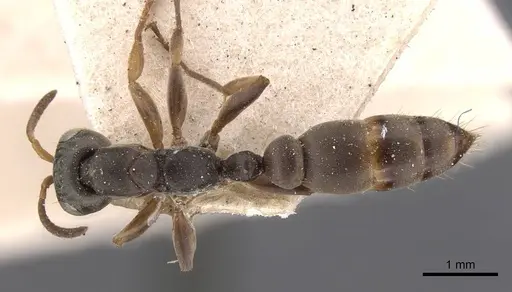
Literatura
A carregar mapa de distribuição...A carregar produtos...