
Probolomyrmex bidens
- Nome cient.
- Probolomyrmex bidens
- Tribo
- Probolomyrmecini
- Subfamília
- Proceratiinae
- Autor
- Brown, 1975
- Distribuição
- Encontrado em 0 países
Introdução
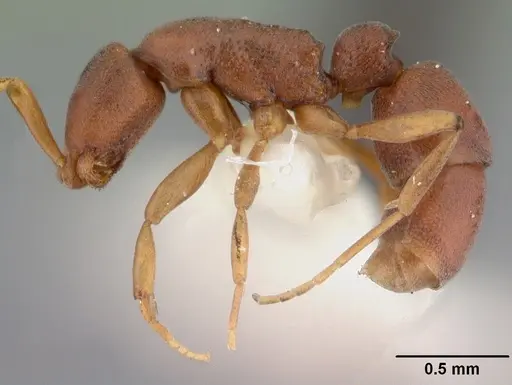
Probolomyrmex bidens is an extremely rare ant species known only from a single worker specimen collected in the Palni Hills of Tamil Nadu, India, at 2150m elevation . Workers are tiny at just 2.7mm total length, with a dark reddish-brown body and distinctive paired teeth on the rear of their petiolar node – the feature that gives them their species name 'bidens' meaning two-toothed . They have no visible eyes, which suggests they are blind, cryptic foragers . This is one of the least-studied ant species in the world, with virtually nothing known about their colony structure, founding behavior, diet, or captive care requirements. The genus Probolomyrmex contains only a handful of rarely encountered species scattered across Asia and Australasia.
Quick Summary
- Difficulty: Expert
- Origin & Habitat: Endemic to the Palni Hills in Tamil Nadu, India, known only from the type locality at 2150m altitude near Kodaikanal. The high elevation suggests a cooler, montane forest habitat [1][4].
- Colony Type: Unknown – only a single worker has ever been collected. The genus Probolomyrmex has no documented colony structure for any species, and sexual forms (queens and males) remain undescribed for this species [1].
- Size & Growth:
- Queen: Unknown – queens have never been documented [1]
- Worker: 2.7mm total length (TL) [1][2]
- Colony: Unknown – no colony data exists
- Growth: Unknown
- Development: Unknown – no brood development has ever been studied (Based on related Proceratiinae species, expect development of several months, but this is entirely estimated)
- Antkeeping:
- Temperature: Likely prefers cool to moderate temperatures given the high-altitude collection site (2150m). Start around 18-22°C and observe colony activity. The elevation suggests they may tolerate cooler conditions than typical tropical ants.
- Humidity: Unknown – no habitat data exists. The Palni Hills receive monsoon rains, suggesting moderate to high ambient humidity. Keep nest substrate slightly moist but not waterlogged.
- Diapause: Unknown – likely requires a cool period during winter months given the temperate-to-cool montane habitat, but this is unconfirmed.
- Nesting: No nesting data exists. Based on related Proceratiinae, they likely nest in soil, under stones, or in rotting wood in shaded locations. A naturalistic setup with moist substrate and minimal disturbance would be appropriate.
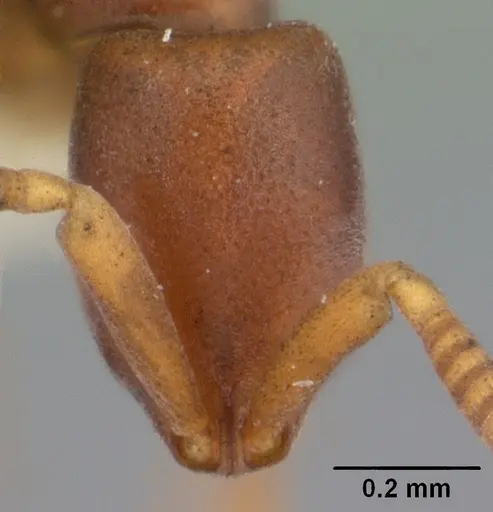
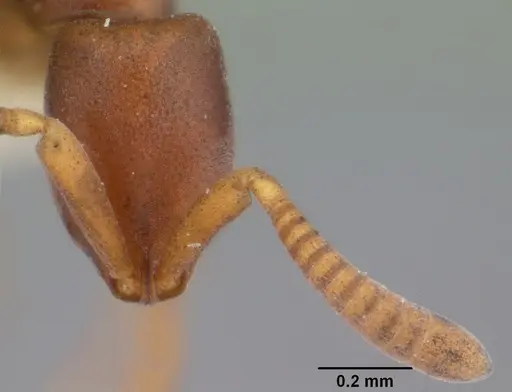
- Behavior: Completely unknown. Proceratiinae ants are typically cryptic, slow-moving, and predatory. Workers are blind with no eyes detected at 50× magnification [2]. They likely forage singly or in small groups rather than forming large trails. Escape risk is low given their tiny size, but excellent containment is still recommended.
- Common Issues: this species has never been kept in captivity – there is no established care protocol, no queens or males have ever been documented, making captive breeding impossible, the single known specimen provides no information about diet, temperature tolerance, or humidity needs, high-altitude origin means they may have specific temperature requirements that differ from typical ants, without any documented biology, even basic care is entirely experimental
Why This Species Is So Challenging
Probolomyrmex bidens is one of the most poorly known ant species in the world. The entire scientific knowledge of this species rests on a single worker specimen collected in 1972 from the Palni Hills of Tamil Nadu, India. No queens, no males, no colonies, no behavioral observations, no ecological data – nothing. Every other ant species in the hobby has at least some documented biology to work with. This species has zero captive history and zero biological studies beyond the original morphological description. This is not a species you can keep – it is a species that exists only in museum collections and scientific papers. Even finding a queen would be a significant scientific discovery, as no one has ever documented a Probolomyrmex queen of any species [1][2].
What We Know From the Specimen
The holotype worker measures just 2.7mm total length, making them smaller than many common house ants [1][2]. They are dark reddish-brown with lighter yellowish legs and antennae. The most distinctive feature is the pair of strong teeth at the rear of their petiolar node – this is how they got their species name 'bidens' meaning two-toothed [3]. They have no visible eyes, confirming they are blind like other Proceratiinae [2]. Their body has relatively large and distinct punctures on the head, mesosoma, and petiole. The propodeal teeth are fairly prominent and somewhat rectangular. The subpetiolar process is deep and well-developed. All of this morphological information tells us about their body shape but nothing about how they live [1][2].
Inferring Care From Relatives
Since we have no direct data on Probolomyrmex bidens, we must infer care from the subfamily Proceratiinae. These ants are typically cryptic, living in hidden microhabitats like under stones, in soil cracks, or in rotting wood. They are predatory, hunting small invertebrates rather than collecting honeydew. Queens are likely claustral – they seal themselves in a chamber and survive on stored fat until workers emerge. They probably prefer cooler, more humid conditions than many tropical ants given their high-altitude collection site. However, these are educated guesses based on relatives, not confirmed requirements for this species. The genus Probolomyrmex remains one of the most poorly documented ant genera globally, with even basic biology unknown for all its species [1].
Legal and Ethical Considerations
This species is endemic to India and has been documented only from a very restricted area in the Palni Hills. There are no documented populations in captivity anywhere in the world. Importing or attempting to keep this species would require knowing whether it is protected under Indian wildlife law, and whether any export permits exist. Given that only a single specimen has ever been found, any wild collection would be extremely disruptive to a potentially tiny population. Appreciate this species through scientific literature rather than as a captive animal – there is simply nothing known about keeping them, and attempting to do so would be entirely experimental with no chance of success without fundamental biological research first [4].
Frequently Asked Questions
Can I keep Probolomyrmex bidens as a pet ant?
No. This species has never been kept in captivity and there is no documented care information. No queens or males have ever been found, so captive breeding would be impossible even if you located a wild colony. This is a species known only from a single museum specimen [1].
Where does Probolomyrmex bidens live?
Only known from the Palni Hills in Tamil Nadu, India, at 2150m elevation near Kodaikanal. This is a high-altitude montane location in southern India [1][4].
What do Probolomyrmex bidens ants look like?
Workers are tiny at 2.7mm total length, dark reddish-brown with lighter yellowish legs and antennae. They have no eyes (are blind). Their most distinctive feature is a pair of teeth on the rear of their petiolar node [1][2].
How big do Probolomyrmex bidens colonies get?
Unknown – no colony has ever been documented. Even the related species in this genus have no documented colony sizes [1].
Do Probolomyrmex bidens ants sting?
Unknown – no one has ever observed their behavior. Proceratiinae ants have stingers but most are too small to affect humans.
What do Probolomyrmex bidens eat?
Unknown – no feeding observations exist. Based on related Proceratiinae, they are likely predatory on small invertebrates, but this is entirely inferred.
Are Probolomyrmex bidens good for beginners?
Absolutely not. This is an expert-level species in the sense that no one knows anything about keeping them. There is no established care protocol, no documented colony structure, and no queens have ever been found. This species is not available in the antkeeping hobby and likely cannot be kept [1].
Do Probolomyrmex bidens need hibernation?
Unknown – no biological data exists. Their high-altitude origin (2150m) suggests they may experience cool winters, but whether they require a dormancy period is completely unstudied [1].
How long does it take for Probolomyrmex bidens to develop from egg to worker?
Unknown – no brood development has ever been studied for this or any Probolomyrmex species.
Can I find Probolomyrmex bidens in the wild?
Extremely unlikely. Only a single specimen has ever been collected despite over 50 years of searching. They appear to be either extremely rare or possibly already extinct from their known range [1].
Report an Issue
The current care sheet is based fully on literature. See inconsistencies, or something that's incorrect? Please , it will be resolved after review from an admin. Contributing to the blogs tab also helps providing information, to make us be able to further improve the caresheets. Thank you for your support!
References

Esta ficha de cuidados é licenciada sob CC BY-SA 4.0 .
Blogs da comunidade
CASENT0101818
Ver no AntWeb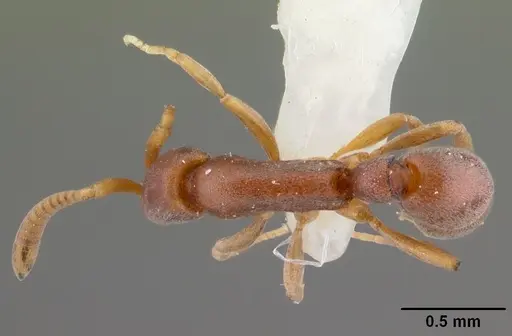
Literatura
A carregar mapa de distribuição...A carregar produtos...