
Pristomyrmex largus
- Nome cient.
- Pristomyrmex largus
- Tribo
- Crematogastrini
- Subfamília
- Myrmicinae
- Autor
- Wang, 2003
- Distribuição
- Encontrado em 0 países
Introdução
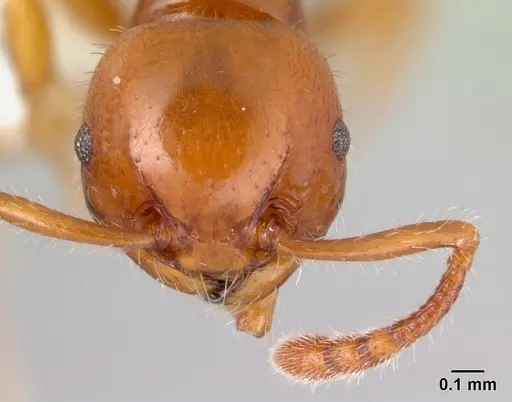
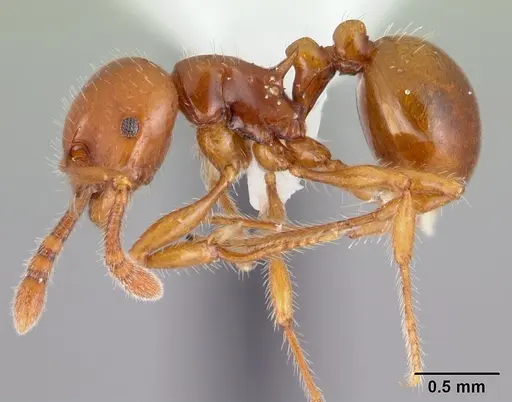
Pristomyrmex largus is a small ant native only to Pohnpei Island in the Federated States of Micronesia. Workers measure about 3.4mm in total length, and queens about 3.9mm . They have an orange to yellow-brown coloration with smooth, shiny bodies and relatively long propodeal spines . The species is found exclusively in high-elevation rainforest habitats, nesting under rain-soaked leaf litter and inside rotting vegetation like ivory nuts on the forest floor . This ant is one of the larger species in the Pristomyrmex genus but remains small by ant standards, with a distinctive morphology that includes a high petiole node and smooth body surfaces.
Quick Summary
- Difficulty: Hard
- Origin & Habitat: Endemic to Pohnpei Island in the Federated States of Micronesia, found in high-elevation rainforest at around 400 meters altitude, nesting under leaf litter and in rotting vegetation [1][2].
- Colony Type: Colony structure is unconfirmed, no data exists on whether they are single-queen or multi-queen colonies.
- Size & Growth:
- Queen: ~3.9mm total length [1]
- Worker: ~3.4mm total length [1]
- Colony: Unknown, no colony size data available
- Growth: Unknown
- Development: Unconfirmed, no development data exists for this species (Based on related Pristomyrmex species in tropical regions, development may take 4-8 weeks under warm conditions, but this is an estimate.)
- Antkeeping:
- Temperature: Inferred from high-elevation tropical habitat, aim for 24-28°C, with room temperature (22-26°C) likely suitable [2].
- Humidity: Inferred from rain-soaked leaf litter habitat, keep nest substrate consistently moist but not waterlogged, with a humidity gradient [2].
- Diapause: Unconfirmed, as a tropical species from a consistent climate, they likely do not require hibernation [2].
- Nesting: Based on natural preferences, they nest in moist substrate with hiding spots like rotting wood or leaf litter, use naturalistic setups with appropriate escape prevention [1].
- Behavior: Temperament is not well-documented, but Pristomyrmex species are generally not aggressive. Primary defense is smearing venom using a modified stinger, based on subfamily Myrmicinae, tribe Crematogastrini. They are small and forage in leaf litter, so escape prevention is critical due to their tiny size.
- Common Issues: experimental care required due to no established husbandry records, tiny size creates high escape risk through small gaps, high humidity needs can lead to mold if ventilation is poor, lack of colony data makes feeding and social needs difficult to assess, wild-caught colonies may have parasites or stress from collection
Natural History and Distribution
Pristomyrmex largus is known only from Pohnpei Island in the Federated States of Micronesia. All specimens have been collected from high-elevation rainforest at around 400 meters altitude, under dead leaves on the ground or inside rotting ivory nuts [1][2]. The species was described in 2003 and is part of the levigatus group, with orange coloration and long propodeal spines as key features [1].
Identification and Morphology
Workers of Pristomyrmex largus are larger than related species, with a total length of about 3.4mm. They have four teeth on the mandibles, with the third tooth from the apex being the smallest. Propodeal spines are long, approximately 1.5 times the distance between their bases. The petiole node is high, with the anterodorsal angle higher than the posterodorsal angle. Queens are slightly larger at about 3.9mm total length and have shorter propodeal spines than workers [1].
Housing and Nest Setup
Given their natural nesting in moist leaf litter and rotting vegetation, use a naturalistic setup with a damp soil or peat-based substrate. Provide small hiding structures like pieces of rotting wood or cork. Because workers are tiny (~3.4mm), ensure excellent escape prevention with fine mesh barriers and tightly fitting lids. A small formicarium or tub-and-tube setup can work, with substrate kept moist but not waterlogged [1].
Feeding and Diet
Diet is unconfirmed for this species. Based on Pristomyrmex genus patterns, they are likely predatory or omnivorous, feeding on small invertebrates. In captivity, offer small live prey like fruit flies or booklice, and sugar sources like honey water. Feed protein prey 2-3 times per week with constant sugar access [1].
Temperature and Humidity
Aim for temperatures around 24-28°C, inferred from their tropical highland habitat [2]. Humidity should be high, with nest substrate consistently moist but not waterlogged, based on their natural rain-soaked leaf litter environment [2]. Provide a gradient with a damp area and a slightly drier area for self-regulation.
Colony Development and Growth
No specific data exists on colony development for Pristomyrmex largus. Based on related species, eggs may develop into workers in 4-8 weeks under warm conditions, but this is an estimate. Colony growth is expected to be slow initially, with maximum size unknown [1].
Frequently Asked Questions
How long does it take for Pristomyrmex largus to produce first workers?
The egg-to-worker timeline is unconfirmed. Based on related Pristomyrmex species, expect approximately 4-8 weeks under optimal warm temperatures around 26°C [1].
What do Pristomyrmex largus ants eat?
Diet is unconfirmed, but they likely accept small live prey like fruit flies and sugar sources. Feed protein prey 2-3 times per week [1].
Are Pristomyrmex largus good for beginners?
No, this species has no established husbandry records, and care is experimental. Their tiny size and specific needs make them unsuitable for beginners [1].
Do Pristomyrmex largus ants sting?
Pristomyrmex species use a smearing defense mechanism with a modified stinger, but sting potency to humans is unconfirmed.
What temperature should I keep Pristomyrmex largus at?
Based on their tropical habitat, aim for 24-28°C [2].
Do Pristomyrmex largus need hibernation?
Unlikely, as a tropical species, they probably do not require diapause [2].
How big do Pristomyrmex largus colonies get?
Maximum colony size is unknown, no large colony data exists [1].
Can I keep multiple Pristomyrmex largus queens together?
Not recommended, colony structure is unconfirmed, and combining queens has not been documented. Assume single-queen colonies [1].
Why are my Pristomyrmex largus escaping?
Workers are only about 3.4mm long and can squeeze through tiny gaps. Use fine mesh barriers and tightly fitting lids for escape prevention [1].
Where is Pristomyrmex largus found in the wild?
They are endemic to Pohnpei Island in high-elevation rainforest, nesting under leaf litter and in rotting vegetation [1][2].
Report an Issue
The current care sheet is based fully on literature. See inconsistencies, or something that's incorrect? Please , it will be resolved after review from an admin. Contributing to the blogs tab also helps providing information, to make us be able to further improve the caresheets. Thank you for your support!
References

Esta ficha de cuidados é licenciada sob CC BY-SA 4.0 .
Blogs da comunidade
CASENT0178409
Ver no AntWeb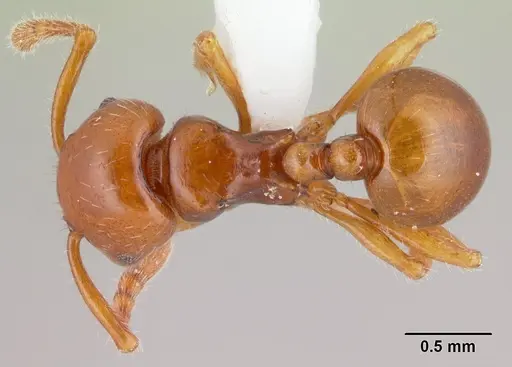
Literatura
A carregar mapa de distribuição...A carregar produtos...