
Polyrhachis transiens
- Nome cient.
- Polyrhachis transiens
- Subgénero
- Myrma
- Tribo
- Camponotini
- Subfamília
- Formicinae
- Autor
- Bolton, 1973
- Distribuição
- Encontrado em 0 países
Introdução
Polyrhachis transiens is a tropical ant species in the subgenus Myrma (revoili-group). They are arboreal nesters, building nests in trees and shrubs using silk produced by their larvae, and also incorporate carton material . Their exact size and coloration are poorly documented in the available literature, but based on genus patterns they are likely medium-sized ants with a dark body. They are found across tropical Asia and Australasia, typically in forest edges and gardens .
Quick Summary
- Difficulty: Medium
- Origin & Habitat: Tropical Asia and Australasia, arboreal nesting in trees and shrubs, typically in forest edges and gardens [1][2]
- Colony Type: Unconfirmed, no specific data on queen number. Based on the genus Polyrhachis, colonies are likely single-queen, but this is not verified.
- Size & Growth:
- Queen: size data unavailable
- Worker: size data unavailable
- Colony: unknown
- Growth: unknown
- Development: Unknown, detailed development time is not reported. Pupal cocoons are present, which suggests a longer development compared to species without cocoons [1]. (Development likely depends on temperature, but specific data is lacking.)
- Antkeeping:
- Temperature: Keep at 25-30°C (77-86°F), inferred from tropical habitat. A heating gradient is recommended. No specific temperature studies exist for this species.
- Humidity: Moderate to high humidity. Their arboreal nature suggests they prefer humid air but not saturated substrate. Mist the enclosure occasionally, a water source can be provided. Inferred from tropical arboreal habitat.
- Diapause: Likely no diapause required, as a tropical species, they probably remain active year-round. Inferred from tropical distribution.
- Nesting: Arboreal specialists, need elevated structures. Provide materials they can weave: leaves, twigs, cork bark, or cloth. They use silk to bind materials, and also incorporate carton [1][2]. A vertical or diagonal orientation is better than horizontal. Naturalistic setups with plants or vertical branches work well.
- Behavior: Based on the genus Polyrhachis, workers are generally non-aggressive toward keepers. They are active climbers and forage primarily in elevated areas. Their silk-weaving behavior is their most notable trait. Escape risk is moderate, they are medium-sized and can climb smooth surfaces, so secure lids are needed. Specific temperament data for this species is lacking.
- Common Issues: tropical temperature requirements mean colonies can struggle in cool rooms or during winter without supplemental heating., arboreal nesting means standard ground-based nests are unsuitable, they need elevated structures for silk-weaving., silk-weaving behavior requires appropriate materials (leaves, twigs, fabric), bare enclosures won't allow natural nesting., humidity control is important, too dry and they desiccate, too wet and mold becomes a problem., slow colony growth may frustrate beginners, as development timelines are unknown but likely moderate.
Nest Preferences and Housing
Polyrhachis transiens is an arboreal species that nests in elevated locations like trees and shrubs. In captivity, you need to replicate this by providing elevated structures. They use silk produced by their larvae to bind materials together, and they also incorporate carton (a mixture of chewed plant fibers and saliva) [1][2]. Provide materials they can manipulate: leaves, twigs, cork bark arranged vertically or diagonally, or pieces of fabric/cloth. Avoid bare plastic or glass, as they won't be able to construct natural nests. A naturalistic terrarium with live or artificial plants works well. Since they are arboreal, the foraging area should be above the nest area.
Feeding and Diet
No specific dietary data exists for Polyrhachis transiens. By genus patterns, Polyrhachis are omnivorous, feeding on small insects and sweet liquids. In captivity, offer protein sources like small crickets, mealworms, or fruit flies twice weekly. Provide sugar water, honey water, or fruit. Since they are arboreal, feed in elevated areas of the enclosure. Remove uneaten prey after 24-48 hours to prevent mold. Observations from related species suggest they accept both live and dead prey. (Note: this guidance is inferred from the genus Polyrhachis and is not species-specific [1][2].)
Temperature and Care
As a tropical species, Polyrhachis transiens needs warm temperatures. Specific data is lacking, but based on its tropical distribution, keep the nest area at 25-30°C (77-86°F). Use a heating cable on one side to create a gradient. Avoid temperatures below 22°C (72°F) for prolonged periods, as this may slow metabolism. They do not require hibernation, maintain consistent warmth year-round. Humidity should be moderate to high, mist the enclosure periodically and provide a water source. Inferred from tropical habitat, not from direct studies.
Behavior and Temperament
Specific behavior for Polyrhachis transiens is not well documented. Based on related Polyrhachis species, they are generally peaceful ants that are not aggressive toward keepers. Their most notable behavior is silk-weaving: they use silk from their larvae to bind nest materials. They are active climbers and will spend most of their time on vertical surfaces. They may bite if handled roughly, but their bite is mild. Escape risk is low to moderate, secure all openings as they can climb glass and plastic. Provide a naturalistic environment to encourage silk-weaving.
Colony Founding
The founding method for Polyrhachis transiens is unknown. Many Polyrhachis species are claustral (queens raise first brood without feeding), but this is not confirmed for this species. If it is claustral, the queen will need a small, dark, sealed chamber with appropriate temperature and humidity for 6-8 weeks (based on related species). However, since this is unverified, it is safer to follow guidelines for semi-claustral founding: provide food (sugar water and small insects) from the start and monitor the queen. Without specific data, flexibility is recommended.
Frequently Asked Questions
Can I keep Polyrhachis transiens in a test tube?
It depends on the founding method, which is unknown. If the queen is claustral, a test tube with a cotton water reservoir can work for the founding stage. If she is semi-claustral, she will need food access from the start. Without species-specific data, it is safer to use a small setup that allows feeding from the beginning. Once workers appear, they will need an arboreal setup with vertical structures.
How long does it take for first workers to emerge?
The development time is unknown for this species. Based on related Polyrhachis species kept in captivity, first workers might emerge in 6-8 weeks at 25-30°C, but this is a guess. Factors like temperature and founding method will affect timing. Keepers should be patient.
Are Polyrhachis transiens good for beginners?
Rated as medium difficulty. They require tropical temperatures and specialized arboreal housing for their silk-weaving behavior. Since their founding and care requirements are not well studied, beginners may face challenges if assumptions are wrong. Experienced keepers will have a better chance of success.
Do Polyrhachis transiens need hibernation?
No, a hibernation period is not required. As a tropical species, they should be kept warm (25-30°C) year-round. They may slow down slightly in cooler conditions but do not enter true diapause.
How big do Polyrhachis transiens colonies get?
Colony size is unknown. There are no published estimates. Mature colonies of related arboreal Polyrhachis species can range from 100 to several hundred workers, but this is speculation.
Why is my Polyrhachis transiens colony not growing?
Common suspects: temperature too low (target 25-30°C), humidity too low (mist the enclosure), lack of appropriate nesting materials for silk-weaving, or inadequate diet (offer both protein and sugar). Also consider that development may be slow naturally. If the queen is founding, stress from disturbance can stall growth.
Can I keep multiple Polyrhachis transiens queens together?
Colony structure is unknown. Many Polyrhachis are monogyne (single queen), but without confirmation, it is safest to assume each colony needs one queen. Attempting to combine queens is risky and may lead to fighting.
What do Polyrhachis transiens eat?
No specific diet known. Based on the genus, they are omnivorous. Offer small insects (fruit flies, small crickets, mealworms) for protein and sugar water, honey water, or fruit for carbohydrates. Feed in elevated areas of the enclosure.
When should I move my colony to a formicarium?
Since their founding behavior is unknown, it is best to provide a suitable arboreal setup from the start if possible. If using a test tube for founding, move them when the colony has outgrown the tube or when you see them actively trying to construct silk nests outside it. Provide vertical structures immediately upon moving.
Report an Issue
The current care sheet is based fully on literature. See inconsistencies, or something that's incorrect? Please , it will be resolved after review from an admin. Contributing to the blogs tab also helps providing information, to make us be able to further improve the caresheets. Thank you for your support!
References

Esta ficha de cuidados é licenciada sob CC BY-SA 4.0 .
Blogs da comunidade
CASENT0903463
Ver no AntWeb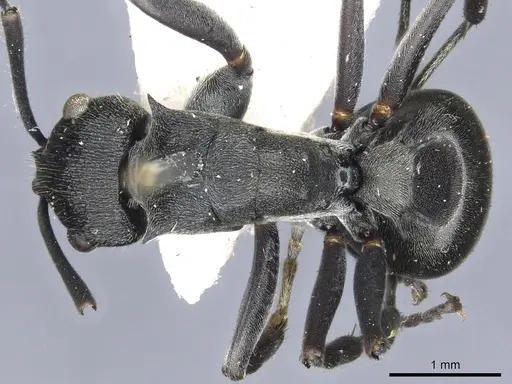
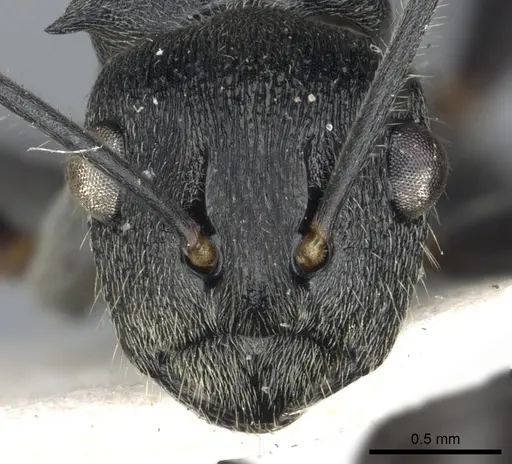
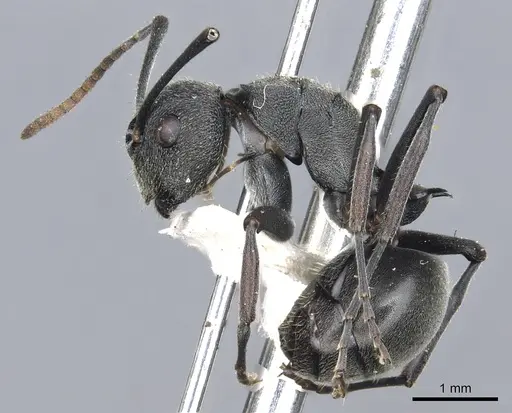
Literatura
A carregar mapa de distribuição...A carregar produtos...