
Polyrhachis seducta
- Nome cient.
- Polyrhachis seducta
- Subgénero
- Hagiomyrma
- Tribo
- Camponotini
- Subfamília
- Formicinae
- Autor
- Kohout, 2013
- Distribuição
- Encontrado em 0 países
Introdução
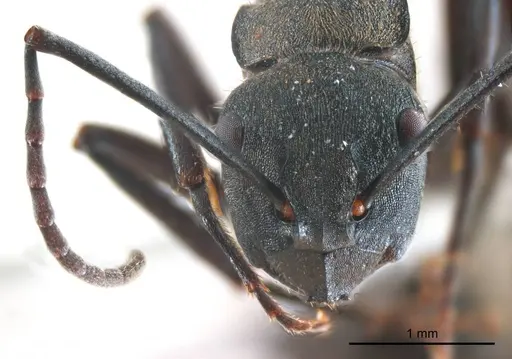
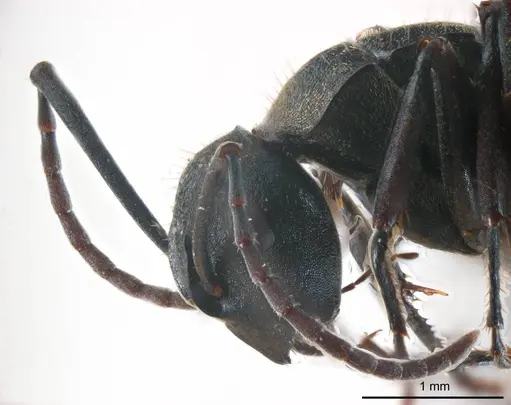
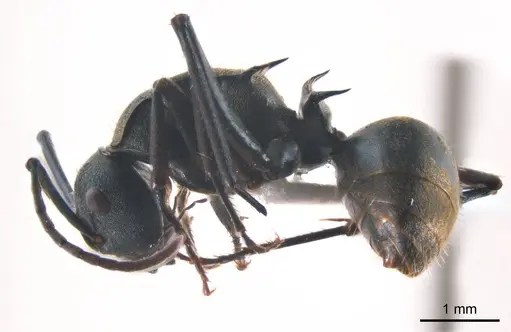
Polyrhachis seducta is a medium-sized ant with a total length of 5.64-7.31 mm, native only to Barrow Island off the coast of Western Australia . Workers are black with dark reddish-brown mandibles and legs, covered in short, golden bristle-like hairs that fringe the body outline . This species belongs to the penelope species-group within the subgenus Hagiomyrma and has spines on both the propodeum and petiole . Unlike many Polyrhachis species that are arboreal, P. seducta is ground-nesting, with all known specimens collected foraging on the ground .
Quick Summary
- Difficulty: Hard
- Origin & Habitat: Barrow Island, Western Australia, a remote island with arid coastal habitat [1][2]. All specimens were collected foraging on the ground, indicating terrestrial nesting habits [1][2].
- Colony Type: Colony structure is unconfirmed. Only worker specimens have been collected, queen caste has not been described [1]. Based on Polyrhachis patterns, likely monogyne (single-queen colonies), but this requires confirmation.
- Size & Growth:
- Antkeeping:
- Temperature: Based on Barrow Island's warm climate, keep around 24-28°C with a gradient for self-regulation [1].
- Humidity: As a ground-nesting species from an arid island, provide a humidity gradient, mostly dry nest with one small moist area [1][2].
- Diapause: Unlikely, Barrow Island does not experience cold winters, so true diapause is not required [1].
- Nesting: Ground-nesting species. Provide a nest with soil or Y-tong/plaster nest with chambers scaled to their size [1][2].
- Behavior: Workers are active ground-foragers [1]. Temperament is not well-documented, but Polyrhachis species are generally not aggressive and defend with spines. As Formicinae, they can spray formic acid, but no specific defense data for this species. Escape risk is moderate, medium-sized ants need standard barriers.
- Common Issues: limited data, this is a recently described species with minimal research, so care recommendations are inferential., queen unknown, only workers have been collected, making colony founding challenging., slow growth expected, development timeline unconfirmed., wild-caught colonies difficult to obtain due to remote location.
Nest Preferences
Polyrhachis seducta is a ground-nesting species, unusual for the genus which contains many arboreal species [1]. In captivity, provide a nest setup that accommodates terrestrial habits, such as a Y-tong or plaster nest with appropriately sized chambers [1][2]. As a ground-nester from an arid island, they prefer drier conditions, so keep the nest substrate lightly moist but allow some areas to dry out.
Feeding and Diet
Specific diet preferences are unconfirmed for this species. Polyrhachis ants are typically omnivorous, so offer a constant sugar source (e.g., honey or sugar water) and regular protein feedings (e.g., small insects), but adjust based on what your colony accepts.
Temperature and Care
Barrow Island has a warm subtropical climate, so keep the nest area around 24-28°C with a temperature gradient [1]. Provide a heating cable on one side to allow workers to self-regulate. Ensure adequate ventilation to prevent mold while maintaining stable conditions.
Behavior and Temperament
Polyrhachis seducta workers are active ground-foragers [1]. They have defensive spines and, as Formicinae, can spray formic acid, but no specific defense data exists for this species. Workers are medium-sized, so escape prevention is straightforward with standard barriers.
Acquiring This Species
Polyrhachis seducta is known only from Barrow Island, making wild collection difficult [1]. Queens have never been described, so colony founding from wild-caught queens is not possible. If breeding colonies become available through legal channels, they would be valuable for advanced keepers.
Frequently Asked Questions
How do I keep Polyrhachis seducta ants?
Provide a ground-nesting setup with soil or a Y-tong/plaster nest, keep temperatures around 24-28°C with a gradient, and offer a varied diet of sugar and protein. However, this species is extremely rare and not commercially available.
What do Polyrhachis seducta ants eat?
Specific diet is unconfirmed, but Polyrhachis species are typically omnivorous. Offer sugar water and small insects, adjusting based on colony acceptance.
How big do Polyrhachis seducta colonies get?
Colony size is unknown, no data exists for this species.
Are Polyrhachis seducta good for beginners?
No. This is not a beginner species due to lack of data, rarity, and difficulty in obtaining colonies.
What temperature do Polyrhachis seducta ants need?
Aim for 24-28°C based on Barrow Island's climate, with a gradient for self-regulation [1].
How long does it take for Polyrhachis seducta to develop from egg to worker?
Development timeline is unconfirmed, no research exists on this species.
Where is Polyrhachis seducta found?
Polyrhachis seducta is known only from Barrow Island, Western Australia [1].
Can I keep multiple Polyrhachis seducta queens together?
Unknown, queen caste has never been described, so colony structure is unconfirmed.
Do Polyrhachis seducta need hibernation?
Unlikely, Barrow Island does not experience cold winters, so true diapause is not required [1].
What makes Polyrhachis seducta unique?
It is a rare, ground-nesting Polyrhachis species from a remote island, with only workers known and no established care protocols.
Report an Issue
The current care sheet is based fully on literature. See inconsistencies, or something that's incorrect? Please , it will be resolved after review from an admin. Contributing to the blogs tab also helps providing information, to make us be able to further improve the caresheets. Thank you for your support!
References

Esta ficha de cuidados é licenciada sob CC BY-SA 4.0 .
Blogs da comunidade
ANTWEB1008707
Ver no AntWeb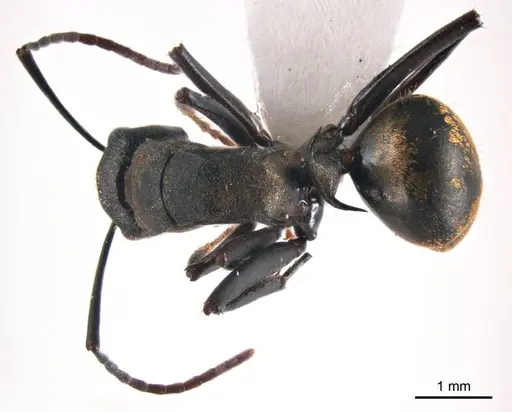
Literatura
A carregar mapa de distribuição...A carregar produtos...