
Polyrhachis rugifrons
- Nome cient.
- Polyrhachis rugifrons
- Subgénero
- Myrmhopla
- Tribo
- Camponotini
- Subfamília
- Formicinae
- Autor
- Smith, 1860
- Distribuição
- Encontrado em 0 países
Introdução
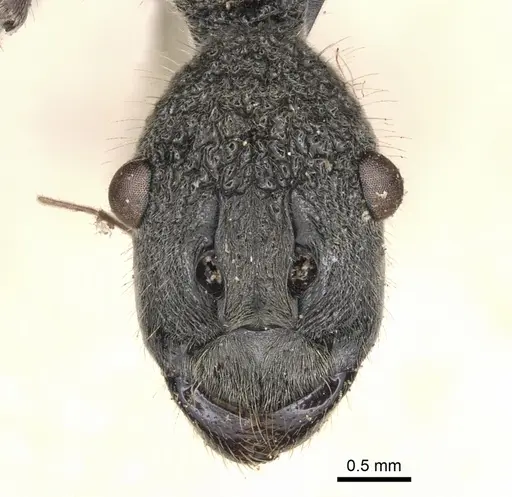
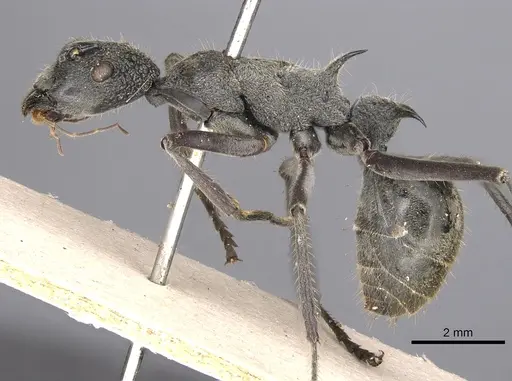
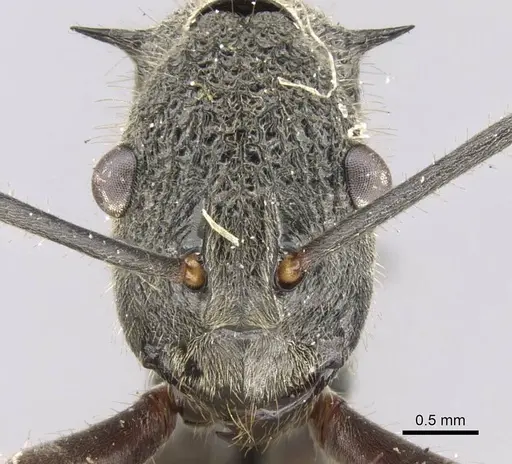
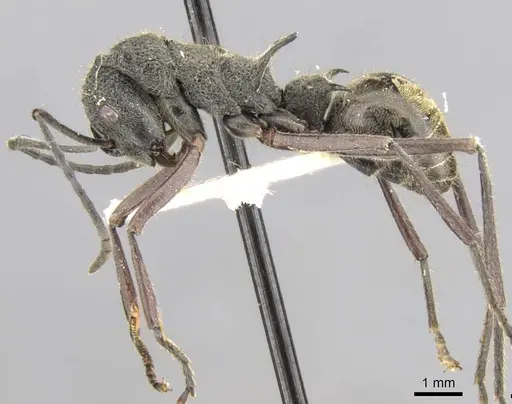
Polyrhachis rugifrons is a species in the sexspinosa-group of the subgenus Myrmhopla . It is distinguished from Polyrhachis spinosa by its short, straight pronotal spines that project laterally at nearly right angles to the body . This species is found in the Indomalaya region, including Borneo, Indonesia, Malaysia, and Sulawesi, typically in forest habitats at elevations of 140-1080 meters . Body size data is unavailable for this species. Polyrhachis rugifrons is arboreal and lignicolous, nesting in wood using carton material, and produces pupal cocoons . This nesting behavior is unusual among Formicinae ants, which often have naked pupae.
Quick Summary
- Difficulty: Medium
- Origin & Habitat: Indomalaya region, found in Borneo, Indonesia, Malaysia, and Sulawesi. Inhabits forest habitats at elevations of 140-1080 meters [2].
- Colony Type: Colony structure is unconfirmed for this species. Based on Polyrhachis patterns, likely single-queen colonies, but no specific data exists.
- Size & Growth:
- Queen: Size data unavailable
- Worker: Size data unavailable
- Colony: Maximum colony size unknown
- Growth: Moderate
- Development: Estimated 8-12 weeks at optimal temperature, based on typical Formicinae development. (Development time may vary with temperature. This species produces cocooned pupae.)
- Antkeeping:
- Temperature: Keep at warm temperatures, roughly 24-28°C, based on tropical habitat.
- Humidity: Keep nest substrate consistently moist but not waterlogged.
- Diapause: No diapause required, as species is tropical.
- Nesting: Arboreal nesting in wood using carton [3][4]. Use Y-tong or plaster nests, avoid acrylic nests.
- Behavior: Workers are generally calm and not aggressive, with moderate climbing ability.
- Common Issues: tropical species requires consistent warmth, cold temperatures can weaken colonies., arboreal nature means they need vertical space and climbing structures., cocooned pupae require stable humidity to develop properly., escape prevention should be adequate due to climbing ability., wild-caught colonies may have parasites or diseases.
Nest Preferences and Housing
Polyrhachis rugifrons is an arboreal, lignicolous species that naturally nests in wood within trees, using carton material to construct and line their nests [3][4]. In captivity, they adapt well to several nest types. Y-tong (AAC) nests work particularly well because they provide the dark, enclosed chambers these ants prefer. Plaster nests are another good option as they can hold moisture well, which helps maintain the humidity these tropical ants need. If using a naturalistic setup, provide small twigs, cork, or wood pieces that the ants can use for nesting. Avoid fully horizontal setups, they prefer more enclosed spaces. The outworld should include climbing structures like twigs, plants, or mesh since they naturally forage in vegetation.
Feeding and Diet
Diet information is not specifically documented for Polyrhachis rugifrons. Based on general ant care, offer a varied diet including sugars (e.g., honey water) and proteins (e.g., small insects).
Temperature and Seasonal Care
This species is tropical and does not require diapause. Keep temperatures warm, roughly 24-28°C, based on its habitat.
Behavior and Colony Dynamics
Polyrhachis rugifrons is generally calm with moderate climbing ability. Workers are active foragers, but specific behavior details are not documented.
Frequently Asked Questions
Can I keep Polyrhachis rugifrons in a test tube?
Test tubes can work for founding colonies, but these arboreal ants prefer more enclosed spaces. Move to a nest once the colony has several workers.
How long does it take for Polyrhachis rugifrons to produce first workers?
Estimated 8-12 weeks from egg to first worker at optimal temperature, based on typical Formicinae development.
What temperature do Polyrhachis rugifrons need?
Keep them at 24-28°C, based on tropical habitat.
Are Polyrhachis rugifrons good for beginners?
They are rated as medium difficulty due to temperature and humidity needs.
How big do Polyrhachis rugifrons colonies get?
Maximum colony size unknown for this species.
What do Polyrhachis rugifrons eat?
They are generalist foragers, offer sugars and proteins.
When should I move my Polyrhachis rugifrons to a formicarium?
Move them once the colony has several workers and the test tube is becoming cramped.
Do Polyrhachis rugifrons need hibernation?
No, as a tropical species, they do not require hibernation.
Why is my Polyrhachis rugifrons colony dying?
Common causes include cold temperatures, low humidity, or stress from disturbance.
Report an Issue
The current care sheet is based fully on literature. See inconsistencies, or something that's incorrect? Please , it will be resolved after review from an admin. Contributing to the blogs tab also helps providing information, to make us be able to further improve the caresheets. Thank you for your support!
References

Esta ficha de cuidados é licenciada sob CC BY-SA 4.0 .
Blogs da comunidade
CASENT0901826
Ver no AntWeb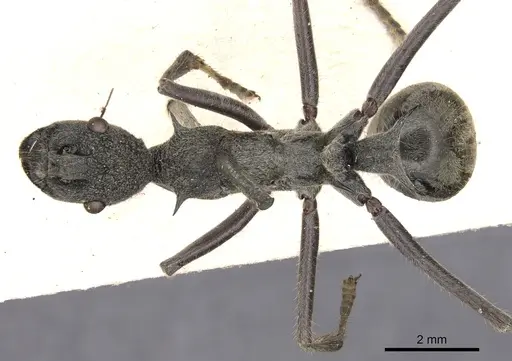
CASENT0906760
Ver no AntWeb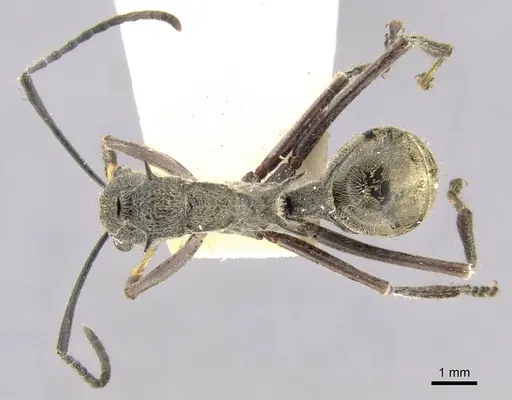
Literatura
A carregar mapa de distribuição...A carregar produtos...