
Polyrhachis johnsoni
- Nome cient.
- Polyrhachis johnsoni
- Subgénero
- Cyrtomyrma
- Tribo
- Camponotini
- Subfamília
- Formicinae
- Autor
- Mann, 1919
- Distribuição
- Encontrado em 0 países
Introdução
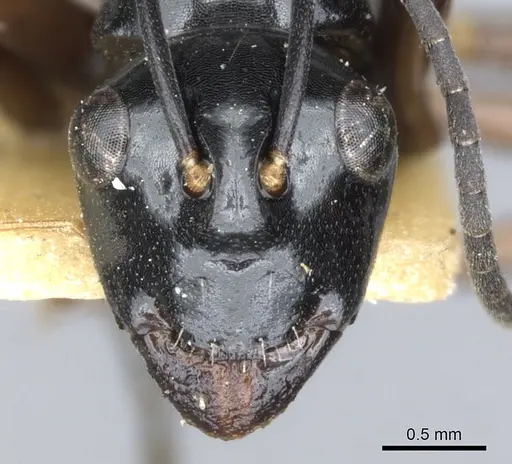
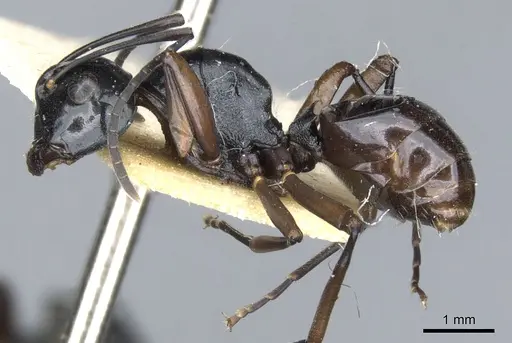
Polyrhachis johnsoni is a medium-sized arboreal ant native to the Solomon Islands. Workers measure around 7mm and have a distinctive appearance with a relatively flat pronotum and short propodeal spines. Their body is dark brown to almost black, and the legs are uniformly dark. This species was originally described as a variety of Polyrhachis rastellata but was later raised to full species status due to distinct morphological differences . They build silk and carton nests on palm leaves, making them an arboreal species that prefers elevated nesting sites . One of the most interesting things about Polyrhachis johnsoni is its silk-weaving behavior, where workers construct nests from silk and carton material attached to vegetation .
Quick Summary
- Difficulty: Medium
- Origin & Habitat: Solomon Islands (Rendova, Makira, Guadalcanal) with unconfirmed records from Papua New Guinea. They are arboreal ants that build silk and carton nests on palm leaves in tropical forest environments [3][1][2].
- Colony Type: Unconfirmed colony structure. Polyrhachis species are typically monogyne (single queen) but some can be polygynous. The exact colony structure for P. johnsoni has not been documented.
- Size & Growth:
- Queen: Size data unavailable
- Worker: 7mm [1]
- Colony: Unknown
- Growth: Moderate, inferred from genus patterns
- Development: Estimated 6-8 weeks at tropical temperatures based on typical Polyrhachis development [2] (Direct development data unavailable for this species. Estimates based on genus-level patterns for tropical Polyrhachis.)
- Antkeeping:
- Temperature: Keep at 24-28°C. This is inferred from their tropical distribution in the Solomon Islands [3][1].
- Humidity: High humidity is needed. Keep the nest substrate consistently moist but not waterlogged, based on their arboreal habitat in humid tropical forests [2].
- Diapause: No, being a tropical species, they do not require diapause.
- Nesting: Arboreal setup required. Use a naturalistic setup with vertical surfaces, cork bark, or plants for silk attachment [2].
- Behavior: Polyrhachis johnsoni is an arboreal species that is moderately active. Workers are robust and will defend their nest if threatened. They are escape artists due to their active nature, ensure excellent barrier protection [1][2].
- Common Issues: arboreal setup is essential, they will not thrive in ground-based test tube setups, high humidity needs can lead to mold if ventilation is poor, escape prevention is critical, they are active and will find gaps, tropical warmth year-round is required, no cold periods, limited availability in the antkeeping hobby makes this a more challenging species to obtain
Housing and Nest Setup
Polyrhachis johnsoni requires an arboreal setup unlike most commonly kept ants. In the wild, they build silk and carton nests attached to palm leaves and vegetation, so your setup should mimic this. A naturalistic vivarium with live or artificial plants, cork bark, and other vertical surfaces works best. The ants will construct their nest by weaving silk and building carton material between surfaces. Avoid traditional test tube setups or simple acrylic nests, these arboreal ants need space to build their characteristic structures. Provide plenty of rough surfaces they can attach silk to. A Y-tong nest with smooth surfaces may not be ideal since they prefer to build on textured, plant-like surfaces. Consider a naturalistic terrarium-style setup with vertical branches or cork bark positioned at various angles [2].
Temperature and Humidity
Being from the Solomon Islands, this is a strictly tropical species that needs warm, humid conditions year-round. Maintain temperatures between 24-28°C consistently. Temperature drops below 22°C can stress colonies and slow development. A small heating mat on one side of the enclosure can create a gentle gradient, but avoid direct heat on the nest area. Humidity should be kept high. Mist the enclosure regularly and ensure the substrate or moisture reservoir maintains humidity. However, good ventilation is crucial, stagnant, overly wet conditions lead to mold that can kill colonies. The key is finding balance: humid but with airflow [3][1].
Feeding and Diet
Polyrhachis johnsoni is likely an omnivorous species typical of the genus. They probably forage for honeydew and small insects in the wild. In captivity, offer sugar water or honey regularly, along with protein sources like small crickets, mealworms, or other appropriate-sized insects. Being arboreal, they may also accept fruit sugars. Feed them every 2-3 days, removing uneaten food promptly to prevent mold. A constant sugar source should be available. Adjust feeding frequency based on colony size, larger colonies can be fed more often.
Behavior and Colony Dynamics
This is an active, arboreal ant that builds distinctive silk and carton nests, one of the more unusual nesting behaviors among ants. Workers are robust at 7mm and will actively patrol their territory. They are not typically aggressive toward keepers but will defend their nest vigorously if disturbed. Colonies likely grow to several hundred workers over time based on related species. The silk-weaving behavior is fascinating to observe as they construct their nests. They are good climbers and will explore vertical surfaces extensively. Escape prevention is important, use fluon barriers on smooth surfaces and ensure any gaps in the enclosure are sealed [1][2].
Growth and Development
Specific development data for P. johnsoni is not available. Based on typical Polyrhachis patterns and their tropical distribution, expect development from egg to worker to take approximately 6-8 weeks at optimal temperatures (25-28°C). Queen founding behavior is unconfirmed but Polyrhachis species are typically claustral, the queen seals herself in and raises the first workers alone on stored fat reserves. The first workers (nanitics) will be smaller than mature workers. Growth rate is moderate, not as fast as some tropical species but faster than temperate ants. Patience is required during the founding phase.
Frequently Asked Questions
Can I keep Polyrhachis johnsoni in a test tube setup?
No, this is an arboreal species that builds silk and carton nests on vegetation. They need a naturalistic setup with vertical surfaces, cork bark, or plants to build their nests. Traditional test tube setups are not suitable [2].
What temperature do Polyrhachis johnsoni ants need?
Keep them at 24-28°C consistently. They are tropical ants from the Solomon Islands and need year-round warmth. Temperature drops below 22°C can stress the colony [3][1].
How long does it take for Polyrhachis johnsoni to produce first workers?
Estimated 6-8 weeks from egg to worker at optimal tropical temperatures (25-28°C). This is based on typical Polyrhachis development patterns since specific data for this species is not available [2].
Do Polyrhachis johnsoni ants need hibernation?
No, being a tropical species from the Solomon Islands, they do not require hibernation or diapause. Keep them warm and active year-round.
What do Polyrhachis johnsoni ants eat?
They are omnivorous. Offer sugar water or honey regularly as an energy source, along with protein from small insects like crickets or mealworms. They will likely accept fruit sugars as well.
Are Polyrhachis johnsoni good for beginners?
This is not an ideal beginner species. They require an arboreal naturalistic setup (not typical ant housing), high humidity, and year-round tropical warmth. They are also rarely available in the hobby. A more common species like Lasius or Camponotus would be better for beginners.
How big do Polyrhachis johnsoni colonies get?
Colony size is not documented, but based on related Polyrhachis species, they likely reach several hundred workers over time.
When should I move my Polyrhachis johnsoni to a formicarium?
Since they need an arboreal setup, you would set them up in a naturalistic terrarium-style enclosure from the start rather than moving them to a traditional formicarium. Provide the appropriate vertical surfaces and humidity from the beginning [2].
Why are my Polyrhachis johnsoni dying?
Common causes include: temperatures too low (below 22°C), humidity too low or too high without ventilation, inappropriate housing (ground-based instead of arboreal), or escape-related stress. Review their tropical, arboreal requirements carefully.
Report an Issue
The current care sheet is based fully on literature. See inconsistencies, or something that's incorrect? Please , it will be resolved after review from an admin. Contributing to the blogs tab also helps providing information, to make us be able to further improve the caresheets. Thank you for your support!
References

Esta ficha de cuidados é licenciada sob CC BY-SA 4.0 .
Blogs da comunidade
CASENT0903408
Ver no AntWeb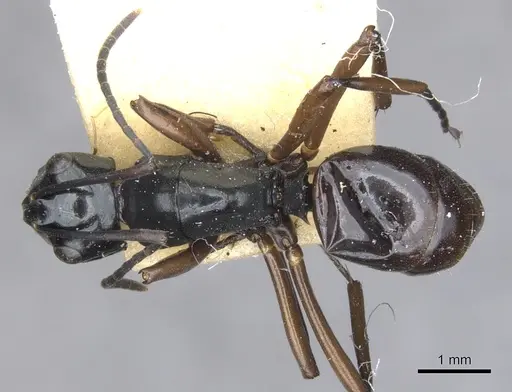
Literatura
A carregar mapa de distribuição...A carregar produtos...