
Polyrhachis hauxwelli
- Nome cient.
- Polyrhachis hauxwelli
- Subgénero
- Campomyrma
- Tribo
- Camponotini
- Subfamília
- Formicinae
- Autor
- Bingham, 1903
- Distribuição
- Encontrado em 0 países
Introdução
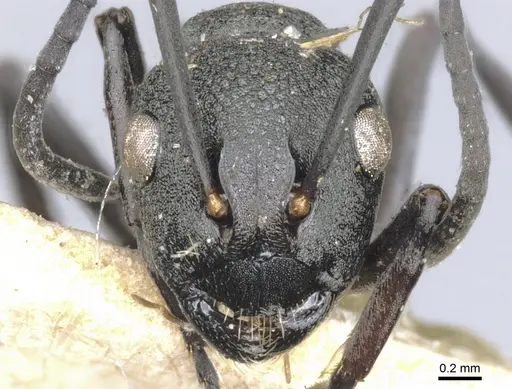
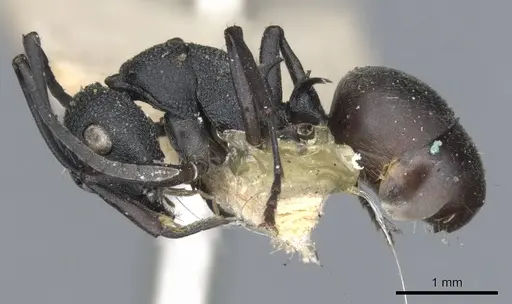
Polyrhachis hauxwelli is a medium-sized ant species in the Formicinae subfamily. Workers have a characteristic arched thorax, but size data is unavailable as no total length measurements are provided in the research . The species was described from Myanmar and is recorded in India, Pakistan, Thailand, and Jordan . It is found in diverse habitats, including cool broadleaved forests at 1600m in Bhutan . In nature, it forms mutualistic relationships with aphids like Aphis craccivora for honeydew .
Quick Summary
- Difficulty: Medium
- Origin & Habitat: Native to the Indomalayan region, recorded in India, Myanmar, Pakistan, Thailand, and Jordan. Habitats range from tropical areas to cool broadleaved forests at 1600m elevation [4][2][3].
- Colony Type: Colony structure is unconfirmed. Based on typical Polyrhachis patterns, likely single-queen (monogyne) colonies, but this needs confirmation.
- Size & Growth:
- Queen: Size data unavailable, inferred from Polyrhachis genus as medium-sized
- Worker: Size data unavailable, inferred from Polyrhachis genus as medium-sized
- Colony: Unknown, no specific data available
- Growth: Moderate, inferred from genus patterns
- Development: Estimated 6-8 weeks at optimal temperature based on related Formicinae species (Development time is inferred from genus patterns as no specific study exists)
- Antkeeping:
- Temperature: Keep warm and stable, roughly 22-26°C, based on their wide elevation range [4]. Avoid extremes below 15°C or above 30°C.
- Humidity: Keep the nest substrate consistently moist but not waterlogged, as they are found in both moist and drier areas [4].
- Diapause: No, being a tropical/subtropical species, they do not require hibernation. A slight temperature reduction in winter may be beneficial.
- Nesting: Based on genus patterns, they typically nest in soil cavities or rotting wood. Use naturalistic setups with soil or Y-tong/plaster nests.
- Behavior: Generally peaceful but defensive when threatened. They lack a functional sting and defend by spraying formic acid (subfamily Formicinae, tribe Camponotini). Active foragers that tend aphids for honeydew and are preyed upon by tiger beetles, indicating ground foraging [6]. Escape risk is moderate due to medium size and activity.
- Common Issues: limited species-specific research means care is largely inferred from genus patterns, wild-caught colonies may have parasites given they are preyed upon by tiger beetles, humidity balance is important, avoid both overly dry and waterlogged conditions, escape prevention should be maintained despite medium size, active foragers can find gaps
Housing and Nest Preferences
You can house Polyrhachis hauxwelli in setups that provide space and humidity control. A naturalistic setup with a soil chamber works well, as they nest in soil cavities or rotting wood in the wild [4]. Alternatively, a Y-tong or plaster nest provides visibility and humidity control. Ensure the nest substrate holds moisture without becoming waterlogged. A small water reservoir helps maintain stable humidity. The outworld should be sized appropriately for the colony [2].
Feeding and Diet
In the wild, Polyrhachis hauxwelli tends aphids like Aphis craccivora for honeydew [5]. They also eat small insects and arthropods. In captivity, offer constant sugar water or honey, and protein sources like small crickets or mealworms 2-3 times per week. Remove uneaten prey after 24-48 hours to prevent mold.
Temperature and Seasonal Care
Maintain temperatures around 22-26°C, with a gentle gradient using a heating cable on one side of the nest [4]. Avoid temperatures below 15°C or above 30°C. During winter, a slight reduction to 18-20°C is acceptable, but no true diapause is needed.
Behavior and Colony Dynamics
Workers are moderately polymorphic and generally not aggressive but will defend the nest by spraying formic acid. They are active foragers, searching for honeydew and small prey. The species is recorded as prey for tiger beetles, indicating ground foraging in agricultural areas [6]. Colony growth is moderate, with first workers expected 6-8 weeks after queen lays eggs under optimal conditions.
Frequently Asked Questions
How long does it take for Polyrhachis hauxwelli to produce first workers?
Based on related Formicinae species, expect first workers approximately 6-8 weeks after the queen lays eggs, assuming optimal temperatures around 24-26°C [5].
What do Polyrhachis hauxwelli ants eat?
They are omnivorous with a preference for sugary substances. Offer constant access to sugar water or honey, and supplement with protein sources like small crickets or mealworms 2-3 times weekly. They naturally tend aphids for honeydew [5].
Can I keep multiple Polyrhachis hauxwelli queens together?
Not recommended. The colony structure is not well-documented, but based on typical Polyrhachis patterns, they likely form single-queen colonies. Combining unrelated queens may result in fighting.
Do Polyrhachis hauxwelli ants need hibernation?
No, they do not require true hibernation. Being a tropical/subtropical species from regions like Thailand and India, they are active year-round. A slight temperature reduction in winter may simulate natural slowing.
What temperature is best for Polyrhachis hauxwelli?
Keep them warm at 22-26°C, with 24-26°C ideal for growth. Their wide elevation range shows tolerance to variation, but avoid temperatures below 15°C or above 30°C [4].
Are Polyrhachis hauxwelli good for beginners?
They are rated as medium difficulty due to limited species-specific care information. They are manageable for intermediate antkeepers willing to observe and adjust care.
How big do Polyrhachis hauxwelli colonies get?
Colony size is unknown, as no specific data is available. Growth is moderate, and it may take time to reach maturity.
When should I move my colony to a formicarium?
Keep founding colonies in a test tube setup until they have a stable number of workers and the tube is crowded. Move to a naturalistic or Y-tong setup once established, ensuring humidity levels are maintained.
Why is my Polyrhachis hauxwelli colony declining?
Common causes include poor humidity, temperatures outside the range, insufficient food, or stress from disturbance. Check water reservoirs, ensure stable temperatures, and verify the queen is laying eggs.
Report an Issue
The current care sheet is based fully on literature. See inconsistencies, or something that's incorrect? Please , it will be resolved after review from an admin. Contributing to the blogs tab also helps providing information, to make us be able to further improve the caresheets. Thank you for your support!
References

Esta ficha de cuidados é licenciada sob CC BY-SA 4.0 .
Blogs da comunidade
CASENT0903384
Ver no AntWeb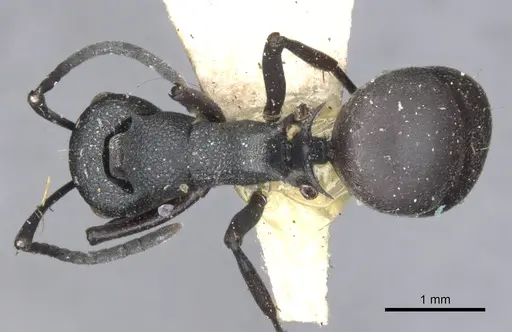
Literatura
A carregar mapa de distribuição...A carregar produtos...