
Pheidole schoedli
- Nome cient.
- Pheidole schoedli
- Tribo
- Attini
- Subfamília
- Myrmicinae
- Autor
- Eguchi <i>et al.</i>, 2006
- Distribuição
- Encontrado em 0 países
Introdução
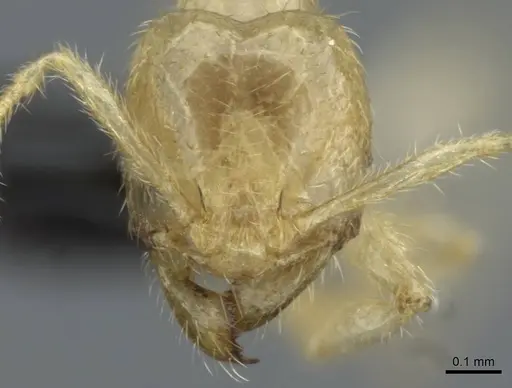
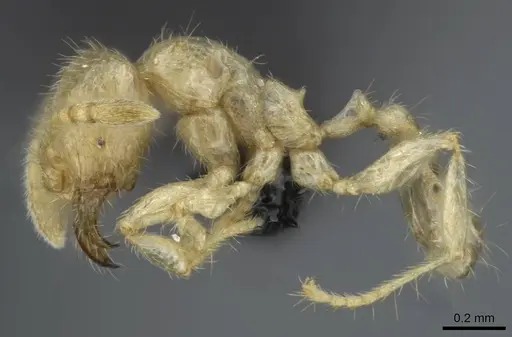
Pheidole schoedli is a subterranean ant species from North Borneo (Sabah, Malaysia). It has extremely reduced eyes and a pale yellowish body, adapted to life underground. Size data is unavailable as research only provides head measurements, not full body length . This species is unique for its strict subterranean nesting and foraging behavior, found in soil samples at elevations of 820-860 meters .
Quick Summary
- Difficulty: Expert
- Origin & Habitat: North Borneo (Sabah, Malaysia), found in tropical forest soil at 820-860m elevation [1]. Strictly subterranean, nesting and foraging underground in both undisturbed and disturbed forests [2].
- Colony Type: Unconfirmed, dealate queens found in soil samples, but social structure not documented [1].
- Size & Growth:
- Queen: Size data unavailable [1]
- Worker: Size data unavailable [1]
- Colony: Unknown, no colony size data available [1]
- Growth: Unknown, no development data exists [1]
- Development: Unknown, no direct data exists for this species. (Development timeline has not been studied. Estimate based on tropical Pheidole patterns is speculative.)
- Antkeeping:
- Temperature: Keep at 24-26°C as a starting point, based on habitat elevation [1].
- Humidity: Keep nest substrate consistently moist but not waterlogged. Provide a moisture gradient, as this species has resistance to desiccation stress [2].
- Diapause: No, as a tropical species, no winter dormancy required.
- Nesting: Use a naturalistic soil-based setup in darkness. Avoid bright lighting [1][3].
- Behavior: Shy and non-aggressive, strictly subterranean. Escape risk is high due to tiny size, minors are under 1mm, so fine mesh barriers are essential [1].
- Common Issues: extremely rare in antkeeping hobby with no established care protocol., subterranean lifestyle requires specialized setup that may be difficult to maintain., tiny size makes escape prevention challenging., diet unknown, may have specialized needs., sensitive to temperature and humidity changes.
Why This Species Is Unique
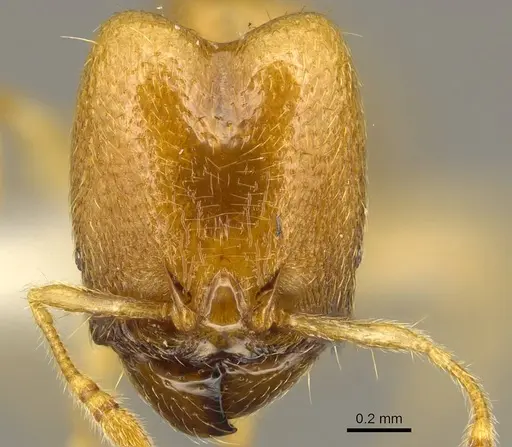
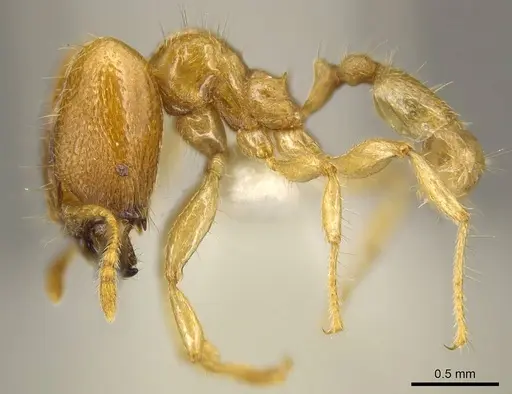
Pheidole schoedli is a true subterranean species, meaning it lives its entire life underground. It has been found only in soil samples, never in leaf litter or on the surface [1][3]. The most striking feature is their extremely reduced eyes: major workers have at most 10 ommatidia, and minor workers have at most 4 ommatidia, a clear adaptation to darkness [1]. Their pale yellowish body color is typical of subterranean ants that do not need protection from sunlight [1].
Housing and Nest Setup
Keep this species in a naturalistic soil-based setup, such as a digging formicarium, kept in complete darkness. Avoid acrylic nests or exposed foraging areas. Maintain temperatures around 24-26°C with high humidity, using a moisture gradient in the substrate [1][2][3]. Escape prevention is critical due to their tiny size, use fine mesh barriers.
Feeding and Diet
The exact diet is unknown, but related subterranean Pheidole species prey on soil mites [1]. In captivity, offer small live prey like springtails or micro-arthropods. Sugar sources may be accepted but should not be relied upon. Place food directly on the substrate rather than in exposed areas.
Finding and Acquiring Colonies
This species is extremely rare in the antkeeping hobby. Wild colonies are found through soil core sampling in Borneo [1][2]. Specialized methods are required, making it unsuitable for most keepers. If acquired, ensure legal collection with proper permits.
Frequently Asked Questions
Is Pheidole schoedli a good species for beginners?
No. This species is not recommended for beginners due to its rarity, specialized subterranean lifestyle, and lack of established care protocols [1].
How long does it take for Pheidole schoedli to develop from egg to worker?
Unknown, no development data exists for this species.
Can I keep multiple queens together?
Unconfirmed, dealate queens have been found in soil samples, but social structure is not documented [1]. Combining queens is not recommended.
What do Pheidole schoedli eat?
Their exact diet is unknown, but related subterranean Pheidole species prey on soil mites. Offer small live prey in captivity [1].
What temperature do Pheidole schoedli need?
Keep them at 24-26°C as a starting point, based on their tropical habitat elevation [1].
Do Pheidole schoedli need hibernation?
No, as a tropical species from Borneo, they do not require winter dormancy.
Why are their eyes so small?
Their extremely reduced eyes are an adaptation to subterranean life, where vision is unnecessary in darkness [1].
When will first workers appear after founding?
Unknown, this species has never been documented in captivity.
What is the best nest type for Pheidole schoedli?
A naturalistic soil-based setup kept in darkness is essential. Avoid bright lighting and exposed nests [1][3].
Report an Issue
The current care sheet is based fully on literature. See inconsistencies, or something that's incorrect? Please , it will be resolved after review from an admin. Contributing to the blogs tab also helps providing information, to make us be able to further improve the caresheets. Thank you for your support!
References

Esta ficha de cuidados é licenciada sob CC BY-SA 4.0 .
Blogs da comunidade
CASENT0911254
Ver no AntWeb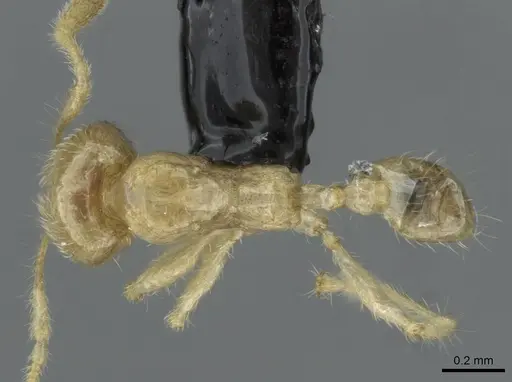
CASENT0916048
Ver no AntWeb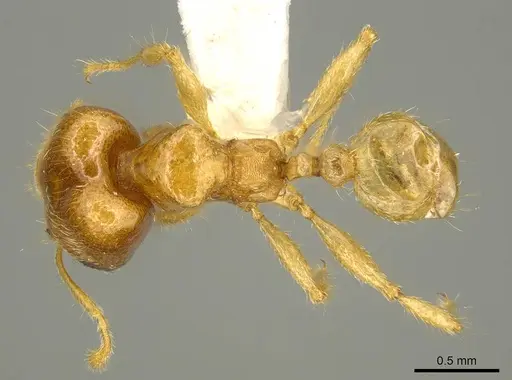
Literatura
A carregar mapa de distribuição...A carregar produtos...