
Pheidole sarae
- Nome cient.
- Pheidole sarae
- Tribo
- Attini
- Subfamília
- Myrmicinae
- Autor
- Sharaf, 2018
- Distribuição
- Encontrado em 0 países
Introdução
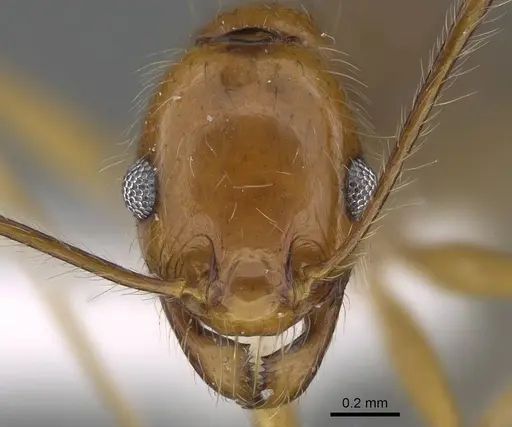
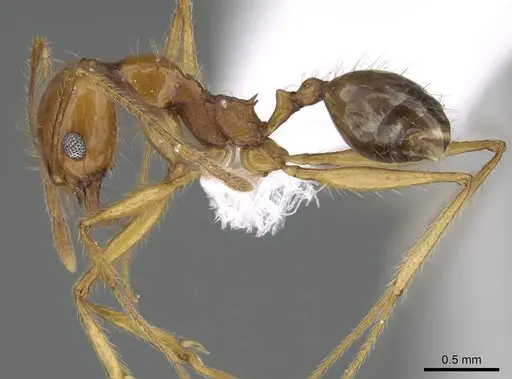
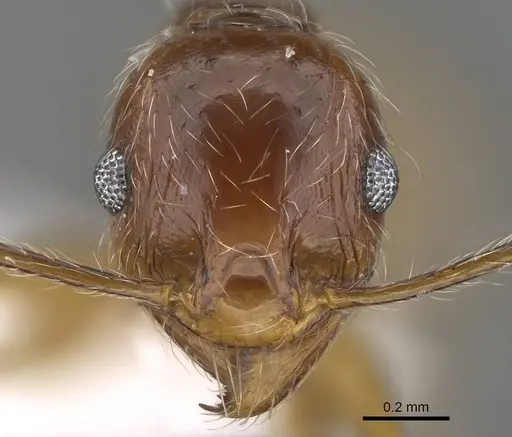
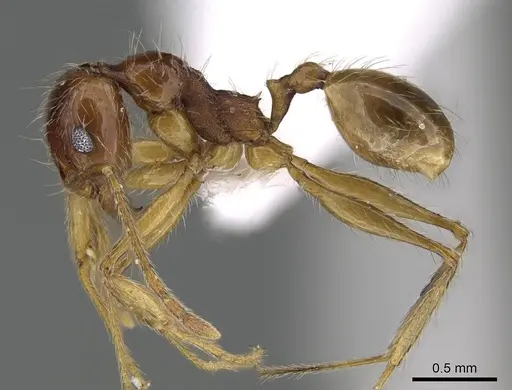
Pheidole sarae is a small ant species with uniform light brown coloration and abundant long body setae . Workers measure 3.0-4.25 mm in body length . It is found in mountainous regions of Oman and Saudi Arabia at elevations of 1235-1949 m, often in areas with cultivated rose plantations . The species was recently reassigned from Aphaenogaster to Pheidole based on morphological evidence, including its three-segmented antennal club .
Quick Summary
- Difficulty: Medium
- Origin & Habitat: Mountainous regions of Oman and Saudi Arabia at elevations of 1235-1949 m, found in areas with cultivated rose plantations [1].
- Colony Type: Colony structure is unconfirmed. No specific data on queen number or social structure.
- Size & Growth:
- Queen: Size data unavailable, queen measurements not described in literature.
- Worker: 3.0-4.25 mm [1]
- Colony: Unknown for this species.
- Growth: Moderate, inferred from typical Pheidole growth patterns.
- Development: 6-8 weeks, estimated based on typical Pheidole development at optimal temperature. (Development time is estimated from genus-level data. Warm temperatures around 24-28°C will accelerate development.)
- Antkeeping:
- Temperature: Keep nest area at warm temperatures, roughly 24-28°C, based on the species' mountainous habitat [1].
- Humidity: Provide moderate humidity, keep the nest substrate consistently moist but not waterlogged, as inferred from the habitat [1].
- Diapause: Unknown, no specific data on diapause requirements.
- Nesting: In captivity, standard test tube setups work for founding. For established colonies, use soil or wood nests, as inferred from genus patterns [1].
- Behavior: Pheidole sarae workers are moderately active and will defend their colony with a sting, though they are too small to be dangerous to humans. Escape risk is low due to their size, but proper barriers should still be used.
- Common Issues: colony establishment can be slow, founders may take several weeks to produce first workers., overheating is a risk, keep temperatures below 30°C., dry conditions can cause founding queens to abandon eggs., wild-caught colonies may carry parasites that affect captive survival.
Nest Preferences
In the wild, Pheidole sarae likely nests in soil or under stones in mountainous regions [1]. The type locality in Oman shows cultivated rose plantations at high elevation, suggesting they prefer sheltered, relatively humid microhabitats [1]. For captivity, standard test tube setups work well for founding colonies. Once established, you can move them to nests with soil chambers. The nest should have a water reservoir to maintain moderate humidity. Avoid overly wet conditions, these ants come from a region that experiences dry periods.
Feeding and Diet
The diet of Pheidole sarae is unconfirmed, but as a member of the tribe Attini, it may harvest seeds and accept protein from small insects. Offer a mix of crushed seeds and protein sources like small mealworms or fruit flies. Feed small amounts 2-3 times per week, removing uneaten food to prevent mold.
Temperature and Care
Keep your colony at warm temperatures, roughly 24-28°C, based on the species' mountainous habitat [1]. Avoid temperatures above 30°C as this can stress colonies. A heating cable placed on one side of the nest creates a temperature gradient. Room temperature around 22-24°C is acceptable if your home falls within this range. Reduce temperatures to 15-18°C during winter months to provide a rest period, though specific diapause requirements are unknown.
Behavior and Temperament
Pheidole sarae exhibits the typical Pheidole caste system with major and minor workers. Majors have larger heads and are used for seed processing and colony defense. Workers are moderately aggressive when defending the nest but pose no real threat to keepers. They are not known for being particularly escape-prone, but standard barrier methods should still be used. [2]
Colony Founding
Founding behavior has not been directly documented for this species. The queen likely seals herself in a claustral chamber and raises the first brood alone using stored fat reserves, but this is unconfirmed. Expect 6-8 weeks for the first workers to emerge at optimal temperature. During this time, the queen needs complete darkness and minimal disturbance. Do not feed the founding queen, she will not eat until her first workers arrive.
Frequently Asked Questions
How long does it take for Pheidole sarae to produce first workers?
Expect 6-8 weeks from egg to first worker at optimal temperature (24-28°C). This is estimated from typical Pheidole development patterns.
What do Pheidole sarae ants eat?
The diet is unconfirmed, but as a member of the tribe Attini, they may harvest seeds and accept protein. Offer crushed seeds and small insects like mealworms.
Do Pheidole sarae ants have majors?
Yes, as a Pheidole species they have major workers with larger heads, used for seed processing and defense [2].
What temperature do Pheidole sarae need?
Keep them at warm temperatures, roughly 24-28°C, based on their mountainous habitat [1].
Do Pheidole sarae need hibernation?
Unknown, no specific data on diapause requirements for this species.
Are Pheidole sarae good for beginners?
They are moderate difficulty. The main challenges are establishing the founding colony and providing appropriate nutrition. They are not as demanding as tropical species but require more attention than common temperate ants.
How big do Pheidole sarae colonies get?
Colony size is unconfirmed for this species, with no specific data available.
Where is Pheidole sarae found?
This species is known from Oman and Saudi Arabia at high elevations (1235-1949 m), particularly in mountainous regions with cultivated plants [1].
Can I keep multiple Pheidole sarae queens together?
Not recommended without specific evidence. Colony structure is unconfirmed, and most Pheidole species are monogyne.
Report an Issue
The current care sheet is based fully on literature. See inconsistencies, or something that's incorrect? Please , it will be resolved after review from an admin. Contributing to the blogs tab also helps providing information, to make us be able to further improve the caresheets. Thank you for your support!
References

Esta ficha de cuidados é licenciada sob CC BY-SA 4.0 .
Blogs da comunidade
CASENT0922283
Ver no AntWeb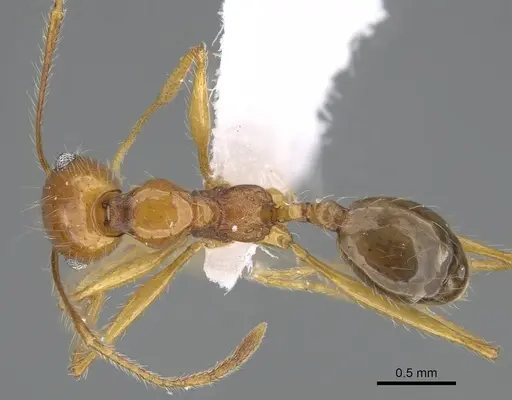
CASENT0922294
Ver no AntWeb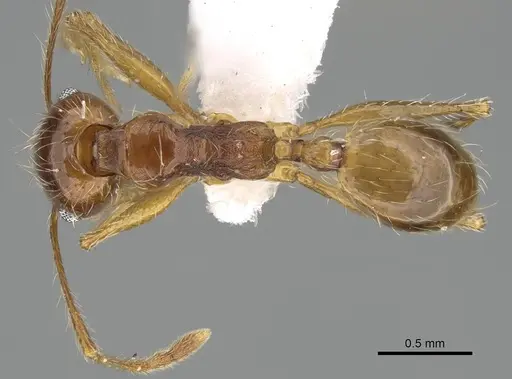
Literatura
A carregar mapa de distribuição...A carregar produtos...