
Pheidole feae
- Nome cient.
- Pheidole feae
- Tribo
- Attini
- Subfamília
- Myrmicinae
- Autor
- Emery, 1895
- Distribuição
- Encontrado em 0 países
Introdução
Pheidole feae is a small ant native to the Indomalaya region, with verified records from India, Myanmar, and southern China . Like all members of the genus Pheidole, this species produces two distinct worker castes: smaller minor workers that handle most tasks, and larger major workers (soldiers) with noticeably enlarged heads used for defense and food processing . Scientific literature provides very limited data on this specific species, so care guidelines rely on general genus patterns and regional distribution records.
Quick Summary
- Difficulty: Medium
- Origin & Habitat: Native to the Indomalaya region, specifically recorded in India (Meghalaya), Myanmar, and southern China [1][2][3]. Likely inhabits forest edges, disturbed ground, or leaf litter in warm, subtropical to tropical climates.
- Colony Type: Unconfirmed. Based on typical Pheidole genus patterns, colonies are likely monogyne (single-queen colonies). Monogyne means the colony is raised by one queen. Polygyne colonies (multiple queens) are rare in this genus.
- Size & Growth:
- Queen: size data unavailable, inferred from Pheidole genus patterns (~6-9 mm)
- Worker: size data unavailable, inferred from Pheidole genus patterns (~3-6 mm)
- Colony: Unknown. Likely up to several hundred workers based on genus patterns.
- Growth: Moderate
- Development: Unknown. Based on typical Pheidole patterns, expect roughly 6-8 weeks at optimal temperatures. (Development speed depends heavily on consistent warmth and steady food supply.)
- Antkeeping:
- Temperature: Keep warm and stable, roughly low-to-mid 20s°C. Avoid cold drafts and rapid temperature swings.
- Humidity: Provide a humidity gradient. Keep the nest substrate consistently moist but not waterlogged. Allow the surface to dry slightly between waterings to prevent mold.
- Diapause: Unknown. Given the tropical and subtropical range, strict winter hibernation is likely unnecessary. A mild slowdown during cooler months may be beneficial.
- Nesting: Ground-nesting species that prefers soil or plaster nests. Simple setups work best. A test tube works well for founding. Established colonies do well in Y-tong or plaster nests with chambers scaled to their size.
- Behavior: Generally docile and not aggressive toward keepers. Major workers defend the nest but their bite is harmless to humans. Minor workers forage actively. Escape risk is moderate due to small size. Use standard antiseep barriers like petroleum jelly or fluon on outworld walls.
- Common Issues: colonies stall in growth if temperatures drop below 20°C, mold develops quickly if you overfeed or keep the nest too wet, workers may abandon the queen if you disturb them during founding, small size allows escape through tiny gaps in setup, wild-caught colonies may carry parasites that kill the queen
Housing and Setup
Start with a simple test tube setup. Fill the tube with water, plug the wet end with cotton, and place the queen inside. Keep the tube in darkness for the first few weeks. The queen will raise the first brood alone [3]. Once workers emerge, move them to a larger nest. A soil-based nest or a Y-tong/plaster nest works well for established colonies. Keep the nest material damp but allow the surface to dry between waterings. Simple setups reduce stress and prevent mold [3].
Feeding and Diet
Offer small insects like fruit flies or pinhead crickets for protein. Provide sugar water, honey, or diluted syrup for carbohydrates. Remove uneaten prey within 24 hours to keep the nest clean [3]. Major workers will help process larger food items once they appear. Feed every 2-3 days. Do not overfeed, as rotting food kills colonies [3].
Temperature and Seasonal Care
Maintain a steady temperature in the low-to-mid 20s°C. A heating cable on one side of the nest creates a useful gradient. Workers will move to their preferred zone. Avoid temperatures below 15°C or above 30°C. These ants come from warm regions, so consistent heat supports steady growth [3]. A mild slowdown during cooler months is fine, but strict hibernation is not required [3].
Colony Development and Castes
Watch the colony grow through distinct stages. The first workers are minor workers, which are smaller than normal workers. As the colony builds numbers, major workers (soldiers) begin to appear. These soldiers have large heads and handle defense and heavy food processing. Their appearance signals a healthy, maturing colony. Do not rush the process. Majors take time to develop once the colony reaches a moderate size [3].
Behavior and Observation
These ants are active and easy to watch. Minors forage constantly, while majors patrol the nest entrance. They rarely bite keepers and adapt well to captivity. Their small size means you must check for escape gaps. Use smooth barriers on outworld walls. They form simple foraging trails and respond well to consistent feeding [3].
Frequently Asked Questions
How long until first workers?
Expect roughly 6-8 weeks at 24-26°C. This timeline is based on typical Pheidole development patterns [3].
What do they eat?
They eat small insects for protein and sugar water or honey for carbohydrates. Remove uneaten food within 24 hours [3].
Can I keep multiple queens?
Not recommended. Queens typically fight once workers emerge. Start with a single queen for best results [3].
What temperature do they need?
Keep them at 22-26°C. A slight temperature gradient helps workers self-regulate [3].
Are they good for beginners?
They are moderately difficult. Their small size requires careful escape prevention, and they need steady warmth. Suitable for keepers with basic experience.
When to move to a larger nest?
Wait until the colony has 20-30 workers before transferring. A test tube works for founding. Moving too early stresses the colony [3].
Do they need hibernation?
They do not require strict hibernation. A mild slowdown during cooler months is sufficient [3].
Why are my ants dying?
Common causes include cold temperatures, mold from overfeeding, disturbance during founding, or parasites. Keep the nest warm, remove uneaten food, and minimize handling [3].
How big do colonies get?
Based on genus patterns, colonies likely reach up to several hundred workers at maturity [3].
What nest type works best?
Use a test tube for founding, then switch to a soil or plaster nest for established colonies. Keep the substrate damp but not soaked [3].
Report an Issue
The current care sheet is based fully on literature. See inconsistencies, or something that's incorrect? Please , it will be resolved after review from an admin. Contributing to the blogs tab also helps providing information, to make us be able to further improve the caresheets. Thank you for your support!
References

Esta ficha de cuidados é licenciada sob CC BY-SA 4.0 .
Blogs da comunidade
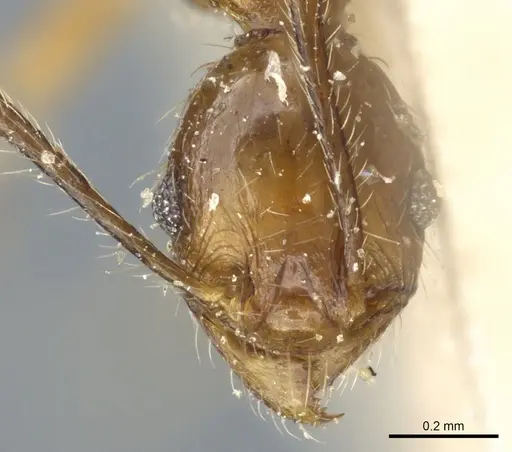
CASENT0904250
Ver no AntWeb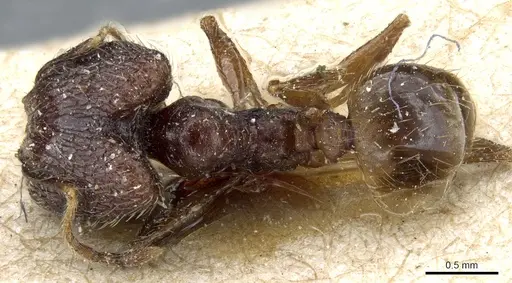
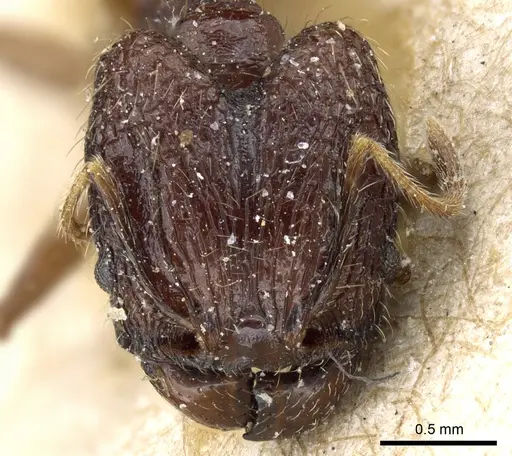
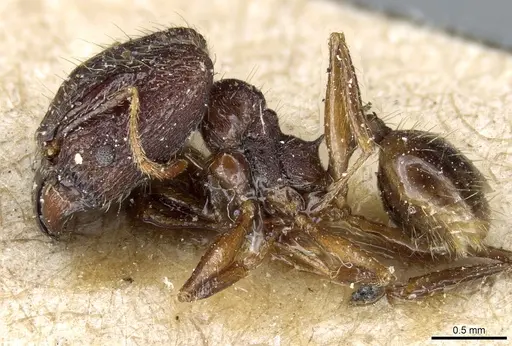
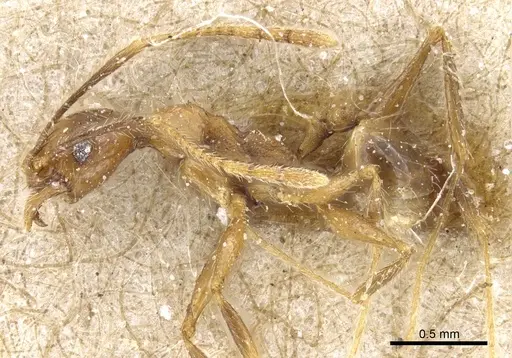
CASENT0904251
Ver no AntWeb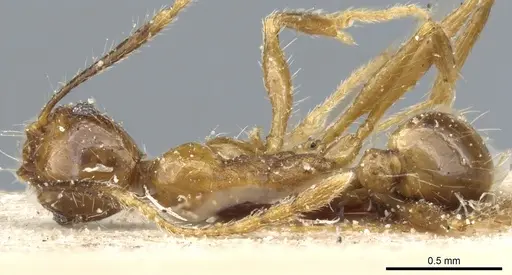
Literatura
A carregar mapa de distribuição...A carregar produtos...