
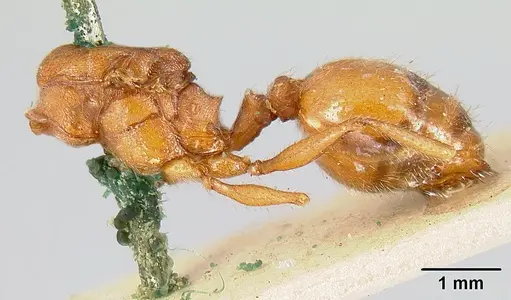
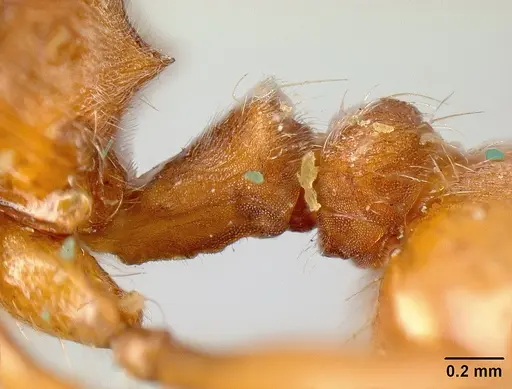
Pheidole castanea
- Nome cient.
- Pheidole castanea
- Tribo
- Attini
- Subfamília
- Myrmicinae
- Autor
- Smith, 1858
- Distribuição
- Encontrado em 0 países
Introdução
Pheidole castanea is a small ant species native to Brazil, first described by Frederick Smith in 1858 from a queen collected in Ega (now Tefé) . The original description gives the queen as about 6.35 mm long , but worker sizes and colony structure remain undocumented. As a member of the tribe Attini, it belongs to a group that includes seed‑harvesters and omnivores, though its own diet is unknown. This is a very poorly studied species with almost no published natural history, so most care advice must be treated as experimental.
Quick Summary
- Difficulty: Hard
- Origin & Habitat: Brazil (Neotropical region), specifically documented from the Amazon basin near Tefé (formerly Ega) [1][2]. Its natural habitat is tropical rainforest, suggesting warm, humid conditions.
- Colony Type: Unknown, no data on queen number or social structure for this species. Most Pheidole species are monogyne, but this has not been confirmed for P. castanea.
- Size & Growth:
- Queen: ~6.35 mm (3 lines) [1], from the original 1858 description.
- Worker: Unknown, no worker measurements are available.
- Colony: Unknown, no colony size data exists.
- Growth: Unknown, cannot be estimated reliably.
- Development: Unknown, no developmental data exists. (Without direct observations, even approximate timelines cannot be given. Keep the colony warm and undisturbed, and record any brood development for future reference.)
- Antkeeping:
- Temperature: Likely warm and stable, similar to the Amazonian rainforest, an estimated range of 24-28 °C is a reasonable starting point, but this has not been tested. Avoid temperatures below 20 °C.
- Humidity: Likely moderate to high, keep the nest substrate damp but not waterlogged. This is inferred from the tropical habitat.
- Diapause: No, as a tropical Brazilian species, it does not require hibernation and remains active year‑round when kept warm.
- Nesting: Unknown wild preferences. In captivity, start with a simple test tube setup for a founding queen. Once the colony is established, a small formicarium (Y‑tong or plaster) with chambers not much larger than the ants' body size is reasonable, Pheidole generally prefer snug spaces.
- Behavior: No specific behaviour has been documented for this species. Generalized from the genus: Pheidole ants are typically peaceful and not aggressive toward keepers. They have a functional stinger (as a member of Myrmicinae) but it is not considered a medical risk. Due to their small size (unknown worker size, but likely small), they can squeeze through tiny gaps, use fine mesh and tight lids for escape prevention.
- Common Issues: very little is known about this species, so all care parameters are experimental and may need adjustment., tropical species are sensitive to cold, keep them warm and away from draughts., unknown founding behaviour means the queen may fail if conditions are not ideal, minimise disturbance during early colony growth., test tube humidity must be managed carefully, too wet can drown the queen or cause mould, too dry can desiccate her.
Nest Preferences
The natural nest sites of Pheidole castanea are unknown. Based on typical Pheidole habits, they may nest in soil or rotten wood. For captive care, a test tube setup (water reservoir with cotton plug) is safest for a founding queen. When the colony is established, move it to a small formicarium with chambers sized closely to the ants, Pheidole often prefer snug cavities. No specific nest material preference has been documented.
Feeding and Diet
The natural diet of Pheidole castanea has not been studied. Most Pheidole are omnivorous, they take small insects, seeds, and sugary liquids. As a starting point, offer small live prey (fruit flies, pinhead crickets) and a sugar source (honey water or sugar water). Seed acceptance is unconfirmed. Test different foods and observe acceptance. Remove uneaten protein within 24 hours to prevent spoilage. Feed 2-3 times per week, adjusting based on colony response.
Temperature and Care
Because Pheidole castanea originates from the Brazilian Amazon, warm and stable temperatures are probably required. A range of 24-28 °C is a reasonable initial target, use a heating cable on one side of the nest to create a thermal gradient. Avoid prolonged exposure below 20 °C. Since this is a tropical species, no hibernation is necessary. Maintain year‑round warmth.
Behaviour and Temperament
Specific behaviour has not been recorded for Pheidole castanea. In general, Pheidole species are relatively calm and not aggressive to keepers. They possess a functional stinger (typical of the subfamily Myrmicinae) but it is not known to be medically significant. Major workers (soldiers) may occur, with enlarged heads used for seed crushing or defence, but the presence and size of majors in this species is unknown. The ants' small size makes escape a risk, seal all openings with fine mesh or cotton.
Colony Founding
The founding strategy of Pheidole castanea has not been documented. Do not assume it is claustral (queen sealing herself off) or semi‑claustral. Provide a dark, undisturbed test tube with a water supply, and check only rarely. The time to first workers is unknown, record any observations and share them to help fill the knowledge gap.
Frequently Asked Questions
How long does it take for Pheidole castanea to produce first workers?
This has never been documented. Development time is unknown.
What do Pheidole castanea ants eat?
The natural diet is unknown. Most Pheidole are omnivorous, offer small insects and sugar water, and test whether they accept seeds.
What temperature do Pheidole castanea ants need?
Based on their tropical origin, keep them warm at an estimated 24-28 °C. Avoid prolonged temperatures below 20 °C.
Can I keep multiple Pheidole castanea queens together?
There is no data on this species. Most Pheidole are monogyne (single queen), but some can be polygyne. Experimenting with two queens carries a risk of fighting or failure.
Do Pheidole castanea need hibernation?
No. As a tropical Brazilian species, they do not require hibernation and remain active year‑round when kept warm.
How big do Pheidole castanea colonies get?
Unknown. No colony size records exist for this species.
What size nest should I use for Pheidole castanea?
Start with a test tube for the founding queen. Once the colony is established, move it to a small formicarium with snug chambers, avoid large open spaces.
Are Pheidole castanea good for beginners?
No, this species is rated Hard because almost nothing is known about its care requirements. It is not recommended for beginners.
Why are my Pheidole castanea dying?
Possible causes: temperatures too cold, humidity extremes (too wet or too dry), disturbance during founding, or an unknown disease. Review the estimated care ranges and keep conditions stable.
Report an Issue
The current care sheet is based fully on literature. See inconsistencies, or something that's incorrect? Please , it will be resolved after review from an admin. Contributing to the blogs tab also helps providing information, to make us be able to further improve the caresheets. Thank you for your support!
References

Esta ficha de cuidados é licenciada sob CC BY-SA 4.0 .
Blogs da comunidade
CASENT0901598
Ver no AntWeb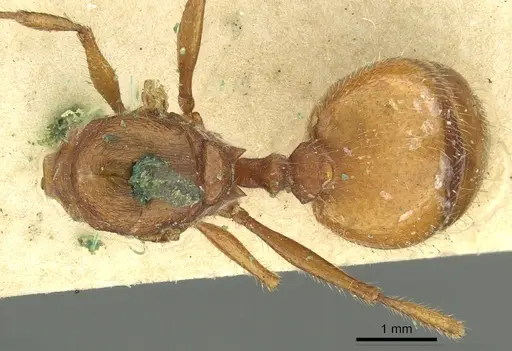
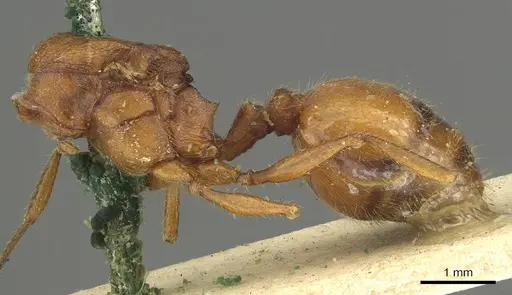
JTL259163
Ver no AntWeb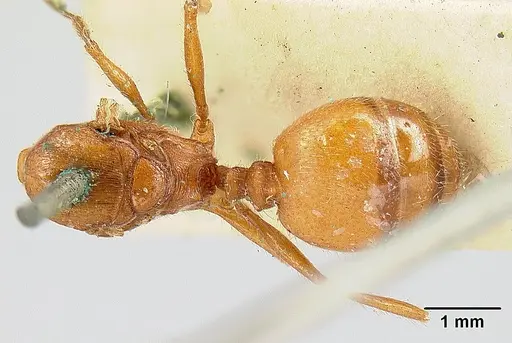
Literatura
A carregar mapa de distribuição...A carregar produtos...