
Pheidole cardinalis
- Nome cient.
- Pheidole cardinalis
- Tribo
- Attini
- Subfamília
- Myrmicinae
- Autor
- Wilson, 2003
- Distribuição
- Encontrado em 0 países
Introdução
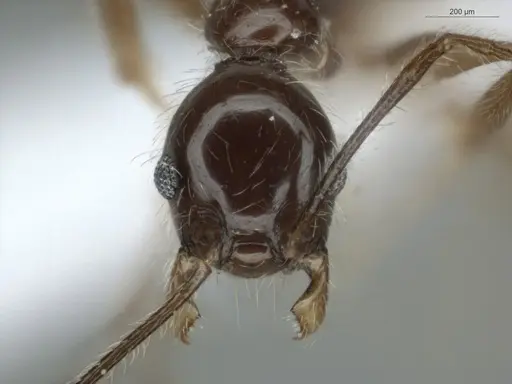
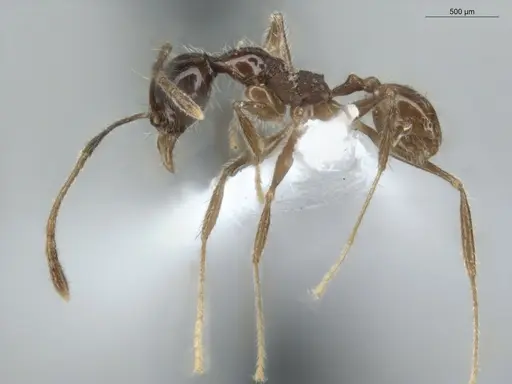
Pheidole cardinalis is a dimorphic ant species native to Brazil, belonging to the fallax group. Majors have a distinctive brownish red body with yellow appendages, while minors are lighter brown. The species is only known from Serra Caraça in Minas Gerais, Brazil, at approximately 1380m elevation, where the type colony was collected from an earthen nest . It has also been recorded in Serra das Confusões National Park in Piauí . This species is closely related to several other South American Pheidole, and minor workers have a nuchal collar and reduced propodeal spines .
Quick Summary
- Difficulty: Hard
- Origin & Habitat: Serra Caraça, Minas Gerais, Brazil at 1380m elevation, from an earthen nest [1]. Also recorded in Piauí [2].
- Colony Type: Unconfirmed, colony structure has not been documented for this species.
- Size & Growth:
- Queen: Undocumented, no queen measurements available
- Worker: Size data unavailable for full body length. Castes include majors and minors.
- Colony: Unknown, no colony size data available
- Growth: Unknown, no development data available
- Development: Unknown, no species-specific data available (Development timeline is unconfirmed.)
- Antkeeping:
- Temperature: Aim for warm conditions around 22-28°C, based on Brazilian distribution [1].
- Humidity: Keep nest substrate moderately moist, as type colony was from an earthen nest [1].
- Diapause: Unknown, no data available, but tropical origin suggests minimal diapause.
- Nesting: Based on type colony from earthen nest, naturalistic soil setups or Y-tong/plaster nests with moist substrate are suitable [1].
- Behavior: Behavior is unconfirmed for this species. Pheidole ants are typically seed-harvesting and non-aggressive, but will defend the nest. Major workers can deliver a mild sting, as per subfamily defense mechanisms. Escape prevention should be moderate due to small size.
- Common Issues: limited availability, this species is rarely kept in captivity and may be difficult to acquire., no species-specific care information exists, keepers must rely on genus-level guidance., growth rate is unknown so patience may be required., wild-caught colonies may harbor parasites or diseases., distribution is very limited so requeening from local sources may not be possible.
Nest Preferences and Housing
The type colony was collected from an earthen nest in Serra Caraça, Minas Gerais, Brazil [1]. This suggests they naturally nest in soil. For captive care, a naturalistic setup with soil or Y-tong/plaster nests with moist substrate is suitable. Ensure humidity is maintained without waterlogging.
Feeding and Diet
Diet is unconfirmed for this species. Based on typical Pheidole patterns, they may be granivorous, feeding on seeds, and supplement with protein from insects. In captivity, offer seeds and protein sources, but no species-specific data exists.
Temperature and Seasonal Care
Based on the species' origin in Brazil, aim for warm conditions around 22-28°C [1]. Diapause requirements are unknown.
Colony Structure and Development
Pheidole cardinalis is a dimorphic species with distinct major and minor worker castes [1]. Colony structure (monogyne vs polygyne) has not been documented. Queen size is unconfirmed. Founding behavior is unconfirmed. Development timeline is unknown.
Frequently Asked Questions
How long does it take for Pheidole cardinalis to produce first workers?
The exact timeline is unknown for this species. No species-specific data exists.
What do Pheidole cardinalis ants eat?
Diet is unconfirmed, but based on typical Pheidole patterns, they may eat seeds and insects. Offer a seed mix and protein sources, but no species-specific data exists.
Are Pheidole cardinalis good for beginners?
This species is not recommended for beginners due to limited availability and lack of species-specific care information.
How big do Pheidole cardinalis colonies get?
Colony size is unknown for this species.
What temperature should I keep Pheidole cardinalis at?
Aim for 22-28°C based on their Brazilian origin [1].
Can I keep multiple queens together?
Colony structure is unconfirmed, so keeping a single queen is the safest approach.
What type of nest should I use?
Based on the type colony from an earthen nest, a naturalistic setup with soil or Y-tong/plaster nests with moist substrate is suitable [1].
Do they need hibernation?
Diapause requirements are unknown, but tropical origin suggests year-round activity is appropriate.
Why is this species so rarely kept?
Pheidole cardinalis is only known from a limited area in Brazil, with one additional record in Piauí [2], making it rare in captivity.
Report an Issue
The current care sheet is based fully on literature. See inconsistencies, or something that's incorrect? Please , it will be resolved after review from an admin. Contributing to the blogs tab also helps providing information, to make us be able to further improve the caresheets. Thank you for your support!
References

Esta ficha de cuidados é licenciada sob CC BY-SA 4.0 .
Blogs da comunidade
ECOFOG-MI15-0420-36-S
Ver no AntWeb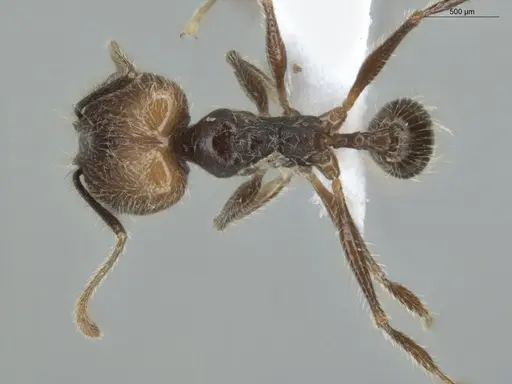
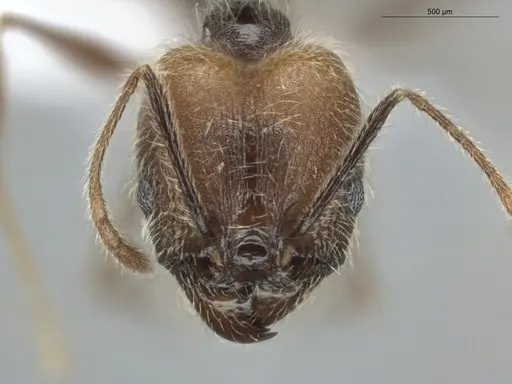
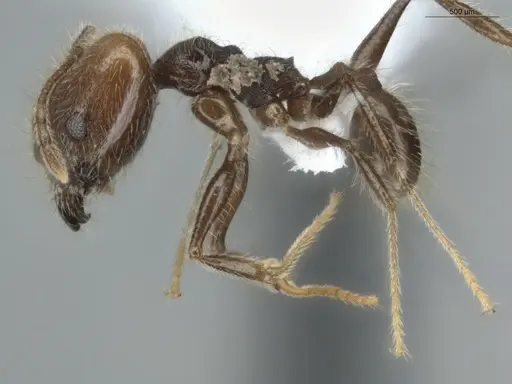
ECOFOG-MI15-0420-36
Ver no AntWeb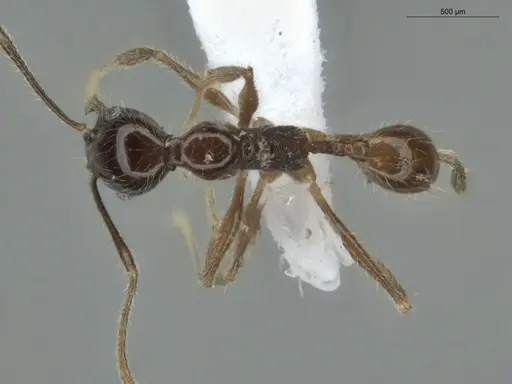
Literatura
A carregar mapa de distribuição...A carregar produtos...