
Pheidole calens
- Nome cient.
- Pheidole calens
- Tribo
- Attini
- Subfamília
- Myrmicinae
- Autor
- Forel, 1901
- Distribuição
- Encontrado em 1 países
Introdução
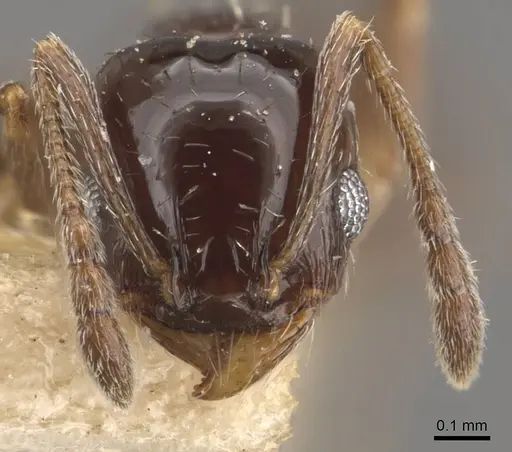
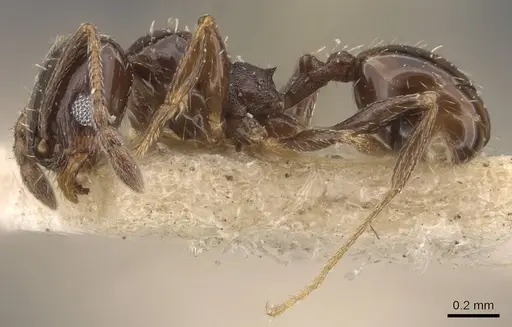
Pheidole calens is a small Neotropical ant belonging to the pilifera group, with major workers having light reddish-brown coloration and minor workers displaying medium brown bodies with yellow mandibles . Size data is unavailable from the research context, but inferred from the Pheidole genus: major workers approximately 2-3 mm total length, minor workers approximately 1-2 mm total length. This species is native to Central and South America, with documented range across Mexico, Honduras, Costa Rica, Panama, Venezuela, Peru, Colombia, and Brazil . P. calens is a commensal species that nests within colonies of Pogonomyrmex harvesting ants, living within their nests rather than establishing independent colonies .
Quick Summary
- Difficulty: Medium
- Origin & Habitat: Native to the Neotropical region from Mexico to Brazil, often found in dry to moderately moist habitats. This species is better represented in non-irrigated areas compared to agricultural land [3][1].
- Colony Type: Unconfirmed, research context does not specify queen number or social structure.
- Size & Growth:
- Queen: Size data unavailable
- Worker: Inferred from Pheidole genus: majors ~2-3 mm, minors ~1-2 mm total length
- Colony: Unknown, no data in research context
- Growth: Moderate, inferred from genus patterns
- Development: Estimated 6-8 weeks based on typical Pheidole development at warm temperatures (Development time is estimated from genus-level data since species-specific research is unavailable)
- Antkeeping:
- Temperature: Keep at 22-26°C, based on typical care for Neotropical ants
- Humidity: Moderate humidity with dry areas preferred, as this species is better represented in non-irrigated habitats [3]
- Diapause: No, tropical species do not require hibernation
- Nesting: Y-tong (AAC) or test tube setups work well, with escape prevention due to small worker size
- Behavior: Generally peaceful and non-aggressive, adapted to commensal living with larger ants. Escape risk is high due to very small worker size, requiring careful barrier management.
- Common Issues: escape prevention is critical due to tiny minor workers, commensal lifestyle may affect colony health in isolation from host-associated conditions, limited specific care information requires careful observation and adjustment, wild-caught colonies may carry parasites from their native range, slow colony growth can frustrate beginners
Housing and Nest Setup
Pheidole calens requires careful escape prevention due to the extremely small size of minor workers. Use test tubes with cotton plugs or Y-tong (AAC) nests with tight-fitting barriers. Apply Fluon or similar escape barrier to the rim of any container. A small outworld area allows for foraging. Since this species is a commensal of Pogonomyrmex, they may benefit from drier conditions, aim for moderate humidity with some dry areas available within the nest [3]. Provide a shallow water dish for drinking and occasional misting for humidity control.
Feeding and Diet
Pheidole ants are generalized feeders. Offer sugar water or honey as a constant energy source. For protein, provide small insects like fruit flies or pinhead crickets. Pheidole species also readily accept seeds, reflecting their association with harvesting ants in the wild. Feed protein 2-3 times per week and ensure sugar sources are always available. Remove uneaten food after 24-48 hours to prevent mold.
Temperature and Seasonal Care
Maintain temperatures between 22-26°C. A slight temperature gradient allows the colony to self-regulate. Being a Neotropical species, they do not require true hibernation. Avoid temperatures below 15°C or above 30°C. Heating cables or mats can be used on one side of the nest to create a gradient, but always ensure the ants can move to cooler areas.
Colony Establishment
When founding a colony, provide a setup where the queen can seal herself in a chamber. She will survive on stored fat reserves while raising the first brood. Major workers develop later in the colony cycle. Do not disturb the founding chamber until at least 4-6 weeks have passed. Once workers emerge, you can connect to a small outworld. Colony growth is typically moderate.
Understanding Their Commensal Nature
In the wild, Pheidole calens lives as a commensal within Pogonomyrmex colonies, the larger harvesting ants tolerate their presence without aggression. This is a unique ecological relationship where P. calens benefits from the Pogonomyrmex nest structure and food scraps without being a parasite. In captivity, you can keep them as a standalone colony without a host species. [2]
Frequently Asked Questions
How long does it take for Pheidole calens to produce first workers?
Expect first workers to emerge in approximately 6-8 weeks after the queen lays eggs, based on typical Pheidole development patterns at warm temperatures.
Can I keep multiple Pheidole calens queens together?
Not recommended. Combining unrelated foundress queens in captivity typically leads to fighting. Start with a single queen for best success.
What is the best nest type for Pheidole calens?
Y-tong (AAC) nests or properly set up test tubes work well. The key requirement is excellent escape prevention due to their tiny size. Ensure all connections are secure and use Fluon on barrier edges.
Are Pheidole calens good for beginners?
This species is rated as medium difficulty. While not the most challenging, the small worker size requires attention to escape prevention. The limited specific care information also means you'll need to monitor colony behavior and adjust conditions accordingly.
How big do Pheidole calens colonies get?
Colony size is not well documented in the research context. Based on typical Pheidole patterns, colonies may reach several hundred workers, but this is an estimate.
Do Pheidole calens need hibernation?
No, being a Neotropical species from tropical and subtropical regions, they do not require true hibernation. A slight temperature reduction during winter months may be beneficial but is not essential.
Why are my Pheidole calens escaping?
Their minor workers are extremely small. Standard test tube setups may allow escape through tiny gaps. Apply Fluon to all rim edges, ensure cotton is packed tightly, and consider using fine mesh on any ventilation. Check all connection points between nest and outworld.
Report an Issue
The current care sheet is based fully on literature. See inconsistencies, or something that's incorrect? Please , it will be resolved after review from an admin. Contributing to the blogs tab also helps providing information, to make us be able to further improve the caresheets. Thank you for your support!
References

Esta ficha de cuidados é licenciada sob CC BY-SA 4.0 .
Blogs da comunidade
CASENT0908240
Ver no AntWeb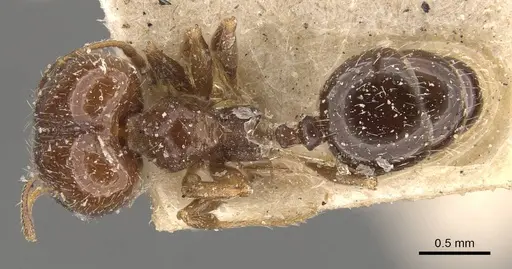
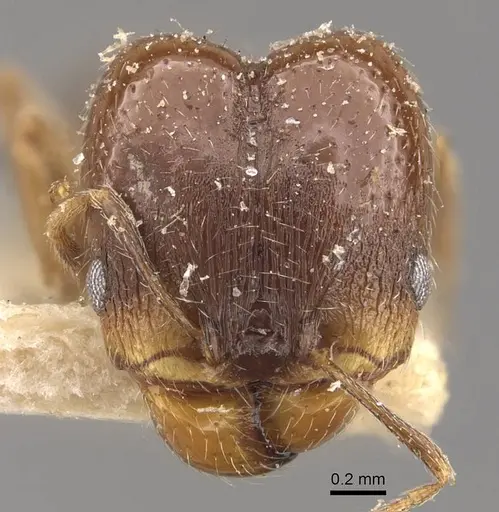
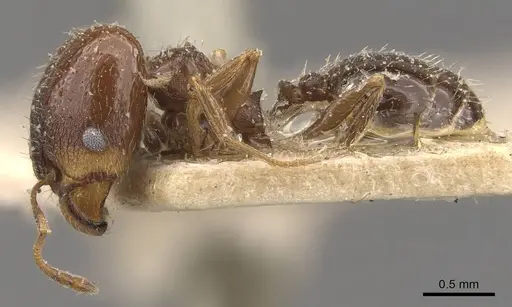
CASENT0908241
Ver no AntWeb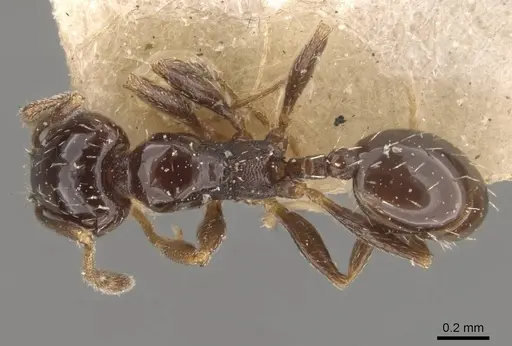
Literatura
A carregar mapa de distribuição...A carregar produtos...