
Parasyscia lindrothi
- Nome cient.
- Parasyscia lindrothi
- Subfamília
- Dorylinae
- Autor
- Wilson, 1959
- Distribuição
- Encontrado em 1 países
Introdução
Parasyscia lindrothi is a small to medium-sized ant native to Fiji, where it is endemic to the islands of Viti Levu and Koro . Workers have a smooth and shiny black integument, are long-limbed, and have a petiole longer than broad . This species was originally described as Cerapachys lindrothi before being moved to Parasyscia in 2016 . Colonies nest in rotting logs at elevations from 300 to 880 meters . The species has ergatoid (wingless) queens, which means new colonies may form through colony splitting rather than typical nuptial flights .
Quick Summary
- Difficulty: Expert
- Origin & Habitat: Endemic to Fiji, specifically Viti Levu and Koro islands. Found in rotting logs in forested areas at elevations between 300-880m [1][2].
- Colony Type: Colonies contain ergatoid (wingless) queens. The exact colony structure (single queen vs multiple queen) is not well documented [1].
- Size & Growth:
- Queen: size data unavailable [1]
- Worker: size data unavailable [1]
- Colony: Unknown, no colony size data available
- Growth: Unknown
- Development: Unknown, no development data available for this species (Development timeline has not been studied. Based on related Dorylinae, development may take 4-8 weeks at tropical temperatures, but this is an estimate [4].)
- Antkeeping:
- Temperature: Based on tropical climate, keep warm around 22-28°C. Start in the mid-70s°F (around 24°C) and observe colony activity [4].
- Humidity: Keep nest substrate consistently moist but not waterlogged, based on rotting log nesting habitat [1].
- Diapause: Unknown, as a tropical species, hibernation is unlikely, but no specific data [4].
- Nesting: In the wild, colonies nest in rotting logs. In captivity, use a naturalistic setup with moist soil and rotting wood or cork, or a well-humidified plaster nest [1].
- Behavior: As a Dorylinae ant, they are likely predatory. Escape prevention should be moderate due to their size, but exact size is unknown [1][4].
- Common Issues: maintaining high humidity can be challenging without experience., providing consistent live prey may be difficult., temperature stability is crucial for tropical species.
Natural History and Distribution
Parasyscia lindrothi is endemic to Fiji, found only on the islands of Viti Levu and Koro. It lives in rotting logs at elevations between 300-880 meters. The original type series was collected by hand from colonies nesting in these decaying wood habitats. The species was described by E.O. Wilson in 1959,originally placed in the genus Cerapachys, and later moved to Parasyscia during the 2016 generic revision of Dorylinae. This ant is part of the lindrothi complex and is most similar to Parasyscia zimmermani, another Fijian endemic. The ergatoid (wingless) queens suggest that new colonies may form when ergatoid queens disperse or when colonies split, rather than through typical nuptial flights [1][2][3].
Appearance and Identification
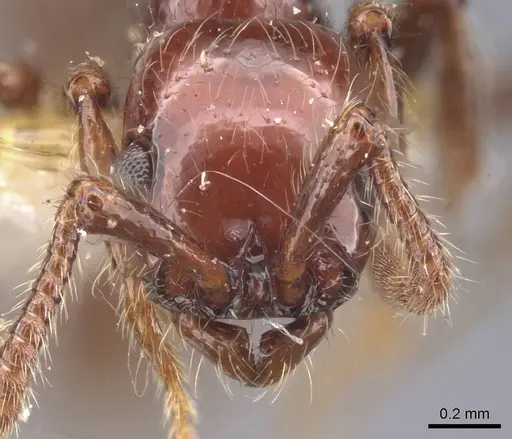
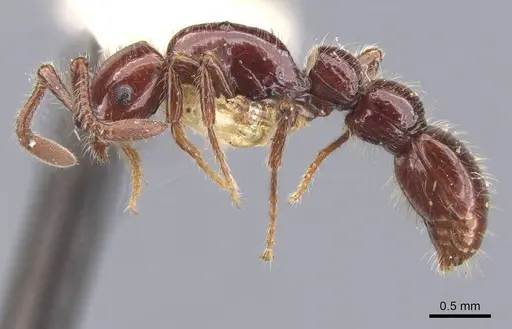
Workers of Parasyscia lindrothi have an almost entirely smooth and shiny black integument. The species is described as long-limbed, meaning its legs are proportionally longer than many related species. The petiole is longer than it is broad, which helps distinguish it from similar species. It lacks the foveae (small pits) found in related species like Parasyscia zimmermani, and bears a thin carina separating the anepisternum from the katepisternum. Workers are of moderate size, though exact measurements are not specified in the available literature [1].
Housing and Nesting Preferences
In the wild, Parasyscia lindrothi nests exclusively in rotting logs, indicating they need humid, enclosed spaces with access to decaying wood material. For captive care, a naturalistic setup works best: use a container filled with moist soil and small pieces of rotting wood or cork, which mimics their natural log-nesting habitat. Alternatively, a well-humidified plaster formicarium with narrow chambers can work, provided humidity is kept high. The key is maintaining consistently damp but not waterlogged substrate conditions. Because they are a tropical species from Fiji, they need stable warmth and humidity, avoid temperature fluctuations and dry air. Escape prevention should be moderate, while not extremely small, they can squeeze through small gaps, so standard barrier methods work well [1].
Feeding and Diet
As a member of the Dorylinae subfamily, Parasyscia lindrothi is predatory and likely hunts small invertebrates. In captivity, offer small live prey such as fruit flies, pinhead crickets, small mealworms, and other micro-arthropods. They probably do not rely heavily on sugar sources, though offering a small amount of sugar water or honey occasionally is worth experimenting with. Feed small prey items 2-3 times per week, adjusting based on colony consumption. Since this species is not well-documented in captivity, be prepared to experiment with prey acceptance. The key is providing consistent protein sources, a hungry colony will decline quickly [4].
Temperature and Seasonal Care
Parasyscia lindrothi comes from tropical Fiji, so it needs warm conditions year-round. Aim for temperatures in the 22-28°C range based on typical Dorylinae patterns. Room temperature in most homes may be acceptable if it falls within this range, but you may need a heating cable or mat to maintain warmth during cooler months. Unlike temperate species, they do not require a true hibernation period. However, slight reduction in activity during winter months if your room temperature drops is normal. Monitor your colony, if workers become less active but remain alive, this is likely just seasonal slowing rather than a problem. The key is avoiding cold drafts and temperatures below 20°C for extended periods [4].
Colony Structure and Reproduction
This species has ergatoid queens, wingless queens that develop within the colony rather than dispersing to found new colonies via nuptial flights. The type series includes both workers and ergatoid queens, suggesting that replacement reproductives can develop within established colonies. This has implications for captive care: your colony may be able to sustain itself long-term without needing to introduce new queens. However, the exact colony structure (whether colonies have one queen or multiple) is not well-documented. If you acquire a colony, observe queen behavior, ergatoid queens typically remain in the nest and are attended by workers, unlike flying queens that disperse after mating [1].
Frequently Asked Questions
How do I keep Parasyscia lindrothi ants?
This species requires a naturalistic setup with rotting wood or a highly humid plaster nest. Keep temperatures warm around 22-28°C, maintain high humidity, and feed small live prey regularly. However, this species is extremely rare in the antkeeping hobby and has no documented captive breeding history, making it an expert-level species [1][4].
What do Parasyscia lindrothi eat?
As a Dorylinae ant, they are predatory. Feed small live invertebrates like fruit flies, pinhead crickets, small mealworms, and other micro-arthropods. Sugar sources may be accepted occasionally but should not be the primary food [4].
How big do Parasyscia lindrothi colonies get?
Colony size is unknown, no data exists on maximum colony size for this species. Based on related Dorylinae, colonies are likely moderate rather than massive [4].
Does Parasyscia lindrothi need hibernation?
No, as a tropical species from Fiji, they do not require hibernation. Keep them warm year-round at 22-28°C [4].
What is an ergatoid queen?
An ergatoid queen is a wingless queen that develops within the colony rather than dispersing to found new colonies. Parasyscia lindrothi has ergatoid queens, which means new colonies may form through colony splitting rather than typical nuptial flights [1].
Where is Parasyscia lindrothi found?
This species is endemic to Fiji, found only on the islands of Viti Levu and Koro. It lives in rotting logs at elevations between 300-880 meters [1][2][3].
Is Parasyscia lindrothi good for beginners?
No, this species is not recommended for beginners. It has no documented captive care history, requires specific humidity and temperature conditions, and is extremely rare in the antkeeping hobby. It is an expert-level species [4].
How long does it take for Parasyscia lindrothi to develop from egg to worker?
The development timeline is unknown, no research has documented egg-to-worker time for this species. Based on related Dorylinae, it may take 4-8 weeks at optimal tropical temperatures, but this is an estimate [4].
Can I keep multiple Parasyscia lindrothi queens together?
The colony structure is not well-documented. Ergatoid queens develop within colonies, but whether multiple queens can coexist in a single colony (polygyny) is unknown. Combining unrelated queens is not recommended due to lack of data [1].
Report an Issue
The current care sheet is based fully on literature. See inconsistencies, or something that's incorrect? Please , it will be resolved after review from an admin. Contributing to the blogs tab also helps providing information, to make us be able to further improve the caresheets. Thank you for your support!
References

Esta ficha de cuidados é licenciada sob CC BY-SA 4.0 .
Blogs da comunidade
CASENT0175801
Ver no AntWeb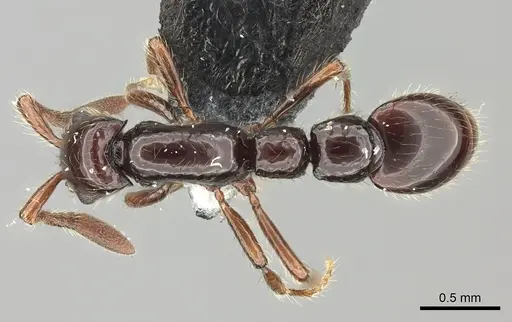
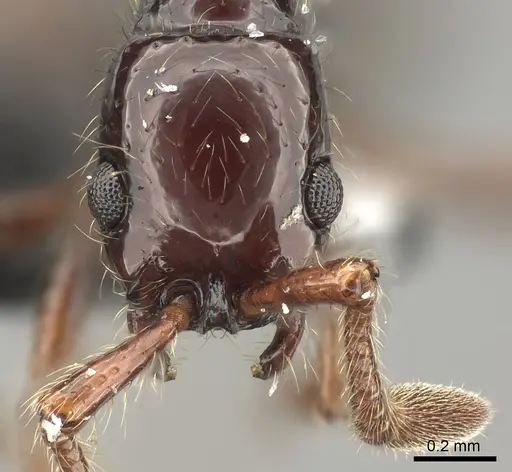
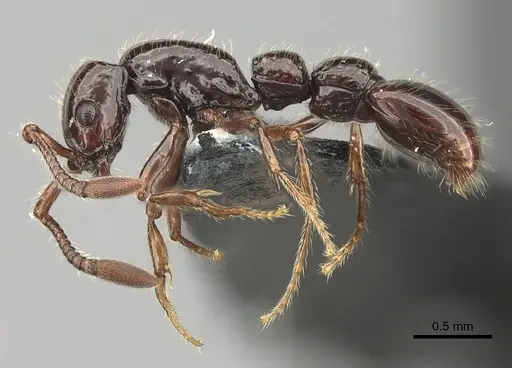
CASENT0911259
Ver no AntWeb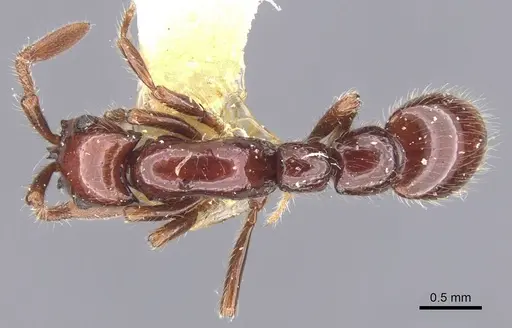
Literatura
A carregar mapa de distribuição...A carregar produtos...