
Nylanderia sindbadi
- Nome cient.
- Nylanderia sindbadi
- Tribo
- Lasiini
- Subfamília
- Formicinae
- Autor
- Pisarski, 1960
- Distribuição
- Encontrado em 0 países
Introdução
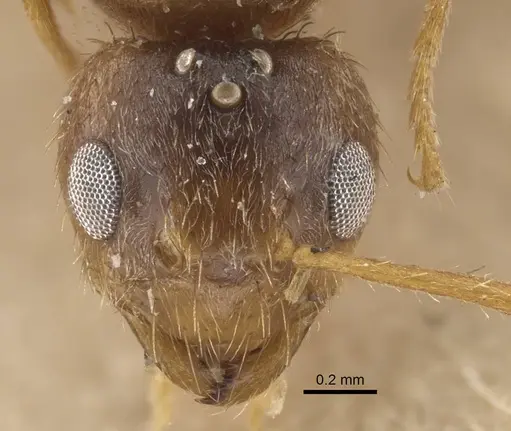
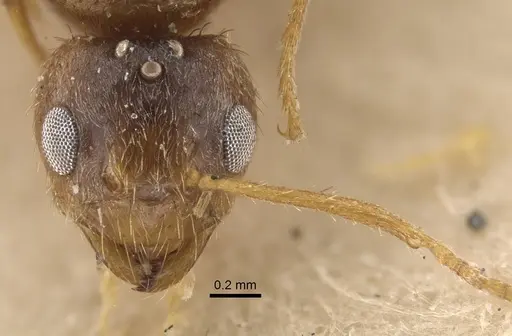
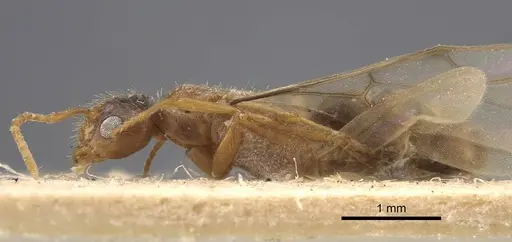
Nylanderia sindbadi is a small ant species originally described from Baghdad, Iraq, in 1960 . Workers are typical of the genus – small, slender, dark-bodied with pale legs, moving in the erratic 'crazy ant' style. Queens are alate (winged), based on a syntype female . This species is known from Iraq and Israel, where it occupies the Irano-Turanian region from the Jordan Valley to the Negev desert . This is a poorly documented ant with very little scientific study beyond its taxonomy and distribution. Because it lives in hot, dry Middle Eastern areas, it likely tolerates warm, arid conditions better than temperate ants. It was originally placed in the genus Paratrechina before being moved to Nylanderia .
Quick Summary
- Difficulty: Unknown – very limited data. Based on Nylanderia genus patterns, possibly Easy to Medium, but caution is advised.
- Origin & Habitat: Middle East – Iraq (Baghdad) and Israel (Jordan Valley, southern Golan, Negev). Inhabits the Irano-Turanian region, typically dry, warm areas [2][3].
- Colony Type: Unconfirmed colony structure. Based on typical Nylanderia patterns, colonies may accept multiple queens (facultatively polygyne), but this is unconfirmed.
- Size & Growth:
- Queen: No direct measurements exist. Inferred from Nylanderia genus patterns, approximately 4–6 mm.
- Worker: No direct measurements exist. Inferred from Nylanderia genus patterns, approximately 2–3 mm.
- Colony: Unconfirmed – likely several hundred workers, based on typical Nylanderia colony sizes.
- Growth: Unknown – likely moderate to fast based on genus patterns.
- Development: Unconfirmed – estimated 5–8 weeks in warm conditions, based on related Nylanderia species. (No direct development data exists. These are rough estimates, actual timing may differ.)
- Antkeeping:
- Temperature: No specific data. Inferred from Middle Eastern distribution: keep at 22–28°C (room temperature likely fine). Avoid prolonged cold below 15°C.
- Humidity: Low to moderate – prefer drier conditions typical of arid-region ants. Let the substrate dry between waterings and avoid constant moisture.
- Diapause: Unknown – Middle Eastern species may have reduced activity in winter but likely do not require true hibernation. More observation needed.
- Nesting: Likely prefers dry, well-drained nesting sites. A Y-tong or plaster nest works well, with a humidity gradient (one moist area, rest dry).
- Behavior: Based on Nylanderia genus behavior: active, erratic foragers, omnivorous, generally non-aggressive to humans, small size increases escape risk – use fine mesh and standard barriers.
- Common Issues: care requirements are estimated from genus patterns due to lack of species-specific data, colony structure (single vs multiple queens) is unconfirmed, development timeline and growth rate are estimates only, wild-caught colonies may be hard to source because of the limited distribution, temperature and humidity preferences may differ from estimates – observe colony behavior and adjust
Distribution and Natural Habitat
Nylanderia sindbadi is native to the Middle East, recorded from Iraq (type locality Baghdad) and Israel [1][4][3]. In Israel, it occurs in the Jordan Valley, southern Golan, and extends into the Negev desert [2]. This places it in the Irano-Turanian region, a zone with hot, dry summers and mild winters. The species appears adapted to arid or semi‑arid conditions, though detailed habitat data is lacking.
For captive care, aim to replicate warm, dry conditions. Room temperature (20–24°C) is likely suitable, avoid cold drafts. Brief temperature drops are probably tolerated better than constant chilling, given its origin.
Nest Preferences
Natural nesting habits have not been documented. Related Nylanderia species often nest in soil, under stones, or in decaying wood in warm climates. Given the species’ dry habitat, it probably prefers well‑drained nesting sites with low moisture.
In captivity, use a Y‑tong (AAC) or plaster nest. Provide a gradient with both moist and dry areas so the ants can choose. A small water tube attached to the nest adds humidity without soaking the substrate. Avoid completely sealed nests – some ventilation helps prevent mold in dry‑adapted species.
Feeding and Diet
Specific dietary data does not exist, but Nylanderia ants are generally omnivorous. They collect honeydew and forage for small insects and other protein. They also accept sugar water or honey.
Offer sugar water or honey as a constant energy source, and provide protein (small insects like fruit flies, pinhead crickets, or mealworms) two to three times per week. Remove uneaten protein within 24–48 hours to prevent mold. Because workers are small, make sure prey items are appropriately sized – very small insects or pre‑killed pieces work best.
Temperature and Seasonal Care
Based on its Middle Eastern distribution, Nylanderia sindbadi likely tolerates and prefers warm conditions. The Irano‑Turanian region has hot summers and mild winters, so these ants may be heat‑tolerant but could slow down in cooler months.
Keep nest temperatures between 22–28°C. Typical room temperature (20–24°C) should be fine. If the colony is sluggish, a small heating cable on one side of the nest can provide extra warmth. Avoid temperatures below 15°C for long periods. Whether true diapause occurs is unknown – you can reduce feeding in winter and let activity slow naturally without requiring full hibernation.
Colony Structure and Development
Scientifically documented colony structure is lacking. Many Nylanderia species are facultatively polygyne (can have one or several queens), but this has not been studied for Nylanderia sindbadi.
Founding behavior is also unconfirmed. Most Nylanderia are claustral – the queen seals herself in a chamber and raises the first brood on stored reserves without foraging. This is likely for this species but unconfirmed. Colony size is estimated at several hundred workers based on typical genus patterns, exact numbers are unknown.
Behavior and Temperament
Nylanderia species are known for their erratic, ‘crazy’ foraging movement – they wander unpredictably rather than following straight trails. Workers are small but active and persistent foragers. The genus is generally not aggressive toward humans and lacks a painful sting, but their tiny size makes containment tricky.
Escape prevention is important: apply fluon on test tube rims and ensure all formicarium connections are secure. They can squeeze through very small gaps because of their size. However, they are not strong climbers on smooth surfaces, so standard barrier methods (fluon, PTFE) should work.
Frequently Asked Questions
How long does it take for Nylanderia sindbadi to produce first workers?
The exact timeline is unconfirmed. Based on typical Nylanderia development in warm conditions, expect first nanitic workers about 5–8 weeks after the queen lays eggs. This is a rough estimate, actual timing may vary.
What do Nylanderia sindbadi ants eat?
Like most Nylanderia, they are omnivorous. Provide sugar water or honey as a constant energy source, and offer small protein sources (fruit flies, small crickets, or mealworms) several times per week. They will likely accept a wide variety of foods.
What temperature should I keep Nylanderia sindbadi at?
Based on their Middle Eastern distribution, aim for 22–28°C. Room temperature (20–24°C) is probably suitable. They appear adapted to warm, dry conditions and should tolerate higher temperatures better than cold.
Are Nylanderia sindbadi good for beginners?
Difficulty level is estimated as Easy to Medium based on genus patterns. The species is likely hardy and tolerant of varying conditions. However, because it is rarely kept and poorly documented, there may be unexpected challenges. Start with a small colony and watch their behavior.
How big do Nylanderia sindbadi colonies get?
Colony size is unconfirmed but estimated at several hundred workers based on typical Nylanderia colony sizes. This is moderate – not among the largest or smallest ant species.
Can I keep multiple Nylanderia sindbadi queens together?
Colony structure is unconfirmed for this species. Many Nylanderia are facultatively polygyne (can have multiple queens), but this trait has not been documented here. Do not combine unrelated foundress queens without research – they may fight.
Do Nylanderia sindbadi need hibernation?
Diapause requirements are unknown. As a Middle Eastern species, they likely do not need true hibernation but may become less active in winter. You can reduce feeding and allow cooler temperatures (but not below 15°C) during winter months.
What type of nest should I use for Nylanderia sindbadi?
A Y‑tong (AAC) or plaster nest works well. Provide a humidity gradient with both moist and dry areas. Given their likely preference for drier conditions, ensure good ventilation and avoid overly damp substrates.
Where is Nylanderia sindbadi found in the wild?
This species is native to the Middle East, specifically Iraq and Israel. The type specimens come from Baghdad, Iraq. In Israel, they are found in the Jordan Valley, southern Golan, and Negev desert regions [1][2][3].
Report an Issue
The current care sheet is based fully on literature. See inconsistencies, or something that's incorrect? Please , it will be resolved after review from an admin. Contributing to the blogs tab also helps providing information, to make us be able to further improve the caresheets. Thank you for your support!
References

Esta ficha de cuidados é licenciada sob CC BY-SA 4.0 .
Blogs da comunidade
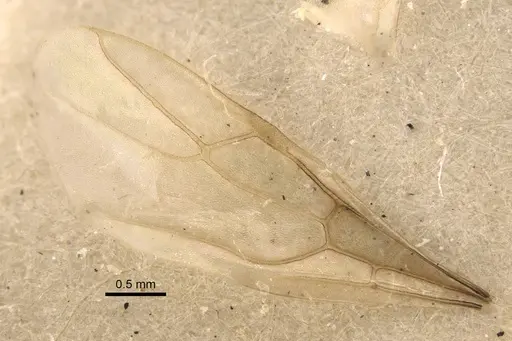
CASENT0917229
Ver no AntWeb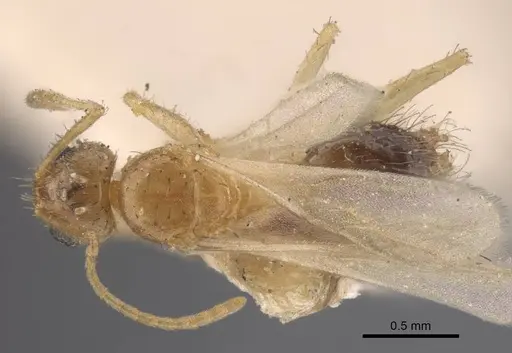
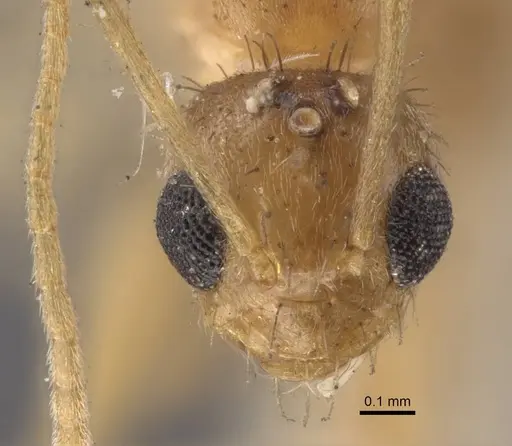
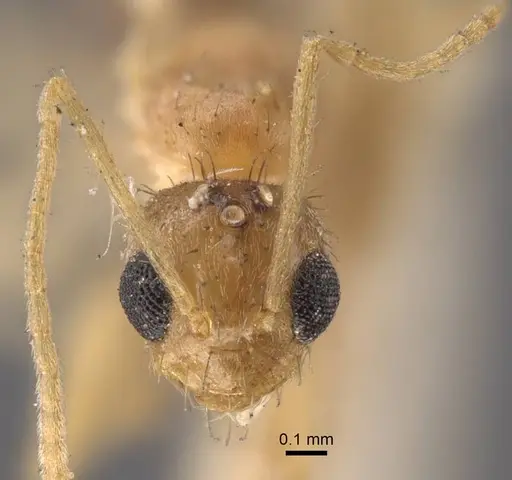
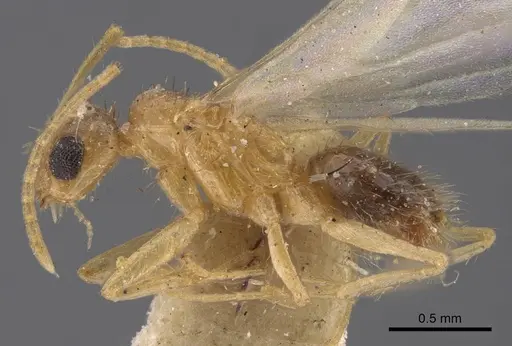
CASENT0917230
Ver no AntWeb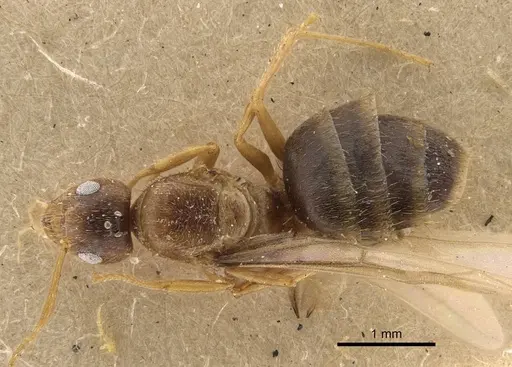
Literatura
A carregar mapa de distribuição...A carregar produtos...