
Nesomyrmex schwebeli
- Nome cient.
- Nesomyrmex schwebeli
- Tribo
- Crematogastrini
- Subfamília
- Myrmicinae
- Autor
- Forel, 1913
- Distribuição
- Encontrado em 0 países
Introdução
Nesomyrmex schwebeli is a small ant species native to Brazil, belonging to the Myrmicinae subfamily and Crematogastrini tribe. Type specimens were collected in São Paulo in 1912 . The species is part of the Neotropical Region . Size data is unavailable as no total length measurements are provided in the research. This species is cryptic and poorly studied, with limited biological data available. Its defense mechanism involves a smear using a modified stinger, typical of Crematogastrini ants.
Quick Summary
- Difficulty: Unknown, insufficient data for reliable assessment
- Origin & Habitat: Native to Brazil in the Neotropical Region. Type specimens collected from São Paulo in September 1912 [1]. Habitat likely tropical forests [2].
- Colony Type: Unconfirmed, no data on queen number or social structure.
- Size & Growth:
- Queen: Size data unavailable, no total length measurements provided.
- Worker: Size data unavailable, no total length measurements provided.
- Colony: Unknown, no data on colony size.
- Growth: Unknown
- Development: Estimated 6-10 weeks based on genus patterns [2] (This is an inference from related species, actual development time is unconfirmed.)
- Antkeeping:
- Temperature: Keep at 24-28°C based on typical tropical conditions [2].
- Humidity: Maintain moderate humidity, keep nest substrate moist but not waterlogged [2].
- Diapause: Unconfirmed, tropical species may not require hibernation [2].
- Nesting: Based on genus patterns, prefer small cavities in rotting wood or under bark [2].
- Behavior: Temperament is likely docile based on genus patterns. Escape risk is high due to small size, but size data is unavailable, assume tiny ants. Use fine mesh barriers [2].
- Common Issues: escape prevention is critical as this species is tiny, use fine mesh barriers, lack of documented biology means care is based on genus inference, be prepared to adjust conditions, slow growth may lead to impatient keepers overfeeding or disturbing the colony, wild-caught colonies may carry parasites that can devastate captive colonies, maintaining stable humidity is important, avoid both drying out and flooding
Nest Preferences
Nesomyrmex schwebeli was originally described from specimens collected in São Paulo, Brazil [1]. Based on typical Nesomyrmex ecology, these ants likely nest in small cavities such as rotting wood, hollow twigs, or under bark [2]. In captivity, provide a nest with small chambers scaled to their tiny size. Test tube setups work well for founding colonies, while small Y-tong or plaster nests accommodate established colonies. Avoid tall, open spaces that may cause stress, these are cryptic ants that prefer enclosed, concealed nesting sites.
Feeding and Diet
Like most Myrmicinae ants, N. schwebeli is likely a generalist forager that accepts both protein and sugar sources [2]. In captivity, offer sugar water or honey as a constant energy source, and provide protein sources such as small mealworms or fruit flies. Feed protein 2-3 times per week depending on colony size. Remove uneaten food promptly to prevent mold.
Temperature and Care
As a Brazilian tropical species, N. schwebeli likely prefers warmer temperatures around 24-28°C [2]. Maintain stable temperatures avoiding cold drafts or sudden fluctuations. A heating cable on one side of the nest can create a gentle gradient allowing ants to self-regulate. Monitor colony behavior to adjust as needed.
Behavior and Temperament
Nesomyrmex species are generally docile, cryptic ants that avoid confrontation [2]. Workers are small and likely not particularly aggressive. The most critical aspect of keeping this species is escape prevention, their tiny size allows them to squeeze through standard barrier methods. Use fine mesh, ensure all lid connections are tight, and consider barrier bands of fluon.
Colony Establishment and Growth
Colony founding behavior is unconfirmed for N. schwebeli. Queens may seal themselves in a small chamber and raise the first brood alone, but this is not documented. Founding colonies should be kept in a quiet, dark location with stable humidity. Do not disturb the queen during founding. Expect slow growth initially, with patience essential for poorly documented species. [2]
Frequently Asked Questions
How long does it take for Nesomyrmex schwebeli to produce first workers?
The exact timeline is unconfirmed, but based on related Nesomyrmex species, expect approximately 6-10 weeks from egg to worker at tropical temperatures [2]. This is an estimate, actual development may vary.
What do Nesomyrmex schwebeli ants eat?
They likely accept both sugar and protein sources. Offer sugar water or honey constantly, and protein such as small insects 2-3 times per week [2].
Are Nesomyrmex schwebeli ants aggressive?
Based on genus patterns, they are docile and not aggressive [2]. Workers are small and unlikely to sting.
Do Nesomyrmex schwebeli ants need hibernation?
Unlikely, as a Brazilian tropical species, they probably do not require true hibernation [2]. Activity may slow during cooler periods, but diapause is unconfirmed.
What temperature should I keep Nesomyrmex schwebeli at?
Start with 24-28°C, which matches their likely tropical habitat [2]. A gentle temperature gradient allows the colony to self-regulate.
How big do Nesomyrmex schwebeli colonies get?
Colony size is not documented, so data is unavailable [2]. Assume small colonies based on genus patterns.
What size nest should I use for Nesomyrmex schwebeli?
Use small, tight chambers scaled to their tiny size. Test tubes work well for founding colonies, and Y-tong or plaster nests for established colonies [2]. Avoid large, open spaces.
Is Nesomyrmex schwebeli a good species for beginners?
Difficulty level is unknown due to limited biological data. Their small size and escape risk may present challenges, so they are not recommended as a first species until more is known [2].
Can I keep multiple Nesomyrmex schwebeli queens together?
Colony structure is unconfirmed, and combining unrelated queens has not been documented [2]. It is not recommended.
Why are my Nesomyrmex schwebeli ants escaping?
This species is tiny, so escape prevention is critical. Use fine mesh barriers and ensure all connections are tight [2].
Report an Issue
The current care sheet is based fully on literature. See inconsistencies, or something that's incorrect? Please , it will be resolved after review from an admin. Contributing to the blogs tab also helps providing information, to make us be able to further improve the caresheets. Thank you for your support!
References

Esta ficha de cuidados é licenciada sob CC BY-SA 4.0 .
Blogs da comunidade
CASENT0908998
Ver no AntWeb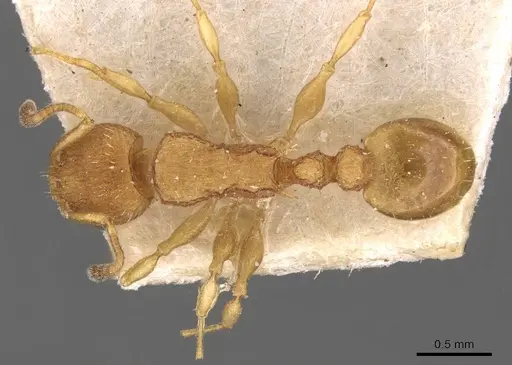
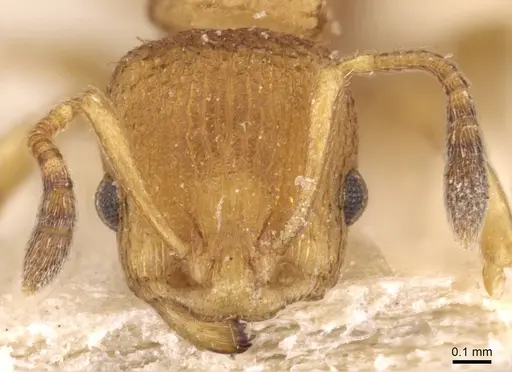
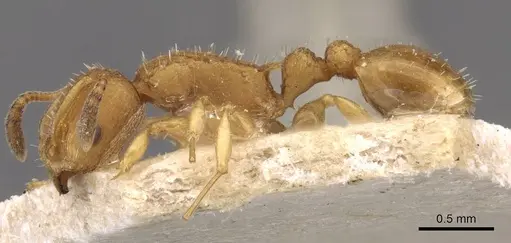
Literatura
A carregar mapa de distribuição...A carregar produtos...