
Myopias castaneicola
- Nome cient.
- Myopias castaneicola
- Tribo
- Ponerini
- Subfamília
- Ponerinae
- Autor
- Donisthorpe, 1938
- Distribuição
- Encontrado em 0 países
Introdução
Myopias castaneicola is a small Ponerine ant species endemic to Papua New Guinea. Workers have a reddish-brown body with a distinctive deep metanotal groove and smooth, shiny lateral faces on the propodeum and petiole. The species was originally described as Trapeziopelta castaneicola in 1938 from specimens collected at Kokoda, approximately 1200 feet elevation, before being moved to the genus Myopias in 1995. This species is most similar to Myopias etsukoae, sharing similar coloration and morphological features . This is one of the rarest ant species in captivity, with virtually no established care protocols. The entire scientific knowledge base consists of the original type description from 1938 and a few taxonomic notes, making proper husbandry largely experimental.
Quick Summary
- Difficulty: Unknown, likely Hard due to lack of documented care information
- Origin & Habitat: Papua New Guinea, specifically the Kokoda region at approximately 1200 feet elevation. They inhabit tropical forest environments in the Australasian region [1][2].
- Colony Type: Unconfirmed colony structure. Specific data for this species is lacking.
- Size & Growth:
- Queen: Size data unavailable, inferred from Myopias genus patterns (~7-9mm)
- Worker: Size data unavailable, estimated 5-7mm based on genus patterns
- Colony: Unknown, likely small colonies typical of Myopias genus
- Growth: Unknown, likely slow to moderate
- Development: Unknown, estimated 6-10 weeks based on typical Ponerinae development at tropical temperatures (Development timeline has not been directly studied for this species.)
- Antkeeping:
- Temperature: Keep at 24-28°C, this is a tropical species from lowland Papua New Guinea. A heating cable on one side of the nest creates a gentle gradient allowing workers to self-regulate.
- Humidity: Maintain high humidity typical of tropical forest floor conditions. Keep nest substrate consistently moist but not waterlogged. Provide a water tube as a humidity source.
- Diapause: No, this is a tropical species that does not require hibernation.
- Nesting: Natural nesting habitat is not well documented. Based on related species, they likely prefer moist soil or rotting wood in shaded forest areas. A naturalistic setup with moist substrate or a Y-tong/plaster nest works well.
- Behavior: Behavior is not well documented for this species. Myopias ants are predatory Ponerinae with moderate aggression. Workers are active foragers that hunt small invertebrates. They have a functional stinger typical of Ponerinae, though the sting may be mild for this small species. Escape prevention is important as they can climb smooth surfaces.
- Common Issues: lack of documented care information makes proper husbandry challenging, specific dietary requirements are unknown, may require live prey typical of Ponerinae, humidity requirements are not well understood for this species, growth rate is unknown making it difficult to assess colony health, no established breeding protocols exist in captivity
Species Identification and Range
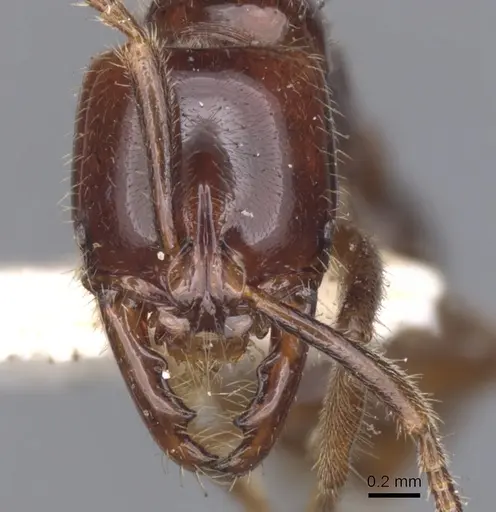
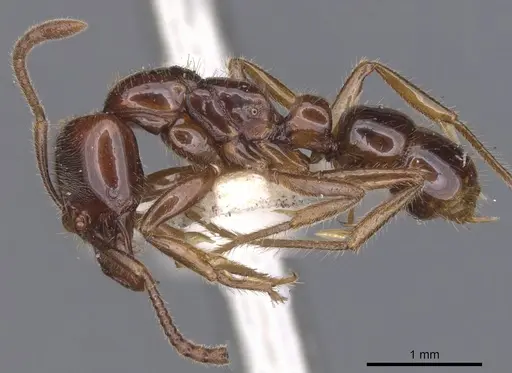
Myopias castaneicola is a distinctive Ponerine ant species endemic to Papua New Guinea. Workers are characterized by their reddish-brown coloration, deep metanotal groove, and smooth shiny lateral faces on the propodeum and petiole. The species was originally described by Donisthorpe in 1938 from specimens collected at Kokoda, approximately 1200 feet elevation. The type specimens are housed in the Natural History Museum in London. This species is most similar to Myopias etsukoae, sharing similar coloration and morphological features, but can be distinguished by the concave anterior margin of the median clypeal lobe without a minute tooth, weakly concave posterior margin of the head, and smooth propodeal and petiolar surfaces [1].
Natural History and Habitat
This species is known only from the Kokoda region in Papua New Guinea, which is located in the Australasian region. The type locality at 1200 feet elevation suggests they inhabit tropical forest environments at low to mid elevations. The region experiences a tropical climate with high year-round humidity and temperatures. Specific nesting preferences are not documented in scientific literature, but related Myopias species typically nest in moist soil, under stones, or in rotting wood in shaded forest areas. Workers are predatory, hunting small invertebrates on the forest floor, which is typical behavior for the Ponerinae subfamily [2].
Housing and Nest Setup
For keeping Myopias castaneicola, use a naturalistic setup with moist substrate or a Y-tong/plaster nest that can maintain high humidity. Since this is a tropical species from Papua New Guinea, the nest should remain consistently moist but not waterlogged. A water tube attached to the setup helps maintain humidity through evaporation. Provide a temperature gradient of 24-28°C using a heating cable on one side of the nest. Escape prevention is important, while not extremely small, they are active foragers that can climb smooth surfaces, so apply Fluon or similar barriers to the rim of the nest. A test tube setup can work for founding colonies, but transfer to a more spacious formicarium once the colony reaches 20-30 workers [2].
Feeding and Nutrition
Myopias castaneicola is a Ponerine ant, and like others in this subfamily, they are predatory. Feed small live prey such as fruit flies, pinhead crickets, small mealworms, and other appropriately sized invertebrates. Offer protein-rich foods 2-3 times per week. Sugar sources may be accepted, you can occasionally offer a drop of diluted honey or sugar water, but protein should be the primary food source. Remove uneaten prey after 24-48 hours to prevent mold. Since specific dietary preferences are unknown, observe what your colony accepts and adjust accordingly [2].
Temperature and Seasonal Care
Maintain temperatures between 24-28°C year-round, consistent with their tropical Papua New Guinea habitat. A slight temperature drop during winter months may be appropriate but is not required for this species. Use a digital thermometer to monitor nest conditions. A heating cable placed on top of the nest (not underneath to avoid drying) creates a gentle gradient. Avoid temperatures below 20°C for extended periods as this species is not adapted to cool conditions. Room temperature within this range is acceptable without additional heating in most homes [2].
Colony Development
Colony development specifics are not documented for Myopias castaneicola. Based on typical Ponerinae development, expect the first workers (nanitics) to emerge 6-10 weeks after the queen lays eggs, provided temperatures are optimal at 26-28°C. Initial colony growth will be slow, the first batch of workers will be smaller than mature workers. Colony size likely remains small, potentially under 500 workers at maturity. The founding queen may seal herself in during founding, living off stored fat reserves until the first workers emerge. Do not disturb the founding chamber during this period [2].
Frequently Asked Questions
How long does it take for Myopias castaneicola to produce first workers?
The exact timeline is unknown for this species. Based on typical Ponerinae development at tropical temperatures (26-28°C), expect first workers approximately 6-10 weeks after egg-laying. Initial development is slow as the queen raises the first brood alone without foraging.
What do Myopias castaneicola ants eat?
They are predatory like other Ponerinae ants. Feed small live prey such as fruit flies, pinhead crickets, small mealworms, and other tiny invertebrates. They may occasionally accept sugar sources like diluted honey, but protein should be the primary food source.
What temperature do Myopias castaneicola ants need?
Keep them at 24-28°C. This is a tropical species from Papua New Guinea that requires warm conditions year-round. A heating cable on one side of the nest can provide the necessary warmth.
How big do Myopias castaneicola colonies get?
Colony size is not documented, but based on genus patterns, they likely reach several hundred workers at maturity. Growth is typically slow, especially in the founding stage.
Is Myopias castaneicola a good species for beginners?
This species is not recommended for beginners due to the lack of documented care information. Specific requirements for humidity, diet, and colony development are not well understood. More established species with known care requirements would be better choices for those new to antkeeping.
Do Myopias castaneicola ants need hibernation?
Hibernation is not required as this is a tropical species from Papua New Guinea. They should be kept at warm temperatures year-round.
What type of nest should I use for Myopias castaneicola?
A naturalistic setup with moist substrate or a Y-tong/plaster nest works well. The key is maintaining high humidity while ensuring good ventilation. The nest material should retain moisture without becoming waterlogged.
Can I keep multiple Myopias castaneicola queens together?
Colony structure is not documented for this species. Most Myopias species appear to be single-queen colonies. Combining unrelated queens is not recommended without documented evidence that they can found colonies pleometrotically.
Why is so little known about Myopias castaneicola care?
This species has rarely been encountered in the wild and has not been kept in captivity by hobbyists. The scientific literature contains only the original type description from 1938 and a few taxonomic notes. This makes establishing proper care protocols challenging and requires experimentation.
Report an Issue
The current care sheet is based fully on literature. See inconsistencies, or something that's incorrect? Please , it will be resolved after review from an admin. Contributing to the blogs tab also helps providing information, to make us be able to further improve the caresheets. Thank you for your support!
References

Esta ficha de cuidados é licenciada sob CC BY-SA 4.0 .
Blogs da comunidade
CASENT0902520
Ver no AntWeb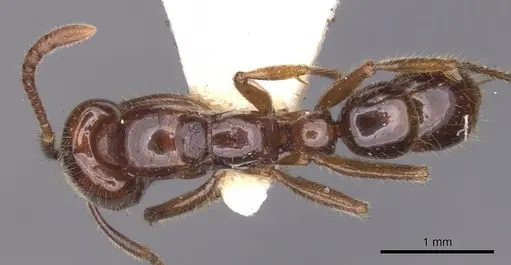
Literatura
A carregar mapa de distribuição...A carregar produtos...